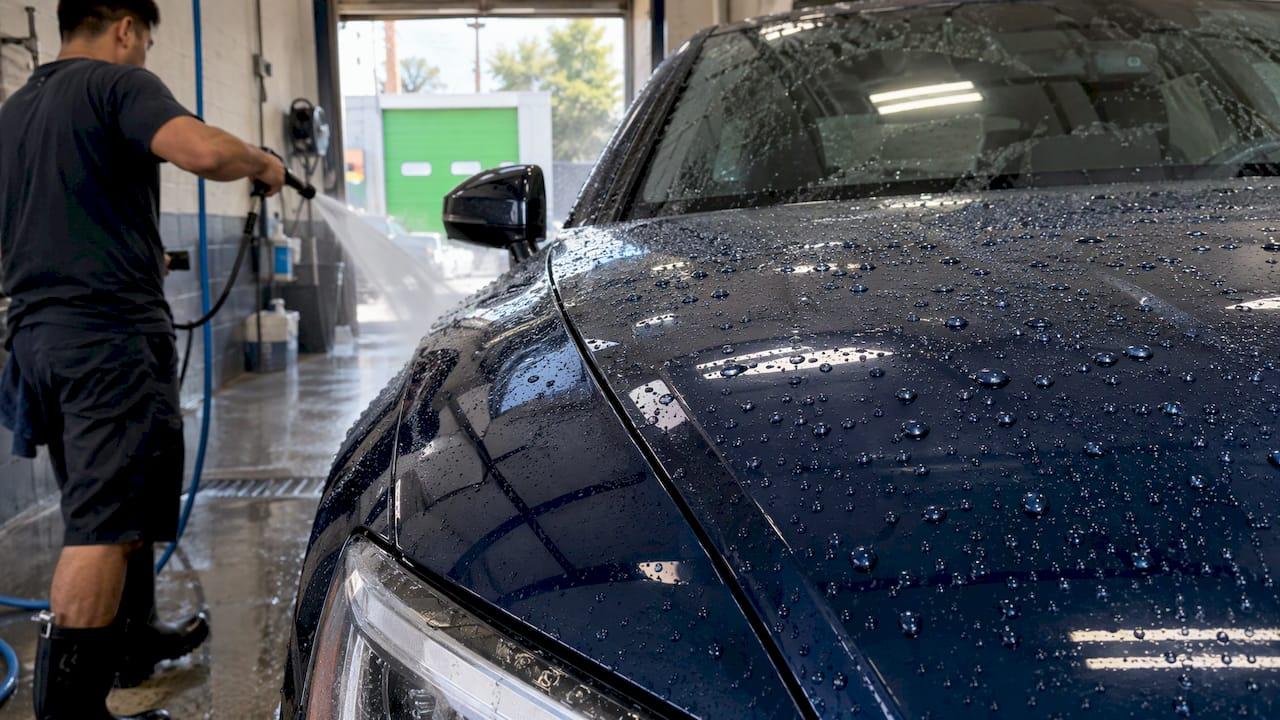
Ceramic coating is a thin, hard layer that bonds to your clear coat and makes paint easier to keep clean, glossier and more resistant to sun and everyday contamination. It is not armor, and it does not wash itself. Most disappointment comes from believing claims that were never true, and most good results come from a clean, properly prepared surface, a professional application and sensible washing. At Tint & Wraps Customs in Van Nuys, we install ceramic coating in a climate-controlled, dust-free facility, and the facts below are what we want every owner to know before booking.
TL;DR
- A ceramic coating resists water, road grime, UV and some chemical contamination. It is not scratch-proof and it does not stop rock chips. That job belongs to paint protection film.
- Coatings still need washing, just less effort per wash, with pH-neutral soap and soft towels.
- Realistic professional lifespans are measured in years, not decades, and upkeep decides how many.
- Prep matters as much as the product: paint is cleaned, decontaminated and polished before coating.
- The first 24 to 48 hours after install are the delicate window, and full cure takes up to two weeks.
Table of Contents
- Myth: ceramic coating makes your car scratch-proof
- Myth: you never have to wash a coated car again
- Myth: a ceramic coating is permanent
- Myth: it makes your paint immune to chemicals, heat and the sun
- Myth: coating fixes or hides swirls and scratches
- Myth: coatings are only for new or high-end cars
- Myth: a DIY kit performs like a professional coating
- The curing window nobody mentions
- Why don't manufacturers coat cars at the factory?
- Book a coating in Van Nuys
- FAQ
- Sources
Myth: ceramic coating makes your car scratch-proof
It does not. A coating is extremely thin compared with paint protection film (PPF, a clear urethane layer applied over the paint), and it is not designed to absorb impact from rocks, gravel or shopping carts. What it does well is add a slick, glossy, hydrophobic surface that makes dirt release more easily and gives light contamination less to grab onto.
If you have ever heard a shop promise a coating will "stop rock chips," that is where the confusion starts. USA Today's guide to coatings lists rocks and gravel among the things a coating cannot completely shield paint from, and notes it will not prevent rust either.
The right way to think about it is as a division of labor:
| What you want | Best fit |
|---|---|
| Gloss, easy cleaning, UV and contamination resistance | Ceramic coating |
| Defense against rock chips and road debris on high-impact areas | Paint protection film |
| Both, for a new or high-value car | PPF on the front end, coating over the whole vehicle |
We offer PPF in Full Front, Full Body and Track Pack coverage for exactly the areas coatings are not built for. For more on how film handles impact, see our rock chip protection guide and PPF benefits overview.
Myth: you never have to wash a coated car again
This is the most common promise and the most expensive one to believe. Coated paint stays cleaner and washes faster, but a coated car is not a maintenance-free showpiece, and neglect can wear a coating down long before its advertised lifespan.
What good care looks like:
- Wash by hand with pH-neutral soap and soft microfiber towels. Harsh detergents degrade a coating, and automatic brush washes can scratch it, according to the same Autoblog guide.
- Wash in the shade, on cool paint. Soap and water drying on a hot panel leave spots that are harder to remove.
- Remove bird droppings, tree sap and bugs early. Car and Driver notes that abrasive washing, highly alkaline cleaners and contaminants left sitting on the paint, including hard-water deposits, reduce a coating's performance.
- Use a ceramic-safe booster spray every few months. Autotrader suggests a booster about every three months and an annual decontamination to keep the coating performing.
One routine wash will not destroy a properly cured coating. Habits do the damage over months. Our ceramic coating maintenance guide walks through a routine that also keeps you in line with warranty terms.
"Self-cleaning" is marketing, not chemistry
Water beads and sheets off a coated surface, carrying loose dirt with it. That is a real benefit and it makes washing easier. It does not remove baked-on grime, road film or bird droppings, which still need a wash. Think "easier to clean," not "cleans itself."
Myth: a ceramic coating is permanent
Coatings are durable, not eternal. The numbers owners see online vary widely, so it helps to know where they come from.
- A peer-reviewed 2025 overview explains that a ceramic coating forms covalent chemical bonds with the clear coat and typically provides effective protection for one to three years, with periodic maintenance washes recommended to get the most from it.
- Autotrader reports that with proper maintenance, most coatings last two to five years or 30,000 to 50,000 miles. Professional installer-cured coatings sit at the top of that range, at 3 to 5 years, while spray-on DIY products last roughly 4 to 6 months.
- Autoblog puts waxes at weeks and synthetic sealants at a few months, which is why a coating that lasts years still feels like a big step up.
The same coating can last far longer on a garaged, hand-washed car than on one parked outside under a tree and run through brush washes every week. That is why we offer coating tiers instead of one-size-fits-all: a 1-Year, 5-Year and Lifetime Coating let you match the product to how you drive, park and care for the vehicle. Lifetime coatings and any manufacturer-backed warranty come with their own care requirements, so ask us to walk you through them before you book.
Myth: it makes your paint immune to chemicals, heat and the sun
Here the truth is "partly." Motor1 lists UV exposure, road grime, bird droppings and some acidic or alkaline contamination among the things a coating helps paint resist. That is a genuine upgrade over bare clear coat, especially under the Southern California sun.
Resistance is not immunity, though. Bird droppings can still etch paint if they sit, and strong chemicals can still affect the finish. A coating gives you more time to clean up a mess, not unlimited time.
Two more claims worth dropping:
- "It makes the car fireproof." No. Heat and UV resistance is about the sun on your paint, not flame.
- "It protects against road salt all winter." Salt and brine are hard on any finish, so rinse them off regularly. This matters less in the Valley, but it matters if you drive to the mountains in winter.
If your main worry is heat and UV inside the cabin, that is a glass job rather than a paint job. Our window tinting in carbon and ceramic films is built for that, and our ceramic glass coating article explains where a glass coating fits.
Myth: coating fixes or hides swirls and scratches
A coating seals what is underneath it. USA Today notes that coating over already-damaged paint just locks the imperfections under a new layer, and that coatings cannot remove swirls or scratches. Motor1 adds that this is why installers polish paint before coating.
That is the real answer to a question owners often ask: does the prep matter? Completely. The academic overview above describes how the coating bonds to a clean, defect-free clear coat, so washing, decontamination, degreasing and polishing come first. A coating applied over contamination or haze bonds to the problem, and the gloss you pay for never shows up.
This is also where a controlled environment matters. Our shop is climate-controlled and dust-free, so the surface you have just prepared is not being settled on by airborne dust while the coating goes on.
Myth: coatings are only for new or high-end cars
A coating can go on any vehicle with healthy paint. New cars benefit because paint is at its best and needs little correction. Older cars can benefit too, provided the paint is polished first so you are sealing in a corrected surface rather than flaws. Daily drivers, family SUVs, work trucks and enthusiast cars all spend their lives outdoors, and that is who gets the most from easier washing and UV resistance. Our guide to whether ceramic coating is worth it and cost breakdown help you decide for your own car.
Special finishes are covered too. Matte paint needs a coating made for it so it does not gain sheen, which we cover in our matte paint coating article, and wheels have their own heat and brake dust demands, covered in our wheel coating guide.
Myth: a DIY kit performs like a professional coating
Both contain silicon dioxide, but they are different products used in different ways. Car and Driver explains that a coating is a liquid polymer built on SiO2, and professional-grade formulas are highly concentrated, often above 80% SiO2, with higher concentration generally meaning thicker, stronger protection.
Autoblog's comparison shows the gap in practical terms: consumer kits run $50 to $150 and last from several months to a couple of years, while professional coatings run $600 to $2,000 and can last up to five years or longer. The professional price reflects hours of prep and the skill needed to apply the coating evenly without streaks or high spots. A high spot that cures is not wiped away: it has to be polished out, which is slow work on a hard coating.
If you want the result you read about, the install is where it is decided. We handle the prep, application and curing in our facility, so your paint is not exposed to dust, wind or a neighbor's sprinklers while it sets.
The curing window nobody mentions
Curing is the quiet reason some coatings underperform. According to Car and Driver, the car should stay completely dry for at least the first 24 hours. The coating is vulnerable from 0 to 24 hours, reaches initial cure at 24 to 48 hours (driving is fine, water is not), and fully cures at 7 to 14 days, when it reaches maximum hardness.

In practice that means no washing, no sprinklers and no parking under a tree for the first days. For a more detailed look at timing, read our ceramic coating curing time guide. We give you aftercare instructions when you pick up the car.
Why don't manufacturers coat cars at the factory?
People ask this often. Factory paint is designed to be applied at scale and cured in high-temperature ovens. A coating is a separate finishing step with its own prep, correction and curing, and it is done best on a specific car after it has been delivered, by someone who can look at that paint under proper light. That is the work of a specialist shop, and it is why dealership "paint sealant" add-ons and a true professional coating are not the same thing.
Our take on ceramic coating
Most myths about coatings come from one idea: that a single product can do every job. It cannot, and the owners who are happiest with their cars are the ones who matched each product to its job.
We put ceramic coating on the paint for gloss, UV resistance and easy washing. We put paint protection film on the front end and other high-impact panels for rocks and road debris. We tint glass for heat and UV inside the cabin. Together they protect a car better than any single layer.
The other half is the install. Our shop is climate-controlled and dust-free because a flawless finish starts with a clean environment. We have protected over 1,000 vehicles, and we pay close attention to Teslas and other EVs, where fit and sensor clearance matter.
If you are choosing between a 1-Year, 5-Year or Lifetime Coating, tell us how you drive and where you park. We will help you pick the one that fits, and explain how to care for it.
Jake
Book a coating in Van Nuys
If you want the benefits of a coating without the guesswork, our team in Van Nuys handles the whole process, from paint prep to the finished, cured surface. Choose from 1-Year, 5-Year and Lifetime Coating options, with manufacturer-backed warranties, and add PPF or window tint when you want protection for the areas a coating does not cover.
See the options on our ceramic coating page and tell us about your car, whether it is a Tesla, a family SUV or a work vehicle. We will recommend what suits it.
FAQ
Is ceramic coating worth it if it is not scratch-proof?
Yes, if you want gloss, easier washing and UV resistance, which is what a coating is built to deliver. For impact protection against rock chips, pair it with paint protection film on the front end. Together they cover both jobs.
How often should I wash a ceramic-coated car?
Often enough that dirt, bird droppings and sap never sit on the paint. Some coating warranties specify a washing schedule, so check the terms for your coating. Use a pH-neutral soap and soft microfiber towels, and avoid brush-style automatic washes.
How long will my coating last?
Professional coatings commonly last 3 to 5 years with good care, according to Autotrader's lifespan guide, and results depend on the product, the prep and how the car is washed. Our 1-Year, 5-Year and Lifetime Coating options let you choose a level that fits your plans for the vehicle.
Can I coat a car that already has scratches?
Yes, but the paint should be polished first. A coating seals whatever is under it, so scratches and swirls are better corrected before the coating goes on rather than sealed in.
Sources
- What Is Ceramic Coating, And Is It Worth It? (Motor1)
- Does ceramic coating your car really protect its paint? (USA Today)
- Considering Ceramic Coating for Your Car? (Autoblog)
- Best Ceramic Coatings for 2026, Tested (Car and Driver)
- How Long Does Ceramic Coating Last? (Autotrader)
- Development of Car Coating Materials over the Past Decade (PMC)