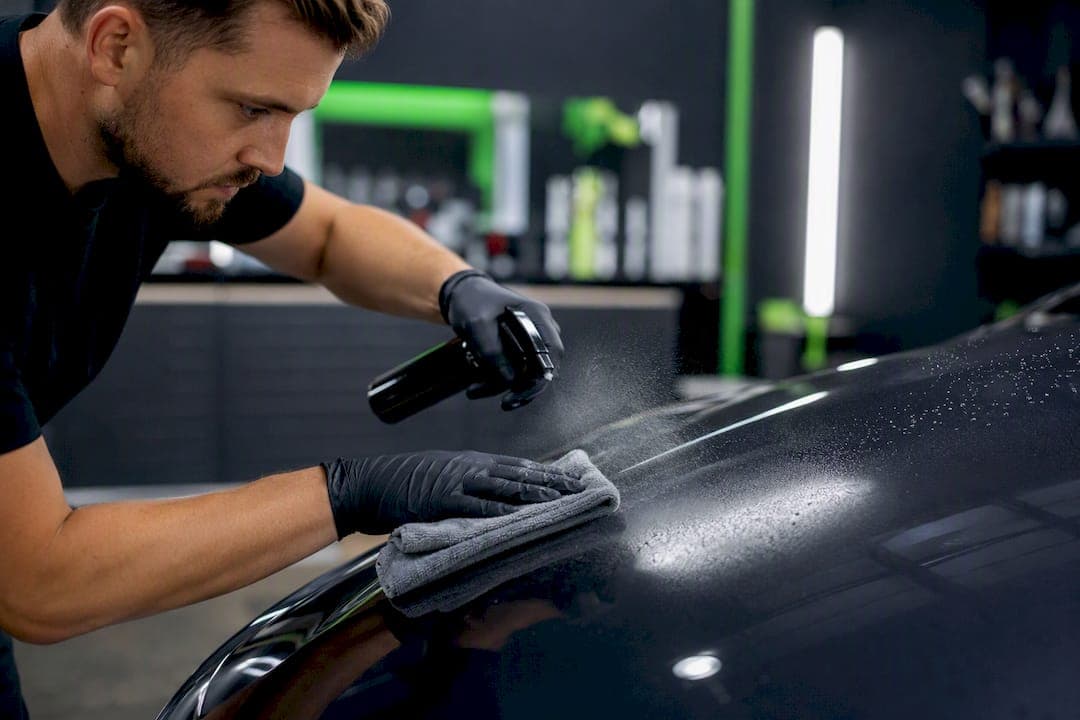
Keep it simple: pH-neutral washes every one to two weeks, an SiO2 booster every two to three months, and a full decontamination with professional inspection once a year. Skip the automatic car wash and dish soap, respect the manufacturer's cure window after installation, and the coating will keep beading water and shedding grime for years instead of months.
TL;DR:
- Weekly washing with pH-neutral soap and diligent drying are essential to preserve the coating's water-beading and grime-shedding properties.
- Periodic chemical boosters every two to three months restore hydrophobicity, but only if the surface has been properly decontaminated beforehand.
- Annual professional decontamination treatments remove bonded contaminants that cannot be addressed by washing or boosting alone, extending coating lifespan.
- Using dish soap, automatic brushes, or applying wax over the coating voids the warranty and accelerates coating deterioration.
- Water-beading tests after rinsing can help owners monitor coating health, with tight beads indicating proper maintenance and surface integrity.
Table of Contents
- What Is a Ceramic Coating Maintenance Schedule?
- How Do You Wash a Ceramic Coated Car Without Damaging It?
- What Do SiO2 Boosters Actually Do Between Washes?
- When Does a Ceramic Coating Need Professional Decontamination?
- Which Habits Void a Ceramic Coating Warranty?
- What Does a Professional Ceramic Coating Maintenance Visit Look Like?
- Is DIY Maintenance Enough, or Should You Book a Pro?
- Book a Ceramic Coating Maintenance Visit With Tint & Wraps Customs
- Where to Learn More About Ceramic Coating Care
- Sources
What Is a Ceramic Coating Maintenance Schedule?
A ceramic coating maintenance schedule is a rotation of three habits at three different intervals: frequent gentle washing, periodic chemical boosting, and occasional deep decontamination. Most owners get the washing part right and ignore the other two, which is exactly why coatings that promise three to five years of protection often look tired after eighteen months.
The baseline is a hand wash every one to two weeks using a pH-neutral soap and the two-bucket method, according to Bryan Car Care. That interval shifts depending on where and how the car actually lives. A garage-kept weekend car in a dry climate can stretch to three weeks between washes. A daily driver parked under trees near the coast needs weekly attention, sometimes more during pollen season or right after a road-salt application.
Here's how environment should shape your calendar:
- Daily driver, mixed climate: wash weekly, booster every 8 to 10 weeks, decon every 6 to 9 months.
- Daily driver, coastal or high-pollution area: wash weekly, booster every 6 to 8 weeks, decon every 6 months.
- Weekend or garage-kept car: wash every 2 to 3 weeks, booster every 3 months, decon annually.
- Fleet or commercial vehicle: wash every 3 to 5 days depending on route, booster monthly, decon every 4 to 6 months.
| Driving environment | Wash frequency | SiO2 booster interval | Annual decon recommendation |
|---|---|---|---|
| Coastal / salt exposure | Weekly | Every 6–8 weeks | Every 6 months |
| Urban daily commute | Weekly to biweekly | Every 8–10 weeks | Every 6–9 months |
| Suburban mixed use | Biweekly | Every 8 to 10 weeks | Every 6 to 12 months |
| Garaged / weekend car | Every 2–3 weeks | Every 3 months | Annually |
| Fleet / commercial use | Every 3–5 days | Monthly | Every 4–6 months |
That table is a starting point, not gospel. The real diagnostic tool costs nothing: the water-beading test. Rinse a clean panel and watch how the water behaves. Tight, marble-like beads that roll off at the slightest tilt mean the hydrophobic layer is intact. Water that sheets flat, drags, or beads inconsistently across the hood but not the roof is telling you contamination has bonded to part of the surface, or that section is due for a booster. Run this test monthly on a daily driver and you'll catch problems before they become visible water spots or etching.
Pro Tip: Do the beading test right after a rinse, before any soap touches the panel. Soap residue can temporarily fake good beading even on a coating that's actually struggling.
One thing to flag early: quarterly boosting and annual decontamination aren't competing schedules, they're sequential. You boost to maintain hydrophobicity between deeper services, then decon to strip whatever the boosting couldn't remove. Owners who only do one or the other end up either sealing in grime (boosting without ever decontaminating) or stripping the coating faster than necessary (decontaminating too often without maintaining it between visits).
How Do You Wash a Ceramic Coated Car Without Damaging It?
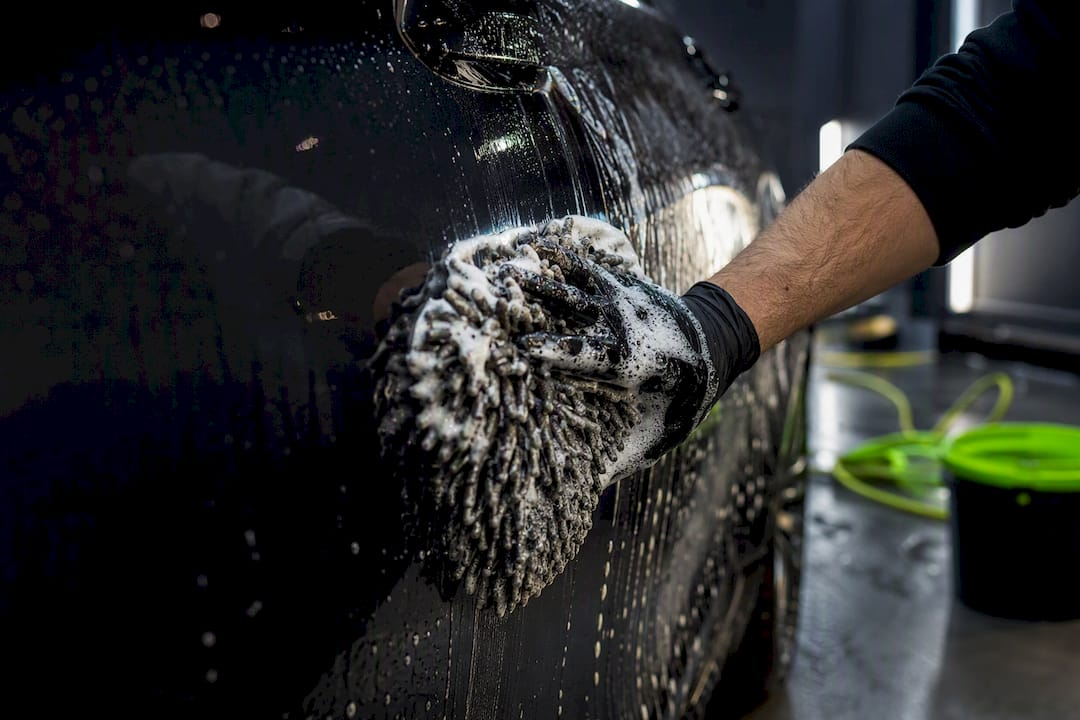
Washing a ceramic-coated car wrong is worse than not washing it enough. Dragging a dirty microfiber mitt across a panel introduces the same fine scratches you paid to prevent, so the sequence matters as much as the products.
1. Pre-rinse the entire vehicle. A full water rinse from top to bottom loosens loose dirt and dust before anything touches the paint. Skip this step and you're grinding grit into the surface with your wash mitt.
2. Apply a foam pre-wash. A foam cannon attached to a pressure washer gives the most even coverage and the longest dwell time, letting the pH-neutral foam encapsulate dirt so it lifts away in the rinse rather than getting wiped off. No pressure washer? A pump sprayer with a diluted pre-wash solution does a serviceable job, though the foam won't cling as long. Let it dwell three to five minutes, then rinse it off completely before any contact washing begins.
3. Wash using the two-bucket method. One bucket holds your pH-neutral, coating-safe shampoo mixture; the other holds clean rinse water. Both need grit guards at the bottom, which catch abrasive particles before your mitt drags them back onto the paint. Work top-down: roof, hood, upper doors, lower doors, rocker panels, wheels last. Rinse your mitt in the clean bucket after every panel, not every few panels.
4. Use a lambswool or microfiber wash mitt, never a sponge. Sponges trap grit against their surface; a quality mitt's fibers let particles fall away.
5. Rinse the entire car again, working the same top-down order, checking that no soap residue collects in trim lines or badge gaps.
6. Dry with a forced-air blower or blot with a plush, coating-safe drying towel. Dragging a towel across paint, even a soft one, creates friction that can dull a coating's gloss over hundreds of wash cycles. A leaf blower or dedicated automotive dryer eliminates contact entirely. If you're blotting by hand, lift and place the towel rather than wiping.
On product labels, look for the words "coating-safe" or "pH-neutral" specifically. Chemical Guys notes that acidic or highly alkaline formulations chemically attack the SiO2 bonds that give a ceramic coating its slickness, which is exactly the kind of damage a warranty won't cover. Gtechniq's own wash guide echoes the same core sequence: foam first, two buckets always, and nothing abrasive touching the surface.
For bird droppings or tree sap, don't wait for the next scheduled wash. Both are acidic and can etch through a coating within hours in hot weather. Soak the spot with a quick detailer or diluted pH-neutral shampoo for a minute or two to soften it, then lift it with a clean, damp microfiber towel using minimal pressure. Never scrape it off dry.
What Do SiO2 Boosters Actually Do Between Washes?
SiO2 booster sprays top up the outermost hydrophobic layer of a ceramic coating without replacing the coating itself. Think of the base coating as the roof of a house and the booster as periodically resealing the shingles: it extends the life of what's already there, but it isn't structural.
Over weeks of driving, UV exposure, road film, and repeated washing wear down the microscopic surface tension that makes water bead tightly. A booster redeposits a thin sacrificial layer of silica that restores that beading behavior, and the effect is measurable. Correctly applied boosters can push a degraded water contact angle back above 100 degrees from a worn range closer to 80 to 90, according to CeramicInfoSpot. Visually, that shows up as tighter beading and a noticeably slicker feel right after the next rinse.
A few rules make boosting worth the fifteen minutes it takes:
- Apply to a freshly washed, fully decontaminated surface. Spraying a booster over bonded grime just locks that grime under a fresh hydrophobic layer, according to CeramicInfoSpot's application guidance.
- Work one panel at a time rather than coating the whole car at once. Boosters flash (dry too fast to buff) quickly in direct sun or warm weather, and doing the whole vehicle before wiping leaves high spots and streaking.
- Use light, even coverage. More product doesn't mean more protection; it just means more residue to buff off.
- Respect the interval. Bryan Car Care recommends applying a booster every two to three months for typical use, tightening to six to eight weeks in harsh climates.
Cost-wise, most consumer booster sprays run somewhere between $4 and $15 per application depending on bottle size and brand, which makes this the cheapest line item in the entire maintenance calendar. What it isn't cheap on is time savings down the road: an owner who boosts every quarter walks into their annual decon appointment with far less bonded contamination than one who never touched the surface between washes.
Boosters are a stopgap, not a cure. If beading stays flat or patchy even after a fresh application, that's the surface telling you it needs mechanical decontamination, not another layer of spray sealant.
When Does a Ceramic Coating Need Professional Decontamination?
Bonded contamination, things like iron particles from brake dust, rail dust, and mineral deposits from hard water, sits on the paint in a way that no shampoo or booster can touch. It has to be chemically dissolved with an iron remover or physically lifted with a clay bar, and both processes are best left to a shop that knows how much dwell time a given coating can handle before it starts stripping the sacrificial layer along with the grime.
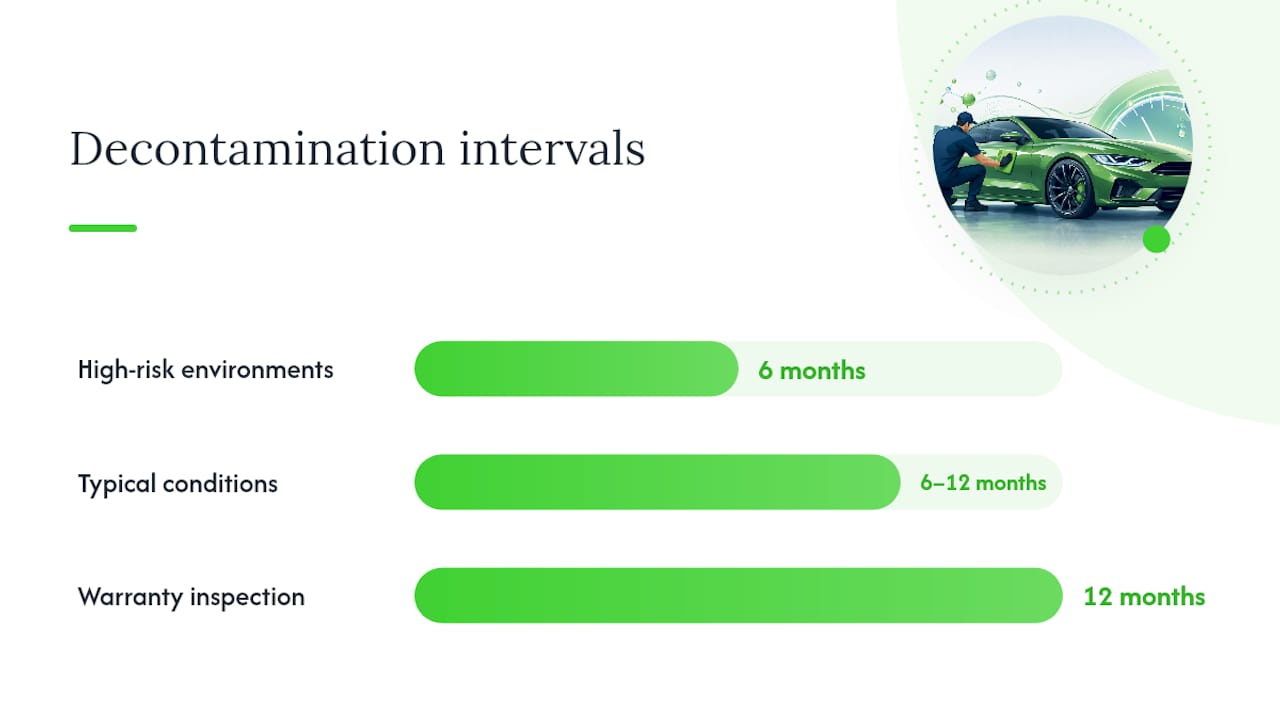
Plan on a professional decontamination every six to twelve months, tightening toward the six-month end if you're in a coastal, industrial, or high-pollen environment, per Bryan Car Care's maintenance guide. Watch for these signs that a decon is overdue regardless of the calendar:
- The paint feels gritty or sandpaper-like when you run a clean hand across it after washing.
- Water beading has gone flat or patchy despite recent boosting.
- Small orange or rust-colored specks appear, especially near the wheel wells.
- Tar spots or tree sap residue persist after a normal wash cycle.
A typical shop visit for full decontamination and inspection runs about two to three hours, covering an iron-remover treatment, a clay or clay-alternative pass, inspection under proper shop lighting to catch swirl marks or thin spots, and a fresh booster application to send the car home beading like new, according to Bryan Car Care. This is also where documentation matters. Manufacturer warranties frequently require proof of annual maintenance, and Ceramic Pro's aftercare guidelines specifically call out annual inspection records as part of staying covered. Keep every receipt, and ask your shop for a written service note each visit rather than relying on memory a year later.
Which Habits Void a Ceramic Coating Warranty?
The fastest way to shorten a coating's life has nothing to do with weather or mileage. It's dish soap. Dish soap is formulated to strip oil and wax, and it strips the hydrophobic bonds of a ceramic coating right along with it. A single wash with Dawn or a similar degreaser can noticeably dull beading performance.
Automatic car washes with spinning brushes are the second-biggest offender. Those brushes accumulate grit from every car that passed through before yours and drag it across your paint under pressure, which is precisely the swirl-mark scenario the two-bucket method exists to prevent.
Waxing or applying a separate paint sealant over a ceramic coating is a more subtle mistake. Coatings work through a microscopic pore structure that creates the hydrophobic surface; layering wax on top fills those pores with a different chemistry that can mask how the coating is actually performing underneath, and it interferes with how well an SiO2 booster bonds on the next application. If you want extra slickness, use a booster designed to layer over the existing coating, not a traditional carnauba wax.
Common mistakes worth avoiding entirely:
- Washing with dish soap, dégreaser, or any non pH-neutral product.
- Running the car through automatic brush washes.
- Applying wax or sealant directly over the coating.
- Using aggressive polishes or compounds within the manufacturer's cure window.
- Ignoring the coating's cure period, typically 7 to 10 days, before the first wash.
That cure window isn't a suggestion. Ceramic Pro's warranty documentation explicitly excludes damage from alkaline cleaners and premature contact from coverage, which means one impatient wash in week one can cost you the protection you paid for. A quick warranty-safe checklist: use only pH-neutral products, skip automatic washes permanently, keep a maintenance log, and book an annual inspection even if the coating still looks fine.
What Does a Professional Ceramic Coating Maintenance Visit Look Like?
Tintandwrapscustoms runs every maintenance visit through the same climate-controlled facility used for original installations in Van Nuys, which matters more than it sounds. Dust and temperature swings during a decon or booster application can cause uneven flashing or trap contaminants right back into the surface, so a controlled environment isn't a luxury detail, it's a technical requirement for consistent results.
A typical visit follows the decon-inspect-boost sequence: full iron-remover treatment and clay decontamination, inspection under shop lighting to check for thin spots or early swirl marks, then a panel-by-panel booster application, usually wrapping up in two to three hours.
Tesla and EV owners get particular attention here. Flush door handles, unique panel gaps, and factory paint that runs thinner than most combustion vehicles all change how aggressive a decon can safely be, and manufacturer-backed warranty terms only hold up when the aftercare follows the same standards used at installation.
A few numbers that back up the approach:
- Over 1,000 vehicles protected across window tint, PPF, ceramic coating, and wraps.
- A 5-star customer rating built on installation and follow-up maintenance work.
- Manufacturer-backed warranties tied to documented annual service visits.
Is DIY Maintenance Enough, or Should You Book a Pro?
The advice that circulates most about ceramic coatings, wash it gently and let it do its job for five years, undersells how much active maintenance actually determines that lifespan. A coating is a chemical layer that degrades with UV exposure and contact, not a one-time upgrade you can forget about.
Where I think most owners go wrong is treating boosters and decontamination as optional upgrades rather than the two events that do the real work. Washing prevents new damage. Boosting and decontamination are what actually reset the clock on hydrophobic performance. Skip those two and you'll still have a coating in eighteen months, just one that beads water like bare paint.
If you're doing the weekly wash and quarterly booster yourself but have never had a professional decon, that's the gap to close first. It's the step most DIY owners skip because it requires equipment and judgment calls about dwell time that a bottle of iron remover doesn't teach you. Get that annual inspection on the calendar before the coating tells you it's overdue.
— Jake
Book a Ceramic Coating Maintenance Visit With Tint & Wraps Customs
Skip the guesswork on intervals, products, and cure windows. Tintandwrapscustoms runs maintenance visits, SiO2 boosting, full decontamination, and warranty-backed re-coating out of the same climate-controlled Van Nuys facility used for original installs, so the environment your coating gets maintained in matches the one it was applied in.
Bring your original installation paperwork and any warranty documentation when you book. A standard maintenance visit runs roughly two to three hours, covering inspection, decontamination if needed, and a fresh booster application before the car leaves the bay. Tesla and EV owners get the same attention to panel gaps and factory paint thickness that goes into every installation. If you're weighing the cost of ongoing maintenance against a future re-coat, the ceramic coating cost breakdown is worth a look before your visit. Ready to get on the schedule? Book your maintenance visit at Tint & Wraps Customs and keep that warranty intact.
Where to Learn More About Ceramic Coating Care
For readers who want to go deeper on any of the steps above, these sources cover the technical detail behind the recommendations in this guide:
- Gtechniq's wash guide breaks down foam pre-wash and two-bucket technique in more product-specific detail.
- Bryan Car Care's maintenance guide covers booster intervals and decontamination scheduling.
- Ceramic Pro's aftercare page lays out manufacturer warranty terms and documentation requirements.
- Diamond Brite's maintenance overview offers an additional professional perspective on coating-safe products.
- Tintandwrapscustoms's own ceramic coating warranty guide explains what's actually covered and what voids it.
Sources
- How to Wash a Ceramic Coated Car | Bryan Car Care
- Warranty + Aftercare - Ceramic Pro
- How to wash a car with ceramic coating without removing it | CeramicInfoSpot
- How to Wash a Ceramic Coated Car | Gtechniq