A ceramic coating warranty is a manufacturer-backed guarantee that protects you against defects in the coating itself — things like delamination, abnormal fading, and loss of adhesion — provided you meet specific maintenance conditions. It is not a blanket shield against every scratch, chip, or environmental mishap your car encounters. The key players in the U.S. market each structure their coverage differently: Ceramic Pro ties warranty duration to the package tier you select, with annual inspections required to keep coverage active; Tint World® Nano Ceramic offers a manufacturer-backed guarantee through its certified installer network; and CQUARTZ products carry warranties that depend heavily on authorized application and documented aftercare.
Here is what most ceramic coating warranties share in common:
- Coverage scope: Protects against coating defects such as delamination, peeling, and premature loss of hydrophobic properties
- Duration: Ranges from short-term on entry-level packages to extended or conditional lifetime terms on premium tiers
- Manufacturer backing: Valid only when applied by an authorized, certified installer
- Registration requirement: Most warranties require you to register a warranty card within a set window after installation
- Annual inspections: Required by most professional programs to maintain coverage year over year
- Exclusions: Environmental damage, stone chips, improper washing, and contaminants left untreated are almost universally excluded
- Maintenance obligation: pH-neutral washes, approved boosters, and professional upkeep are typically mandatory
Understanding these basics upfront saves you from a costly surprise when you go to file a claim.
Table of Contents
- What your ceramic coating warranty actually covers
- How to keep your warranty valid through proper maintenance
- Realistic expectations: what warranties don't promise you
- How to file a warranty claim and what to expect
- Why professional installation makes your warranty worth having
- Key Takeaways
- Tintandwrapscustoms gives you a warranty you can actually use
What your ceramic coating warranty actually covers
Warranty contracts in the ceramic coating space are more specific than most vehicle owners expect. Coverage almost always addresses manufacturing defects in the coating product itself, not damage caused by external forces or owner neglect. Here is how the major terms break down.
Coverage against coating defects
A valid ceramic coating warranty typically covers delamination (the coating separating from the paint), abnormal fading or discoloration caused by the coating's own chemistry, and failure of the hydrophobic layer under normal use. Chemical damage from contaminants is covered only when the coating fails to resist substances it was formulated to repel — not when the owner leaves bird droppings or tree sap sitting on the surface for days.
Duration and tier variations
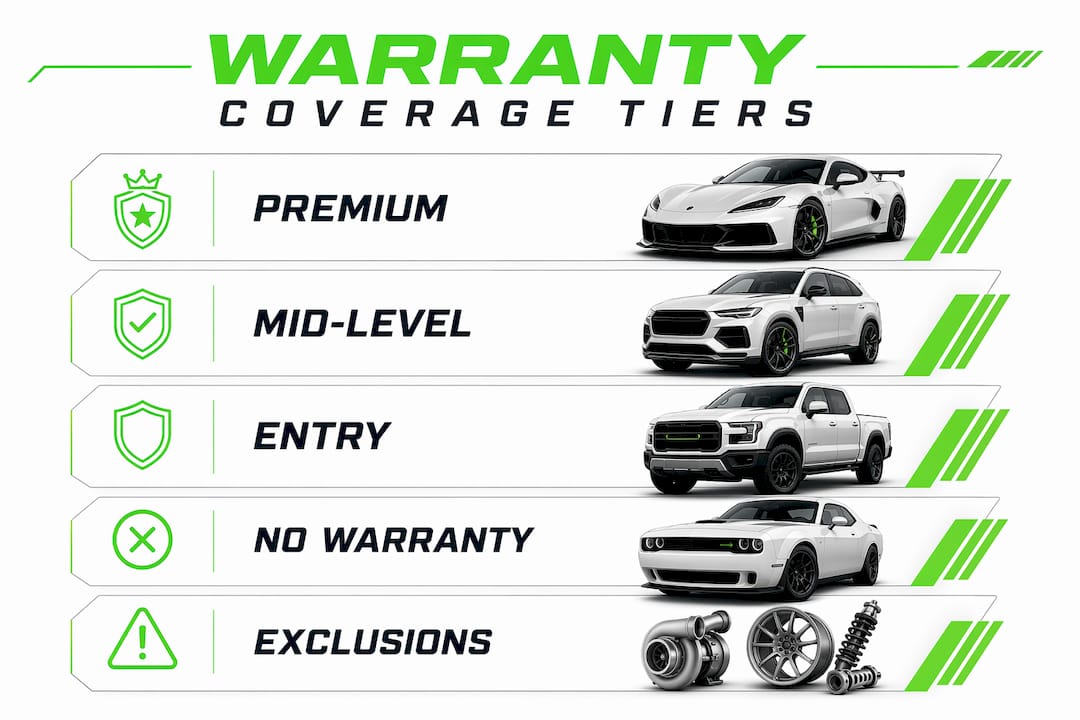
Ceramic coating lifespan varies widely by product tier. Entry-level professional packages typically carry 1–2 year warranties. Mid-tier packages commonly run 3–5 years. Premium or flagship packages from brands like Ceramic Pro can extend to 7–10 years, and some SiC-based coatings are marketed as permanent, though "permanent" in warranty language still comes with conditions. Consumer-grade spray coatings rarely carry any formal warranty at all.
Transferability when you sell the vehicle
Transferability rules vary by brand and installer. Some programs allow the warranty to transfer to a new owner, which can be a genuine selling point. The transfer usually requires written notification to the manufacturer or installer within a specified window along with documentation of maintenance records. Missing that window typically voids the transfer entirely. If you are buying a used vehicle with a claimed coating warranty, ask for the original warranty card, installation receipt, and inspection records before assuming coverage carries over.
Common exclusions you need to know
Most ceramic coating warranties are written to cover what the product fails to do on its own — not what the environment or the owner does to it. Reading the exclusions section of your warranty contract is where the real terms live.
The exclusions list is where many claims fall apart. Standard exclusions across most programs include:
- Stone chips and physical impact: No coating prevents rock chips; this is universally excluded
- Automated brush washes: Running a coated car through a brush-style car wash voids coverage in most programs
- Improper cleaning products: Using alkaline degreasers, solvent-based cleaners, or non-approved products voids the warranty
- Untreated contaminants: Bird droppings, bug splatter, and tree sap left on the surface beyond a reasonable time frame are excluded from coverage
- Pre-existing paint defects: Scratches, oxidation, or swirl marks present before installation are not covered
- Misuse or modification: Any paint correction or polishing performed after installation without authorization can void coverage
Pro Tip: Before signing off on your installation, ask the installer to walk you through the exclusions section line by line. The coverage you assume you have and the coverage you actually have are often different things.
Registration and notification requirements
Most manufacturer-backed programs require timely registration of your warranty card after installation. If you need to file a claim, you typically must notify the installer or manufacturer within a set window after discovering the issue. Waiting longer can give the manufacturer grounds to deny the claim on procedural grounds alone.
How to keep your warranty valid through proper maintenance
Maintenance is where most ceramic coating warranties are won or lost. The coating itself may be flawless, but if you wash the car incorrectly or skip an annual inspection, your coverage can disappear without the coating ever failing.
Washing correctly is non-negotiable
Proper routine maintenance with pH-balanced shampoos and approved ceramic boosters is the single most important thing you can do to keep both the coating and the warranty intact. pH-neutral shampoos clean without stripping the hydrophobic layer. Harsh alkaline or acidic cleaners physically degrade the coating chemistry over time, and using them is one of the fastest ways to void coverage.
Safe washing habits include:
- Two-bucket method or foam cannon: Minimizes the risk of dragging contaminants across the surface
- Microfiber wash mitts: Soft, clean media only — never sponges or abrasive pads
- Microfiber drying towels or a blower: Reduces water spotting, which can etch the surface over time
- pH-neutral shampoo every 1–2 weeks: Frequency matters; letting grime accumulate puts the coating under unnecessary stress
- Ceramic booster spray every few months: Reinforces hydrophobic performance and extends the coating's functional life
Pro Tip: Schedule your ceramic booster application on the same day as your quarterly oil change or tire rotation. Pairing it with an existing maintenance habit means it actually gets done — and your warranty stays intact.
What to avoid entirely
Improper cleaning methods physically degrade coatings faster than most owners expect, and they do it in ways that are not always visible until the damage is done. Automated brush washes are the biggest offender. The rotating bristles grind road grime into the coating surface, causing micro-abrasion that accelerates wear and voids coverage under most warranty programs. Touchless automatic washes are generally acceptable, but confirm with your installer before using one.
Other things that commonly void coverage: pressure washing at close range, using household dish soap, applying wax or sealant products not approved by the coating manufacturer, and attempting DIY paint correction after installation.
Annual inspections and their role in your coverage
Professional ceramic coating warranties require annual inspections, and missing one can reduce your warranty length or void it entirely. During an inspection, an authorized applicator examines the coating for signs of wear, contamination, or diminished performance. If issues are found early, they can often be corrected without a full reapplication. Think of it less as a bureaucratic requirement and more as a checkup that protects your investment.
Authorized applicators can also apply professional-grade booster treatments during inspections that consumer products cannot replicate. These treatments restore hydrophobic performance and reset the coating's surface chemistry in ways that extend real-world durability.
Consequences of neglect
Skipping washes, using the wrong products, or missing inspections does not just risk voiding your warranty. It accelerates the coating's actual degradation. A coating's functional life depends heavily on environmental exposure, washing habits, and parking location. A garage-kept vehicle washed regularly with proper products tends to maintain coating better than an outdoor-parked car washed infrequently or with harsh soaps, even if both carry the same warranty tier.
Realistic expectations: what warranties don't promise you
The gap between what a ceramic coating warranty sounds like and what it actually delivers is where most owner frustration originates. Setting accurate expectations before installation is more useful than reading the fine print after something goes wrong.
Warranty duration is a lab-tested maximum
The warranty duration is often a laboratory-tested maximum, not a guaranteed lifespan in real-world conditions where environment and usage vary significantly. A 5-year warranty means the coating was tested to perform for 5 years under controlled conditions. Your actual results depend on your climate, your parking situation, your washing habits, and how quickly you respond to contaminants. In the San Fernando Valley's heat and sun exposure, for example, UV stress on a coating is meaningfully different from what a garage-kept vehicle in a mild climate experiences.
The "lifetime warranty" problem
"Lifetime" warranties are usually contingent on ongoing paid maintenance, and stopping those maintenance services voids the warranty. The word "lifetime" in ceramic coating marketing rarely means what it implies. Consumers should be cautious about lifetime warranties without clearly defined terms and should verify maintenance obligations before assuming long-term coverage. A legitimate lifetime warranty will specify exactly what maintenance is required, at what intervals, and by whom.
Common myths versus facts
| Myth | Fact |
|---|---|
| Ceramic coating makes paint scratch-proof | Coatings resist light swirls but cannot stop rock chips or deep scratches |
| A longer warranty means a better coating | Warranty length reflects marketing tiers as much as product quality |
| Lifetime warranties cover everything forever | They require ongoing paid maintenance and exclude most physical damage |
| Water beading loss means the coating is gone | Surface contamination can suppress beading even when the coating is still intact |
| DIY coatings carry the same warranty as professional installs | Consumer-grade products rarely carry formal warranties at all |
| The coating protects against automated brush washes | Brush washes void most professional warranties |
What the warranty actually assures you
A ceramic coating warranty is best understood as protection against the product failing to do its job under normal conditions, not as insurance against the world. It covers the manufacturer's confidence in their chemistry. Your job is to give that chemistry the conditions it needs to perform. When both sides hold up their end, the coating delivers genuine, long-lasting protection with professional-grade products applied by certified installers.
How to file a warranty claim and what to expect
Filing a ceramic coating warranty claim is a process that rewards preparation. The owners who get claims resolved quickly are the ones who kept their paperwork organized from day one.
Verifying your warranty is authentic and valid
Before filing anything, confirm your warranty is legitimate. Steps to verify:
- Locate your warranty card: This should have been provided at installation with the installer's name, date, product applied, and warranty duration
- Confirm registration: Check that the card was registered with the manufacturer within the required window after installation
- Review your maintenance records: Gather receipts for all washes, inspections, and booster applications performed by authorized providers
- Check inspection compliance: Confirm you have not missed a required annual inspection, which can independently void coverage
If you purchased a used vehicle and are trying to verify a transferred warranty, contact the manufacturer directly with the original warranty card number. They can confirm whether the transfer was properly documented.
Notification timelines and documentation
Most programs require you to notify the installer or manufacturer within 30–60 days of discovering a potential defect. Document the issue with clear photographs showing the affected area, the date, and the vehicle's current condition. Include your warranty card, installation receipt, and any maintenance records. Submitting an incomplete claim is one of the most common reasons for delays or denials.
What happens during a claim inspection
An authorized installer or manufacturer representative will inspect the vehicle to determine whether the issue falls within warranty coverage. They will look at whether the defect is a product failure or the result of improper care, environmental damage, or excluded causes. If the claim is approved, the typical outcome is a professional reapplication of the coating on the affected area, not a cash payment or a full vehicle respray.
Avoiding common disputes
The most frequent disputes arise from:
- Missing maintenance documentation: If you cannot prove you followed the maintenance requirements, the manufacturer can deny the claim
- Using non-approved products: A single wash with the wrong shampoo, documented or not, can be cited as grounds for denial
- Delayed notification: Waiting too long after noticing an issue gives the manufacturer procedural grounds to reject the claim
- Unauthorized repairs: Having paint correction or polishing done by a non-authorized shop after installation can void coverage entirely
If a claim is denied and you believe it was wrongly rejected, request the denial in writing with specific reasons cited. You can escalate to the manufacturer's customer service team with your documentation. For unresolved disputes, the Better Business Bureau handles complaints involving automotive service providers and can provide a formal dispute resolution channel.
Why professional installation makes your warranty worth having
A ceramic coating warranty is only as strong as the installation behind it. The gap between a professionally installed, manufacturer-backed coating and a DIY or uncertified application is not just about finish quality. It is about whether your warranty is real.
The installation environment matters more than most owners realize
Properly installed professional ceramic coatings backed by local experts provide longer-lasting warranties and better real-world protection compared to DIY or uncertified installers. The reason is straightforward: professional coatings like Ceramic Pro's flagship packages and CQUARTZ's professional tiers require controlled application environments. Dust, humidity, and temperature fluctuations during application cause uneven curing, weak bonding, and premature failure. A climate-controlled facility eliminates those variables entirely.
Surface preparation is equally critical. A professional installation includes washing, chemical decontamination, mechanical decontamination, paint correction, and a final surface prep to remove polishing oils. Without that sequence, the coating cannot bond correctly, and a coating that bonds poorly fails early — often before the warranty period ends.
Authorized professional installers provide warranty coverage that includes annual inspections and maintenance, with legitimate documentation required to validate claims and protect asset value. That documentation is what separates a warranty you can actually use from a piece of paper.
What manufacturer-backed warranties provide that uncertified installs cannot
A manufacturer-backed warranty from a certified installer gives you a direct line to the product manufacturer if something goes wrong. Uncertified installers may offer their own shop guarantee, but that guarantee is only as reliable as the shop itself. If the shop closes or disputes the claim, you have no recourse with the manufacturer. With a certified installer and a registered manufacturer warranty, the product company stands behind the work regardless of what happens to the individual shop.
This distinction matters especially for Tesla and EV owners, where paint surfaces and body panel materials require specific handling knowledge. Installers with documented EV expertise and manufacturer certification provide coverage that accounts for those variables.
Tintandwrapscustoms: professional installation with real warranty backing
Tintandwrapscustoms has protected over 1,000 vehicles with a 5-star customer rating, operating from a climate-controlled facility in Van Nuys, CA. Their ceramic coating services come with manufacturer-backed warranties, and their team has specialized experience with Tesla and EV installations — a detail that matters when the coating needs to account for specific panel materials and body geometry. For San Fernando Valley drivers, that combination of local expertise and documented warranty backing is what makes the difference between coverage that holds up and coverage that looks good on paper.
The authorized dealer network is worth understanding when evaluating any warranty claim: manufacturers validate claims through certified installers, which means your installer's certification status directly affects your ability to file and win a claim.
Key Takeaways
A ceramic coating warranty covers product defects under strict maintenance and inspection conditions — it does not protect against physical damage, environmental neglect, or improper care.
| Point | Details |
|---|---|
| Coverage is defect-specific | Warranties cover coating failures like delamination and fading, not rock chips or improper-care damage. |
| Duration reflects lab conditions | Warranty length is a tested maximum; real-world lifespan depends on climate, habits, and parking. |
| Maintenance keeps coverage alive | pH-neutral washes, annual inspections, and approved boosters are required to maintain warranty validity. |
| Transferability requires documentation | Selling your vehicle with an active warranty requires written notification and full maintenance records within the transfer window. |
| Tintandwrapscustoms backs installs | Over 1,000 vehicles protected with manufacturer-backed warranties and a climate-controlled facility in Van Nuys, CA. |
Tintandwrapscustoms gives you a warranty you can actually use
Most ceramic coating warranties look identical on paper. The difference shows up when you try to use one. A warranty backed by a certified installer working in a controlled environment, with documented inspections and proper surface prep, is a warranty that holds. One applied in a parking lot by an uncertified shop is a piece of paper.
Tintandwrapscustoms offers ceramic coating services in Van Nuys, CA with manufacturer-backed warranties, a climate-controlled installation facility, and specialized expertise for Tesla and EV owners. Every job comes with the documentation you need to keep your coverage valid: warranty card registration, maintenance guidance, and access to annual inspections. If you want professional ceramic coating that comes with real warranty support, not just a promise, reach out to Tintandwrapscustoms to get a quote and book your installation. The San Fernando Valley's heat and UV exposure make proper coating protection worth doing right the first time. Check out proper maintenance techniques to understand what keeping your warranty valid actually looks like day to day.