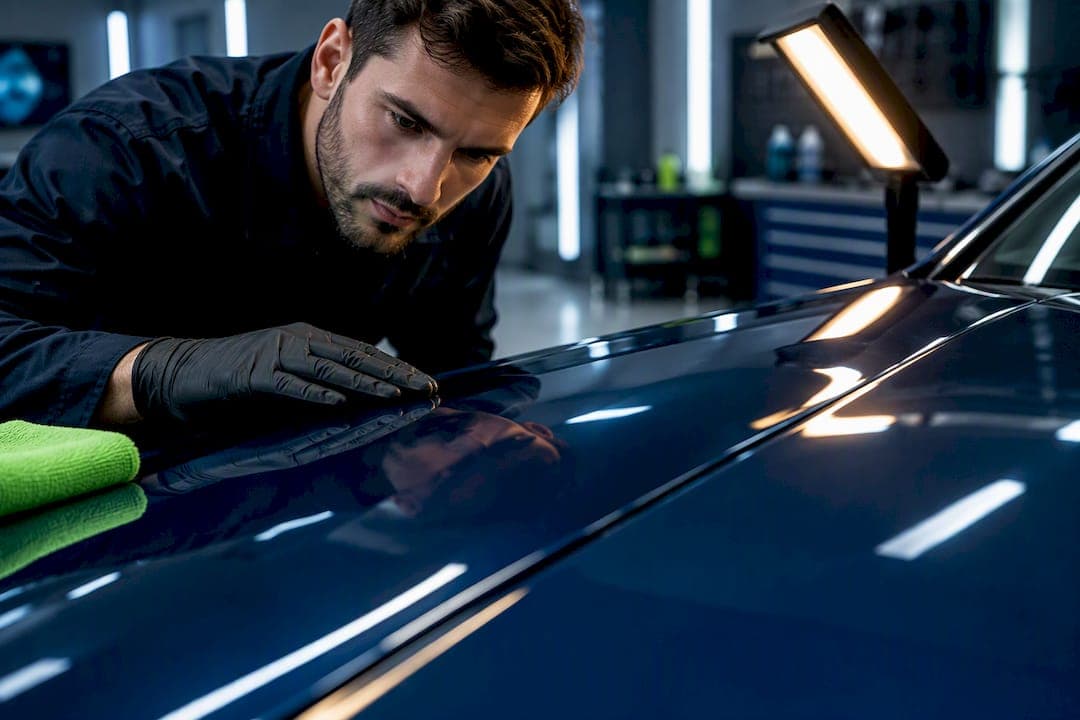
Most professional ceramic coatings are water-safe within 4 to 72 hours but can take up to 2 to 3 weeks to reach full hardness. Follow the product's technical data sheet rather than forum advice, and keep the vehicle away from rain, sprinklers, and dust during that initial window.
TL;DR:
- Proper application requires a controlled environment; outdoor or dusty conditions can extend cure times and compromise durability.
- The full chemical curing process can take up to 2 to 3 weeks, but light water exposure is tolerated after about 4 hours for professional coatings.
- Multiple coats offer limited additional durability beyond two or three layers, with boosters better suited for maintenance after 24 to 48 hours.
- Fixing high spots or haze should be done within the first 72 hours using gentle wiping; beyond that, professional polishing is advisable.
- Warranties often depend on correct installation in climate-controlled, dust-free settings, making proper site selection crucial for long-term performance.
Table of Contents
- Flash time, dry-to-touch, and full cure explained
- What you can actually do at each cure milestone
- Why temperature, humidity, and product chemistry change the timeline
- Your first 24 hours and next 14 days, step by step
- How many coats you actually need
- Spotting and fixing high spots during the cure window
- Why installation environment shapes the whole cure process
- Getting your coating installed and cured right the first time
- Sources
- FAQ
Flash time, dry-to-touch, and full cure explained
Coating manufacturers use specific language that gets flattened into vague advice online, so it helps to know what each term actually means. Flash time is how long the product needs to level out and begin bonding before you wipe away the excess, and rushing this step is what causes high spots and streaking. 3M's application SOP calls for a 2 to 5-minute dwell period specifically for leveling before removal.
Dry-to-touch is a different milestone entirely. A panel can feel dry and look glossy within hours while the chemistry underneath is still cross-linking, and that distinction matters because wiping away surface residue does not mean the film has fully bonded to the paint. Full cure refers to the point where the coating reaches its maximum hardness and chemical resistance, which is a separate and later stage from the practical "safe to expose" window most owners actually care about.
3M's technical data sheet lists a functional cure of about 4 hours for some of its automotive coatings, but the accompanying SOP describes separate dwell and interval steps that shape how that number applies in practice.
What you can actually do at each cure milestone
The first few hours are the least forgiving part of the process. 3M's SOP recommends keeping the vehicle away from water for at least 4 hours after application, and many installers extend that no-touch period further depending on ambient conditions.
Water-safe windows generally fall between 4 and 72 hours, and the spread exists because spray coatings, wipe-on professional coatings, and graphene-enhanced formulas all cure at different rates. Adam's Polishes notes that its spray coatings flash in 1 to 2 minutes and are typically safe from light exposure after about 3 to 4 hours, a much faster schedule than professional wipe-on systems.

Full cure, the point of maximum hardness, can take up to 2 to 3 weeks depending on conditions. This does not mean the car is unusable during that stretch. It means the film is still gaining hardness and chemical resistance, so gentle handling during those two to three weeks pays off in long-term durability.
Why temperature, humidity, and product chemistry change the timeline
Cure time is a chemical reaction, and reactions respond to their environment. Cold garages slow the cross-linking process, while warm, dry conditions speed it up, which is one reason installers favor controlled indoor bays over driveway applications. Humidity works against cure by keeping moisture on the surface longer than the coating chemistry wants.

Airflow matters almost as much as temperature. Stagnant air traps solvent vapor near the panel and slows the coating's ability to fully flash off, which is part of why climate-controlled, filtered facilities produce more consistent results than an open driveway.
A few other variables shift the timeline in predictable ways:
- Film thickness: a heavier application takes longer to cross-link all the way through than a thin, even layer.
- Additional coats: stacking layers without adequate spacing extends the overall cure because each layer needs its own bonding time.
- Product chemistry: spray coatings, wipe-on coatings, and graphene-enhanced formulas each carry different cure profiles, so a schedule that works for one can under-cure or over-cure another.
A 2026 aftercare guide for ceramic coatings identifies the first 24 hours as the most weather-sensitive period, with active curing continuing through the following two weeks. That distinction is the reason installers tell owners to treat week one and week two differently rather than applying one blanket rule.
Your first 24 hours and next 14 days, step by step
Coating care follows a clear sequence, and skipping steps is what leads to swirl marks or a hazy finish.
- Inspect every panel under angled light immediately after application to catch high spots while the product is still workable.
- Keep the vehicle indoors or covered for at least the manufacturer's stated no-water window, generally 4 hours or more.
- Avoid rain, sprinklers, and automatic washes for the first 24 hours, a restriction confirmed in current aftercare guidance.
- Drive gently and avoid highway debris during the first few days while the film is still gaining hardness.
- Limit washing to light rinses for the next two weeks, then resume normal maintenance and washing to protect coating performance.
Pro Tip: If you must move the car before the no-water window closes, park it nose-in under cover rather than risk a sprinkler zone or open sky.
How many coats you actually need
Layering adds durability up to a point, then stops helping. Adam's Graphene Ceramic Coating guidance recommends letting each layer level and cure before adding the next, with boosters appropriate only after 24 to 48 hours rather than immediately.
3M's SOP specifies 30 to 60 minutes between coats for its professional system, a much shorter interval than consumer graphene products because the chemistry and application method differ. Rushing that spacing risks trapping solvent between layers, which can cause cloudiness or uneven bonding.
Most coatings show diminishing returns after two to three layers. At that point, a maintenance booster spray protects the existing film more effectively than another full coat, and it avoids the buildup that makes a finish look thick or plasticky instead of glassy.
Spotting and fixing high spots during the cure window
High spots and light haze are common enough that they are not automatically a failed job, but timing determines how easy they are to fix. Checking panels from multiple angles under bright light reveals uneven patches that flat, head-on inspection misses.
- Within the first 24 to 72 hours, a fresh microfiber cloth and gentle wiping can often level minor high spots before they fully harden.
- After deeper cross-linking sets in, mechanical polishing becomes riskier and can damage or strip the coating instead of correcting it.
- Replacing applicator cloths often during application prevents the smearing that causes high spots in the first place.
For a full walkthrough of correction techniques by cure stage, see our guide on fixing ceramic coating high spots. Anything beyond light leveling is worth handing to a professional, since aggressive correction can void a coating's warranty terms outlined in what a ceramic coating warranty actually covers.
Why installation environment shapes the whole cure process
Cure time is not just a chemistry problem, it is an environment problem, and that is the part owners rarely control at home. A climate-controlled, dust-free bay keeps temperature and airflow consistent from the first panel to the last, which is a large part of why professional results tend to hold up more evenly than a garage or driveway job exposed to shifting weather and blowing debris.
Manufacturer-backed warranties typically assume the coating was installed and cured under the conditions the technical data sheet describes, so a controlled facility is not just about finish quality, it is what keeps a warranty valid. Professional coating applications performed in controlled environments benefit from careful attention to details such as cloth changes between panels and angle checks before a car leaves the bay.
Getting your coating installed and cured right the first time
Skipping the guesswork around cure windows starts with getting the installation right in the first place. Every ceramic coating should be applied in a climate-controlled, dust-free environment so that the leveling, dwell, and cure conditions match what the manufacturer's data sheet calls for instead of depending on weather conditions. Manufacturer-authorized warranties typically assume proper cure conditions.
If you're comparing coating tiers or wondering how durability lines up with cost, our breakdown of ceramic coating cost and service tiers covers what each option is built for. When you're ready to book, visit our ceramic coating page to schedule an installation and get a cure timeline suited to your specific vehicle and coating choice.
Sources
- 3M ceramic coating technical data sheet (TDS) — cure time ~4 hours
- 3M ceramic coating application SOP — dwell and leveling guidance
- Adam's Graphene Ceramic Coating product page
- Ceramic coating care guide (2026) — first 24 hours and next 14 days aftercare
FAQ
How long after ceramic coating can I drive?
You can typically drive after the manufacturer's no-water window closes, often around 4 hours for professional wipe-on coatings, though gentle driving and avoiding highway debris for the first few days is still wise. Spray coatings may allow lighter exposure sooner, around 3 to 4 hours per Adam's Polishes guidance.
Can ceramic coating get wet after 24 hours?
Light rain contact is generally tolerated after 24 hours, but a 2026 aftercare guide recommends limiting washing and heavy water contact for the following two weeks while the coating continues hardening. Full car washes and pressure washing are best saved until that two-week window closes.
How long do you let ceramic coating sit before wiping?
Most professional coatings need a 2 to 5 minute dwell time to level before wiping away the excess, according to 3M's application SOP. Wiping too early causes streaking, while waiting too long can leave cured residue that is difficult to remove without marring the finish.
What is the downside of ceramic coating?
Ceramic coating requires a vulnerable curing period, generally 24 hours to 2 weeks, during which rain, automatic washes, and rough handling can affect the finish. It also does not prevent physical damage like rock chips or scratches, since it protects against chemical and UV exposure rather than impact.
— Jake