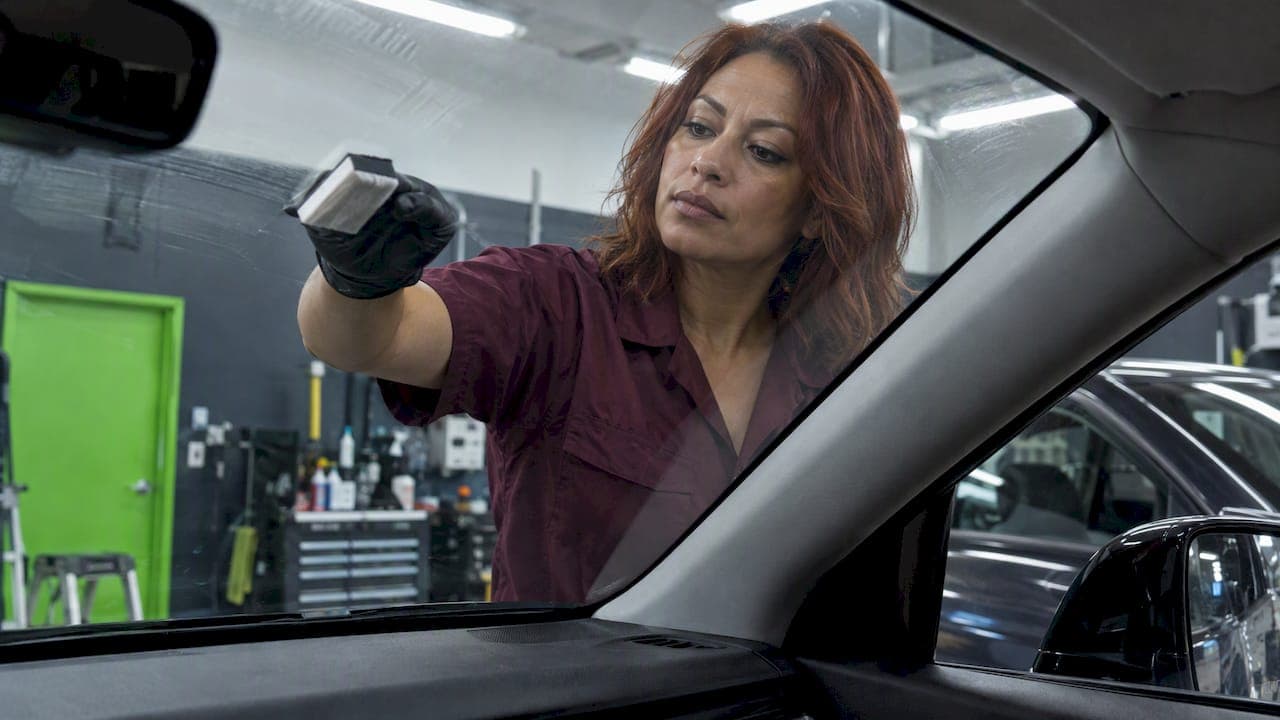
A ceramic glass coating is a thin, clear, water-repellent layer that bonds to your windshield and windows. It makes rain bead and roll off, makes bugs and grime easier to wipe away, and helps you see better in wet weather. It does not make glass unbreakable, fill scratches, or replace your wipers. Most coatings last months on the part of the windshield your wipers sweep and a year or more elsewhere, and the result depends heavily on how clean the glass is before application.
Below: how the coating works, what to expect, what can go wrong, how it affects wipers, how long it lasts, what it costs, and how to decide if it's worth doing on your car.
TL;DR
- Glass coatings are silane-based layers that bond to the silica in the glass and repel water, which improves visibility in rain and makes cleaning easier.
- They don't repair chips, scratches, pitting or etching, and wipers are still essential.
- Expect roughly a year or 10,000 miles on a windshield and up to three years on side windows, with the wiper arc wearing out first.
- Poor prep or sloppy leveling causes haze, streaks and high spots, so controlled conditions matter more than the brand on the bottle.
- Wiper chatter after coating is usually residue or worn blades, and it's fixable.
Table of Contents
- What ceramic glass coating is
- What a glass coating does for you
- What it does not do
- How the application should go
- The downsides, honestly
- Wipers and coated glass
- How long it lasts
- Cost and whether it's worth it
- Should you do it yourself?
- Our perspective
- Protect the whole car, not just the glass
- Care tips for coated glass
- FAQ
- Sources
What ceramic glass coating is
The name sounds more exotic than the chemistry. Glass is mostly silica. A glass coating is a thin, silane-based layer that bonds directly to the silica in automotive glass, forming silicon-to-oxygen-to-silicon links. That bond is what gives the coating its water repellency over the long term, rather than the slick-but-temporary feel of a rain-repellent spray.
The result is a hydrophobic surface. Water doesn't spread into a sheet; it forms tight beads. At driving speed, airflow pushes those beads up and off the glass, which is why people describe coated windshields as clearer in a downpour.
Two points that trip people up:
- Glass coatings are not paint coatings. The chemistry, the leveling and the curing are different. A product should only go on a windshield when its label specifically permits glass use. Don't assume a paint coating is suitable for glass.
- "Ceramic" is a marketing label for a family of products. A coating's real value comes from its formulation and from the quality of the application, not from the word on the packaging.
What a glass coating does for you
Better visibility in wet weather
This is the main benefit. Windshield protection products improve wet-weather vision and make bugs and other contaminants easier to clean. In the San Fernando Valley, where we get few rainy days but plenty of dust, pollen and bug splatter on freeway runs, the cleaning benefit often shows up more than the rain benefit. When it does rain, the first storm after months of dry weather lifts oil and dust off the road and smears it across untreated glass. Coated glass resists that smearing.

Easier cleaning
Contaminants have a harder time gripping a slick surface. Bug residue, bird droppings and road film release with less effort and less scrubbing, which also means fewer micro-scratches from rubbing hard on dry glass.
Less water-spot buildup
Hard water spots form when droplets dry on glass and leave minerals behind. A coated surface sheds water instead of letting it sit, so spotting is reduced, though not eliminated if you let sprinkler water bake on in the sun.
What it does not do
Be skeptical of any promise beyond the above. Glass coatings do not fill scratches, remove existing etching, fix pitting, or make a chip safe, and wipers remain essential in low-speed rain and heavy storms. Beads need airflow to leave the glass, so at a stoplight or in slow traffic you'll still use your wipers.
On impact protection, the picture is mixed. Anti-chip coatings and films can reduce scratches and stone chips, but larger stones at higher speeds may still cause damage. A hydrophobic coating alone is not a chip-prevention product. If your goal is to stop rock damage on the paint, that's a job for paint protection film. If your goal is heat and UV control through the glass, that's a job for window tint. Glass coating is about clarity and cleanability.

How the application should go
The coating itself is only half the story. The other half is the prep, and it's where most failures start. Here is the process a careful installer follows.
- Wash and decontaminate. Wash the glass, then remove bonded contamination. Many installers use a clay bar and an isopropyl alcohol wipe to leave a residue-free surface.
- Polish out water spots. Thorough cleaning and polishing to remove existing water spots is essential. A coating locks in whatever is on the glass, including mineral deposits, so skipping this step shows later as permanent blemishes under the film.
- Control the environment. Application calls for a controlled environment and moderate temperatures, roughly 60°F to 80°F, plus precise leveling within minutes to avoid haze and streaks. One manufacturer application guide calls for working above 40°F at the very least. Direct sun and wind flash the product off before it can be leveled.
- Apply in small sections. Work in small areas, using a cross-hatch pattern, so every inch gets even coverage.
- Level on time. Wet-buff within a short window, typically 1 to 5 minutes depending on the product, then dry-buff until the surface is smooth and clear. Miss the window and you get high spots.
- Cure. Keep the glass dry. Manufacturer guidance for some products says no washing for 2 to 4 hours; other instructions advise staying away from water for at least 48 hours. Follow the instructions for the specific product used.
This is why a shaded driveway with a bottle from the internet gives such uneven results. Dust, temperature swings and rushed leveling are the enemy. It's also why we do coating work inside a climate-controlled, dust-free facility in Van Nuys. If you want a deeper look at the paint side of this, read our guide to how ceramic coating durability holds up in real life.
The downsides, honestly
Haze, distortion and high spots. Improper application can leave haze, distortion or hard-to-remove high spots. On a windshield, that's not just cosmetic: glare from sunlight or headlights at night becomes a safety issue. If you see it, go back to a professional rather than trying to polish it yourself with aggressive compounds.
It's a consumable. Windshield protection products require repeat spending, and coatings need meticulous application in a controlled environment. Unlike paint coatings that people re-evaluate every few years, the windshield wears quickly because the wipers physically scrub it.
Maintenance habits matter. Keep blades clean, use them with washer fluid, and avoid certain chemicals and high-pressure washing. Avoid strong alkaline pre-soaks and spinning brushes, and never run wipers across a dry, dusty windshield.
Wipers and coated glass
This is the most common complaint after a windshield coating, so it deserves its own section.
A fresh coating can make wipers stutter or squeak, and if it persists, hardened blades are usually the cause. NHTSA has published a technical service bulletin noting that water-repellent nano-particle coating residue can cause wiper squeaking or chatter. The same bulletin lists other causes of noise or poor wiping: contamination, worn or damaged blades, and an incorrect wiper-arm angle. Its advice includes cleaning the windshield and replacing blades in specified cases.
Practical steps:
- Clean the blade edges with a lint-free cloth and washer fluid or isopropyl alcohol before and after coating.
- If chatter continues after a few days of driving, replace the blades. Old rubber that has hardened in the Southern California sun is the usual suspect. If you're not sure which kind to buy, this overview of the types of windshield wipers explains the differences between conventional, beam and hybrid designs.
- Don't wait for the blades to fail. Worn blades that streak are more than an annoyance: AAA says streaking blades could interfere with the performance of driver assistance systems, which rely on cameras looking through the windshield. If you drive a Tesla or any camera-based ADAS car, a clean field of view is part of how the car sees.
- Replacing blades is a quick job, and there are mobile options in the area, such as wiper blade replacement in Los Angeles that can come to you.
Some modern blades also use ceramic-coated silicone compounds designed to reduce friction and noise, which can help on freshly coated glass.
How long it lasts
AutoTrader reports that glass coatings last about 1 year or 10,000 miles on windshields and up to 3 years or 30,000 miles on side windows. Wiper use and road debris shorten the windshield's life, while climate, wash frequency and surface prep affect longevity everywhere. Another source puts the wiper arc at 3 to 8 months, and a year or more outside it.
What that means in practice:
| Glass area | Typical lifespan | What shortens it |
|---|---|---|
| Windshield (wiper arc) | About 3 to 12 months | Wiper friction, grit, dry wiping |
| Windshield (outside the arc) | A year or more | Harsh chemicals, hard water |
| Side windows, rear glass | Up to about 3 years | Abrasive cleaners, poor prep |
The lifespan ranges come from published guidance on typical use. Your own driving, parking and washing habits move them in either direction. Freeway commuters with lots of bugs and grit will see the shorter end on the windshield.
Cost and whether it's worth it
Published price data for glass alone is thin. As a reference point for the whole category, Automoblog's 2025 review says a professional ceramic coating may cost $1,000 to $2,000, while DIY kits cost less than $100. That range is for full-vehicle paint coating work, not glass, so treat it as context rather than a glass quote. Glass is a smaller job and priced accordingly, and it varies by shop, vehicle size and how many panes are included. We don't publish a flat glass price because it depends on the vehicle; ask for a written quote.
For a fuller breakdown of how coating is priced, see our guide to ceramic coating cost and our practical take on whether ceramic coating is worth it.
It tends to be worth it if:
- You drive a lot at night or in rain and want less glare and faster water clearing.
- You park outside and fight bug, sap or hard-water spots.
- You'd rather pay for a clean professional application than risk hazing your own windshield.
It's probably not worth it if:
- Your windshield already has deep wiper marks, pitting or etching. The coating won't hide them and can make glare more noticeable.
- You rarely drive in wet weather and wash the car infrequently anyway.
- You want chip protection. A coating isn't designed for that.
Should you do it yourself?
DIY kits exist and some people get fine results on side windows, where the stakes are lower and wipers don't scrub. The risks sit mostly on the windshield: missed leveling windows, high spots and residue that makes wipers chatter. If you go the DIY route, use only a product labeled for glass, work in shade at moderate temperatures, and follow the buffing and cure times to the minute.
If you'd rather not gamble on your primary field of view, a professional application in a controlled space takes most of that risk out.
Our perspective
We protect a lot of cars in the San Fernando Valley, and the glass question comes up most often from two kinds of owners: Tesla drivers who want a clear view for their cameras and sensors, and commuters tired of scrubbing bugs off the windshield every week.
Our view is simple. Coating glass is a good idea when it's treated as a visibility and cleaning upgrade, not a shield. We would rather tell you what it won't do than sell it as armor. The work lives or dies on prep and environment, which is why we do installs in a climate-controlled, dust-free facility. Dust and temperature swings ruin glass work faster than anything else.
On Teslas and other EVs, we pay close attention to the sensors and camera housings around the glass, because zero interference is the standard we hold ourselves to. And if your wipers are tired, fix them first. No coating compensates for hardened blades.
We'd rather do fewer jobs well than promise the moon. Ask us what makes sense for your vehicle and your driving, even if the honest answer is "not yet."
— Jake
Protect the whole car, not just the glass
If you're already thinking about coating, it often makes sense to look at the full picture. At Tint & Wraps Customs in Van Nuys, we offer ceramic coating in 1-year, 5-year and lifetime options, backed by manufacturer-authorized warranties, plus window tinting in carbon and ceramic films for UV and heat control. Tell us what you want out of the glass and we'll recommend the right combination for your vehicle.

If you're curious how a coating is covered afterward, read about what a ceramic coating warranty actually covers and the maintenance habits that keep a warranty valid.
Care tips for coated glass
- Wash gently. Use a pH-neutral shampoo and a clean microfiber mitt. Avoid strong alkaline pre-soaks and spinning brushes.
- Skip pressure close-up. High-pressure washing aimed at glass edges can shorten coating life.
- Use washer fluid. Never run wipers on a dry, dusty windshield.
- Clean the blades. Wipe the edges every few weeks.
- Replace blades on schedule. Don't wait until they streak.
- Wait before washing. Follow the cure time given by your installer.
FAQ
Is ceramic coating on glass worth it?
For most daily drivers who face rain, bugs or night glare, yes, as a visibility and cleaning upgrade. It isn't worth it as chip protection, and it won't help glass that is already pitted or etched. Weigh the cost against the 3-to-12-month windshield lifespan and the fact that it's a repeat expense.
Can I put a ceramic coating on my windshield?
Yes, as long as the product is labeled for glass. Paint coatings shouldn't be used on windshields. The glass has to be thoroughly decontaminated and polished first, and the coating must be leveled within minutes to avoid haze and streaks.
Will it make my wipers squeak?
Sometimes, briefly. Residue from a new coating can cause chatter, and so can old or contaminated blades. Clean the windshield and blade edges first, and replace hardened blades if the noise persists.
How long does a glass coating last?
Expect about a year or 10,000 miles on a windshield and up to three years or 30,000 miles on side windows. The wiper arc wears fastest, and washing habits, climate and prep quality change the numbers.
What are the downsides?
Poor application can leave haze, distortion or high spots, and the coating is a consumable you'll reapply. It also doesn't fix scratches, chips or etching. Using a professional in a controlled environment lowers the risk of the first problem.
Sources
- Ceramic Coating for Windshields: Prep, Cure and Lifespan
- Windshield protection: is it worth the money?
- NHTSA technical service bulletin on windshield wiper noise and poor wiping
- AAA: Vehicle safety systems in bad weather
- How Long Does Ceramic Coating Last? (Autotrader)
- Best Ceramic Coatings (Automoblog)