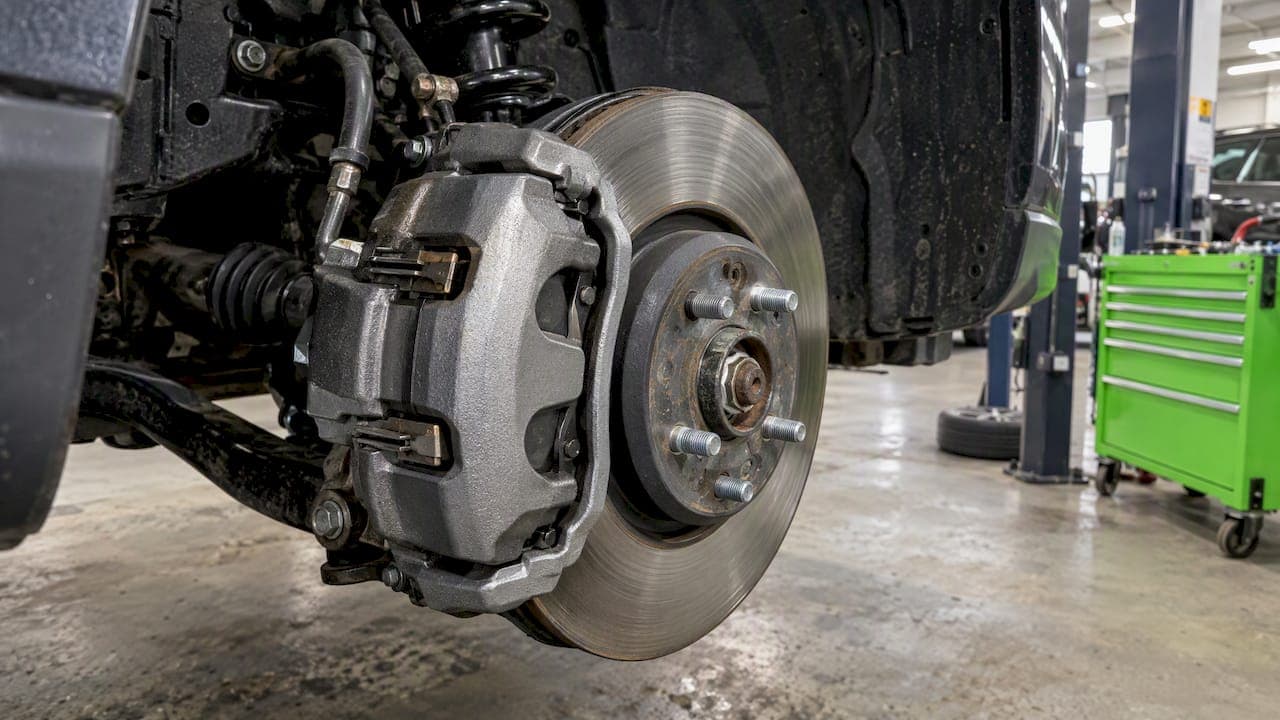
Caliper ceramic coating is a cosmetic and cleaning treatment for the visible outside of your brake calipers. It helps the finish resist brake dust, road grime and staining, and it makes the calipers easier to wash. It does not make your brakes stop better, and it does not belong on pads, rotors or any moving brake part. Done well, it is a one-afternoon job for a shop with the right prep process. Done badly, it flakes off in a few months or, worse, contaminates something that matters for safety.
This guide walks through what the coating is, the safe work area, how a proper job goes, how it compares with caliper paint, and what to ask before you book. We are Tint & Wraps Customs in Van Nuys, CA, and we do this work on cars and Teslas across the San Fernando Valley, so we will tell you where we think shortcuts hurt.
TL;DR
- Ceramic coating on calipers is cosmetic: it resists brake dust and staining and makes cleaning easier. It is not a brake performance upgrade.
- It goes only on the visible outer housing. Never on friction surfaces (pads, rotors) or internal parts such as pistons and seals.
- Prep decides the result. Calipers must be cleaned, decontaminated and dry before any coating goes on, or it will not bond.
- This is a shop job, not a weekend spray-can project. Brake contamination is a safety risk.
- If your calipers are faded, rusty or you want a new color, caliper painting is often the better first step, with a protective coating on top.
Table of Contents
- What caliper ceramic coating actually is
- The safe work area: where the coating goes and where it never goes
- How a proper caliper coating job goes
- Ceramic coating or caliper paint: which one do you need?
- Does a Tesla or EV need caliper coating?
- Perspective: how we think about it
- What it costs and what affects the quote
- Questions to ask any shop before you book
- Aftercare and maintenance
- Why not do it yourself?
- Promo: caliper work at Tint & Wraps Customs
- FAQ
- Sources
What caliper ceramic coating actually is
Caliper coatings are liquid, silica-based or ceramic-resin products that cure into a hard, slick layer on the surface. The point is chemical resistance and a smooth finish that brake dust has a hard time clinging to. The same idea is behind coatings on paint and wheels, which we cover in our guide to wheel ceramic coating.
Calipers are a harder environment than a wheel barrel or a hood. They sit right next to the rotor, they see repeated heat cycles every time you brake, and they collect fine metallic dust. So a product made for paint is the wrong tool. Manufacturers of dedicated caliper products describe ceramic-resin formulas rated for temperatures around 500°C, as in this caliper enamel data sheet, and standard automotive paint or interior coatings are not built for that kind of thermal cycling.
Two misconceptions come up constantly:
- "It insulates the caliper from heat." Not in any meaningful way. The job of a professional caliper coating is chemical resistance and easier cleaning, not acting as a thermal barrier. A heat rating only tells you the coating will survive the temperatures, not that it will protect the brake system from them.
- "It improves braking." It does not. Ceramic coating is an exterior finish. It is no substitute for mechanical maintenance, and it is not a performance treatment.
The safe work area: where the coating goes and where it never goes
This is the part most online threads gloss over, and it is the part that matters.
Safe to coat: the visible, painted or finished outer housing of the caliper, once it is properly cleaned and prepared.
Never coat or let any product reach:
- Brake pads and rotor friction surfaces
- Pistons, dust boots and seals
- Slide pins and the pad contact points that need approved lubricant
- Anything that moves or rubs
Contamination on a friction surface can impair braking. That is why we tell owners the same thing every time: do not treat this as a DIY rattle-can job. Wheels come off, parts get masked, and the coating is applied only where it belongs.
A related point is lubricant. Brake grease is meant only for specific contact points such as slide pins and pad slides, and it must be the type the manufacturer specifies. Tesla's own service documentation for cleaning and lubricating caliper pad slides shows how specific the instructions are, including a change to a particular synthetic lubricant in 2024. More is not better. Over-application of any lubricant attracts debris and causes its own problems, and a coating job is not the time to improvise with whatever grease is on the shelf.
One more caution from the Tesla service manual: its caliper replacement procedure warns that brake fluid dissolves paint, so spills must be washed off painted surfaces immediately. If your calipers have been serviced recently, tell the shop, because fluid residue is exactly what prevents a coating from bonding.
How a proper caliper coating job goes
Exact steps vary by product and vehicle, but a job done right follows this order.
- Inspection. The shop checks the caliper finish. Peeling paint, heavy corrosion or pitting changes the plan. Coating over a failing surface just seals in the problem.
- Wheel removal. You cannot do a clean job through the spokes. The wheels come off and the car is supported safely.
- Mechanical cleaning and decontamination. Brake dust, corrosion and old residue are removed. Steam or chemical cleaners strip oils and film. Spraying over dirty or pitted surfaces leads to poor adhesion and flaking.
- Masking. Pads, rotor faces, pistons, seals and bleeder areas are protected so nothing reaches them.
- Application. The coating goes on in thin, even coats, only on the exterior housing.
- Cure. The coating needs time to set before it sees heat and water. Your installer should tell you how long to keep the car dry and how soon you can drive normally.
- Reassembly and check. Wheels go back on to spec and the work area is checked for any overspray.
The environment matters too. Dust that settles into a curing coating becomes a permanent bump in the finish. That is one reason we do our work inside a climate-controlled, dust-free facility instead of an open bay.
Ceramic coating or caliper paint: which one do you need?
People search "caliper ceramic coating" when they often want one of two outcomes: keep clean calipers clean, or change how the calipers look. Those are different jobs.
| Situation | Best starting point |
|---|---|
| New or like-new calipers with the factory finish intact | Ceramic coating to resist dust and ease cleaning |
| Faded, stained or lightly rusted calipers | Refinish first, then protect |
| You want red, yellow, gloss black or another color | Caliper painting, with a protective top layer |
| Brembo or other factory-finished performance calipers | Often only a cleaning-focused coating, if anything |
| Daily-driven EV with minimal brake dust | Coating is optional; color is the main reason to act |
A note on factory finishes: enthusiasts point out that high-performance systems already ship with sophisticated factory coatings, so a second coating there is mostly about easier cleaning, not necessity. That is an honest reason to skip it. If your calipers look fine and you do not mind washing them, you do not need it.
If you want color or a refinish, take a look at our wheel and caliper painting service. It sits alongside our ceramic coating work, so you can handle appearance and protection in the same visit.
Does a Tesla or EV need caliper coating?
Electric cars lean on regenerative braking, so the friction brakes work less than they do on a gas car. That means less brake dust in many cases, but also less heat cycling, which is one reason calipers can sit and corrode with surface rust if the car is driven gently and washed rarely. Coating can help calipers stay clean, but the bigger reason Tesla owners ask us about calipers is color, since the factory finish is plain.
We specialize in Tesla and EV installations, and our concern here is the same as for every other service: fit and finish without interfering with anything on the car. For calipers, that means careful masking and working only on the outer housing. Before any brake-adjacent work on your car, check what your owner's manual and service documentation say about the specific parts involved.
Perspective: how we think about it
We do not sell caliper coating as magic. When a customer asks whether it will help their brakes, our answer is no, and that is why we frame it the way we do. It is a finish treatment, and its value is that the part of the car people see through their wheels stays sharp.

What we have learned from a lot of installs, and from protecting more than 1,000 vehicles overall, is that the order of operations decides the outcome. The prep takes longer than the application. A coating can only bond to a surface that is clean, dry and sound. So the first conversation we have is about what is on the caliper now, not about which product we will put on it.
We also push back on two requests. First, coating "everything back there" for heat or performance reasons. Second, rushing the job so the car is back the same hour. A calm, dust-free space and a cure period you respect will beat any shortcut. If we think your calipers need painting or refinishing first, we will say so even if it changes the quote.
— Jake
What it costs and what affects the quote
We do not publish a set price for caliper work, because the job depends on the car and the condition of the parts. What changes the quote:
- Condition of the calipers. Light dust is quick. Rust, pitting or flaking paint means refinishing before coating.
- Number of calipers and accessibility. Four calipers on a car with tight wheel designs take longer than two.
- Color change versus protection only. Painting adds steps.
- Bundling. Many owners combine caliper work with wheel coating or a full ceramic coating on the paint, which saves a second trip.
For a broader look at what shops charge and why, see our breakdown of brake caliper coating cost and shop quotes. It is general guidance, so treat it as a range of questions to bring to a quote, not a replacement for one.
Questions to ask any shop before you book
- Where exactly will the coating go, and how will you mask the pads, rotors, pistons and seals?
- What is your cleaning and decontamination process before application?
- Is the product rated for brake-caliper heat, or is it a paint or wheel product?
- How long is the cure time, and when can I drive and wash the car?
- What happens if the finish fails? Is there a warranty on this specific work?
- Do you work indoors in a controlled environment?
If an answer is vague on masking or prep, keep looking. Professional caliper treatment is mostly careful preparation, and a confident shop can describe it step by step.
Aftercare and maintenance
Once the coating has cured, keep it simple:
- Wash with a pH-neutral car shampoo and a soft brush or mitt. Avoid harsh wheel acids unless the coating manufacturer approves them.
- Rinse thoroughly so brake dust does not sit on the surface.
- Do not spray lubricants, degreasers or tire shine around the caliper.
- Keep brake fluid off the surface. If you or a mechanic spill any, rinse it with plenty of water right away.
- Follow the product's guidance on layering or topping with other products. General upkeep principles are similar to paint, and our guide on ceramic coating maintenance covers washing habits that protect warranty coverage.
Also keep an eye on the brakes themselves. A coating does nothing about worn rotors or pads. If you notice vibration, noise or a soft pedal, a coating is not the answer. A walkthrough on how to inspect brake rotors is a good place to start, and if anything looks off, see a certified brake technician before you coat anything.
Why not do it yourself?
You will see forum threads where people brush or spray a ceramic caliper paint at home, and some report it holding up. Our view is that the risk is lopsided. The best case is a decent-looking caliper. The worst case is contamination of a friction surface on a safety system. Professionals also have the tools to remove wheels safely, do the multi-stage cleaning and control dust during cure. If you still choose to do something yourself, stick to cleaning and leave brake components and lubricants to the manual.
Promo: caliper work at Tint & Wraps Customs
If you are in Van Nuys or anywhere in the San Fernando Valley and want your calipers cleaned, refinished or protected, our team does it inside a climate-controlled facility. Start with wheel and caliper painting if you want color, or our ceramic coating options, which include 1-year, 5-year and lifetime coatings, if protection is the priority. Tell us what you drive and what you want, and we will quote the job and tell you honestly whether it is worth doing. You can reach us through our main site.
FAQ
Is it safe to ceramic coat brake calipers?
Yes, when it is limited to the visible outer housing and done with proper masking. It becomes unsafe if product reaches pads, rotor surfaces, pistons or seals. That is why we recommend a professional install over a DIY attempt.
Can ceramic coating handle brake heat?
Products made for calipers are rated for the high temperatures of braking, with some data sheets listing figures around 500°C. Products meant for paint or wheels are not the same thing. Ask the installer which product is going on and what its rating is.
How long does caliper ceramic coating last?
It depends on the product, prep and how you drive and wash. Some professional systems quote around two years with proper maintenance, but we would not promise a number without knowing your car and the coating used. Ask your shop for the warranty terms on the specific product.
Will it make my brakes work better or run cooler?
No. It is a cosmetic and cleaning treatment. It does not change stopping power, and it is not a substitute for pad, rotor or fluid maintenance.
Should I paint my calipers or just coat them?
If the finish is damaged, faded or you want a new color, paint or refinish first and protect after. If the factory finish is fine and you want easier cleaning, a coating alone can be enough.
Sources
- RAPTOR Caliper Enamel data sheet
- Tesla service manual: brake caliper pad slides, cleaning and lubrication
- Tesla Model Y service manual: front brake caliper replacement