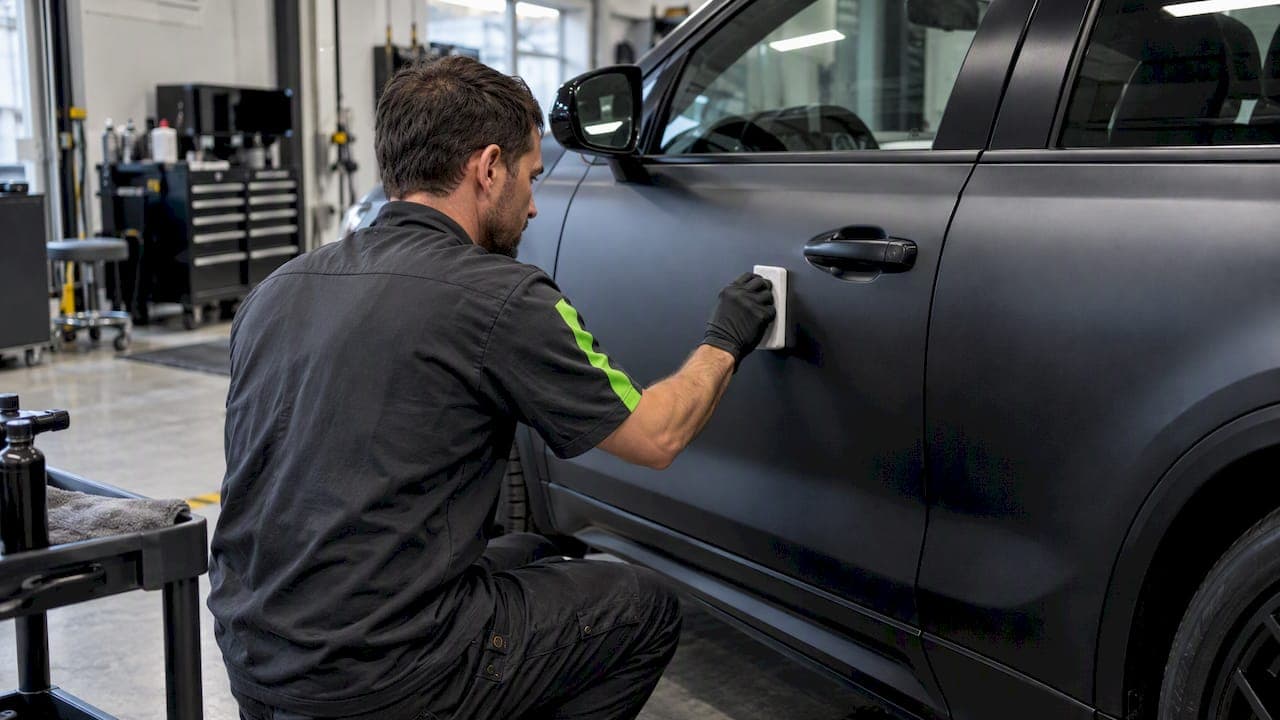
Yes, ceramic coating can protect matte paint, but only when the product is matte-specific or film-safe and formulated without gloss agents. The flat look survives only when both the chemistry and the application are right, since the wrong solids ratio or a rushed cure can leave permanent sheen. If you want certainty, professional installation with manufacturer-backed warranty coverage removes most of that guesswork.
TL;DR:
- For matte paint, choose a product labeled matte safe with no gloss agents; matte PPF and vinyl require flexible, film specific formulas.
- High solids coatings are harder to level evenly on matte surfaces, so ask about cure times, climate control, and warranty coverage before booking.
- Gloss out and abrasion can permanently alter matte texture; keep application and maintenance records, and avoid polish, wax, clay bars, and brush washes.
- Wash with pH neutral matte safe soap and a soft mitt, rinse weekly, deep wash monthly, and follow the coating maker’s maintenance schedule.
Table of Contents
- What makes a coating matte-safe
- Risks, warranty notes, and irreversible issues
- How to choose a matte-safe coating or service
- Application differences: DIY prep and why pros matter
- Maintenance and care after coating
- How a pro shop minimizes risk for matte coatings
- Is coating matte paint the right choice for you?
- Book a matte-safe ceramic coating with Tint & Wraps Customs
- FAQ
- Sources
- Primary sources and manufacturer care guides
What makes a coating matte-safe
Matte paint, matte paint protection film, and matte vinyl wraps all get their flat look the same way: a textured, light-scattering surface instead of the mirror-smooth layer under gloss paint. Anything that fills those micro-crevices or adds reflective polymers pushes the surface back toward shine, which is why standard high-gloss ceramic coatings are the wrong tool here. Gloss agents, certain silicones, and leveling fillers in conventional coatings are built to maximize reflection, and on a matte surface that same chemistry reads as unwanted shine, sometimes called gloss-out.
Matte-safe formulations avoid that problem in a few ways, including using specialized matting agents such as those found in ClearCoat Guard Protectant:
- Matting agents that keep the coating's own refractive index low instead of smoothing the surface to a glossy plane.
- Thin-film SiO2 layers applied at a controlled thickness so they protect without bridging the paint's texture.
- Polymer-modified formulas designed to cure flat rather than leveling into a glassy film.
- Polysilazane-based chemistries formulated for flexible films, since matte PPF and vinyl need a coating that moves with the film instead of cracking.
Matte PPF and matte vinyl wraps need their own film-specific, flexible coatings rather than a paint-oriented product, because a rigid paint coating can crack or peel on a surface designed to flex. FEYNLAB's matte ceramic coating is one example built specifically for matte, satin, and frozen finishes, using a matting agent so the coating adds UV and chemical resistance without adding sheen.
Risks, warranty notes, and irreversible issues
Two outcomes define the risk here: gloss-out, where the coating or a cleaning product adds reflective sheen to a surface that should stay flat, and burnishing, where mechanical abrasion (brushes, polish, clay bars) physically smooths the matte texture. Both are difficult to reverse and sometimes permanent, because matte paint cannot be polished back to its original texture the way gloss paint can.

Hyundai's owner's manual guidance explicitly warns against wax, polish, clay bars, abrasive chemicals, and automatic brush car washes on matte finishes, recommending hand-washing with pH-neutral, matte-safe soaps instead. Automaker documentation like this matters beyond the wash bay: using an unapproved product or process can affect how a dealer or manufacturer treats an appearance-related warranty claim, so keeping records of what coating was applied and how it was maintained is worth doing before a problem ever comes up.
How to choose a matte-safe coating or service
Picking the right product or shop comes down to a short set of checks rather than brand loyalty.
- Confirm the product is explicitly labeled "matte-safe" or "film-safe," and look for ingredient language like "no gloss agents" or "matting agent" rather than taking a label's word for it.
- Weigh durability against application risk: high-solids, ultra-dense SiO2 coatings last longer on gloss paint but are harder to level evenly on matte surfaces, and uneven leveling is what causes gloss-out.
- Ask any shop about climate-controlled application bays, dwell and cure times, and what warranty terms apply if the finish changes.
- Confirm what maintenance routine is required to keep that warranty valid, since skipping an approved wash method can void coverage even if the coating itself was applied correctly.
Pro Tip: Ask to see the coating's technical data sheet before booking. If it does not mention matte, satin, or film-safe use by name, treat it as a gloss product.
Application differences: DIY prep and why pros matter
Matte surfaces demand a prep sequence that avoids anything capable of altering texture. That means decontaminating the paint, using substrate-appropriate cleaners instead of standard clay bars where the product calls for it, and doing a solvent wipe only when the coating manufacturer specifies one. Polishing steps common in gloss detailing are off the table entirely, since any abrasive pass risks burnishing.
- Decontamination comes first, with iron removers and chemical cleaners chosen for matte compatibility rather than default gloss products.
- Leveling and dwell time are the hardest part of the job: high-solids coatings need even distribution within a tight working window, and professional detailers note that application skill, not brand, is the biggest factor in a successful outcome.
- Minor high spots can sometimes be managed with a manufacturer-approved leveling pass during the dwell window, but once a coating has cured unevenly, DIY correction usually makes it worse and a professional reapplication is the safer route.
Maintenance and care after coating
Keeping a coated matte finish flat long-term depends on consistent, gentle cleaning rather than anything that could burnish the surface.
- Wash with the two-bucket method, a pH-neutral matte-safe detergent, and a soft microfiber mitt, then dry immediately with a clean towel to prevent water spots.
- Treat stuck-on contamination with a soak-and-lift approach: saturate the spot with an approved solvent, let it soften, then lift gently rather than rubbing.
- Rinse weekly, deep-wash monthly, and apply any matte-safe maintenance spray on the schedule the coating manufacturer lists, similar to the upkeep routines detailed in our ceramic coating maintenance guide.
Never use polishes, waxes, automatic brush car washes, or abrasive pads on a coated matte finish. Genesis's matte paint care guide makes the same point for uncoated matte surfaces, noting that many common cleaners and mechanical washes can irreparably damage the finish, since appearance damage is not always covered under warranty.
Pro Tip: Keep a dedicated matte-safe soap and mitt set separate from anything used on gloss panels, wheels, or glass, so a gloss-rated product never ends up on the matte paint by accident.

How a pro shop minimizes risk for matte coatings
Ceramic coating installations are ideally done in a climate-controlled, dust-free facility, which matters most on matte work where uneven leveling or airborne contamination can cause gloss-out.
Is coating matte paint the right choice for you?
Matte coating makes the most sense for daily drivers, vehicles exposed to road grime and UV, and owners willing to follow a strict matte-safe wash routine. A garage-kept car with light use can reasonably skip it. Either way, go in with realistic expectations: the coating protects the surface, but it does not forgive skipped maintenance.
— Jake
Book a matte-safe ceramic coating with Tint & Wraps Customs
If you want your matte finish protected without guessing on chemistry, we apply matte-safe and film-safe ceramic coatings in a climate-controlled bay built to avoid the dust and temperature swings that cause uneven leveling. Our ceramic coating options include 1-Year, 5-Year, and Lifetime Coating tiers, and we also install paint protection film for owners who want film and coating working together on the same vehicle.

Reach out through our ceramic coating page to get a consultation and find the right tier for your matte finish.
FAQ
Can ceramic coating be done on matte paint?
Yes, as long as the product is specifically formulated as matte-safe or film-safe. A standard gloss ceramic coating will add sheen to matte paint and change its appearance permanently in most cases.
Does matte paint need ceramic coating?
Matte paint does not strictly need a coating, but it benefits from one because matte surfaces cannot be polished to remove contamination or minor marks the way gloss paint can. A matte-safe coating adds a protective layer without changing the flat look.
What is the best ceramic coating for matte paint?
There is no single best product, but coatings built specifically for matte, satin, or frozen finishes, such as FEYNLAB's matte ceramic coating, are designed to protect without adding gloss. For matte PPF or vinyl, a film-specific coating matched to the film manufacturer's approved list is the safer choice.
What are the downsides of matte car paint?
Matte paint cannot be polished to remove scratches, water spots, or stains, so damage that would buff out on gloss paint is often permanent. It also requires stricter care, including hand-washing with pH-neutral soaps and avoiding automatic brush car washes, polish, and wax entirely.
How do I know if my paint is real matte or just matte-look?
Factory matte paint typically comes with manufacturer documentation and specific care instructions in the owner's manual, while a matte-look finish is often a vinyl wrap or film applied over gloss paint. Checking the build sheet or owner's manual, or asking an installer to inspect the surface, is the most reliable way to tell.
Sources
- Hyundai owner’s manual — matte finish care
- Detailing Gear HQ — Ceramic coating on PPF & matte paint compatibility guide
Primary sources and manufacturer care guides
- Hyundai owner's manual, matte finish care
- Detailing Gear HQ, ceramic coating on PPF and matte paint compatibility guide
- FEYNLAB matte ceramic coating product page
- Genesis matte paint care guide