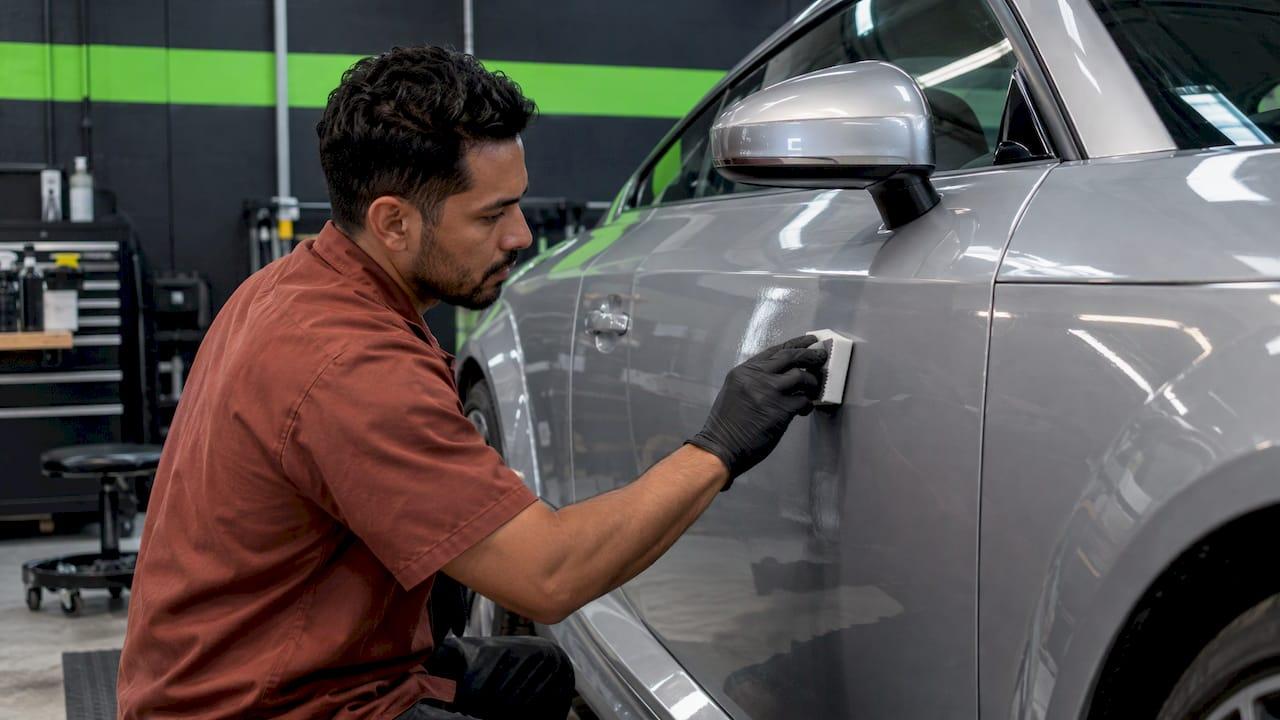
For most cars, one well-applied layer is the foundation and a second layer is a way to guarantee even coverage and a little extra durability. More than two or three rarely adds anything. Layer count is set by the product's chemistry, the prep work and the conditions in the room, not by a bigger number on a quote. That is why we apply coatings in a climate-controlled, dust-free facility in Van Nuys, and why our ceramic coating tiers (1-Year, 5-Year and Lifetime) are a better guide to what you are buying than a layer count alone.
TL;DR
- One properly applied layer is enough to earn the base warranty on many coatings. A second layer is common on high-wear areas and for even coverage.
- Stacking more layers does not multiply protection. Some makers say extra layers add hardness and thickness up to a limit, others say they add nothing.
- Timing between layers is short, usually one to three hours, because a layer that has fully set will reject the next one.
- A coating does not stop rock chips. Paint protection film does that job.
- Prep, temperature, humidity and a clean room decide the result more than the number of coats.
Table of Contents
- Why people ask about layers
- What manufacturers say about layer counts
- What a second layer actually adds
- Why more layers can backfire
- How long the coating sits before wiping
- Curing: when the layers actually finish
- What matters more than the layer count
- What wears a coating out
- How to decide what you need
- Our perspective
- Book a coating that is done right
- FAQ
- Sources
Why people ask about layers
A quote that says "one layer" from one shop and "three layers" from another looks like a price comparison. It is not. A layer is one pass of liquid coating that is applied, left to flash, and leveled. What it leaves behind depends on the formula, how much is applied, how fast it flashes, and how well the paint was prepared beforehand.
So the useful questions are: what does the coating maker specify, what does an extra layer add, and who controls the conditions during application. We will take them in that order.
What manufacturers say about layer counts
Makers disagree in small ways, which tells you the number is product-specific.
- One maker's official instructions state that a single layer is sufficient for its one-year warranty on clear-coated paint, and that extra layers can go on high-wear areas such as the hood and front bumper.
- A major industrial manufacturer's product page states that one full layer lasts up to 3 years and two full layers up to 5 years, with annual maintenance check-ups and a booster spray required to hold those terms. That page is for Canada, so check the terms that apply in the US.
- Another maker's help center says 1 to 2 layers are all that is needed and that stacking more adds no additional protection, with the second coat mainly making sure every panel is covered.
- A third maker's detailer manual says each additional coat increases thickness and hardness, with a maximum of three layers for that specific product.
Put together: one layer is the baseline, two is the common ceiling, and three is a product-specific limit. A number beyond that is marketing, not chemistry.
What a second layer actually adds
A second coat does three reasonable things:
- Coverage insurance. Hand application on a whole car leaves room for thin spots, especially around edges, door jambs and curved panels. A second pass closes them.
- Extra wear margin on exposed panels. Hoods, front bumpers, mirrors and the leading edge of the roof take the most abuse.
- A modest durability gain. Not double. Think "somewhat more," not "twice as long."
What it does not do is change the kind of protection. A coating is a hard, slick, hydrophobic layer that makes washing easier and helps resist chemical etching and UV. Another maker's own instructions note that a coating does not protect against rock chips or bugs and that paint protection film is the answer for debris. If that is your main worry, read our guide to ceramic coating and rock chip protection, and look at paint protection film, which we offer in Track Pack, Full Front and Full Body coverage.
Why more layers can backfire
Coatings bond to the surface chemically. Once a layer has set, the next one has nothing to grab and is rejected, so it sits on top and can leave streaks or high spots instead of adding protection. Apply the second layer too early and you can disturb the first. The practical window is narrow and product-specific.
Two timing points from manufacturer documentation:
- One maker says additional layers go on between one and three hours after the previous layer.
- Another specifies that at least one more coat can be applied after a minimum of one hour.
The same manual stresses that temperature and humidity are the two big factors: the hotter or more humid the room, the quicker the coating flashes and cures, and the first bonding window is only a few seconds. That is a big reason the installer's environment matters. A garage with open doors, blowing dust or swinging temperatures turns a simple two-layer job into guesswork.
How long the coating sits before wiping
Another common question is how long each layer rests before it is leveled. It depends on the product:
- One maker says to wait until the coating is about 75% dry, 15 to 20 minutes depending on humidity and temperature.
- An industrial manufacturer's application procedure has the installer work in 2 ft by 3 ft sections and let the coating dwell and level for 2 to 5 minutes before leveling with a clean microfiber cloth.
- A third product is wiped off immediately, within 10 to 30 seconds.
The spread, from seconds to 20 minutes, shows why there is no universal "layer routine." Someone has to know the specific product and read the room. That is a job for a trained installer, and it is one of the main reasons a coating performs the way the label says.
Curing: when the layers actually finish
A dry coating is not a cured coating. Manufacturer guidance says the car should stay indoors at least 12 hours after the last layer, the coating is fully dry after 24 hours, and full curing can take up to two to three weeks, with no detergent washing in the first 7 days. For a plain-language walk-through of what to do in the first days, see our post on ceramic coating cure times.

If you are also getting film, the order matters. Our article on ceramic coating over PPF explains the wait before washing.
What matters more than the layer count
When we look at why two coatings on two cars perform differently, the layer count is near the bottom of the list. The factors above it:
| Factor | Why it matters |
|---|---|
| Paint prep | A coating bonds to what is under it. Contamination and swirls get sealed in. |
| Room conditions | Temperature, humidity and dust change flash and cure times. |
| Even application | Thin spots and high spots both fail early. |
| Product tier and warranty | The warranty terms tell you what the maker stands behind. |
| Aftercare | Washing habits decide how long the surface keeps beading. |
Our own ceramic coating durability article goes deeper on what lab tests suggest versus real driving.
What wears a coating out
The layers you paid for are only as good as the care they get. Car and Driver's testing notes that abrasive washing, harsh or highly alkaline cleaners, and contaminants left on the paint (bird droppings, tree sap, hard-water deposits) wear a coating down, and that brush-style automatic washes leave fine scratches. The same testers advise against dish soap for routine washing and suggest a pH-neutral automotive shampoo with the coating maker's care instructions.
Mineral deposits deserve special attention. An industry repair association official reported that mineral deposits are the number one problem he sees: left too long they cannot be removed chemically and must be abraded off, which strips the coating along with them. In dry, hard-water areas like Southern California, rinse and dry promptly after washing and after sprinklers hit the car. Our post on water spots on ceramic coatings covers how to tell a surface spot from etching before anyone reaches for a polisher.

Slow, unnoticed damage is a theme across the whole car, from paint to the engine bay. The same habit of catching problems early applies to things like battery corrosion on a car.
How to decide what you need
Skip the layer count and use these questions:
- How long will you keep the car? A short lease and a car you plan to keep a decade call for different tiers.
- Do you want debris protection? Add film on the front end. A coating alone will not do it.
- Is it a Tesla or other EV? Coatings do not touch sensors, but a careful, clean installation on a car with cameras and radar trim is worth a shop that works on these cars every week.
- Where is it parked? Sun, sprinklers, trees and coastal air each change what the coating faces.
With those answers, the installer should tell you which tier and how many passes make sense for your car, in terms of the warranty you get.
Our perspective
We get the layer question constantly, and we answer it the same way each time: the number on the quote is the least interesting part of a coating job.
What we care about is the room, the prep and the product. We install in a climate-controlled, dust-free facility because flash and cure times move with temperature and humidity, and because dust landing in a wet coating is a defect you see forever. Our ceramic coating comes in 1-Year, 5-Year and Lifetime tiers, so you choose by how long you plan to keep the car and what protection you want, not by counting coats.
On Teslas and other EVs we work for a clean, factory-quality fit with zero sensor interference, and our installs are backed by manufacturer-authorized warranties. If you also want protection from rock chips, we pair coating with paint protection film, because each does a different job.
Jake
Book a coating that is done right
If you are choosing between tiers, our ceramic coating page shows the 1-Year, 5-Year and Lifetime options. We protect cars across the San Fernando Valley from our Van Nuys shop, and we have protected over 1,000 vehicles.
Tell us how you drive, where you park and how long you will keep the car, and we will recommend the tier that fits. If you also want film on the front end, window tint or a wrap, you can see everything we do on our main site.
FAQ
Can you layer ceramic coatings?
Yes, within the window the maker specifies. Typically that means a second coat one to three hours after the first, while the first is still receptive. After that the surface rejects new coating, so waiting longer does not help.
How many layers of ceramic coating are best?
One well-applied layer is the baseline and two is the common maximum. Makers' own documents range from "one is sufficient" to "up to three for this product." The tier and warranty you choose matter more than the count.
How long should you wait between layers?
It depends on the product. Published instructions give anywhere from a minimum of one hour to a window of one to three hours. Heat and humidity shorten it, which is why controlled conditions help.
Does a second layer make the coating last twice as long?
No. A second layer can add coverage, some thickness on certain products and a modest durability gain, but it does not double life. Prep, cure and washing habits have a bigger effect.
Do more layers protect against rock chips?
No. A coating is not designed to stop chips, and extra layers do not change that. Paint protection film is the product for impact protection.
Sources
- Original Ceramic instructions, one-layer warranty, timing and rock chip note
- 3M Canada ceramic coating product page
- Armor Shield IX layer guidance
- Certified detailer coatings manual
- 3M ceramic coating application procedure
- Car and Driver, Best Ceramic Coatings Tested
- Repairer Driven News, SCRS on ceramic coating misconceptions