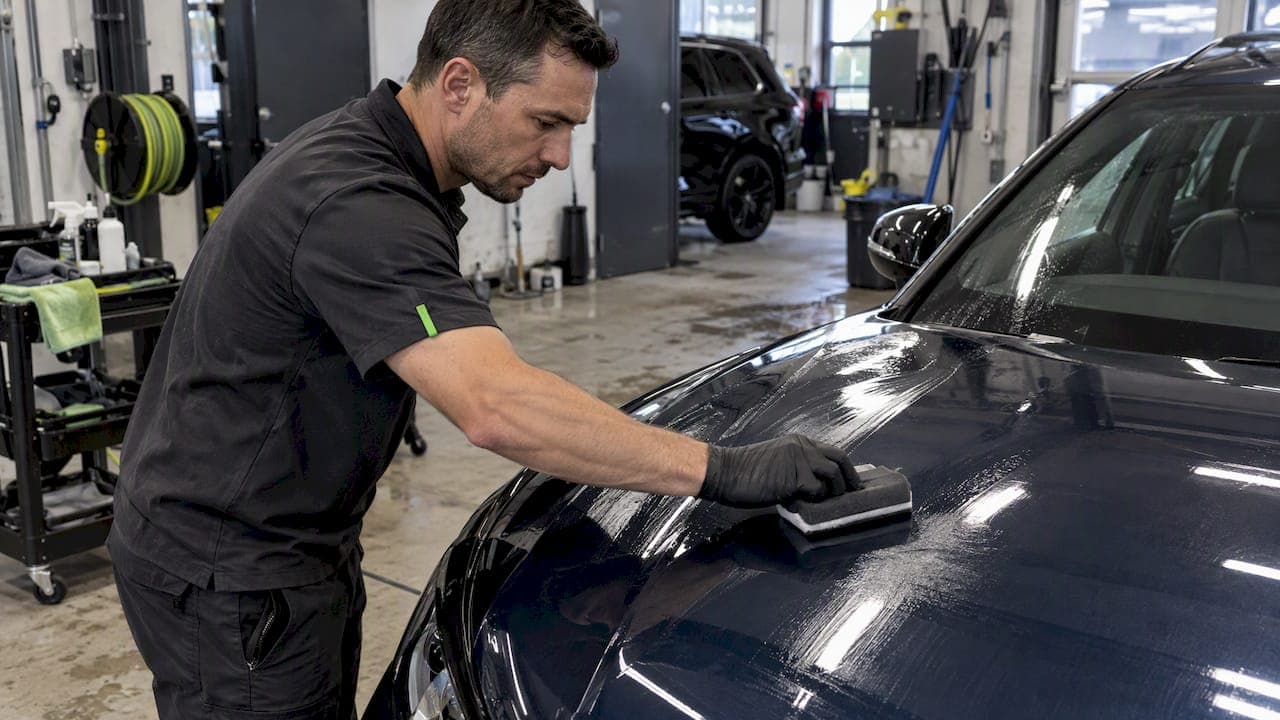
Yes, you can and generally should apply a compatible ceramic coating over properly installed paint protection film. Coat after the film goes on, never before, and choose a product tested or approved for that specific film. Correct sequencing, documented compatibility, and professional application protect your warranty and deliver the hydrophobic performance you're paying for.
TL;DR:
- Wait for the film to cure after installation; 3M advises waiting 72 hours before washing and one week before waxing.
- Check the film and coating pairing before booking, because some Scotchgard PPF Pro Series 200 combinations call for waiting 3 to 6 months after installation.
- Get the film and coating product identifiers, pairing specific cure interval, and warranty terms in writing; approval for similar products is not enough.
- After coating, use pH balanced soap and sprays approved by the manufacturer, while avoiding abrasive polishes, dyes, rubbing compounds, and generic waxes.
- Apply coating in small panels, change microfiber towels often, and inspect each section under varied lighting to catch high spots before curing.
Table of Contents
- Why Add Ceramic Coating on Top of PPF
- When and How to Apply Ceramic Coating Over PPF
- Compatibility and Warranty: What Manufacturers Actually Say
- Maintenance and Care for Ceramic-Coated PPF
- Why Professional Installation Matters
- A Straight Answer From Jake
- Protect Your Investment With Tint & Wraps Customs
- FAQ
- Sources
Why Add Ceramic Coating on Top of PPF
Paint protection film absorbs rock chips, road debris, and minor scrapes, but it does not make your paint easier to clean or more resistant to chemical staining on its own; learn more about what paint protection film is and how it works. A ceramic coating layered over the film changes that. It adds a slick, hydrophobic surface that sheds water, dust, and grime before they bond to the film.
That slickness translates into fewer washes and less scrubbing, which matters because scrubbing is exactly what shortens a film's good looks. A coating also adds a layer of chemical resistance against bird droppings, tree sap, acid rain, and road salt, which complements the physical, self-healing protection PPF already provides against impacts and scratches. Coating does not replace that self-healing property. It works alongside it.
- Hydrophobic surfaces reduce how often dirt and water spots cling to film
- Added chemical resistance helps against bird droppings, sap, and road salt
- Glossier finish with less micro-contamination buildup over time
- Coating adds surface-level chemical protection; it doesn't substitute for the film's impact resistance
Film with hydrophobic top-surface features, like Scotchgard PPF Pro Series 200, already resists water to a degree, and the right coating builds on that baseline rather than duplicating it. The combination tends to matter most for daily-driven vehicles exposed to road grime, for long-term owners who want to stretch the years between major details, and for electric vehicle owners concerned about sensor housings and cameras staying clean for accurate operation.
When and How to Apply Ceramic Coating Over PPF
Sequencing is not a matter of preference. Film manufacturers design PPF to bond directly to clean, bare paint, not to a pre-existing coating layer. According to the 3M Paint Protection Film Installation Guideline, paint should not carry a ceramic coating before film goes on, and any existing coating should be removed before installation. Coat the film after it's installed and cured, never the paint before the film arrives.
Timing after installation follows a few windows. 3M's maintenance guidance recommends waiting 72 hours before the first wash and one week before waxing. For certain film and coating pairings, the Scotchgard PPF Pro Series 200 technical data sheet recommends a longer window, up to 3 to 6 months, before applying some ceramic products to optimize hydrophobic performance.
- Confirm the film has fully cured and passed its no-wash and no-wax windows.
- Decontaminate the surface to remove wax, silicone residue, or polishing oils.
- Inspect film edges and seams for lifting or incomplete adhesion before coating.
- Apply coating to small panels, roughly 2 feet by 3 feet at a time, following a cross-hatch pattern.
- Let the product dwell for 2 to 5 minutes before leveling with a fresh microfiber towel.
- Inspect each panel under varied lighting angles to catch high spots before they cure.
- Allow the coating's full cure time before the first wash, per the product's instructions.
That panel-by-panel approach comes directly from the 3M Ceramic Coating Standard Operating Procedure, which calls for frequent cloth changes to prevent cured coating from scratching the surface during leveling. Skipping that step is one of the more common ways a rushed install ends up hazy. For a sense of how long a full PPF install itself takes before coating even begins, see our breakdown of install timelines.
Pro Tip: If you spot a cured high spot after coating, don't reach for heavy compound. Lighter, cure-stage-specific correction protects the film underneath.
Compatibility and Warranty: What Manufacturers Actually Say
Manufacturers define "compatibility" narrowly: a tested pairing of specific products, not just two chemically similar coatings that seem like they should work together. The 3M installation guideline frames warranty and performance as dependent on documented procedures and approved products, not general assumptions about what ceramic products typically do.
For certain Scotchgard film series, 3M lists specific ceramic products, including 3M Ceramic Coating and Ceramic Boost, as approved top-ups for extending hydrophobic performance. That level of specificity is worth asking for by name when you book an install.
- Ask your installer for the exact film SKU and the coating product and SKU being applied
- Request the documented cure interval for that specific pairing in writing
- Get the warranty terms in writing, not verbally described
- Avoid coating paint before film goes on, and skip unapproved cleaners or abrasive polishes on fresh film
Skipping these questions is how owners end up with a coating that voids a film warranty they never read closely. If you want to understand how PPF's protective role differs from a wrap's cosmetic one before deciding what to layer where, our comparison of PPF and vinyl wrap covers that distinction.
Maintenance and Care for Ceramic-Coated PPF
Once your film is coated, the care routine shifts slightly, but the early restrictions still apply. 3M recommends no washing for the first 72 hours and no waxing for one week after film installation, and those windows still matter even once a coating is scheduled to go on top later.
- Use pH-balanced car soap, never dish detergent or anything acidic
- Avoid abrasive polishes, dyes, and rubbing compounds, which 3M specifically warns against for film surfaces
- Reapply manufacturer-approved top-up sprays rather than generic waxes to maintain hydrophobic behavior
- Hand wash on a regular cadence rather than letting contaminants sit and bond to the surface
- Address stains or spots promptly rather than scrubbing hard later
Pro Tip: Stick to the product the coating manufacturer names by name. A compatible pairing documented in writing beats a guess based on what worked on a different car.
Our PPF maintenance guide and shop-proven coating maintenance steps go deeper on wash cadence and warranty-safe products if you want a fuller routine. Schedule a professional inspection at the first sign of reduced water beading or any dulling, since that's usually the earliest indicator a coating needs a touch-up rather than a full redo.
Why Professional Installation Matters
A dust-free, climate-controlled space is not a marketing detail, it's a direct answer to the biggest quality risk in ceramic coating application: cured high spots caused by airborne particles settling mid-leveling. The 3M SOP treats that inspection step, checking each panel under varied lighting before moving on, as the real measure of quality, not how fast the job gets done.

At handoff, a properly documented install includes the film SKU, the coating product and SKU, the cure interval that applies, and warranty terms in writing, matching what 3M's own guidance calls for. Tesla and EV installations add another layer: sensor housings, cameras, and charging ports need edge work that avoids interference while still sealing cleanly. That specialized attention reflects our extensive experience and commitment to quality service.
A Straight Answer From Jake
PPF first, then an approved coating, applied by someone who documents the pairing. Coating earns its keep on daily drivers and vehicles facing heavy road grime. Ask your installer for written compatibility and warranty details before you commit.
— Jake
Protect Your Investment With Tint & Wraps Customs
Our installations are completed in a controlled, dust-free environment to ensure attention to sequencing, cure times, and documentation.
- Paint protection film installs including Full Front, Full Body, and Track Pack options
- Ceramic coating in 1-Year, 5-Year, and Lifetime tiers
- Warranties with documented film and coating SKUs
- Expertise with Tesla and EV installations that addresses sensor function and edge finishing
When you book an estimate, you receive product information, cure intervals, and warranty terms in writing before work starts. Get a quote for PPF and ceramic coating and see what your vehicle needs.
FAQ
Is it worth putting ceramic coating on PPF?
For most daily-driven vehicles, yes. A coating adds hydrophobic, easy-clean properties and chemical resistance that complement PPF's impact protection, which is especially useful if you want to wash less often and avoid stains from sap, bird droppings, or road salt.
Should I apply ceramic coating before or after PPF?
After. Manufacturer guidance states that film should bond to clean, bare paint, so any existing coating should be removed before PPF installation, and the ceramic coating goes on top once the film has cured.
Can I have both PPF and ceramic coating?
Yes, this is the standard, manufacturer-supported approach when the coating is tested or approved for your specific film. The key is correct sequencing, the right cure intervals, and documented product compatibility from your installer.
What not to use on PPF?
Avoid abrasive polishes, dyes, and rubbing compounds, which can damage the film's surface quality, along with unapproved cleaners during the first wash and wax windows after installation. Stick to pH-balanced soaps and products the film or coating manufacturer specifically names.