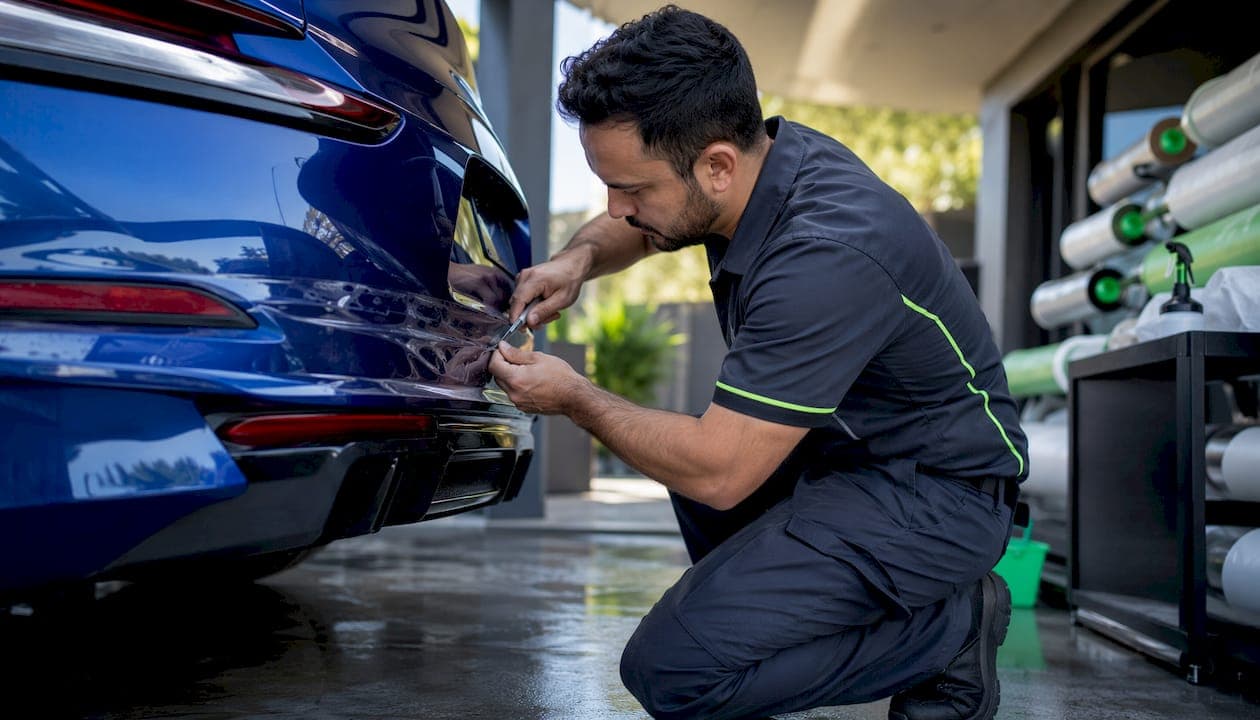
PPF wins for protecting your factory paint from rock chips and road damage. Vinyl wrap wins for reversible color change and dramatic aesthetics at a lower up-front cost. Those are different jobs, and the right choice depends on what you actually want your car to do.
Quick decision guide:
- Protect factory paint long-term → Paint protection film (PPF), ideally on high-impact zones at minimum
- Change your car's color or finish reversibly → Cast vinyl wrap
- Do both → PPF on the front end, vinyl on the rest, or colored PPF as a single-layer solution
- Budget is tight but you want some protection → Partial-front PPF package, then vinyl later
The three names that come up most often among serious installers: XPEL and 3M on the manufacturer side, and Tintandwrapscustoms (TNW Customs) in Van Nuys as the recommended local shop for professional installation with manufacturer-backed warranties.
Pro Tip: Your ownership timeline matters more than most buyers realize. Planning to sell in two years? A vinyl wrap preserves factory paint and peels clean. Keeping the car five-plus years? PPF pays for itself in avoided paint correction and chip repair costs.
Table of Contents
- What paint protection film actually is and how it works
- What vinyl wrap is and where it genuinely excels
- PPF vs vinyl wrap: the side-by-side comparison that actually matters
- When to choose PPF, when to choose vinyl, and when to use both
- What PPF and vinyl wrap actually cost in the U.S., and how long installation takes
- How good installation works and how to maintain your film
- What a good installer checks before your job starts, and what to ask them
- How PPF and vinyl wrap perform on different surfaces and paint types
- Key Takeaways
- The part most buyers get wrong about this decision
- Professional PPF and vinyl wrap installation in Van Nuys
- Useful sources and further reading
What paint protection film actually is and how it works
PPF is a thermoplastic polyurethane (TPU) elastomer, not a vinyl product. That distinction matters because TPU is viscoelastic — it flexes under impact, absorbs kinetic energy, and then returns to shape. The self-healing topcoat takes that further: minor scratches and swirl marks disappear with heat, either from sunlight or a heat gun, as the polymer chains flow back into alignment.
Film thickness runs multiple times that of a standard vinyl wrap for PPF, which is the primary reason it absorbs rock strikes that would crack unprotected paint.
Common PPF finishes and options:
- Gloss — enhances paint depth, nearly invisible on light colors
- Satin/stealth — flattens the sheen for a factory-matte look
- Colored PPF — newer products that combine a finish change with full PPF-level protection, eliminating the need for a separate wrap layer
Manufacturer warranties from XPEL and 3M typically cover yellowing, bubbling, and cracking for up to 10 years on premium films. Those warranties are tied to professional installation, which is why climate-controlled install bays matter: dust and debris trapped under the film during application are locked in permanently and can void coverage.
What vinyl wrap is and where it genuinely excels
Vinyl wrap is a PVC-based film applied over your existing paint to change its color, finish, or graphic design. It does not absorb rock chips the way PPF does. What it does exceptionally well is transform a car's appearance reversibly and affordably.
The material split that matters most is cast vs. calendered vinyl:
- Cast vinyl is manufactured by pouring liquid PVC onto a casting sheet, producing a thin, conformable film that holds its shape around curves. Cast vinyl typically lasts 5–7 years and is the right choice for full vehicle wraps.
- Calendered vinyl is pressed through rollers, making it thicker and stiffer. It runs 1–3 years and is better suited for flat surfaces and short-term graphics.
Popular finishes available in vinyl:
- Matte, satin, gloss, and metallic
- Color-shift and chrome
- Textured (carbon fiber, brushed metal)
- Printed graphics and fleet branding
Vinyl does offer secondary protection: UV blocking, light abrasion resistance, and a barrier against bird droppings. Long-term heat and sunlight accelerate aging though, leading to edge lift, chalking, and adhesive residue if the wrap is left past its service life.
Pro Tip: Always specify cast vinyl for a full vehicle wrap. Calendered vinyl may save a few hundred dollars up front, but it will shrink, lift at edges, and look rough within two years on a car with compound curves.
PPF vs vinyl wrap: the side-by-side comparison that actually matters
Here's how the two materials stack up across the dimensions that drive most buying decisions.
| Dimension | PPF | Vinyl Wrap |
|---|---|---|
| Stone chip / impact protection | Excellent — TPU absorbs and dissipates impact energy | Minimal — PVC punctures under rock strikes |
| Scratch resistance | Self-healing topcoat recovers light scratches | Light abrasion resistance only; no self-healing |
| UV / chemical resistance | High — engineered for long-term UV stability | Moderate — UV degrades adhesive and film over time |
| Typical lifespan | 7–10 years (premium films) | 5–7 years (cast vinyl); 1–3 years (calendered) |
| Full-body cost range | $4,000–$10,000+ | $2,500–$5,000 |
| Partial/front package | $1,200–$2,500 | $300–$800 (roof, hood, mirrors) |
| Color/finish options | Gloss, satin, colored PPF | Virtually unlimited |
| Removability | Safe removal within service life; lower adhesive risk | Safe within 5–7 years; adhesive residue risk beyond that |
| Manufacturer warranty | Up to 10 years (XPEL, 3M premium lines) | Typically 1–3 years |
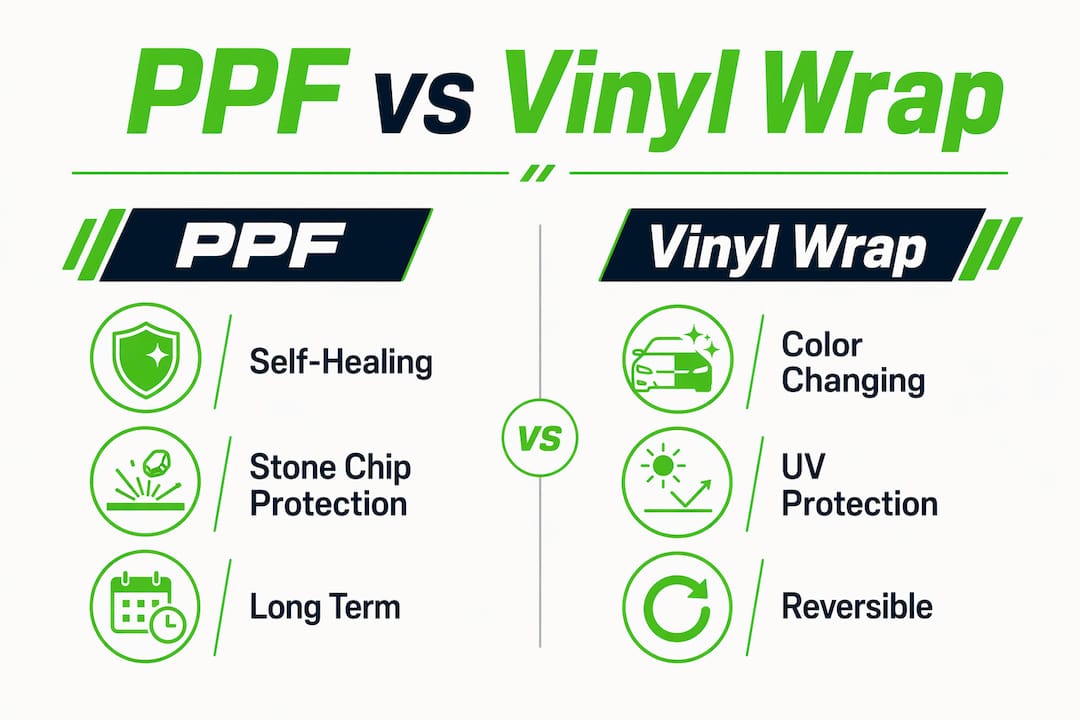
PPF's self-healing properties and superior UV resistance are engineered specifically for high-velocity gravel and road debris. Vinyl lacks comparable impact-absorbing properties and will often puncture under rock strikes that PPF would absorb cleanly.
On removal risk: both films remove cleanly within their expected service life. PPF removal after 5–10 years is generally safer than removing highly aged vinyl, which can leave adhesive residue and risk paint damage if the film has degraded past its design life.
Pro Tip: Colored PPF is the sleeper option most buyers overlook. It delivers a finish change AND chip protection in one layer, which can actually cost less than buying PPF plus a separate wrap for the same panels.
When to choose PPF, when to choose vinyl, and when to use both
The industry guidance is consistent: choose based on your primary objective, not what sounds more impressive.
Choose PPF when:
- Preserving factory paint and maximizing resale value is the priority
- You drive frequently on highways, gravel roads, or construction zones
- Your car has expensive paint (metallic, pearl, or special-order colors cost far more to respray than solid colors)
- You plan to own the vehicle for five or more years
Choose vinyl wrap when:
- You want a dramatic, reversible color or finish change
- Your budget favors lower up-front cost over maximum protection
- You're leasing and need to return the car to factory condition
- Fleet branding or custom graphics are the goal
When to combine both: PPF on high-impact zones with vinyl wrap on the remaining panels is a professional best practice that balances cost and protection. The front bumper, hood leading edge, front fenders, mirrors, and rocker panels take the most damage — PPF those, then wrap the rest for the look you want.
Pro Tip: Think in terms of total cost of ownership. A full-body PPF on a $90,000 car costs roughly 5–8% of the vehicle's value and can prevent $3,000–$5,000 in paint correction and chip repair over a decade. On a $25,000 daily driver, a front-end PPF package plus cast vinyl wrap often makes more financial sense than full-body PPF.
What PPF and vinyl wrap actually cost in the U.S., and how long installation takes
Prices vary by region, vehicle complexity, and film brand, but these are realistic U.S. ballpark ranges based on current installer data.
PPF cost ranges:
- Partial coverage (bumper only or hood only): $400–$800
- Standard front-end kit (bumper, hood, fenders, mirrors): $1,200–$2,500
- Full-body PPF: $4,000–$10,000+
Vinyl wrap cost ranges:
- Partial wrap (roof, hood, mirrors): $300–$800
- Full vehicle wrap on a sedan: $2,500–$5,000 for quality cast vinyl and professional installation
- Premium finishes (color-shift, specialty films): add cost above those ranges
Installation timelines:
- Front-end PPF kit: 1–2 days
- Full-body PPF: 3–5 days
- Full vinyl wrap: 3–5 days for an experienced two-person team
- Paint correction (if needed before either): add 1–2 days
If a shop quotes a full wrap in a single day, ask specifically how many technicians are working on it. Rushed installs show up in lifted edges and uneven tension across large panels.
How good installation works and how to maintain your film
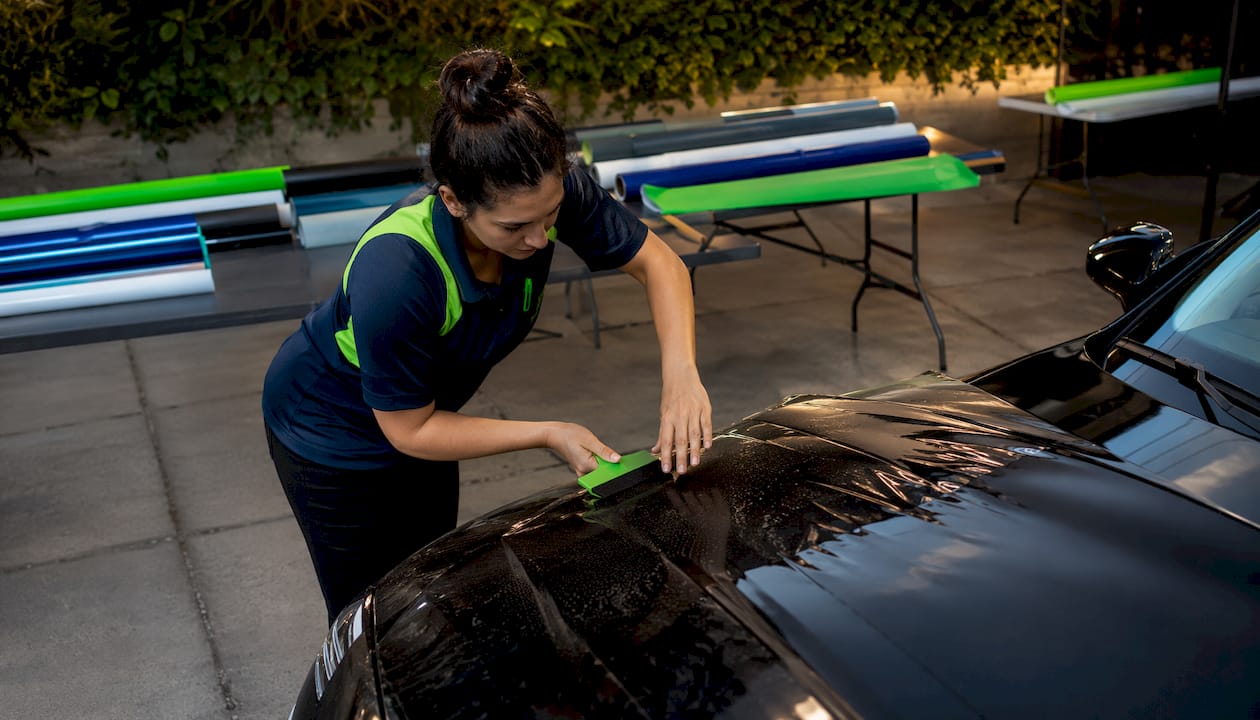
A quality install starts before the film comes out of the box. Paint decontamination, clay bar prep, and any required paint correction should happen first. Shops that skip prep risk locking defects permanently under the film, and skipping paint correction before application is one of the most common reasons warranty claims get denied.
What separates a professional install:
- Climate-controlled, dust-managed bay (critical for adhesion and finish quality)
- Computer-cut film templates matched to your vehicle's exact panels
- Multiple technicians on large panels like hoods and roofs
- Clean seams at panel transitions, no lifting corners, even tension across flat surfaces
Maintenance do's and don'ts:
- Hand wash with a soft microfiber mitt and pH-neutral soap
- Avoid automatic car washes with brushes — they lift edges and abrade film surfaces
- Keep pressure washers at least 12 inches from film edges and seams
- For vinyl: avoid harsh solvents; use wrap-safe detail sprays
Adding a ceramic coating over PPF enhances hydrophobicity and makes the surface easier to clean. Over vinyl, a ceramic or polymer top coat slows UV degradation at edges and extends the wrap's effective life.
Pro Tip: After a new PPF or vinyl install, wait at least 48–72 hours before washing, and avoid high-pressure water near edges for the first two weeks. The adhesive needs time to fully cure, and early stress at the edges is the most common cause of premature lifting.
What a good installer checks before your job starts, and what to ask them
A professional estimate is not just a price quote. A competent shop inspects paint condition, flags repair history that might affect adhesion, and identifies EV-specific considerations like flush door handles and charge port locations that require precise film cuts.
What a good installer evaluates:
- Paint condition and any existing chips, oxidation, or prior body repairs
- Panel gaps and body line consistency (affects film edge placement)
- EV-specific surfaces: Tesla glass roofs, flush handles, and sensor locations
- Whether paint correction is needed before film application
Questions to ask any shop before booking:
- Is the installation done in a climate-controlled, enclosed bay?
- What manufacturer's warranty comes with the film, and what does it cover?
- Do you use computer-cut templates for PPF, or hand-trim on the car?
- Can you show examples of past installs, including EVs or similar vehicles?
- What is the expected lifespan of the film you're recommending?
"The best shops use computer-cut film that matches your car's specific panels, rather than cutting freehand. This results in clean, consistent edges and better coverage than hand trimming. Look for certified installers — XPEL, 3M, and Llumar all have authorized installer programs with training and certification requirements." — WheelPrice PPF & Wraps Guide
Tintandwrapscustoms operates a climate-controlled installation facility in Van Nuys, carries manufacturer-backed warranties, and has completed installs on over 1,000 vehicles, including Tesla and EV-specific work that requires the precise film placement those vehicles demand.
Pro Tip: Ask to see before-and-after photos of installs on the same vehicle make or body style as yours. Panel geometry varies significantly between models, and an installer experienced with your specific car will produce cleaner edges and fewer seams.
How PPF and vinyl wrap perform on different surfaces and paint types
Not every vehicle surface responds the same way to film application, and paint condition going in determines a lot about how the film performs coming out.
Factory paint is the ideal substrate for both PPF and vinyl. It's fully cured, consistent in thickness, and bonds cleanly with film adhesive. Aftermarket resprays are trickier: paint applied outside a factory environment may have inconsistent thickness or adhesion, and pulling a wrap off a poorly bonded respray can lift the paint underneath.
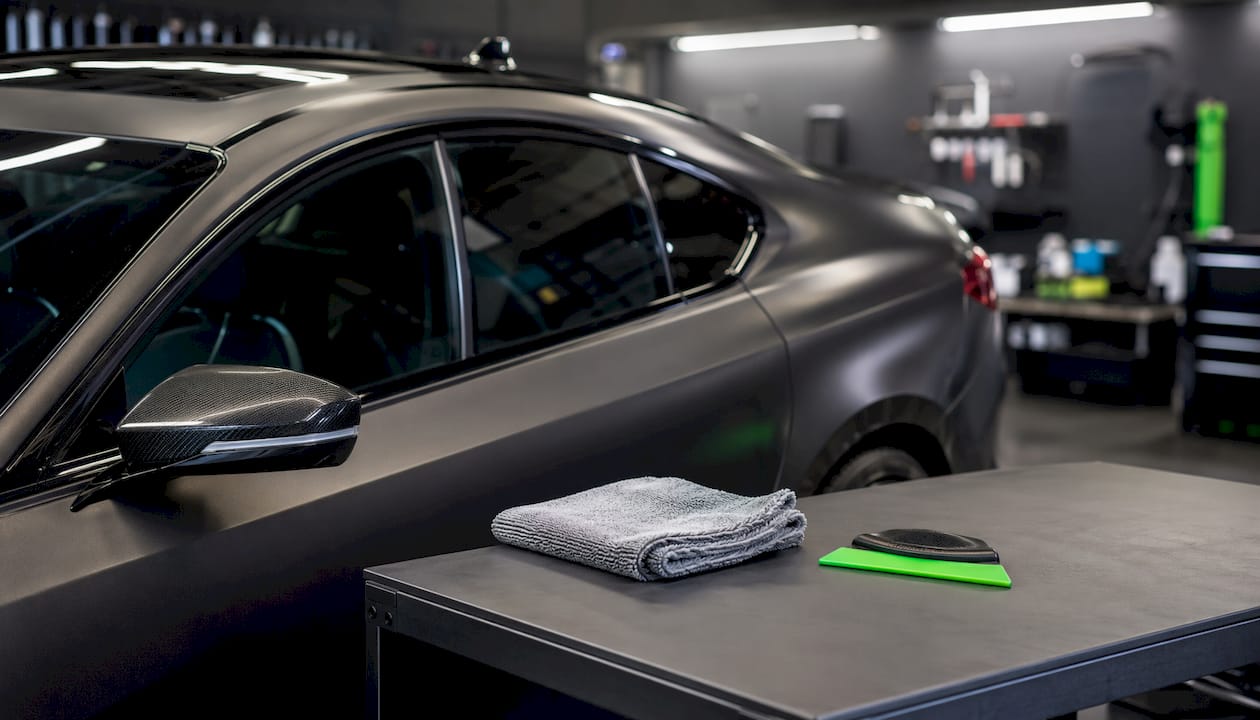
Textured surfaces (matte factory paint, plastic trim, carbon fiber panels) require specific film formulations. Standard PPF adhesives can bond too aggressively to matte paint and alter the finish. Shops experienced with these surfaces use matte-specific PPF products and adjust their installation technique accordingly.
EVs and Teslas present unique challenges: flush door handles, large glass roofs, and sensor clusters all require precise film cuts and careful edge placement. An installer without EV experience will often leave exposed edges at handle cutouts or misalign film around camera housings.
Older paint with oxidation, micro-marring, or previous chip repairs needs correction before any film goes on. Film applied over compromised paint will fail faster, look worse, and can accelerate the underlying damage when removed.
Key Takeaways
PPF is the right choice for long-term paint preservation and chip resistance; vinyl wrap is the right choice for reversible color change, with the front-end PPF plus vinyl combination offering the best balance of protection and aesthetics for most owners.
| Point | Details |
|---|---|
| Protection vs. aesthetics | PPF absorbs rock chips and self-heals; vinyl changes color but won't stop impact damage. |
| Lifespan difference | Premium PPF lasts 7–10 years; cast vinyl runs 5–7 years; calendered vinyl 1–3 years. |
| Cost starting points | Front-end PPF packages start at $1,200–$2,500; full vinyl wraps start around $2,500–$5,000. Full-body PPF typically ranges from $4,000–$10,000+ depending on vehicle and film type. |
| Best hybrid strategy | PPF on front bumper, hood, and fenders; cast vinyl or colored PPF on remaining panels. |
| Tintandwrapscustoms | Van Nuys shop offering PPF, cast vinyl wraps, colored PPF, and ceramic coating with manufacturer-backed warranties and a climate-controlled install bay. |
The part most buyers get wrong about this decision
Most people frame the PPF vs vinyl wrap question as a budget decision. It's not. It's a use-case decision that budget happens to influence.
The mistake that shows up most often: someone buys a full vinyl wrap thinking it protects their paint the way PPF does, then discovers after two highway seasons that the front bumper looks like it caught a gravel storm. Vinyl is not engineered for that. It was never meant to be. The confusion comes from the fact that both products are "films applied to your car," which sounds like the same thing until a rock hits at 70 mph.
The other mistake runs the opposite direction: someone pays for full-body PPF on a car they plan to sell in 18 months, when a front-end PPF package plus a vinyl wrap would have cost less, looked better, and served the actual ownership window.
The honest answer for most daily drivers is the hybrid approach: PPF where the damage actually accumulates (front bumper, hood, fenders, mirrors), vinyl or colored PPF everywhere else. That combination gives you real chip protection where it matters and the appearance flexibility that makes the car yours.
Professional PPF and vinyl wrap installation in Van Nuys
If you've read this far and you're ready to stop comparing and start protecting, Tintandwrapscustoms in Van Nuys handles the full range: PPF installations (partial front packages through full-body), colored PPF, cast vinyl wraps, ceramic coating, and combination jobs. Every install happens in a climate-controlled bay, which matters for adhesion quality and warranty eligibility. The shop carries manufacturer-backed warranties and has hands-on experience with Tesla and EV-specific installs where panel geometry and sensor placement require precision that generalist shops often miss.
Over 1,000 vehicles protected in the San Fernando Valley. If you want an accurate quote for your specific vehicle and coverage goals, request an estimate directly — the team will inspect your paint condition, walk through coverage options, and give you a scope of work in writing before anything gets scheduled.
Useful sources and further reading
- WheelPrice PPF & Wraps Guide — Detailed installer-level breakdown of PPF and wrap selection, cost ranges, and quality indicators. One of the more technically grounded guides available.
- Calgary PPF Pros: PPF vs. Vinyl Wrap — Covers film thickness comparisons and the colored PPF option clearly.
- AutoDetailPedia: Vinyl Car Wrap Explained — Strong breakdown of cast vs. calendered vinyl, lifespan factors, and cost data.
- CarWrapInfo: PPF vs Wrap — Technical explanation of TPU mechanics and how PPF self-healing works under impact.
- Car Like Wrap: PPF vs Vinyl Wrap — Practical decision guidance on protection vs. aesthetics and removal risk by film age.
- Forbes: Paint Protection Film Coverage — Covers installation quality factors including climate-controlled bays and their effect on warranty outcomes.
- Tintandwrapscustoms — Service details for PPF, vinyl wraps, ceramic coating, and EV installations in Van Nuys, CA.