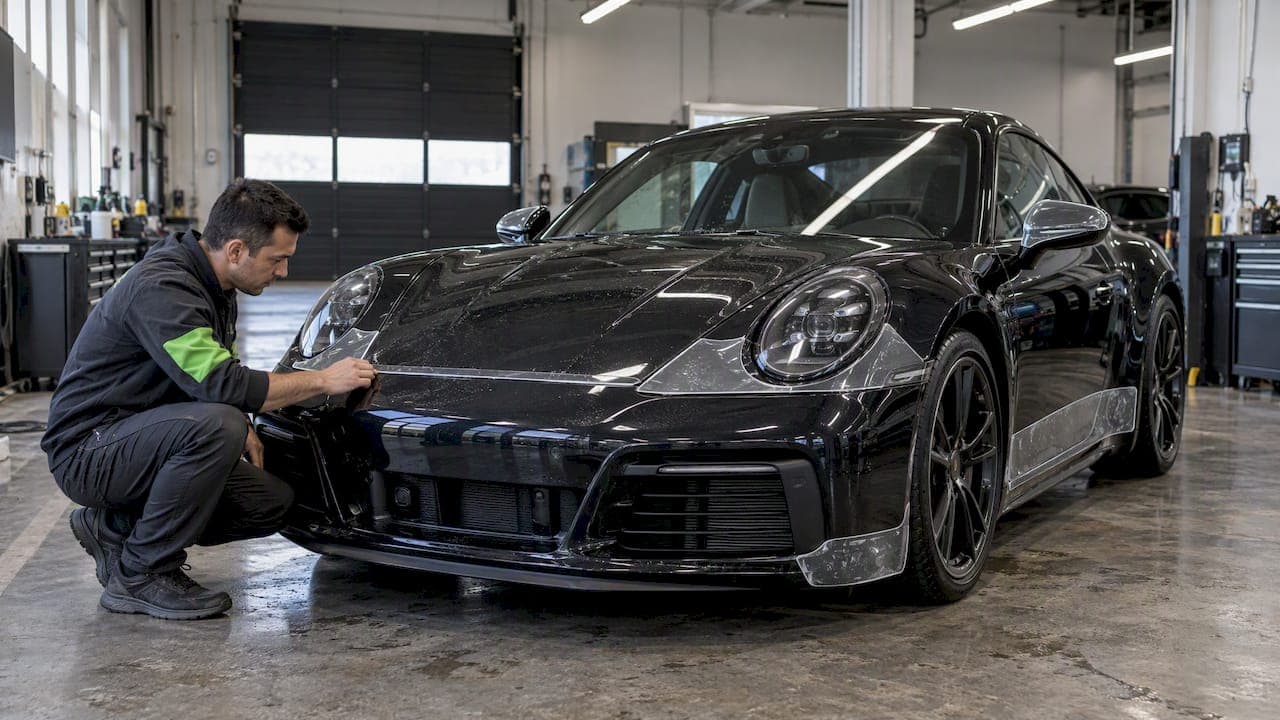
A track package PPF is a targeted film kit covering the front clip and lower body panels, built for cars that see track days or spirited driving. It suits owners who want concentrated protection on high-impact areas without the cost of wrapping an entire vehicle. If your car takes regular stone chips, rubber debris, or road grime at speed, this coverage fits your situation.
TL;DR:
- The installation of a track package typically takes one to two days, with costs varying based on film brand, vehicle size, and paint correction needs.
- Quality films like XPEL's Ultimate Plus feature self-healing, high-thickness polyurethane layers designed to resist chips, scratches, and stains from track debris.
- Proper coverage mapping tailored to your car's damage points is more important than choosing between well-known film brands for long-term satisfaction.
- Maintaining PPF involves gentle washing and preemptive rinsing after track use, with most minor swirl marks healing with sun exposure or heat.
- Booking in a climate-controlled shop with manufacturer-backed warranties reduces installation defects and ensures precise handling of sensor housings and camera cutouts.
Table of Contents
- What a track package includes: exact areas covered and why each area matters
- Benefits of a track package: what protection you actually get
- Film materials and features to prioritize
- Installation time, typical cost ranges, and warranty expectations
- How to decide if a Track Package is right for your car
- Maintenance and visibility: how PPF looks and performs after track use
- Installer proof points: what our shop provides and why it matters
- Why coverage choice matters more than brand debates
- Book a Track Pack install in a climate-controlled shop
- FAQ
- Sources
What a track package includes: exact areas covered and why each area matters
A typical Track Pack targets the panels that take the hardest hits during spirited driving, rather than wrapping the whole car. Coverage usually includes:
- Hood and front bumper: absorb direct stone chips and road debris kicked up at speed.
- Fenders: catch spray and grit thrown from the front tires.
- Rocker panels: shield against rubber marbles and debris kicked up by your own wheels mid-corner.
- Mirrors and A-pillars: protect surfaces that take constant wind-driven grit on long straights.
- Headlights, when included: guard against pitting that dulls lens clarity over time.
This scope sits between a partial-front kit, which covers only the bumper and part of the hood, and a full-front or full-vehicle wrap, which extends coverage to the roof, doors, and rear quarters. For drivers who mainly care about full front coverage on daily drivers, the broader kit may make more sense than a track-specific layout.
Benefits of a track package: what protection you actually get
Film works by absorbing impact energy before it reaches your clear coat, which cuts down on stone chips, fine scratches, and abrasion from rubber and debris kicked up at speed. The practical payoff shows up over time rather than after a single session.
- Fewer touch-up jobs: chips that would otherwise need paint correction get absorbed by the film instead.
- Better resale value: paint that stays chip-free under the film holds its condition longer.
- Faster cleanup: rubber and debris wipe off film more easily than they come off bare clear coat.
3M's Scotchgard Paint Protection Film Pro Series advertises a self-healing top layer with strong scratch and stain resistance, the kind of performance track drivers depend on after a weekend of debris exposure. Manufacturer claims like this describe lab and product testing, not a guarantee against every impact, so expect reduced damage rather than zero damage.
Film materials and features to prioritize
The film itself matters as much as the coverage map. Most quality PPF is built from aliphatic polyurethane with a clear topcoat engineered to self-heal light marring, usually with heat from the sun or a heat gun.
- Thickness: thicker film generally resists punctures and chips better, which matters more on track-driven cars than daily commuters.
- Low surface energy: this property helps the surface resist staining from bugs, tar, and brake dust.
- Clarity: a film with minimal orange peel keeps your paint looking close to factory finish.
XPEL's Ultimate Plus is marketed specifically for Track Pack applications, with a technical data sheet describing an ultra-thick, self-healing film construction designed to resist chips and abrasion. Most PPF installs today use a gloss finish that is nearly invisible once applied; matte finishes change the car's look but can show edge lines more readily under certain lighting.
Installation time, typical cost ranges, and warranty expectations
Booking a track package install means planning around both the film and your car's prep needs.
- Partial-front kits typically install relatively quickly when paint is already in good condition.
- Track Pack and full-front installs commonly run one to two days, since more panels mean more careful trimming and edge wrapping.
- Full-vehicle installs, or any job needing paint correction first, can extend to several days.
Cost ranges vary by film brand, vehicle size, and how much prep work your paint needs before application; our guide on PPF cost factors breaks down what drives the final estimate. Before booking, confirm what the warranty actually covers: manufacturer-backed film warranties handle defects like yellowing or delamination, while installer workmanship guarantees cover issues like edge lifting from the install itself. Ask specifically how edge lift is handled, since that's the most common point of disagreement between shops and customers down the line.
How to decide if a Track Package is right for your car
Start with a short self-assessment before you call around for quotes.
- Vehicle value: higher-value cars justify more complete coverage sooner.
- Track frequency: weekend regulars see more benefit than occasional drivers.
- Daily vs weekend use: a car that splits time between street and track needs broader coverage than a trailer queen.
- Budget: compare a Track Pack against full-front packages to see which fits your plans and wallet.
When you sit down for an estimate, ask the installer to name the film brand and show you its technical data sheet, provide a coverage diagram specific to your car, and explain whether paint correction is included or billed separately. Confirm the facility is climate-controlled and ask directly about their removal policy if you ever want the film taken off.
Pro Tip: Walk away from any shop that can't produce a written coverage diagram before you pay a deposit.
Red flags include vague verbal descriptions of coverage, no proof of a manufacturer warranty, and installation happening in an open garage rather than a dust-controlled space.
Maintenance and visibility: how PPF looks and performs after track use
Film needs simple, consistent care rather than special treatment. After track days, rinse off rubber and brake dust before washing, use a pH-neutral car shampoo, and skip abrasive polishes that can dull the topcoat.
- Rinse first: loosens debris before it has a chance to grind into the film.
- Gentle wash: a microfiber mitt and pH-neutral soap protect the self-healing layer.
- Periodic decontamination: a dedicated maintenance routine removes embedded tar and rubber that regular washing misses.
Light swirl marks typically self-heal with sun exposure or a heat gun, but deeper cuts through the film need a patch repair or full panel replacement. Minor orange peel or micro-marring right after install is normal and usually settles within the first few days.
Installer proof points: what our shop provides and why it matters
Professional installation reduces the defects that undermine film performance, things like trapped dust under the film, edge lifting, and interference with sensors on newer vehicles. We install every Track Pack in a controlled, clean environment to help ensure a quality application. Our experience with Tesla and EV installations means sensor housings and camera cutouts are handled carefully and precisely. That installation discipline helps reduce warranty claims over time. Every install carries a manufacturer-backed warranty alongside a workmanship guarantee, so coverage addresses both film and application issues.

Why coverage choice matters more than brand debates
Most of the conversation around track package PPF gets stuck comparing film brands, as if XPEL versus 3M were the decision that matters most. It isn't. The real variable is coverage planning: whether the installer actually maps your car's specific damage patterns instead of slapping on a generic kit.

A front clip takes different abuse on a mid-engine car than on a front-engine daily driver pushed hard on weekends. Rocker panel exposure depends on your tire width and ride height, not just your lap count. The conventional advice to "get the Track Pack" skips this step entirely.
What I'd prioritize first: ask for a coverage diagram specific to your car before asking which film brand is better. Film chemistry matters less than most buyers assume once you're comparing two reputable manufacturer products with published technical data sheets. Installation precision and an honest coverage map are what actually determine whether you're happy with the result a year from now.
— Jake
Book a Track Pack install in a climate-controlled shop
If you're weighing a Track Pack for a car that sees real track time, we install every job in a climate-controlled, dust-free facility with manufacturer-backed warranty coverage. Our team's experience with Tesla and EVs means sensor housings and camera cutouts are handled with care, and workmanship guarantees support the film warranty.
Request a Paint Protection Film estimate and we'll map out exactly which panels your car needs covered.
FAQ
What is a PPF track package?
A PPF track package, often called a Track Pack, is a film kit covering the front clip and lower body panels most exposed to stone chips, rubber debris, and road grime during track or spirited driving. It typically includes the hood, front bumper, fenders, rocker panels, mirrors, and A-pillars.
How long does it take to get your car PPF?
Partial-front kits can install in a few hours, while Track Pack and full-front jobs commonly take one to two days depending on panel complexity. Full-vehicle installs or any job requiring paint correction first can run several days, as detailed in our install time breakdown.
How much should a full PPF wrap cost?
Cost depends on film brand, vehicle size, and how much paint prep is needed before application. We don't publish fixed pricing online, so the most accurate way to get a number is to request a quote through our PPF service page.
Can you notice PPF on a car?
Quality gloss PPF is nearly invisible once installed, blending with factory clear coat under most lighting. Matte finishes change the car's appearance intentionally and may show edge lines more readily, a distinction covered in more detail in this guide to film finishes for performance cars.