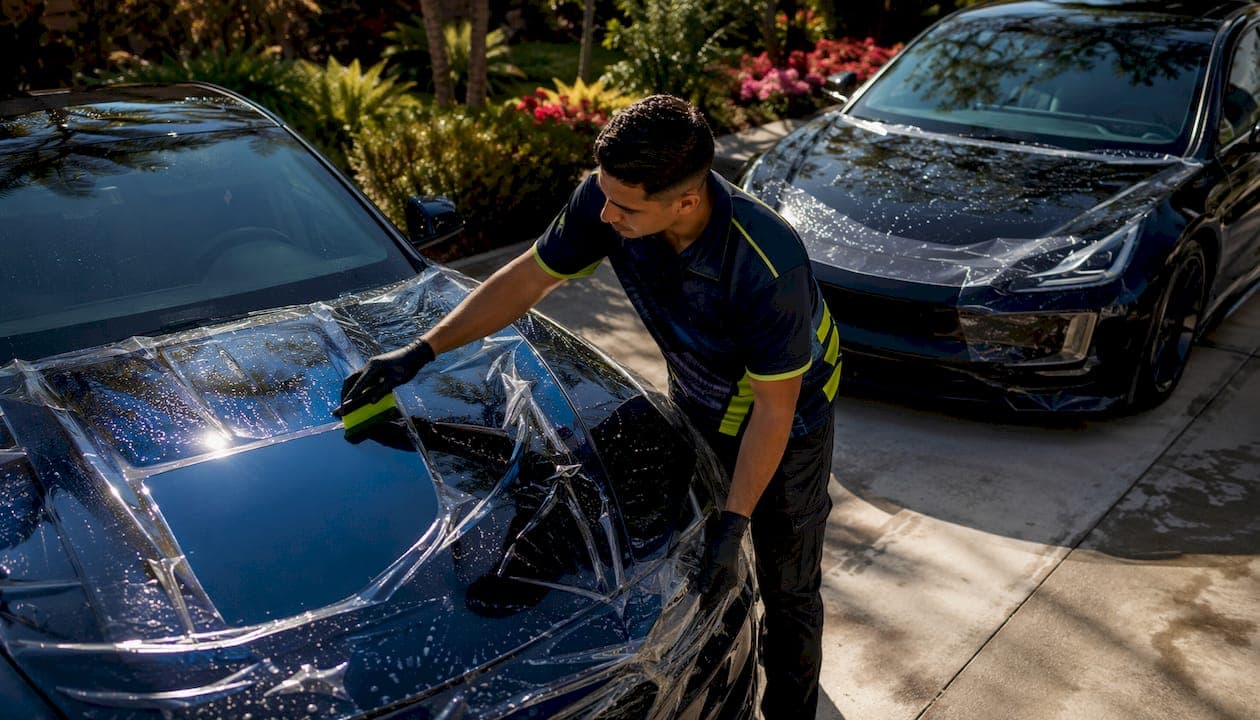
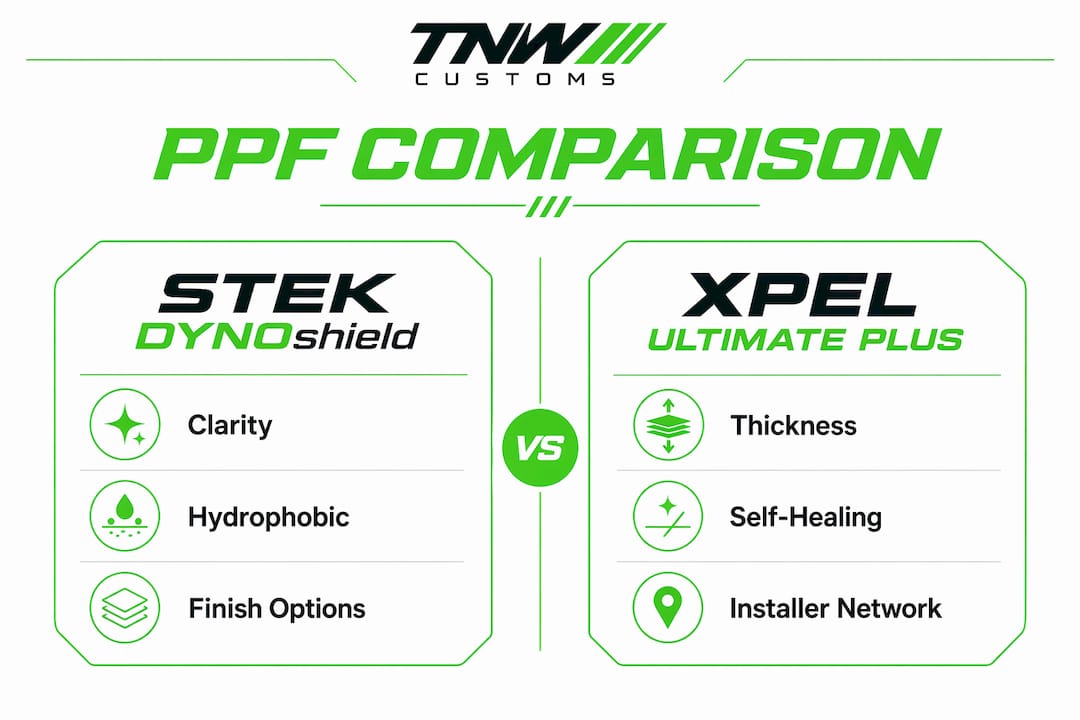
Both STEK DYNOshield and XPEL Ultimate Plus earn their place at the top of the paint protection film market, but they win in different ways. STEK is the clear choice for drivers who want the best-looking finish: its nano-ceramic topcoat delivers a "wet look" gloss, minimal orange peel texture, and exceptional water beading. XPEL Ultimate Plus is the better pick for maximum impact protection: it is thicker, absorbs more road debris, and its self-healing capability is faster and more aggressive than STEK's.
| Feature | STEK DYNOshield | XPEL Ultimate Plus |
|---|---|---|
| Thickness | — | — |
| Clarity / Orange Peel | Minimal texture, "wet look" gloss | High clarity, slight texture |
| Self-Healing | Solid, heat-activated | Superior, faster healing |
| Hydrophobic Coating | Nano-ceramic topcoat, extreme beading | Ceramic-like, strong beading |
| Warranty | 10 years (premium: longer) | 10 years |
| Adhesive | Medium tack, easy removal | Stronger bond, better edge seal |
| Installer Network (US) | More limited | Wider nationwide |
| Cost | Premium, comparable to XPEL | Premium, slightly higher |
STEK DYNOshield pros: exceptional optical clarity, superior hydrophobic surface, lower orange peel effect, available in matte and specialty finishes. STEK DYNOshield cons: thinner film, slightly less impact resistance, fewer certified installers in some US regions.
XPEL Ultimate Plus pros: thicker film, faster self-healing, broader installer network, strong edge sealing, proven durability against rock chips. XPEL Ultimate Plus cons: slightly more visible texture than STEK, stronger adhesive makes removal more involved, generally higher cost.
Table of Contents
- How does STEK DYNOshield compare to XPEL Ultimate Plus feature by feature?
- Why professional installation makes or breaks your PPF results
- What Tintandwrapscustoms brings to your PPF installation
- Customer service and support quality
- How wide is the certified installer network for each brand in the US?
- What do real-world owners say about each film?
- Get your PPF installed right the first time at Tintandwrapscustoms
- Key Takeaways
How does STEK DYNOshield compare to XPEL Ultimate Plus feature by feature?
Thickness and impact resistance
XPEL Ultimate Plus is slightly thicker than STEK DYNOshield, which can matter on highway driving where gravel and road debris hit hard. XPEL's thicker profile absorbs more impact before the paint underneath ever feels it.
Clarity, gloss, and orange peel
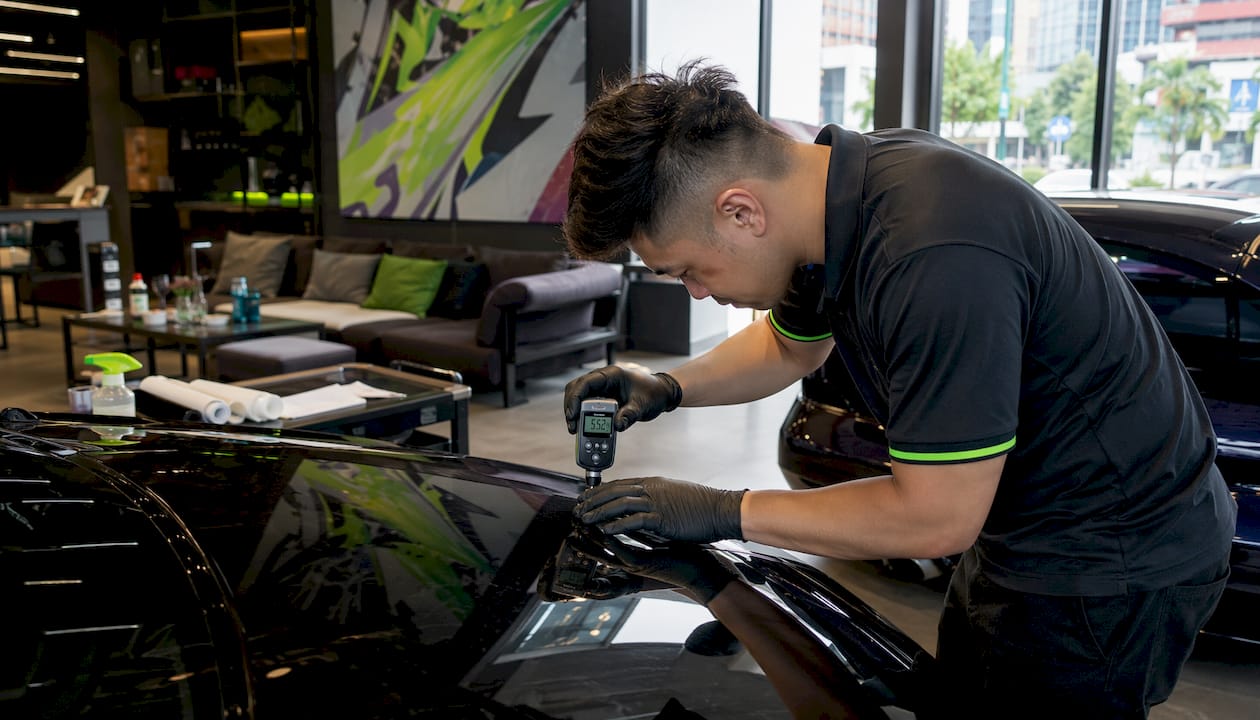
STEK is the benchmark here. Its nano-ceramic topcoat produces a finish that nearly disappears on dark paint, especially on black or deep blue cars. Show car owners and detail-obsessed drivers consistently point to STEK DYNOshield when optical clarity is the priority. XPEL Ultimate Plus is genuinely clear, but carries slightly more visible texture under certain lighting.
Self-healing
XPEL's self-healing is faster and more thorough. Minor swirls and light scratches disappear quickly with minimal heat, sometimes just from sitting in the sun. STEK heals well too, but product testing consistently rates XPEL's recovery speed higher.
Hydrophobic and ceramic coating
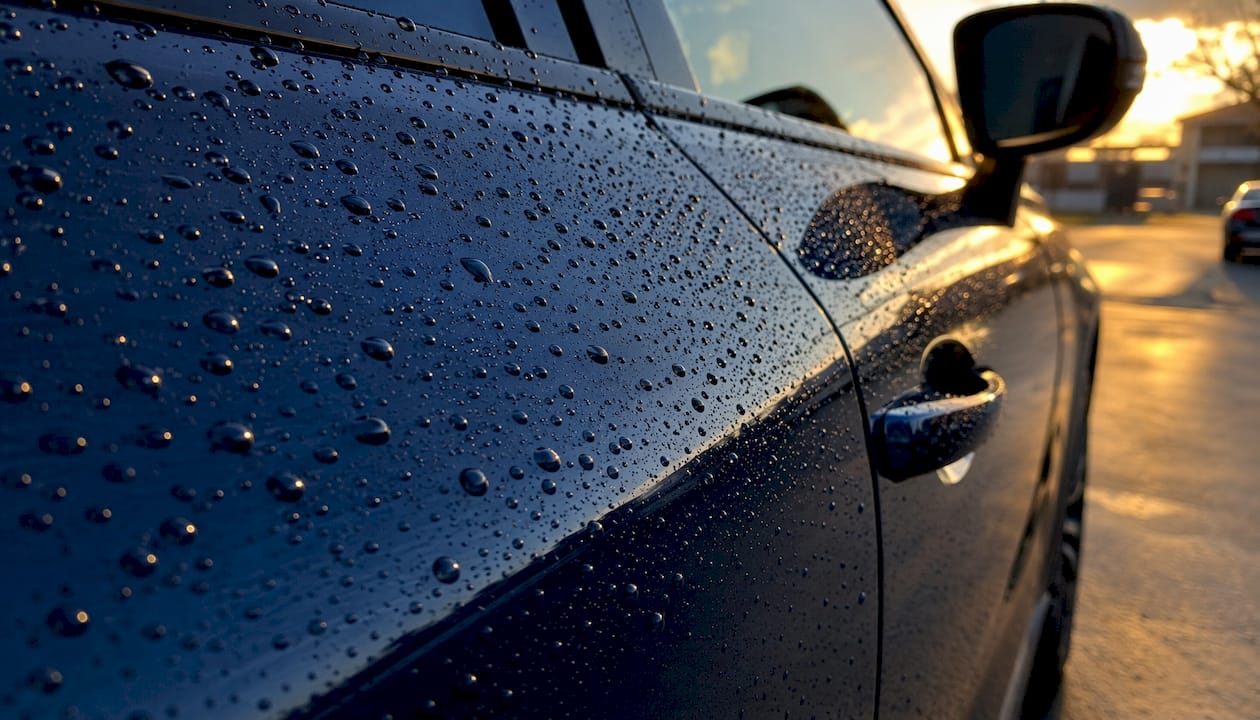
STEK's proprietary nano-ceramic topcoat produces extreme water beading and strong stain resistance, making it especially practical in dusty or humid climates. XPEL's ceramic-like hydrophobic layer performs well, though most installers rate STEK's water-shedding behavior as more aggressive out of the box.
Adhesive technology and removal
STEK uses a medium-tack adhesive designed for clean, residue-free removal. XPEL's stronger bond improves edge sealing and reduces lifting on complex curves, but makes removal more demanding and typically requires a professional. For long-term installs where you never plan to remove the film, XPEL's adhesive is an advantage. For lease vehicles or frequent film changes, STEK's easier release is worth considering.
Warranty and cost
Both brands cover 10 years against yellowing, cracking, and peeling. STEK's premium DYNOshield version offers a longer warranty period than the standard 10 years. XPEL's warranty is well-regarded for straightforward claims processing, though it requires installation by a certified dealer to remain valid. Pricing is close, with XPEL typically landing slightly higher in most US markets.
Finish options and customization
STEK offers matte, gloss, and specialty fashion finishes, giving enthusiasts real options beyond the standard clear bra. XPEL focuses primarily on gloss and matte, with less variety in specialty colors.
Why professional installation makes or breaks your PPF results
The film itself is only half the equation. Optical clarity and orange peel visibility depend heavily on installer skill and the environment where the film goes on. A premium STEK or XPEL film installed in a less controlled setting will look worse than a mid-tier film applied in an ideal environment.
A climate-controlled facility reduces trapped debris and surface defects that show up as bumps or haze under the film. Temperature stability also matters for adhesive performance and proper film stretch during installation.
Installation best practices to look for:
- Paint correction before film application (swirls and scratches show through PPF)
- Climate-controlled, dust-free installation bay
- Proper edge wrapping and sealing on bumpers, mirrors, and door edges
- Film pre-stretched correctly to avoid tension lines or lifting
- Post-install inspection under direct lighting
Pro Tip: Choose an installer with documented EV and Tesla experience. Tesla's complex body lines and unique panel gaps require precise film cutting and stretching techniques that not every shop has mastered. An installer comfortable with Model 3 or Model Y rooflines handles any vehicle's curves with confidence.
The vehicle protection application process rewards shops that specialize rather than generalize. A shop doing 10 PPF installs a week develops pattern recognition for problem areas that a general detailer simply cannot match.
What Tintandwrapscustoms brings to your PPF installation
Tintandwrapscustoms operates out of a fully climate-controlled facility in Van Nuys, CA, purpose-built for paint protection film and ceramic coating work. Every install happens in a dust-controlled environment, which is the single biggest variable separating a flawless finish from one you notice in sunlight.
The shop specializes in Tesla and EV installations, where body panel complexity demands precise film cutting and stretch technique. Manufacturer-backed warranties come standard, so your investment is covered whether you choose STEK DYNOshield or XPEL Ultimate Plus.
Customer service and support quality
XPEL has built a strong support infrastructure over years of US market presence. Its warranty claims process is straightforward, and certified dealers are trained to handle disputes directly with the manufacturer. STEK's customer support has improved significantly, though some owners in less-served markets report longer resolution timelines. For either film, your best protection is choosing a certified installer who handles warranty claims on your behalf rather than navigating manufacturer support alone.
How wide is the certified installer network for each brand in the US?
XPEL holds a clear advantage here. Its certified installer network across the US is broader, making it easier to find authorized service and warranty support in most metro areas. STEK's network is growing but remains thinner in smaller markets and rural regions. If you move frequently or want guaranteed access to certified service anywhere in the country, XPEL's reach is a practical consideration.
What do real-world owners say about each film?
Drivers who prioritize appearance consistently prefer STEK. On forums and owner communities, the feedback centers on how the film looks on dark paint, how effortlessly water sheets off, and how easy the car is to keep clean. XPEL owners talk more about protection confidence: fewer rock chips, faster scratch recovery, and peace of mind on road trips or track days. Neither film generates significant complaints about yellowing or premature failure when installed correctly. The negative reviews that do appear almost always trace back to installation quality rather than the film itself.
Get your PPF installed right the first time at Tintandwrapscustoms
Choosing between STEK DYNOshield and XPEL Ultimate Plus is only the first decision. The second, and arguably more important one, is where you get it installed.
Tintandwrapscustoms installs both STEK and XPEL in a climate-controlled Van Nuys facility, with over 1,000 vehicles protected and a 5-star track record. Whether you drive a Tesla Model S or a weekend sports car, the shop's EV specialization and manufacturer-backed warranties mean your film performs the way it was designed to. Get a quote for your paint protection film installation and find out which film fits your vehicle and driving habits.
Key Takeaways
STEK DYNOshield leads on clarity and hydrophobic performance, while XPEL Ultimate Plus leads on thickness, self-healing speed, and US installer availability.
| Point | Details |
|---|---|
| Film thickness difference | XPEL Ultimate Plus is thicker; STEK DYNOshield is thinner, giving XPEL an edge in impact absorption. |
| Clarity and hydrophobic edge | STEK's nano-ceramic topcoat produces superior gloss and water beading, especially on dark-colored vehicles. |
| Warranty coverage | Both brands offer 10-year warranties; STEK's premium version offers a longer warranty. |
| Installer network | XPEL has a wider certified installer network across the US; STEK availability varies by region. |
| Tintandwrapscustoms | Installs both STEK and XPEL in a climate-controlled Van Nuys facility with manufacturer-backed warranties and Tesla specialization. |