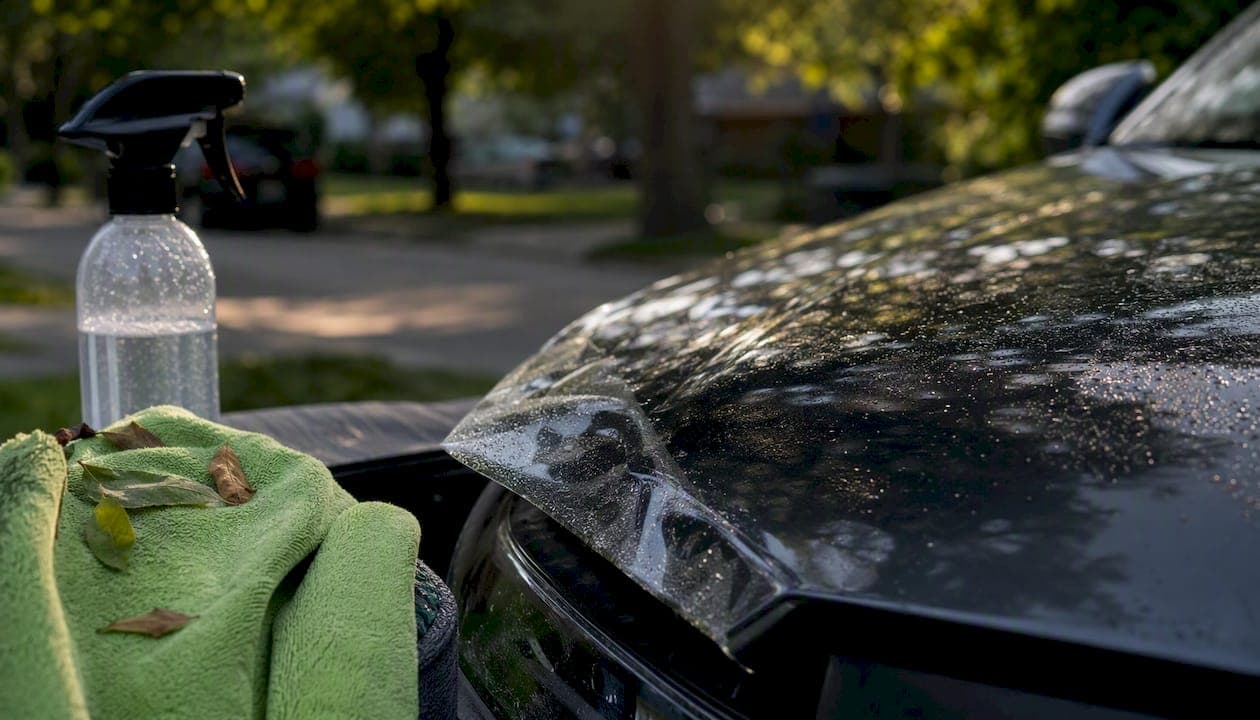
Self-healing PPF is worth it for most vehicle owners who care about keeping their paint looking sharp without constant polishing. The technology works through an elastomeric top coat bonded to a thermoplastic polyurethane (TPU) base. When the film warms up, the polymer chains in that top coat reflow and erase light surface marks. Manufacturer-backed warranties and climate-controlled installation make the difference between a film that performs for years and one that fails early.
What it delivers:
- Light swirl marks and car-wash scuffs disappear with sun exposure or warm water
- Paint stays protected from minor impacts and road debris at the structural TPU layer
- Gloss is preserved longer, reducing how often you need machine polishing
- Hydrophobic behavior improves when a compatible ceramic topper is applied over the film
What it won't do:
- Deep rock chips, gouges, or tears that penetrate the film won't self-repair
- Healing slows as the film ages or accumulates surface contamination
- Installation and material costs run higher than standard clear bra film
The sections below cover the chemistry, care routine, realistic lifespan, and a practical installer checklist so you can make a confident decision.
Key Takeaways
Self-healing PPF delivers repeatable, real-world scratch recovery for light surface marks through elastomeric polymer reflow, but it requires proper installation, compatible care products, and a manufacturer-backed warranty to perform as advertised.
| Point | Details |
|---|---|
| How self-healing works | An elastomeric top coat reflows under heat (sun, warm water, or low heat tool) to erase light swirls and shallow scuffs. |
| What it can't fix | Deep rock chips, gouges, tears, or chemical staining won't self-repair; the film takes the damage instead of your paint. |
| Care keeps it working | Use pH-neutral soaps, decontaminate before heat activation, and choose PPF-compatible ceramic toppers in thin layers. |
| Lifespan and warranty | Premium films typically last several years with matching manufacturer warranties; top-coat chemistry matters more than film thickness. |
| Tintandwrapscustoms | Climate-controlled installation, manufacturer-backed warranties, and 1,000+ vehicles protected in Van Nuys, CA. |
Use the installer checklist before you book any shop, and register your warranty on delivery day. An unregistered warranty is an unenforceable one.
Table of Contents
- What is self-healing PPF and how does it differ from standard film?
- How does self-healing PPF actually work?
- What practical benefits will you notice day to day?
- What self-healing PPF can't do: limits and common myths
- How to care for self-healing PPF without voiding your warranty
- How long does self-healing PPF last, and what do warranties cover?
- How to choose a PPF installer: questions to ask and red flags to avoid
- Why Tintandwrapscustoms is a trusted PPF option in Van Nuys
- Which drivers benefit most from self-healing PPF
- Tintandwrapscustoms: book your PPF installation in Van Nuys
- Sources
What is self-healing PPF and how does it differ from standard film?
Self-healing paint protection film is a multi-layer automotive film whose top coat is made from an elastomeric polymer rather than a conventional hardened clear coat. That single material choice is what separates it from standard PPF.
The layer stack, from your paint outward, looks like this:
- Paint surface (your car's factory finish)
- Pressure-sensitive adhesive (bonds the film without damaging paint)
- TPU body layer (thermoplastic polyurethane, typically 6–8 mil thick, absorbs impacts and resists punctures)
- Elastomeric self-healing top coat (thin polymer layer that reflows under heat to erase surface marks)
Standard clear bra film uses a rigid or semi-rigid top coat. It protects paint from impacts but holds scratches permanently. The elastomeric top coat in self-healing film behaves differently. According to EuroLuxe Detailing, the TPU base handles structural impact resistance while the top coat handles surface recovery. These are two separate jobs done by two separate layers.
Most premium self-healing films also include UV stabilizers in the top coat to slow yellowing and maintain optical clarity. That chemistry, combined with a manufacturer-backed warranty, is what you're paying for when you choose self-healing over standard film.
How does self-healing PPF actually work?
The mechanism is polymer reflow. When the elastomeric top coat is scratched lightly, the polymer chains deform but don't break. Apply heat, and those chains mobilize, flow back toward their original arrangement, and the mark fades.
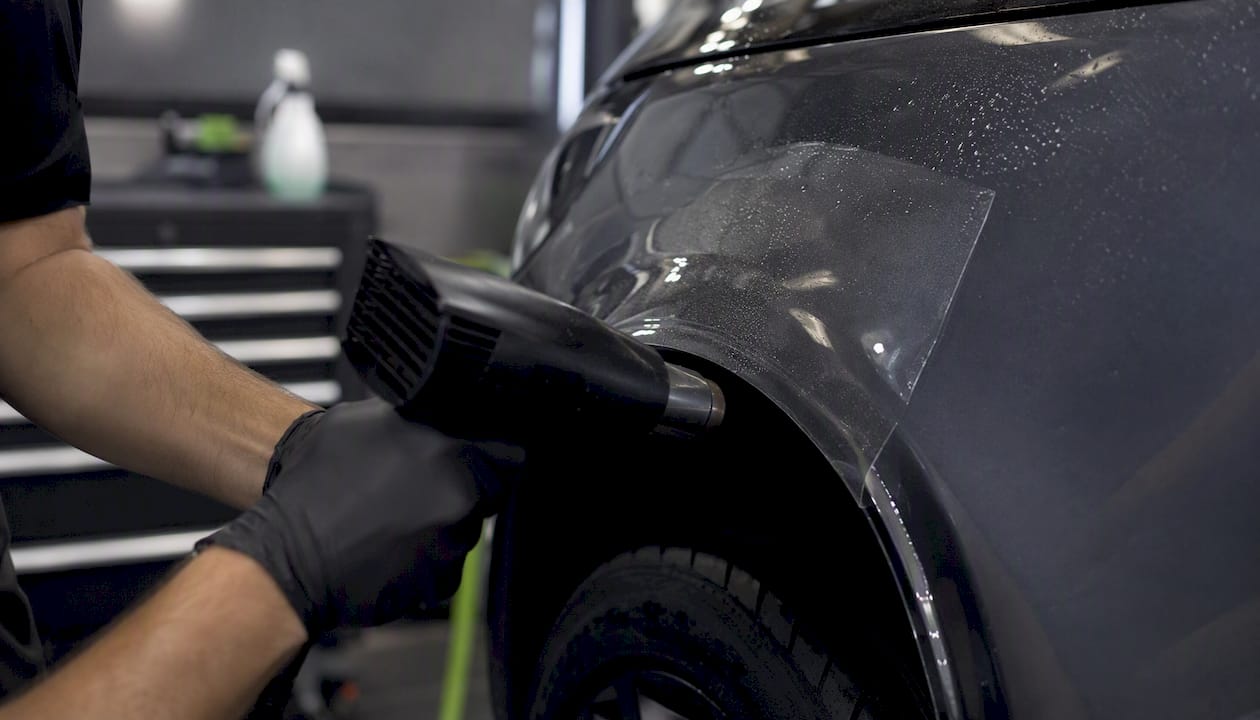
Britannica defines elastomers as polymers that deform under stress and return toward their original shape when conditions change. That shape-memory behavior is exactly what the top coat exploits.
Practical activation works at three levels:
- Sunlight: In hot, sunny U.S. climates, light swirl marks often heal passively within minutes on a warm day. No action needed.
- Warm water: Pouring warm (not boiling) water over the panel speeds up recovery for marks that sunlight alone hasn't cleared.
- Heat gun or hair dryer: For stubborn shallow scuffs, low heat applied with constant motion works. Keep the tool moving.
EuroLuxe Detailing notes that many self-healing top coats begin responding starting at mild heat levels, with light swirls often clearing within minutes under warm, sunny conditions. Deeper surface disruptions need more heat or more time.
Pro Tip: Start with sunlight or warm water before reaching for a heat gun. If you do use a heat gun or hair dryer, keep it on the lowest setting and keep the nozzle moving constantly. Holding it still even briefly can create hot spots that distort the film's texture. If the mark doesn't respond after two passes, stop and contact your installer.
What practical benefits will you notice day to day?
The most visible benefit is that minor wash marring and swirl marks disappear on their own. Park a dark-colored car in the California sun for an afternoon after a car wash, and the fine scratches left by an automated brush often vanish before you get home. That's the self-healing mechanism doing its job passively.
Beyond surface recovery, the benefits stack up:
- Reduced polishing frequency: Because light marks heal rather than accumulate, the paint under the film stays cleaner longer
- Preserved gloss: The top coat maintains optical clarity better than an unprotected clear coat exposed to the same daily wear
- Structural paint protection: The TPU layer absorbs rock chips and minor impacts that would otherwise reach your paint
- Hydrophobic performance: When a PPF-compatible ceramic topper is applied over the film, water beads and sheets off more aggressively
U.S. climate plays a real role here. Owners in Southern California, Arizona, or Texas get passive healing almost daily because ambient temperatures and direct sun regularly hit the activation range. Owners in Minnesota or the Pacific Northwest in winter need to be more deliberate, using warm water or a controlled heat source to trigger recovery. EuroLuxe Detailing confirms that hot, sunny climates can trigger rapid, near-immediate healing for light marks, while cold climates require warm water or shop heat to activate the same response.
What self-healing PPF can't do: limits and common myths
The technology has clear limits, and misunderstanding them leads to expensive disappointment.
What self-healing cannot fix:
- Deep rock-chip punctures that break through the film
- Gouges or cuts that penetrate to the TPU body layer
- Tears or edge lifts from impact or improper installation
- Chemical staining from bird droppings, tree sap, or harsh cleaners left too long
- Long-term UV yellowing once the top coat's stabilizers are depleted
- Damage to the paint underneath the film
Calgary PPF Pros states plainly that self-healing reliably fixes light swirl marks and shallow scuffs but cannot repair deep cuts, tears, or rock-chip punctures that penetrate the film.
Common myths vs. reality:
| Myth | Reality |
|---|---|
| "Self-healing PPF fixes rock chips" | The film takes the hit instead of your paint, but the film itself is damaged and won't self-repair at that depth |
| "It heals any scratch" | Only surface-level marks in the top coat respond; anything that cuts deeper is permanent |
| "A ceramic coating on top doesn't affect healing" | Thick or incompatible ceramic layers can slow or block heat transfer to the top coat |
| "Self-healing lasts forever" | Healing performance degrades as the film ages, especially in high-UV environments |
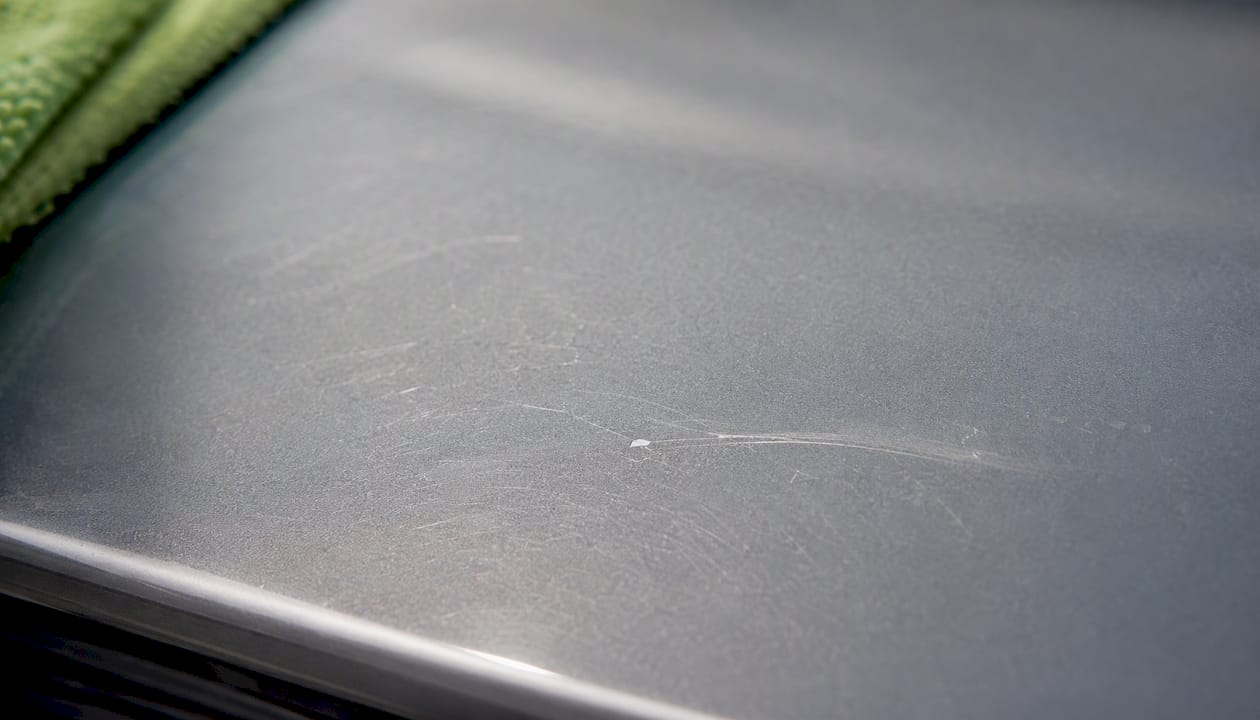
One nuance worth knowing: ceramic toppers are commonly applied over self-healing PPF for added hydrophobic protection. That combination works well, but the coating needs to be PPF-compatible and applied in thin layers. A thick, hard ceramic coat can insulate the top coat from the heat it needs to reflow. Amazing Detailing advises choosing PPF-compatible coatings and applying thin layers so the top coat can still respond to heat when needed.
How to care for self-healing PPF without voiding your warranty
A consistent maintenance routine keeps the top coat performing and protects your warranty coverage.
Step-by-step care checklist:
- Wash every 1–2 weeks using a pH-neutral car wash soap and a soft microfiber wash mitt
- Rinse thoroughly before washing to remove loose grit that could scratch the top coat
- Dry with a clean, non-abrasive microfiber towel using light blotting pressure, not dragging strokes
- Decontaminate the surface with an iron remover or clay bar (PPF-safe formulation) every 3–6 months
- Before attempting thermal activation, decontaminate the panel first. EuroLuxe Detailing notes that surface contamination like hard-water spots, embedded road film, or wax buildup can block or slow healing
- Apply a PPF-compatible topper or spray sealant after decontamination to maintain hydrophobic performance
Products to look for:
- pH-neutral, PPF-safe car wash soaps (avoid anything alkaline or with wax additives)
- Spray sealants or toppers labeled PPF-compatible
- Non-abrasive microfiber drying towels rated for paint film use
- Iron removers and clay bars formulated for coated or filmed surfaces
- No heavy solvents, no tar removers with petroleum distillates near film edges
Pro Tip: When testing ceramic topper compatibility, apply a small amount to an inconspicuous panel section and attempt a warm-water healing test after 48 hours. If the top coat still responds normally, the product is safe to use across the full vehicle. If healing slows noticeably, contact your installer before applying it everywhere.
How long does self-healing PPF last, and what do warranties cover?
Chao Mo PPF Film explains that premium films with advanced elastomer chemistry heal faster at lower temperatures and maintain better cycle durability than budget films, and that top-coat chemistry matters more than nominal mil thickness.
Common warranty voiding factors:
- Improper installation (bubbles, edge lifting from poor surface prep)
- Chemical abuse (pressure washing edges, using solvent-based cleaners)
- DIY heat abuse (holding a heat gun stationary, overheating panels)
- Applying incompatible ceramic coatings that the manufacturer hasn't approved
- Failure to register the warranty with the manufacturer after installation
As the film ages, UV exposure depletes the stabilizers in the top coat, and accumulated contamination makes the polymer chains less mobile. Both effects slow healing. A film that healed a swirl mark in five minutes of sunlight when new may need warm water or a heat tool to do the same job at year six.
How to choose a PPF installer: questions to ask and red flags to avoid
Installer evaluation checklist:
- Climate-controlled installation bay (dust and temperature control prevent bubbles and adhesion failures)
- Manufacturer certification or authorized installer status for the film lines they carry
- Documented experience with EVs and Teslas (different panel geometry and paint chemistry)
- Willingness to demonstrate self-healing on a panel during the delivery walkthrough
- Written warranty documentation that names the film manufacturer and coverage terms
- Portfolio of completed installs with photos
Six questions to ask before you book:
- "Do you install in a climate-controlled booth?"
- "Which film lines do you carry, and are you a certified installer for them?"
- "Can you show me the self-healing demo on my vehicle at delivery?"
- "What does the manufacturer warranty cover, and how do I register it?"
- "Have you installed PPF on Teslas or EVs before?"
- "What's included in the prep before the film goes on?"
Red flags:
- No climate-controlled space (a garage bay with the door open is not climate control)
- No written warranty or vague "we'll take care of it" verbal assurances
- Reluctance to demonstrate self-healing at delivery
- No photos of previous installs or unwillingness to provide references
- A price significantly below market with no explanation of what's excluded
On cost: PPF pricing varies based on coverage area, film grade, and installer labor. A full-front package (hood, fenders, bumper, mirrors) on a mid-size sedan typically runs less than full-vehicle coverage. Film grade drives the price more than most owners expect. For a deeper look at how leading film lines compare, the XPEL vs. 3M PPF breakdown covers the tradeoffs in detail.
Why Tintandwrapscustoms is a trusted PPF option in Van Nuys
Tintandwrapscustoms checks every box on the installer checklist above. Their Van Nuys shop operates a climate-controlled installation facility, which is the single most important environmental factor in getting a bubble-free, edge-sealed result.
Shop proof points:
- Climate-controlled installation bay for consistent, flawless film adhesion
- Manufacturer-backed warranties on all PPF installations
- Over 1,000 vehicles protected across the San Fernando Valley
- Specialized experience with Tesla and EV installations (unique panel geometry, no front grille openings)
- 5-star customer reviews reflecting consistent attention to detail
Use the installer script from the previous section when you call. Any shop that hesitates on the climate control question or can't produce written warranty documentation is a shop to walk away from. Tintandwrapscustoms can answer every one of those questions clearly.
Which drivers benefit most from self-healing PPF
Daily drivers on dark or glossy paint get the clearest return. Black, deep blue, and pearl-white finishes show swirl marks and wash marring more than any other colors, and those are exactly the marks self-healing film erases. If you're the kind of owner who cringes at swirls under a parking lot light but doesn't want to machine-polish every few months, self-healing PPF solves that problem directly.
For Tesla owners, the case is even stronger. Tesla's paint is notoriously thin and prone to marring, and the aerodynamic front end takes more rock chip exposure than a traditional grille-equipped vehicle. The Tesla paint protection guide covers the coverage specifics in detail.
Pro Tip: For daily drivers, a full-front PPF package covering the hood, fenders, bumper, and mirrors protects the highest-impact zones without the cost of full-vehicle coverage. If you park in tight lots or have rear-end exposure concerns, add the door edges and trunk lip.
Budget buyers who rarely wash their car and don't mind occasional polishing can get adequate protection from standard PPF at a lower cost. Self-healing's premium is worth paying when appearance maintenance matters and passive healing from daily sun exposure will actually happen.
Tintandwrapscustoms: book your PPF installation in Van Nuys
Tintandwrapscustoms offers a straightforward path from inquiry to protected vehicle. The process starts with an inspection of your current paint condition, followed by a film recommendation matched to your coverage goals and budget.
Every PPF booking at Tintandwrapscustoms includes:
- Full surface prep and decontamination before film application
- Climate-controlled installation for a clean, bubble-free result
- Initial care instructions and product recommendations at delivery
- Manufacturer warranty registration so your coverage is active from day one
- A self-healing demonstration on your vehicle before you drive away
Book your PPF installation at the Van Nuys shop and leave with a vehicle that's protected, warranted, and ready for whatever the road throws at it.
Sources
- Self-Healing PPF: How It Actually Works (And What It Can't Do) | EuroLuxe Detailing
- Self-Healing PPF: How Does It Actually Work? | Calgary PPF Pros
- Self-Healing PPF 101: Safe Methods, Limits, and Benefits - Chao Mo
- Self-Healing PPF Explained: How It Works and Is It Worth It
- Elastomer | Britannica