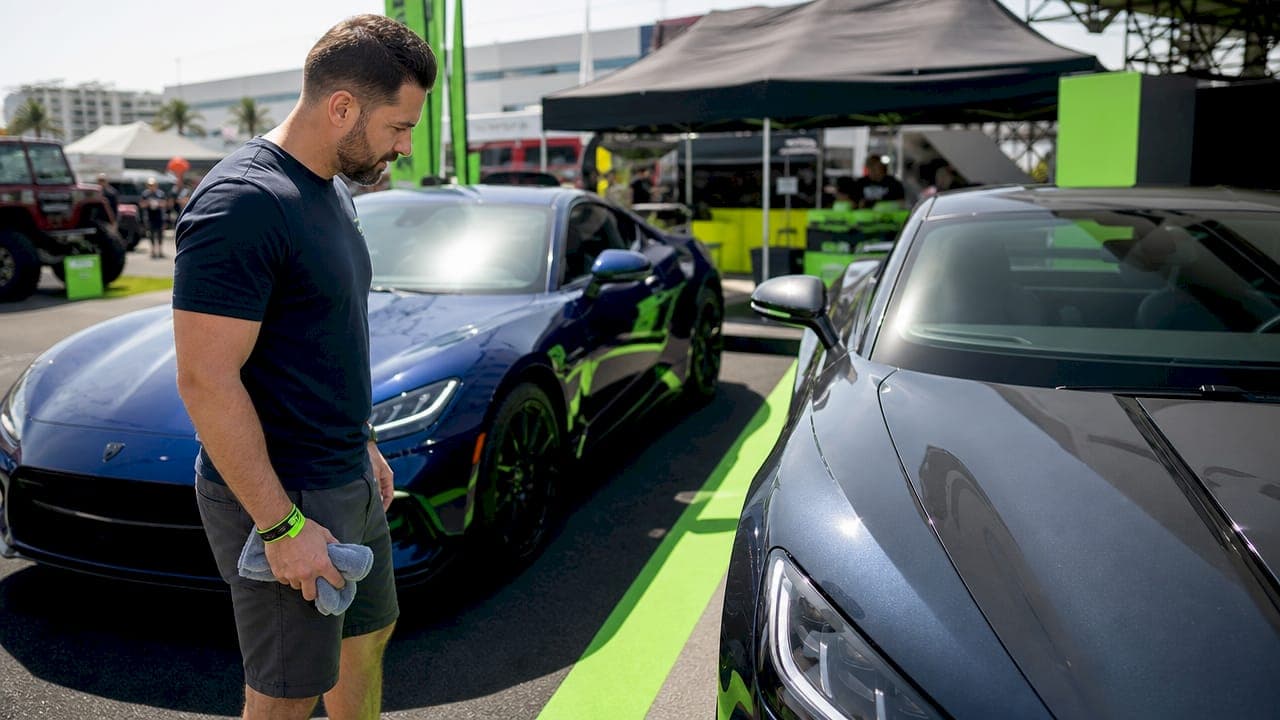
XPEL is the better paint protection film for most vehicle owners. It outperforms 3M on self-healing speed, optical clarity on dark paint, long-term UV stability, and template precision. That said, 3M is not a weak product. It earns its place for budget-conscious buyers, complex installations, and shorter ownership windows. The decision between these two films comes down to how long you plan to keep the car, what color it is, and how much the finish matters to you.
Here is the quick breakdown before diving deeper:
- XPEL advantages: Faster self-healing, superior clarity on dark vehicles, a very large number of precision templates via the Design Access Program, broader product lines including ceramic-integrated and ultra-thick options, and a transferable 10-year warranty
- 3M advantages: Better adhesive repositionability during installation, slightly stronger post-cure edge bond in harsh environments, simpler product selection, and a 10–15% lower price on most jobs
- Both brands offer: Transferable long-term warranties (when installed by authorized dealers), self-healing top coats, UV protection, and rock chip resistance
- Bottom line: Installer certification and installation quality affect your results more than brand selection alone
Table of Contents
- How does self-healing technology compare between XPEL and 3M?
- Which film offers better optical clarity and yellowing resistance?
- How does installation precision differ, and why does your installer matter?
- What do the warranties actually cover, and what voids them?
- How much more does XPEL cost, and is the premium worth it?
- Which brand has the stronger reputation, and when does 3M make more sense?
- Final verdict: which PPF should you choose?
- Tintandwrapscustoms installs both XPEL and 3M in Van Nuys
- Key Takeaways
How does self-healing technology compare between XPEL and 3M?
Self-healing PPF works through an elastomeric top coat that relaxes back to its original shape when exposed to heat, whether from sunlight, warm water, or a heat gun. Minor scratches and swirl marks disappear on their own. Both XPEL and 3M use this technology, but they perform differently in real-world conditions.
XPEL's self-healing is faster and more aggressive. Deeper scratches that remain visible on 3M film tend to heal out on XPEL. For a daily driver collecting shopping cart dings, car wash brushes, and parking lot scuffs, that difference compounds over years of use. 3M's film heals effectively too, but it requires higher thermal input and more time to achieve the same result.
"XPEL's Ultimate Plus film recovers from things that 3M's Scotchgard Pro Series won't fully heal from. In our shop, we see it constantly. For a daily driver, that self-healing difference adds up over time." — Professional installer perspective, Car Teks
XPEL also shows stronger long-term stain resistance in harsh environments, which matters in regions with road salt, industrial fallout, or heavy UV exposure. 3M's post-cure edge bond is slightly stronger, which gives it an advantage in freeze-thaw climates where edge lifting is a concern.
- XPEL heals faster at lower thermal input
- 3M requires more heat for equivalent recovery
- XPEL handles deeper surface marks more completely
- 3M's edge retention is slightly better after full cure in harsh climates
Which film offers better optical clarity and yellowing resistance?
On a white or silver car, you would struggle to tell XPEL and 3M apart. On black, dark navy, or deep metallic finishes, the gap is visible. XPEL delivers superior optical clarity on dark paint with less orange peel texture, making the film nearly invisible once installed. 3M's film is close, but installers consistently report a mild texture under certain lighting on deep black vehicles.
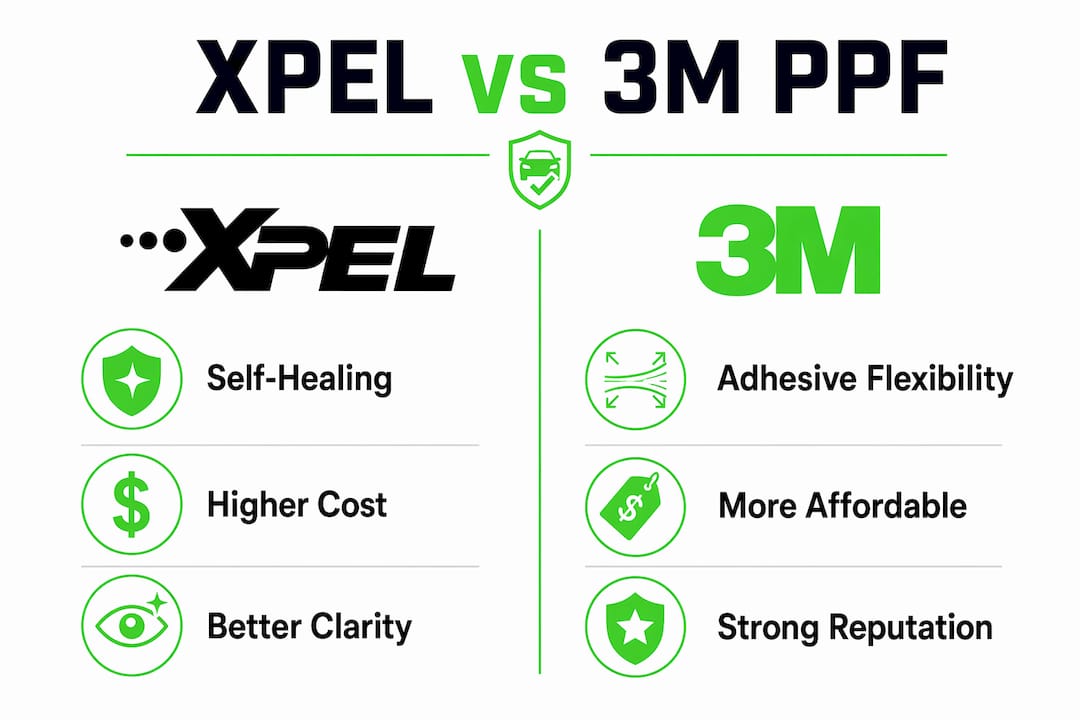
Long-term UV stability is where the difference becomes most consequential. After 7–10 years of use, XPEL maintains stronger UV stability and clarity retention on dark vehicles than 3M. This is not a first-year quality issue. It is a decade-long performance characteristic that experienced installers observe on aged installations.
Both films include UV inhibitors that prevent yellowing, and both have improved dramatically over older PPF generations. Climate plays a role too. High UV regions like Southern California and the Southwest accelerate yellowing in any film, which is why long-term UV stability matters more for owners in those areas.
- XPEL: virtually invisible on dark paint, minimal orange peel texture
- 3M: excellent clarity, minor texture possible under direct light on deep black
- XPEL: stronger long-term UV stability at 7–10 years on dark vehicles
- 3M: comparable performance on light and standard metallic colors
- Both: significantly better than driving without any film protection
Pro Tip: If you own a black, dark blue, or deep metallic vehicle and plan to keep it for more than five years, XPEL's optical advantage becomes increasingly meaningful with time.
How does installation precision differ, and why does your installer matter?
A great film installed poorly will fail before a decent film installed by a skilled technician. Installer certification and installation quality affect final performance and warranty legitimacy more than brand selection alone. That is the most important thing to understand before you pick a film.
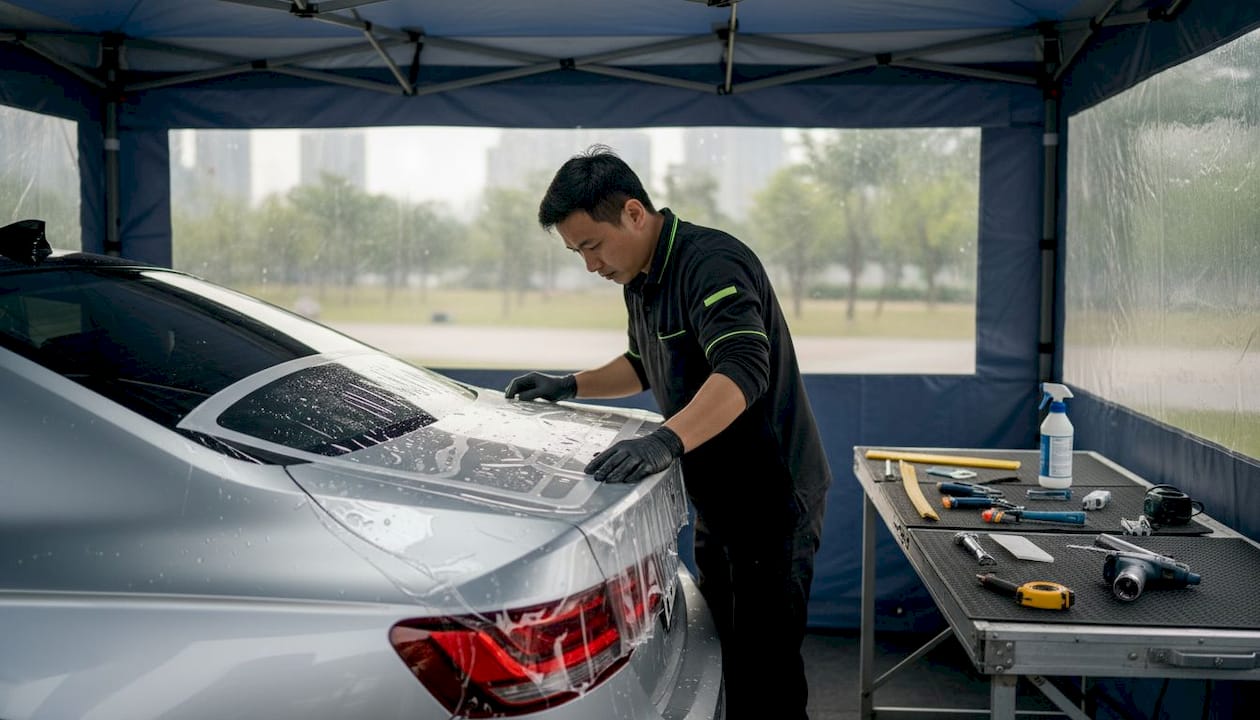
XPEL's Design Access Program (DAP) holds a very large number of precision pre-cut templates covering virtually every vehicle, trim level, and production year. Those templates mean less hand-cutting, tighter edges, and zero blade-to-paint contact on a freshly corrected finish. 3M offers its own pattern library, but XPEL's is more extensive by a wide margin.
Where 3M has a real installation advantage is adhesive behavior. 3M's adhesive allows repositioning during application, which benefits complex, high-curvature panels. XPEL's adhesive is more aggressive from first contact, demanding precision on the first attempt. For tight compound curves on sculpted body panels, 3M's forgiving adhesive can produce cleaner results even in experienced hands.
- XPEL DAP: 80,000+ templates, minimal cutting, no blade-to-paint risk
- 3M: repositionable adhesive, better for complex curves and tight radii
- XPEL: aggressive adhesive requires first-try precision
- Both: warranty requires installation by an authorized dealer
Pro Tip: Before booking any installation, verify your installer's certification through the official XPEL dealer locator or 3M's authorized dealer finder. An uncertified installation voids the warranty on both brands.
For owners of vehicles with complex body sculpting, like many Tesla models or European sports cars, 3M's adhesive flexibility can actually produce a better result depending on the installer's experience with each film. Ask your installer which film they have more hours on before deciding.
What do the warranties actually cover, and what voids them?
Both XPEL and 3M offer transferable long-term warranties when the film is installed by an authorized dealer. The transfer is passive, meaning you pass the original documentation to the new owner without filing paperwork or paying fees. That shared structure is what makes these two brands the natural comparison for buyers who factor resale value into the decision.
Coverage on both films includes yellowing, cracking, peeling, bubbling, and delamination. Neither brand covers impact dents, and neither covers headlights. Rock chip protection is covered as a surface benefit, but a chip deep enough to dent the metal is not a warranty claim on either product.
What voids coverage is straightforward: installation by a non-certified shop. Both brands are explicit about this. An uncertified installation means no warranty, regardless of how well the film looks at first. Keep your installation documentation. If you sell the vehicle, that paperwork is what transfers the warranty to the buyer and adds real resale value.
- Coverage: yellowing, cracking, peeling, bubbling, delamination
- Excluded: impact dents, headlights
- Voided by: non-authorized installation
- Transfer: passive, documentation only, no fees
- Both brands: 10-year duration, same core structure
Installer feedback suggests XPEL's warranty claim process tends to be faster and more straightforward, though 3M's corporate backing provides strong long-term warranty reliability. For a buyer concerned about whether the manufacturer will still honor claims in year nine, 3M's Fortune 500 stability is a legitimate consideration.
How much more does XPEL cost, and is the premium worth it?
XPEL typically costs more than 3M for the same coverage area. On a full front-end job covering the hood, fenders, bumper, and mirrors, that difference might be a few hundred dollars. On a full-body wrap, it can be more. Labor makes up the majority of any PPF installation cost, so the material price gap is a smaller share of your total investment than most buyers expect.
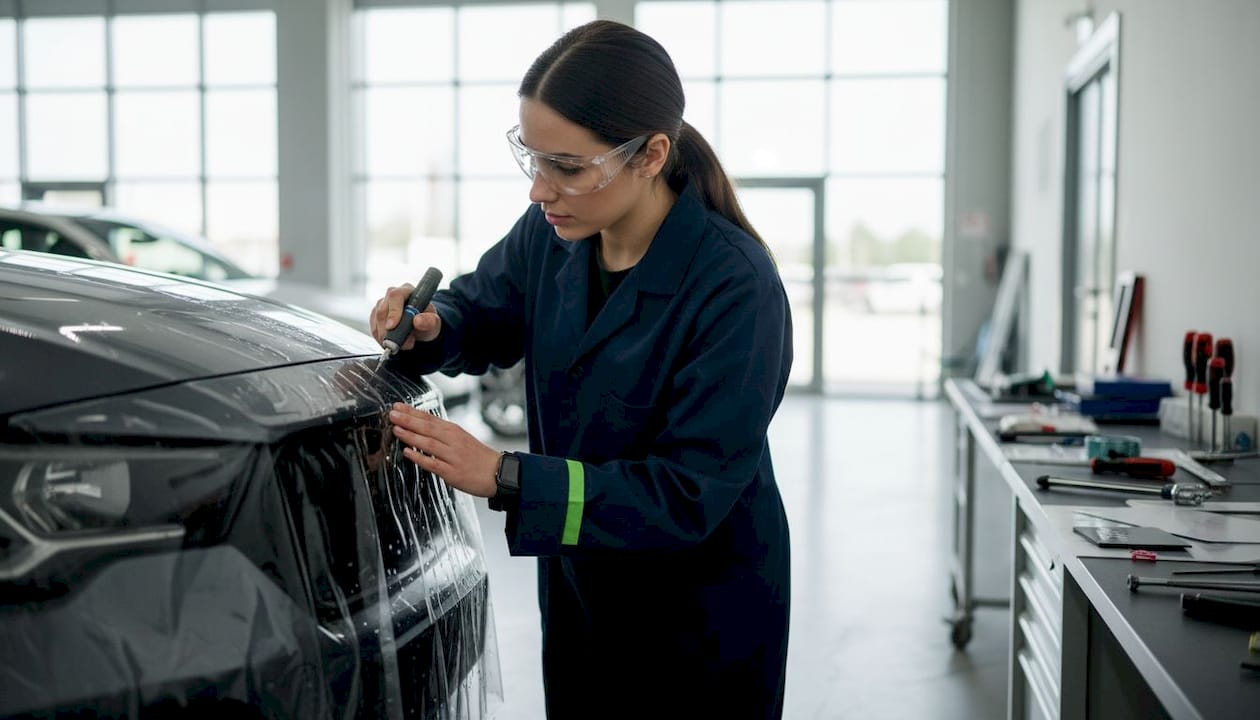
For owners keeping a vehicle eight years or longer, the XPEL premium is easy to justify. Faster self-healing, better long-term clarity on dark paint, and a wider installer network for warranty claims all compound in value over a decade. The film pays for itself in preserved paint condition and resale value.
3M makes more financial sense in three specific scenarios:
- Leased vehicles: A three-year lease does not need a film built for ten years of performance. 3M protects the paint and satisfies lease return requirements at a lower cost.
- Fleet or work vehicles: When cosmetic perfection is not the priority, 3M's rock chip and road debris protection is excellent at a better price per panel.
- Maximum coverage on a fixed budget: 3M's lower material cost can let you protect more panels for the same total spend, which sometimes matters more than marginal performance differences.
For a daily driver on a dark vehicle that you plan to own long-term, the XPEL premium is modest relative to the total job cost and the decade of performance you get in return.
Which brand has the stronger reputation, and when does 3M make more sense?
3M invented automotive paint protection film. The original product was developed for military helicopter blades and adapted for vehicles. That history gives 3M a legacy no other PPF brand can claim, along with the manufacturing scale and corporate stability of a Fortune 500 company. Their warranty is backed by an organization that will almost certainly still exist in 2036.
XPEL's strength comes from focus. XPEL is built entirely around vehicle protection, which has accelerated innovation in self-healing technology, template precision, and product line development in ways that a multi-industry manufacturer cannot match. XPEL wakes up every day thinking about PPF. 3M makes Post-it Notes, surgical tape, and thousands of other products. That focus shows in the product.
3M's product line is deliberately simple: two SKUs at 7.9 mil thickness, gloss and matte. XPEL offers multiple lines including thicker options and a ceramic-integrated film (XPEL ULTIMATE FUSION) with no 3M equivalent. For buyers who want ceramic integration without a separate coating appointment, 3M simply does not have an answer.
Situations where 3M is the better call:
- Complex body panels where repositionable adhesive reduces installation error
- Budget-conscious buyers who want a transferable 10-year warranty at lower cost
- Shorter ownership windows where long-term clarity differences are irrelevant
- Buyers who prioritize corporate stability for warranty confidence over a decade
Final verdict: which PPF should you choose?
XPEL is the better film for most vehicle owners, particularly those with dark-colored vehicles, long ownership plans, or a strong interest in finish quality. Its self-healing performance, optical clarity, template precision, and product line breadth give it a consistent edge in head-to-head comparisons. The 10–15% price premium is real but modest against the total cost of a professional installation.
3M is not a consolation prize. It is a genuinely strong film with specific advantages that make it the right choice in the right situation.
Choose XPEL if:
- Your vehicle is black, dark blue, or a deep metallic color
- You plan to own the car for five years or more
- You want ceramic integration without a separate coating step
- You want the most extensive template library for a cleaner installation
- Long-term optical clarity and self-healing performance are priorities
Choose 3M if:
- Your vehicle has complex sculpted body panels where adhesive flexibility helps
- You are on a tighter budget and want maximum coverage area per dollar
- You are leasing or plan to sell within three years
- You are protecting a fleet or work vehicle where cosmetics are secondary
- Corporate warranty stability over a decade is a priority for you
Regardless of which film you choose, verify that your installer is certified by the brand before committing. An authorized dealer installation is the only way to keep the long-term transferable warranty intact. Ask to see certification, check the brand's official dealer locator, and get the installation documentation in writing. The film matters, but the hands putting it on your car matter just as much.
For owners who want professional guidance on which film fits their specific vehicle and usage, consulting a certified installer before purchasing is worth the time. A good shop will tell you honestly which product they have more experience with and which one suits your car's color, shape, and your ownership timeline.
Tintandwrapscustoms installs both XPEL and 3M in Van Nuys
If you are in the San Fernando Valley and ready to protect your vehicle, Tintandwrapscustoms offers professional PPF installation for both XPEL and 3M films in a climate-controlled facility that eliminates the dust and debris contamination that ruins so many installations done in open bays.
With over 1,000 vehicles protected and a 5-star rating from verified customers, Tintandwrapscustoms brings the kind of installer expertise that makes the difference between a film that lasts a decade and one that starts lifting at the edges by year three. The team specializes in Tesla and EV installations, handles full-body wraps and partial coverage packages, and backs every job with manufacturer-supported warranties. Whether you land on XPEL for the clarity and self-healing or 3M for the budget and installation flexibility, the installation quality at Tintandwrapscustoms gives either film its best chance to perform. Get a quote at tintandwrapscustoms.com and bring your vehicle in for a consultation before you decide.
For post-installation care and detailing guidance that protects your PPF investment, AMB Pro Detailing offers expert automotive detailing services with a solid understanding of how to maintain PPF without voiding coverage.
Key Takeaways
XPEL leads on self-healing speed, optical clarity on dark vehicles, and template precision, while 3M offers better adhesive flexibility during installation and a price that is typically 10–15% lower than XPEL for equivalent warranty coverage.
| Point | Details |
|---|---|
| XPEL leads on clarity and healing | XPEL heals faster and maintains stronger UV stability on dark paint over 7–10 years. |
| 3M costs 10–15% less | The price gap is real but modest relative to total labor-heavy installation costs. |
| Both offer 10-year transferable warranties | Coverage requires authorized dealer installation; non-certified installs void both brands' warranties. |
| Installer quality matters most | A certified installer with the right film outperforms an uncertified one with the better film. |
| Tintandwrapscustoms installs both films | Van Nuys-based, climate-controlled facility with manufacturer-backed warranties and 1,000+ vehicles protected. |