How much does PPF cost for your vehicle?
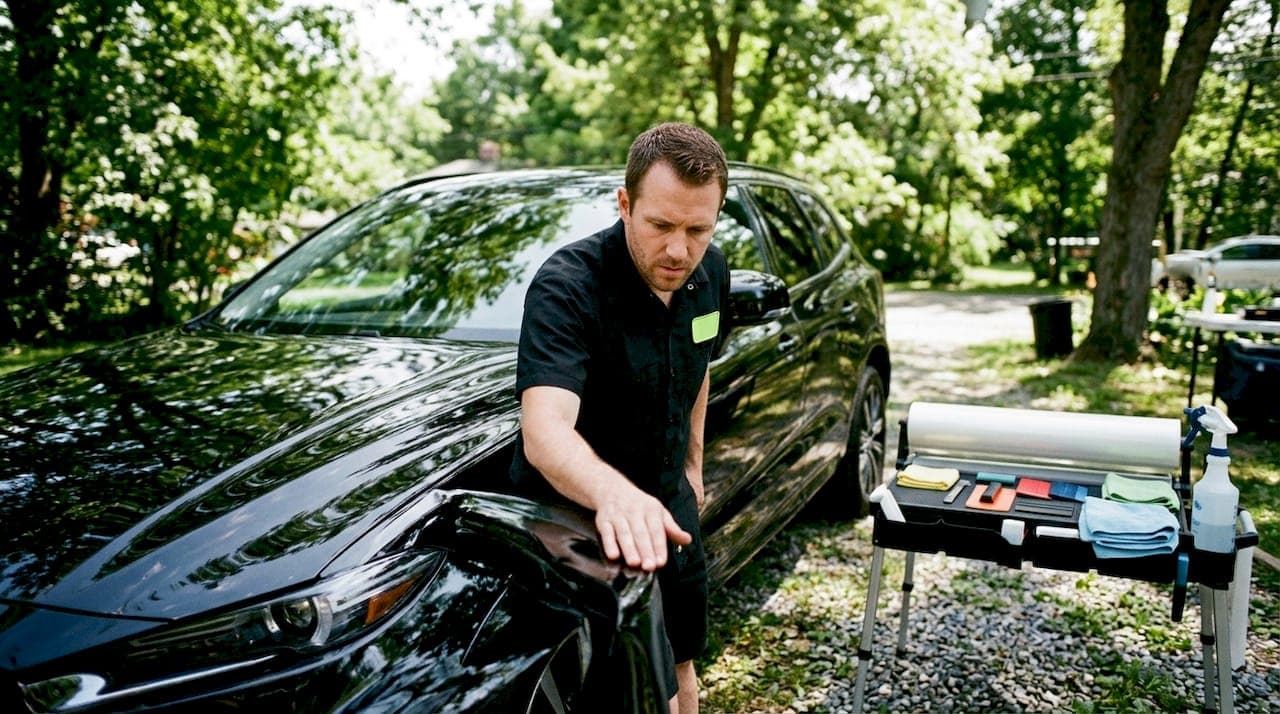
Paint protection film installation in the US varies widely in price depending on how much of your car you want covered, the film brand, and who installs it. For most daily drivers, a full front package on a sedan usually costs a moderate amount, while full body coverage is significantly more expensive, especially on larger vehicles.
Here's a quick look at typical price ranges by package, which vary depending on coverage and vehicle type:
- Partial front covers the front bumper, partial hood, and mirrors.
- Full front covers the complete hood, fenders, front bumper, mirrors, and headlights.
- Track package adds rocker panels, door edges, and A-pillars to the full front.
- Full body covers every painted panel, with prices higher for luxury and exotic cars.
SUVs and trucks cost more than sedans at every tier, simply because there's more surface area to cover. A full body wrap on a large SUV can push well past $8,000 with a premium film.
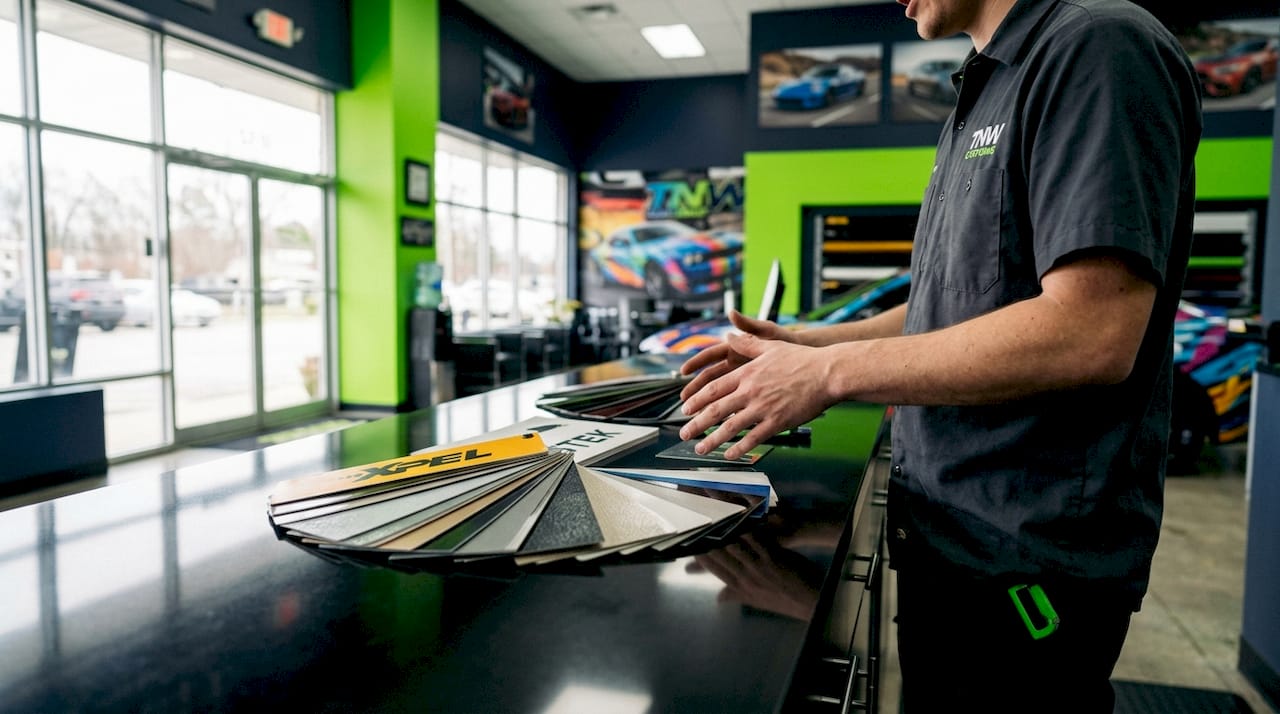
Film brand matters too. XPEL, STEK, and Llumar are among the top-tier options certified installers use, and their films carry manufacturer warranties that budget alternatives don't. Choosing a low-cost quote to save a few hundred dollars upfront often means paying for removal, paint correction, and reinstallation within a couple of years.
What factors drive the paint protection film cost up or down?
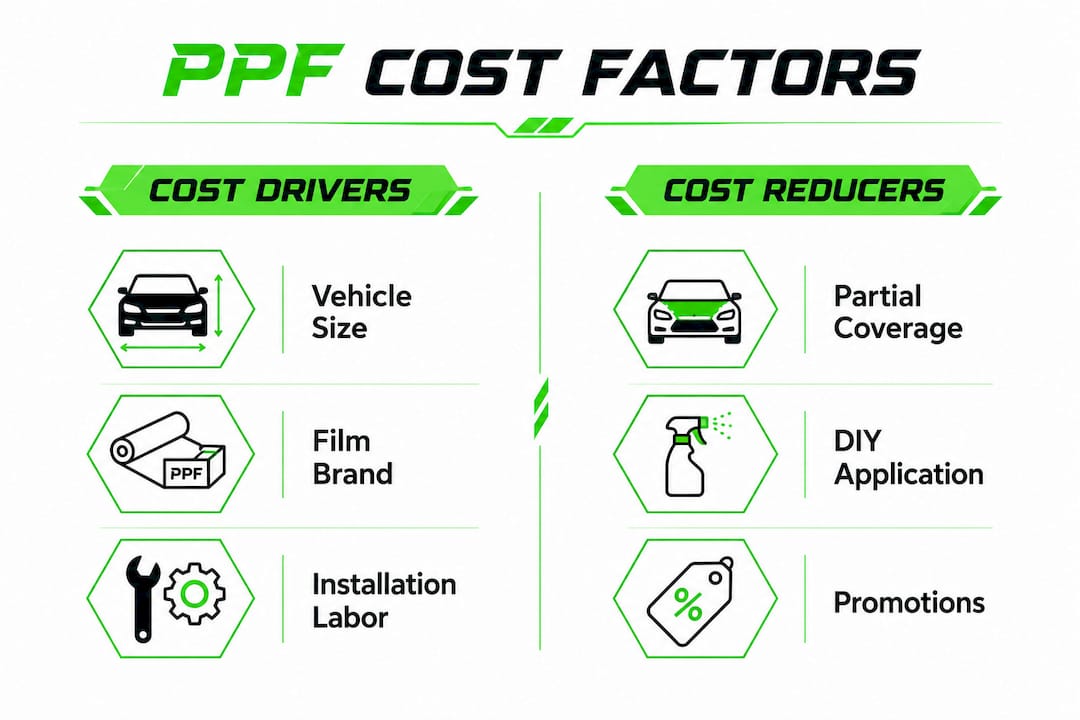
The final price on your invoice reflects several layers of cost, and understanding them helps you evaluate quotes accurately.
- Film quality and brand. Premium self-healing polyurethane film costs more per square foot than entry-level clear film, and this cost difference significantly affects the installed price.
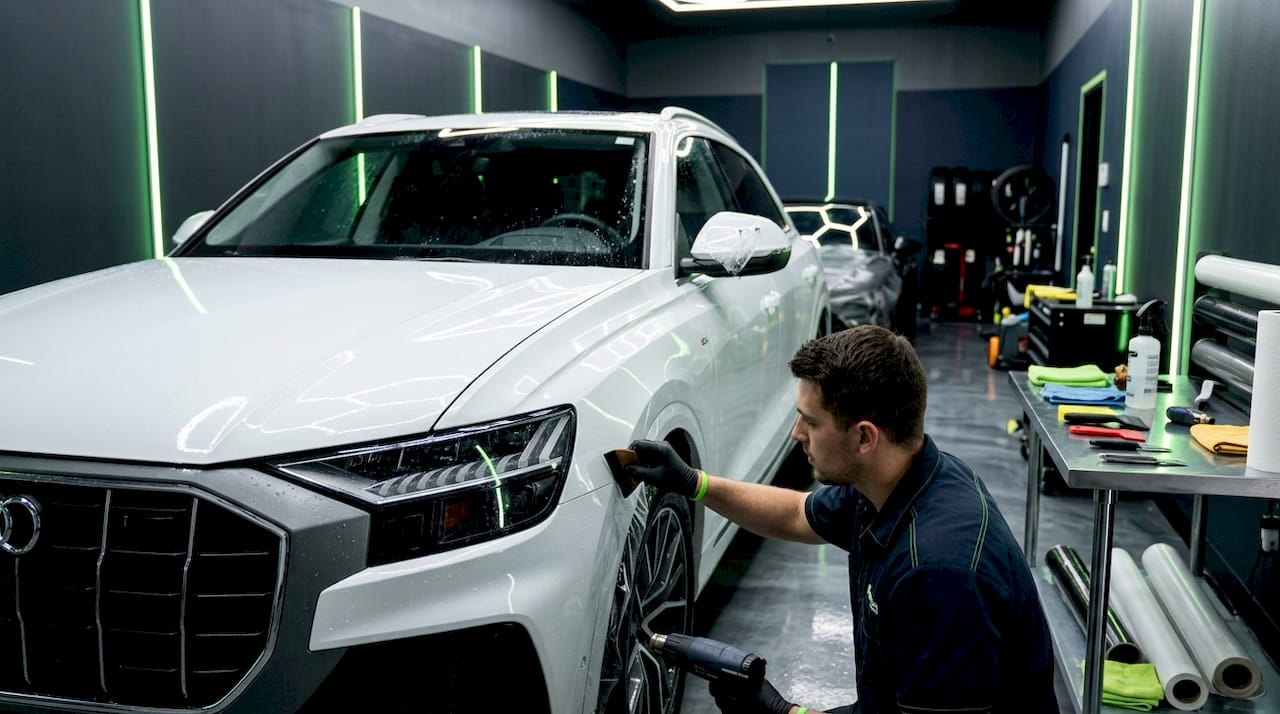
- Labor intensity. A professional installer spends many hours on a full front package, including decontamination, clay bar treatment, paint correction, custom pattern cutting, and edge wrapping. That's skilled trade work, not a quick wrap job.
- Vehicle size and complexity. A Porsche 911 and a Honda Civic may need the same panels covered, but the Porsche takes longer because of its curves, recesses, and tighter tolerances. More complex body shapes mean more labor and more film.
- Paint correction. If your car has swirl marks, oxidation, or existing chips, those must be fixed before film goes on. Paint correction adds substantially to the total cost, especially for heavily damaged paint. PPF locks in whatever condition the paint is in at application, defects included.
- Old film removal. Replacing existing PPF adds a removal fee before any new material goes on. Shops charge separately for this, and it's not a quick process on a full front.
- Installer expertise and location. Certified installers in major metro areas charge more than uncertified shops in smaller markets. Installer expertise can raise the total cost by 15%–30%, but that premium reflects tighter seam control, cleaner edge wraps, and better long-term adhesion.
- Overhead. Climate-controlled workspace, professional lighting, air filtration, digital plotter software, liability insurance, and warranty reserves all factor into what a quality shop charges.
Pro Tip: Ask any installer whether paint correction is included in their quote or billed separately. A shop that skips this step on a car that needs it is setting you up for visible defects sealed permanently under the film.
What coverage options are available, and what do they cost?
Most shops structure their paint protection film pricing around four tiers. Each one covers progressively more of the vehicle, and the right choice depends on how you drive and what you want to protect.
- Partial front ($600–$1,500). Covers the front bumper, partial hood, and mirrors. It's the entry point for budget-conscious drivers, but it leaves a visible film edge line across the hood where the film stops. That seam is noticeable, especially on darker paint.
- Full front ($1,500–$3,500). The most popular option. Covers the complete hood, full fenders, front bumper, mirrors, and headlights. Full front coverage protects roughly 90% of daily road hazard zones, with no visible seam lines because the film wraps around panel edges. For daily drivers, this is where the cost-to-protection ratio makes the most sense.
- Track package ($2,000–$4,000). Adds rocker panels, door edges, and A-pillars to the full front. Good for drivers who rack up highway miles or regularly deal with gravel roads.
- Full body ($5,000–$8,000+). Every painted panel, bumper to bumper. On luxury and exotic vehicles, this is the standard choice because the cost of a single panel respray often exceeds what the film costs per panel.
Pro Tip: Go full front over partial if you're on the fence. The visible seam line on a partial kit is one of the most common complaints from owners who went budget on their first install and regretted it.
One more variable worth knowing: matte or "stealth" PPF costs 20%–40% more than clear film because the satin finish is less forgiving during installation. Any imperfection shows. A full body matte PPF job can run $6,000–$10,000+ depending on vehicle size and film brand.
How long does PPF last, and what does the warranty cover?
Professionally installed PPF lasts 5–10 years with proper maintenance. The range reflects real differences in film quality, installation precision, and how the car is cared for afterward.
Top-tier film brands back their products with 10-year manufacturer warranties covering yellowing, peeling, cracking, and delamination. The paint protection film warranty is tied to the film brand, not just the installer, which is why choosing a certified shop matters. An installer who uses XPEL, STEK, or Llumar can register your vehicle for the manufacturer's warranty. A shop using an unbranded film cannot.
What the PPF warranty coverage typically includes:
- Yellowing and discoloration from UV exposure
- Peeling and delamination from adhesion failure
- Cracking under normal use conditions
- Bubbling caused by manufacturing defects
What PPF warranty coverage typically does not include:
- Physical damage from accidents or misuse
- Damage from improper washing (brush car washes, harsh chemicals)
- Normal wear on high-contact edges over time
Maintenance is straightforward but specific. Wash with pH-neutral soap, avoid automatic brush washes, and stay away from solvent-based products near film edges. Some installers recommend a ceramic coating on top of the PPF to make washing easier and extend the film's surface life.
When the film eventually reaches end of life, professional removal runs $200–$500 depending on coverage area. If the film was installed correctly and removed on schedule, the paint underneath should be in the same condition as the day it was applied.
What industry experts say about PPF pricing and value
A common assumption is that PPF installers pocket most of the price as profit. The reality is the opposite. The bulk of what you pay goes to expensive premium film and labor-intensive installation, leaving shops with thin margins on even a $2,000 job.
That math plays out clearly in real cost comparisons. A budget install at $1,000 that requires film removal, paint correction for blade marks, and reinstallation with quality film can total $3,700 over five years. A quality install at $1,800 stays at $1,800. The annual cost of ownership on the budget route runs roughly double.
Tesla and EV owners have become one of the fastest-growing PPF buyer segments, and for a specific reason. Tesla's factory paint is thinner and more chip-prone than most traditional vehicles, making early PPF investment a practical financial decision rather than a luxury. A Tesla Model 3 full front package commonly costs a higher-end amount; full body coverage is also priced significantly higher. Tintandwrapscustoms has seen this firsthand, having protected over 1,000 vehicles including a growing number of Teslas and EVs at their Van Nuys facility.
Labor accounts for more than half of the total installed cost on most PPF jobs. That figure surprises most vehicle owners who assume the film itself is the main expense. A master installer's time, the climate-controlled workspace, and the precision required to wrap a curved bumper without a single bubble or lifted edge are what justify the price of a quality installation.
Key Takeaways
Full front PPF delivers the strongest cost-to-protection ratio for most US daily drivers, covering a large majority of high-impact zones with no visible seam lines, along with a long manufacturer warranty on premium film.
| Point | Details |
|---|---|
| Typical price ranges | Partial front ranges from $800–$2,500; full front from $1,500–$2,200 (sedan) and $1,800–$2,600 (SUV); full body coverage starts at $4,000 and can exceed $8,000 on larger vehicles or premium films. |
| Labor is the largest cost | Labor accounts for 55%–65% of total installed cost on most PPF jobs. |
| Film brand and warranty | Top-tier films from XPEL, STEK, and Llumar carry 10-year manufacturer warranties against yellowing and peeling. |
| Budget installs cost more long-term | A $1,000 budget install can total $3,700 over five years once removal and reinstallation are factored in. |
| Matte film costs more | Matte or stealth PPF runs 20%–40% more than clear film due to installation complexity and higher material cost. |
Protect Your Vehicle with Tintandwrapscustoms
Tintandwrapscustoms installs premium PPF in a climate-controlled facility in Van Nuys, CA, using manufacturer-backed films that carry real warranty coverage. Whether you drive a daily commuter, a Tesla, or a luxury vehicle, the team has protected over 1,000 cars with the precision that keeps paint in showroom condition for years. Get a quote and find out exactly what your vehicle needs before you commit to anything.