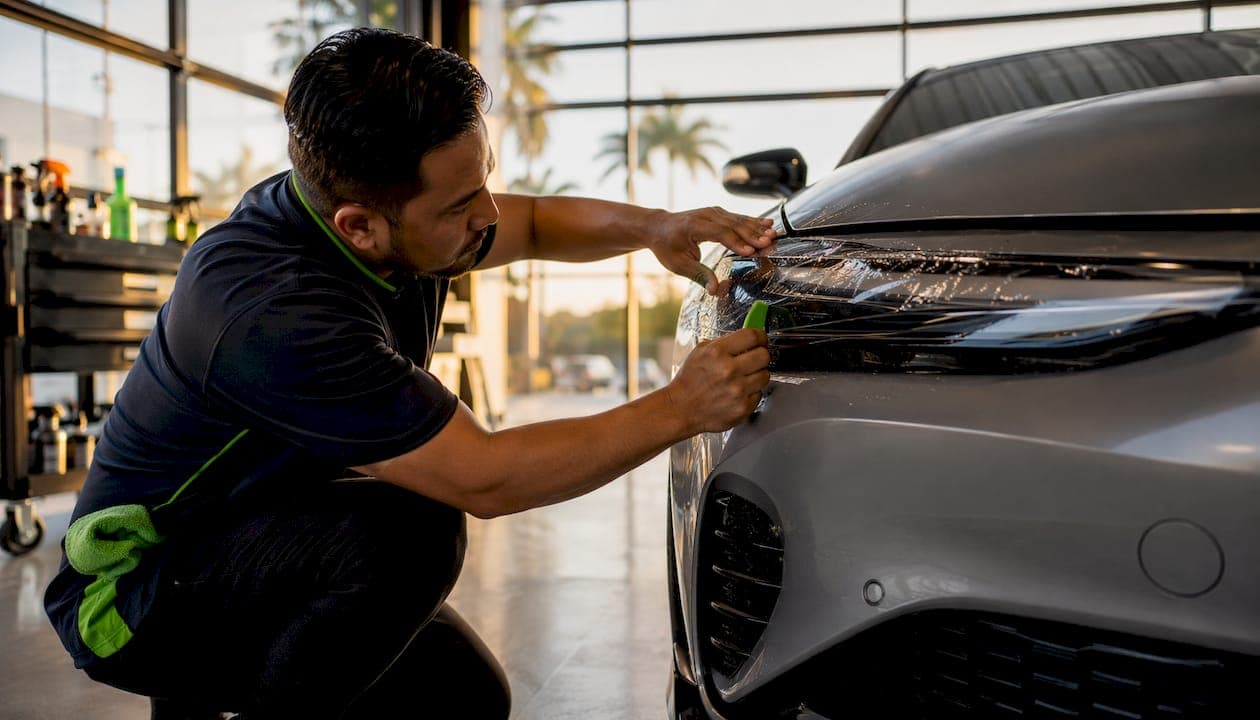
Headlight PPF is worth it for most vehicle owners, especially if your car is new, recently restored, or regularly driven on highways where rock chips and UV exposure are constant threats. Premium headlight protection film typically lasts 5–10 years depending on film quality, installation, and climate, with manufacturer warranties commonly covering that range. Professional installation in the U.S. generally runs in the range of several hundred dollars per pair, and the most common reason drivers choose it is to prevent the yellowing and hazing that makes headlights look aged and reduces nighttime visibility.
- Best candidates: New vehicles, freshly restored headlights, highway commuters, and owners in high-UV states like California, Arizona, and Texas.
- Lifespan: several years for premium films with proper maintenance; budget films may show wear sooner.
- Cost band: DIY precut kits start under $50; professional installation typically runs higher depending on headlight complexity and region.
- Top brands to know: XPEL, 3M, STEK, and shops like Tintandwrapscustoms that offer manufacturer-backed warranties.
Pro Tip: If your headlights are already yellowed or oxidized, restore them first. Applying PPF over damaged lenses seals in the haze permanently.
Table of Contents
- What is headlight PPF and how does it work?
- Pros and cons of putting PPF on headlights
- Headlight PPF vs ceramic coating vs restoration: what each actually solves
- What types of headlight PPF should you look for?
- How much does headlight PPF cost, and how long does it last?
- DIY kits vs professional installation: which one is right for you?
- How to maintain headlight PPF and what to do if it fails
- How to choose a PPF installer: questions to ask and red flags
- Tintandwrapscustoms: shop approach and real-world results
- Key Takeaways
- The part most buyers overlook about headlight PPF
- Professional headlight PPF in Van Nuys: what Tintandwrapscustoms offers
- Useful sources and manufacturer pages
What is headlight PPF and how does it work?
Headlight PPF, short for paint protection film applied to headlight lenses, is a thermoplastic polyurethane (TPU) film bonded directly to the outside of your headlight housing. It acts as a sacrificial barrier, taking the abuse that would otherwise degrade the polycarbonate lens underneath.
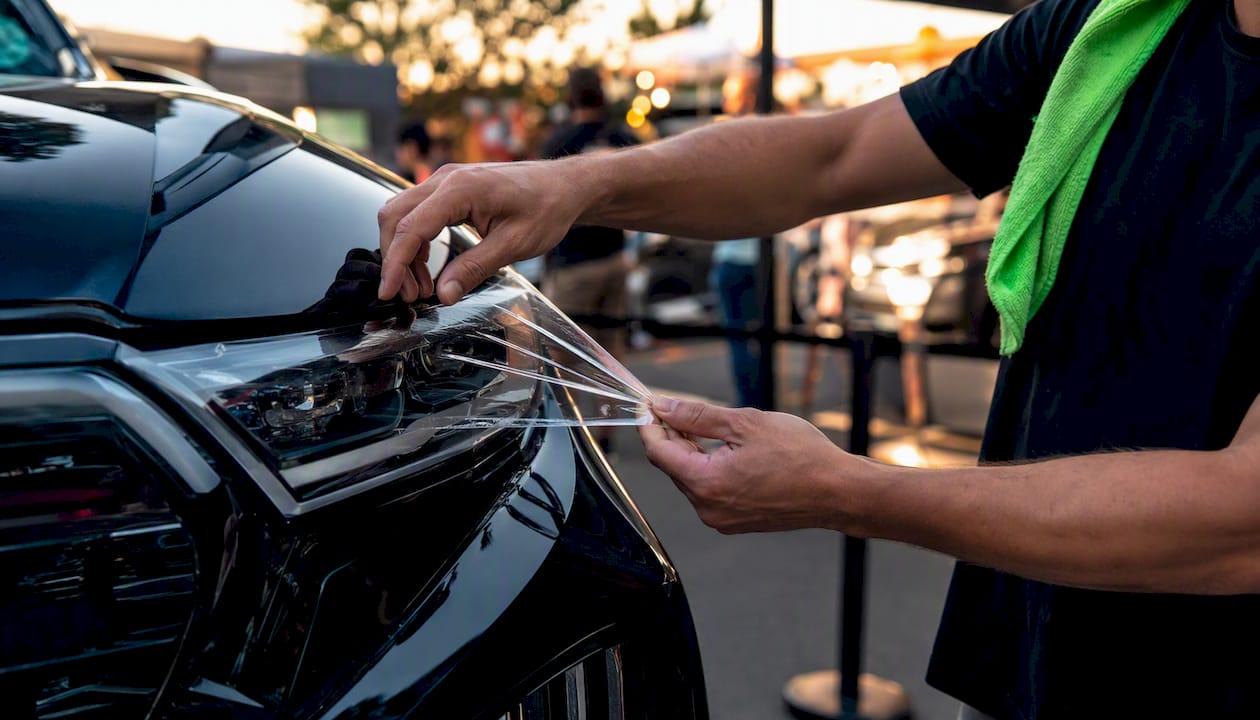
The construction is straightforward. A pressure-sensitive adhesive bonds the film to the lens surface. Above that sits the TPU layer itself, typically measured in mils (thousandths of an inch), which absorbs rock chips and minor abrasion. Many premium films add a topcoat above the TPU, either a ceramic-infused layer or a proprietary coating, which provides hydrophobic water-beading and additional UV resistance.
A few terms worth knowing before you shop:
- Mil (thickness): One mil equals 0.001 inch. Headlight-specific films commonly run 6–8 mil. Thicker generally means better chip resistance, though optical clarity matters just as much.
- Self-heal: The topcoat's ability to close light surface scratches when exposed to heat (sunlight or warm water). Not all films self-heal equally well.
- Optical clarity / haze: How much the film distorts or dims the light passing through. High-clarity films are nearly invisible; low-quality ones can create a noticeable milky look.
- VLT (visible light transmission): The percentage of light the film allows through. Clear PPF sits near 100% VLT; tinted headlight films reduce VLT intentionally for a smoked aesthetic.
The key distinction between headlight PPF and decorative tint film is function. Headlight protection film is engineered for impact resistance and UV blocking. Decorative tint film is primarily cosmetic and typically lacks the TPU construction needed to resist chips or prevent yellowing over time.
Pros and cons of putting PPF on headlights
The case for it
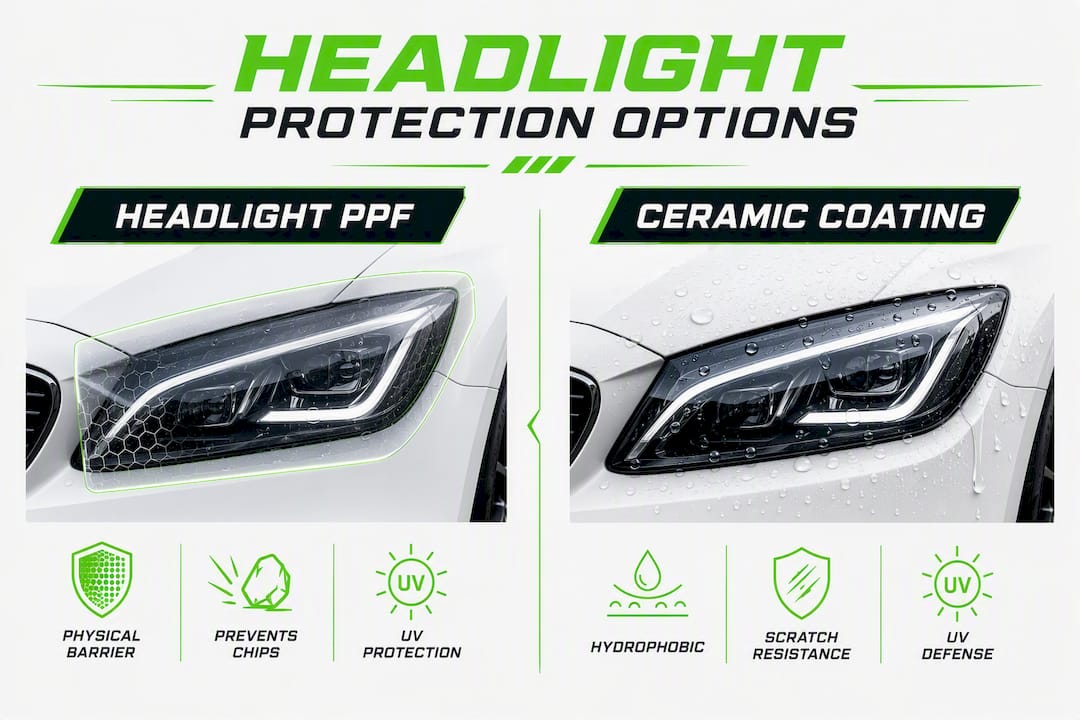
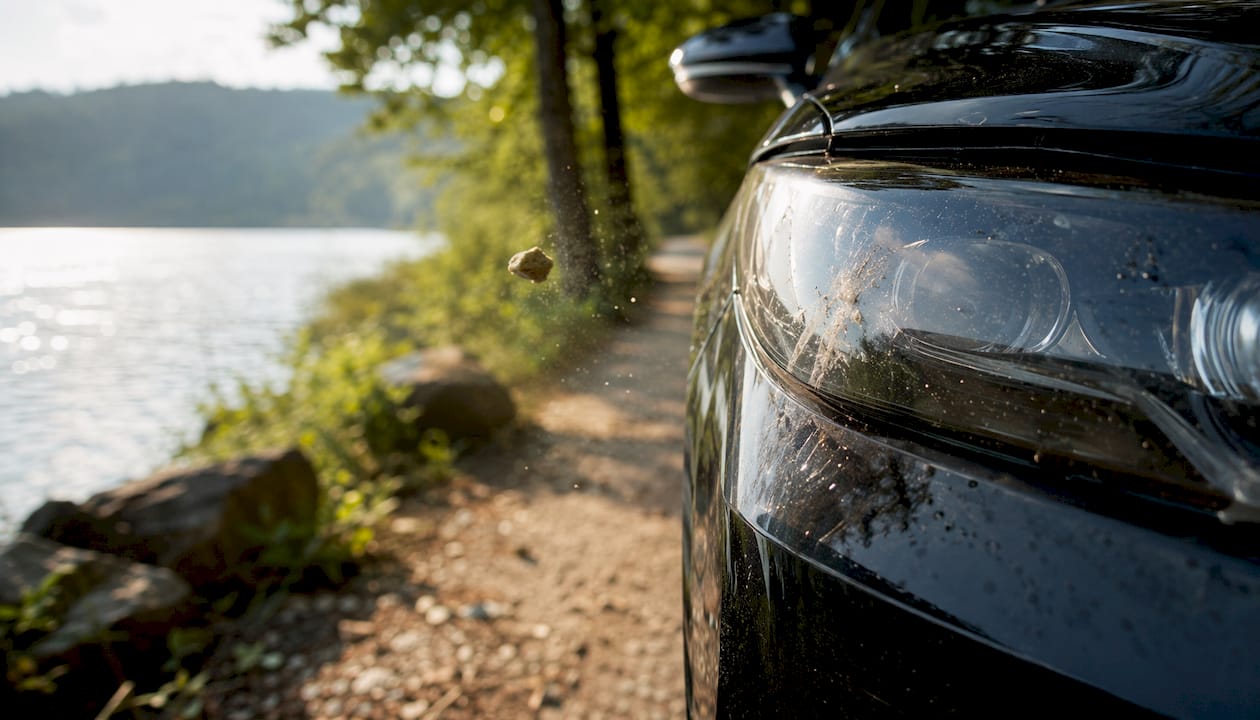
The strongest argument for headlight PPF is physical chip protection. A single rock strike on an unprotected polycarbonate lens can leave a pit that scatters light and accelerates UV degradation. PPF absorbs that impact. For highway drivers, this alone justifies the cost.
UV protection is the second major benefit. Polycarbonate yellows because UV radiation breaks down the surface coating over time. A quality PPF with UV inhibitors built into the TPU layer significantly slows that process, keeping lenses clear for years longer than an unprotected headlight.
Additional benefits worth noting:
- Hydrophobic topcoats shed water and road grime, making cleaning easier and reducing the buildup that contributes to haze.
- Resale value: Clear, bright headlights signal a well-maintained vehicle. PPF helps preserve that appearance.
- Restoration protection: Applying PPF immediately after a professional headlight restoration locks in clarity and prevents the lens from re-oxidizing within a year or two, which is what typically happens without protection.
The real trade-offs
Not every install goes perfectly, and the cons are worth knowing upfront.
- Optical haze from low-quality film or poor installation. Community reports and owner forums note that some installs reduce beam performance or create a visible milky cast. The fix is choosing a high-clarity film and a shop with a proven track record, not avoiding PPF altogether.
- Edge lift on complex curves. Modern headlight assemblies have compound curves that challenge both DIY kits and inexperienced installers. Lifted edges collect dirt, look bad, and eventually peel.
- VLT reduction with tinted films. Smoked headlight PPF reduces light output. This is intentional aesthetically but can create visibility and legal issues if VLT drops too low.
- Replacement cost. When the film reaches end of life or gets damaged, it needs to be removed and replaced. That's an additional labor cost.
The one scenario where PPF may not be the right first move: heavily oxidized headlights where the lens itself is deeply pitted or cracked. Restoration is cheaper and more appropriate there, with PPF applied afterward if the owner wants long-term protection.
Headlight PPF vs ceramic coating vs restoration: what each actually solves
These three options address different problems. Choosing the wrong one wastes money.
| Dimension | Headlight PPF | Ceramic Coating | Headlight Restoration |
|---|---|---|---|
| Problem solved | Chips, UV, yellowing prevention | Surface hydrophobics, minor UV | Removes existing yellowing/haze |
| Durability | several years (film lifespan) | 1–3 years typical | 1–3 years without protection |
| Rock chip protection | Yes (sacrificial TPU layer) | No | No |
| Optical clarity risk | Low with quality film/install | Very low | Improves clarity immediately |
| Replacement | Full film swap when worn | Reapply coating | Re-restore or protect |
| Typical cost | Moderate to higher (pro install) | Lower | Lowest |
| Ideal use case | New or restored lenses, highway drivers | Parked/low-chip-risk vehicles | Oxidized lenses before any protection |
The critical distinction: PPF is a sacrificial physical barrier. When a rock hits it, the film takes the damage instead of the lens. Ceramic coating is a surface treatment. It adds hydrophobics and some UV resistance, but it will not stop a chip. A rock that hits a ceramic-coated lens still damages the polycarbonate.
The smart sequencing for oxidized headlights is to restore first, then protect. Applying PPF over a yellowed lens seals in the damage permanently. Restore the lens to clarity, then apply PPF or ceramic depending on your chip-risk level and budget. Some owners layer both: PPF for physical protection, with a ceramic topcoat above for hydrophobics and gloss.
What types of headlight PPF should you look for?
Clear vs tinted vs topcoated
Clear optical PPF is the most common choice. It's designed to be invisible, preserving the factory look while adding protection. This is the right pick for anyone whose primary goal is preservation.
Tinted headlight PPF, often called smoked film, is available in multiple shade levels. Products like UPPF's headlight line offer measured VLT options such as H25, H35, and H50, where the number reflects the percentage of light transmitted. H50 is a light smoke; H25 is significantly darker. The aesthetic appeal is real, but darker shades reduce nighttime visibility and may not be street-legal in all states. Always confirm local regulations before going below 50% VLT on headlights.
Specialty topcoated PPF adds a ceramic or proprietary coating layer above the TPU. These films offer better hydrophobics, enhanced gloss, and sometimes improved self-healing performance compared to standard TPU alone.
Features that actually matter
- High optical clarity: Look for films with low haze ratings. A film that looks great on a paint panel can still create a milky cast on a clear headlight lens.
- UV/yellowing resistance: The TPU itself should contain UV inhibitors. This is what prevents the film from yellowing before the lens does.
- Self-healing topcoat: Useful for light swirl marks from washing, though it won't repair deep scratches or chips.
- Thickness: 6–8 mil is the typical range for headlight-specific films. Thinner films are easier to conform to curves; thicker films absorb more impact.
- Manufacturer warranty: Warranties range from 5 to 10 years depending on brand and product tier. A 5-year warranty is common; 10-year coverage is available from select manufacturers and typically covers yellowing, delamination, bubbling, and cracking.
XPEL, 3M, and STEK each offer headlight-specific films with documented optical clarity specs and installer networks. For a detailed look at how XPEL and STEK compare on film construction and warranty terms, the STEK vs XPEL comparison breaks down the differences worth knowing before you choose.
Pro Tip: Ask your installer for the film's technical data sheet before committing. Any reputable brand publishes haze percentage, thickness, and warranty scope. If the shop can't produce it, that's a signal.
How much does headlight PPF cost, and how long does it last?
Price ranges
| Option | Typical Cost Range | Notes |
|---|---|---|
| DIY precut kit (pair) | — | Pattern quality varies; no labor warranty |
| DIY bulk sheet (pair) | — | Requires cutting skill and tools |
| Professional install (pair) | several hundred dollars | Varies by headlight complexity, region, film brand |
| Restoration + PPF (pro) | several hundred dollars | Includes prep; best long-term value |
For a deeper look at how PPF pricing breaks down across vehicle types and regions, the PPF cost guide covers the full picture.
Lifespan expectations
Premium headlight PPF from established brands lasts 5–10 years with proper care, with manufacturer warranties commonly covering that range. Budget films or poorly installed film may show problems within 1–3 years. Climate matters significantly: vehicles parked outdoors in high-UV environments like Southern California or Arizona will stress film faster than those garaged in cooler climates.
Signs it's time to replace the film:
- Yellowing of the film itself (distinct from lens yellowing underneath)
- Edge lift at corners or around mounting tabs
- Bubbling or delamination from the lens surface
- Optical haze that wasn't present at install
- Cracking in the topcoat, usually from prolonged UV exposure without maintenance
How warranties typically work
Manufacturer warranties cover material defects: yellowing, delamination, bubbling, and cracking under normal use. Installer warranties cover workmanship: edge lift from poor application, bubbles from trapped contaminants, and fitment issues. The best shops offer both. When comparing quotes, ask specifically whether the warranty covers yellowing and what the claim process looks like. For context on what ceramic coating warranties typically cover versus what film warranties cover, the ceramic coating warranty breakdown is worth a read.
DIY kits vs professional installation: which one is right for you?
The honest decision flow
Start with your headlight shape. Modern assemblies use compound curves, wraparound designs, and integrated DRL channels that make fitment genuinely difficult. If your headlights are flat or gently curved, a quality precut kit is manageable. If they wrap around the corner of the bumper or have complex internal geometry, a DIY attempt is likely to result in visible seams, lifted edges, or bubbles.
Ask yourself these questions in order:
- Have you installed PPF or vinyl film before? If no, the learning curve on headlights is steep.
- Do you have access to a clean, dust-free, temperature-controlled space? Film applied in a garage with blowing dust will trap contaminants under the adhesive.
- Are you comfortable with wet-apply technique, squeegee work, and heat forming? These are the three skills that separate a clean install from a failed one.
- Is the headlight shape complex? If yes, go pro.
- Are you willing to accept that a failed DIY attempt may require professional removal and reinstallation, which costs more than the original pro quote?
What goes wrong with DIY
The most common failures are predictable. Precut kits often struggle with fitment on compound-curved assemblies, leaving gaps at edges or requiring stretching that creates thin spots. Trapped contaminants under the film show up as bumps that can't be smoothed out after the adhesive sets. Edge lifting starts at corners and spreads, especially on vehicles parked outdoors.
Spot repairs after a failed DIY install often cost more than a single professional install would have. That's the math that makes pros worth considering from the start.
What a good professional installer does differently
A quality shop approaches headlight PPF with a defined process:
- Prep first: Clean the lens thoroughly, address any surface oxidation, and degrease before film touches the surface.
- Custom or plotter-cut patterns: Rather than relying on a generic precut kit, experienced installers use plotted patterns specific to your vehicle's headlight geometry.
- Wet-apply technique: A slip solution lets the film be repositioned before the adhesive sets, which is critical for getting alignment right on curved surfaces.
- Heat forming: A heat gun or torch allows the film to conform to compound curves without lifting or wrinkling.
- Post-install QA: Inspect edges, corners, and the optical center of the lens for bubbles, haze, or alignment issues before the vehicle leaves the shop.
Pro Tip: Ask any shop whether they use a plotter for custom patterns or rely on precut kits. Custom-cut patterns fit better and last longer on modern headlight designs.
How to maintain headlight PPF and what to do if it fails
Daily and weekly care
Headlight PPF is low-maintenance, but a few habits extend its life significantly.
- Wash with a mild pH-neutral soap and a soft microfiber wash mitt. The same products safe for PPF on paint panels work on headlights.
- Rinse thoroughly after driving on salted roads or through heavy rain.
- Avoid automatic car washes with abrasive rotating brushes. Touchless washes are fine.
- Do not use aggressive polishes or compounds on the film surface unless the product is explicitly rated for PPF. Harsh abrasives damage the topcoat and accelerate yellowing.
What to avoid
Prolonged direct sun exposure without any maintenance is the fastest way to shorten film life. A periodic application of a PPF-safe spray sealant or detailer adds a layer of protection and keeps the topcoat performing. Avoid parking under trees where sap or bird droppings can sit on the film for extended periods. Both are acidic and will etch the topcoat if left untreated.
Troubleshooting problems
- Small bubbles shortly after install: Often water trapped during installation. Many resolve on their own within a few weeks as moisture escapes. If they persist past 30 days, contact the installer.
- Edge lift at corners: This is a workmanship issue if it appears within the warranty period. Contact the shop. If it appears after several years, it's normal wear and signals replacement time.
- Film yellowing: If the film itself yellows before the warranty expires, that's a manufacturer defect. Document it with photos and contact the installer to initiate a warranty claim.
- Optical haze: If the film develops a milky appearance that wasn't there at install, it may be delaminating from the lens. This is also a warranty-eligible defect on most premium films.
Repairs to a small section of headlight PPF are possible but often visible at the seam. Full replacement of the film on a single headlight is usually the cleaner solution.
How to choose a PPF installer: questions to ask and red flags
Pre-visit checklist
Before you call a shop, know what you're looking for. A quality headlight PPF installer should be able to answer every one of these without hesitation:
- Do you have a climate-controlled installation bay? (Dust and temperature swings kill adhesion.)
- How many headlight PPF installs have you completed?
- Can you show before/after photos of headlight work specifically?
- What film brand and product line do you use, and can you provide the technical data sheet?
- What does your warranty cover, and is it the manufacturer warranty, your shop warranty, or both?
Questions to ask during the quote
- Do you use custom plotter-cut patterns or precut kits for this vehicle?
- Does the warranty cover yellowing of the film, not just delamination?
- What is the expected cure time before the vehicle can be washed?
- What is your removal policy if I want the film replaced in three years?
Red flags that should make you walk away
- No dedicated indoor workspace. Film applied outdoors or in an open garage will trap contaminants.
- No portfolio of headlight-specific work. General PPF experience on paint panels doesn't automatically translate to headlight installs.
- Vague warranty language like "we stand behind our work" with no written terms.
- A fixed low price quoted without seeing the vehicle. Headlight complexity varies enormously between models, and a shop that doesn't inspect first is guessing.
How to validate a shop's claims
Ask for photos from a recent headlight install on a similar vehicle. Request a reference from a customer who had the same service. Shops confident in their work will provide both. Prefer installers who are authorized by or affiliated with the film manufacturer, since that relationship typically includes training standards and warranty backing.
Tintandwrapscustoms: shop approach and real-world results
Tintandwrapscustoms has protected over 1,000 vehicles from its Van Nuys, CA facility, earning a 5-star rating from customers who consistently cite the attention to detail and quality of finish. Every headlight PPF install happens inside a climate-controlled bay, which eliminates the dust contamination and temperature variability that cause most DIY and low-end shop failures.
The shop's workflow for headlight protection follows a defined sequence:
- Prep: Inspect the lens condition, perform restoration if needed, clean and degrease thoroughly before any film is cut.
- Patterning and cutting: Custom patterns are used for precise fitment on the specific vehicle, not generic precut kits.
- Installation: Wet-apply technique with proper squeegee sequence and heat forming on complex curves.
- QA and warranty registration: Post-install inspection of edges, optical center, and corners before the vehicle leaves. Manufacturer-backed warranties are registered at this stage.
Tintandwrapscustoms offers manufacturer-backed warranties on the films it installs, covering yellowing, delamination, bubbling, and cracking under normal use. Customers in the San Fernando Valley can also request before/after documentation of their specific install.
Key Takeaways
Headlight PPF is the most durable way to prevent yellowing and rock-chip damage on new or restored headlights, with premium films lasting 5–10 years under manufacturer warranty.
| Point | Details |
|---|---|
| Restore before you protect | Apply PPF only after restoring oxidized lenses; film seals in existing damage permanently. |
| Film lifespan and warranty | Premium headlight PPF lasts 5–10 years; look for warranties covering yellowing, delamination, and bubbling. |
| DIY vs professional install | Complex, compound-curved headlights need a pro; DIY kits work on simpler shapes with the right prep and technique. |
| VLT matters for tinted film | Smoked headlight PPF reduces light output; confirm local regulations before going below 50% VLT. |
| Tintandwrapscustoms | Van Nuys shop with 1,000+ vehicles protected, climate-controlled install, and manufacturer-backed warranties on every headlight PPF job. |
The part most buyers overlook about headlight PPF
There's a version of this conversation that goes: "Is PPF worth it for headlights?" And the answer almost everyone gives is some variation of "yes, if you care about your car." That's technically true but not very useful.
The more honest answer is that headlight PPF is worth it when the preparation is right and the installer knows what they're doing. The film itself, from any of the major brands, is genuinely good. What separates a five-year clean install from a peeling mess at 18 months is almost always the prep and the fitment, not the film brand.
What I see consistently is that buyers focus on the film spec and ignore the shop's process. They'll spend an hour comparing XPEL vs STEK optical clarity ratings and then book the cheapest shop in town. That's backwards. A premium film installed poorly will fail faster than a mid-tier film installed correctly in a clean, climate-controlled environment with proper prep.
The other thing worth saying plainly: if your headlights are already yellowed, PPF is not the fix. Restoration is the fix. PPF is what you do after restoration to make sure you don't have to restore them again in two years. That sequencing is the single most cost-effective decision a vehicle owner can make on this topic, and it's the one most people skip because they want to protect the headlights without admitting they need work first.
Professional headlight PPF in Van Nuys: what Tintandwrapscustoms offers
Tintandwrapscustoms provides complete headlight protection packages from its climate-controlled Van Nuys facility, including lens restoration followed by PPF installation for vehicles where the lenses need prep before film goes on. Every install uses custom-cut patterns for your specific vehicle, not generic precut kits, and every job is backed by a manufacturer warranty covering yellowing, delamination, and bubbling.
Getting a quote is straightforward. Reach out with your vehicle's make, model, and year, note the current condition of your headlights (clear, lightly hazy, or heavily oxidized), and let the team know whether you want clear protection or a smoked shade. From there, the shop will confirm the right film, walk you through warranty terms, and schedule your install. Turnaround for a headlight PPF job is typically same-day or next-day depending on whether restoration is included.
Book your headlight PPF appointment at Tintandwrapscustoms and leave with manufacturer-backed warranty documentation in hand.
Useful sources and manufacturer pages
For readers who want to verify specs, compare warranty terms, or dig into installation technique before booking:
- XPEL Headlight Protection Film: Product page with FAQs on lifespan, yellowing, and finding an installer near you.
- UPPF Headlight PPF: Detailed product page covering tinted shade options (H25, H35, H50), VLT specs, and warranty terms.
- Tint Academy Installation Tutorial: Step-by-step headlight PPF install guide covering prep, slip solution, squeegee technique, and bubble elimination.
- Ceramic Pro Headlight PPF Guide: Thorough overview of film function, sequencing (restore then protect), and what to expect from a professional install.
- CovrGard PPF Lifespan Resource: Practical guidance on what affects film longevity and when to plan for replacement.
- Tintandwrapscustoms (Van Nuys): Primary booking page for headlight PPF, restoration packages, and warranty registration for drivers in the San Fernando Valley.
Before choosing a tinted headlight film, confirm your state's regulations on minimum headlight output. VLT limits for headlights are not uniformly defined across all U.S. states, and a shade that's legal in one state may not be in another. When in doubt, ask your installer to confirm legal limits for your specific vehicle and location.