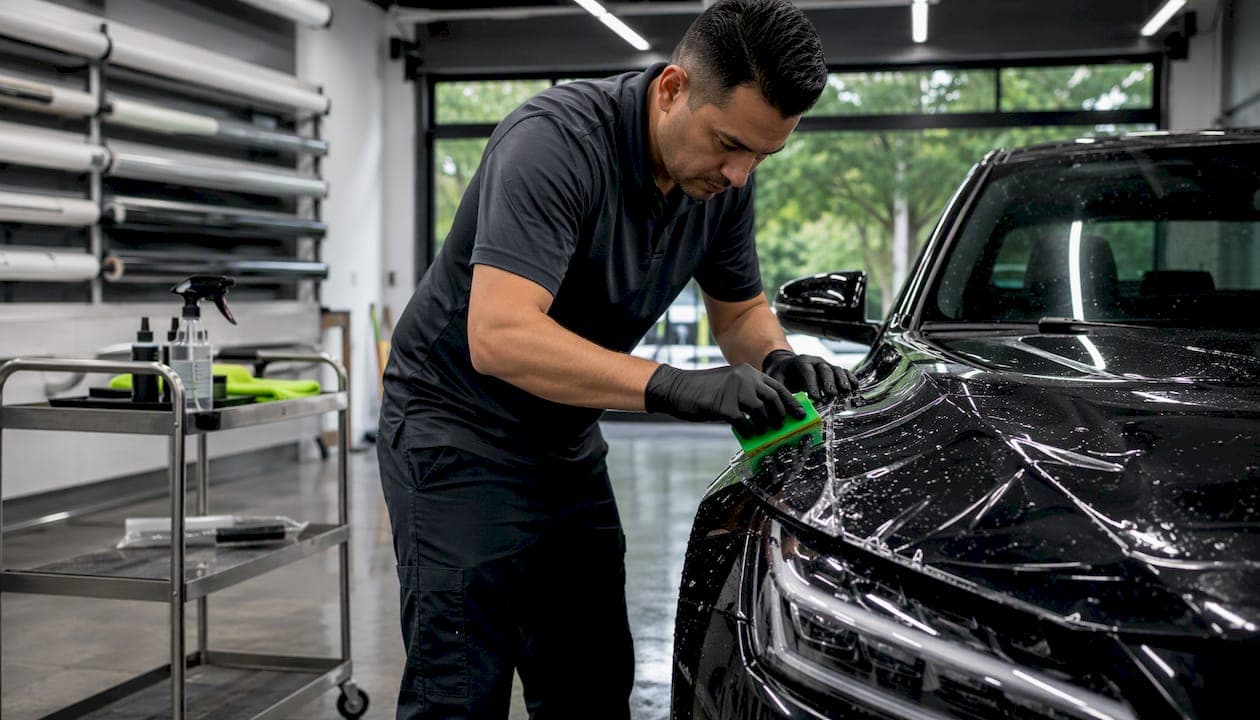
For most drivers, a full front PPF package is the right call. It covers the panels that take the most punishment — hood, bumper, fenders, and headlights — at a fraction of full-car cost. The one exception: if you own a high-value vehicle, drive a dark or metallic color, or plan to keep the car for five or more years, full-body coverage earns its price.
Here's the short version of what separates the two:
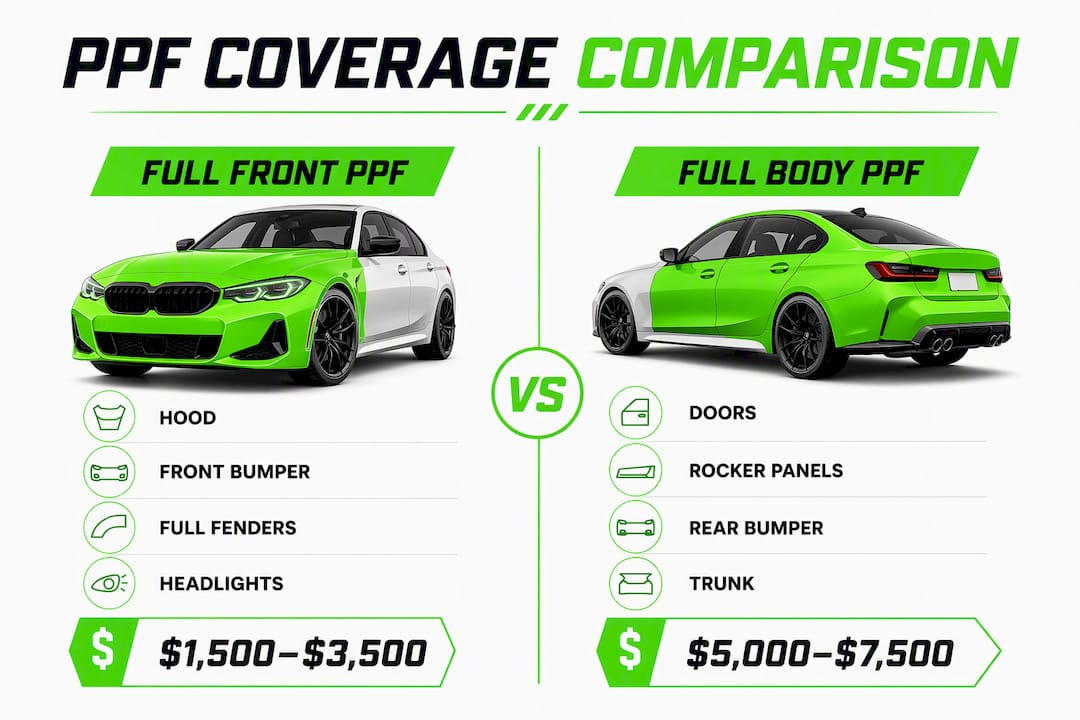
- Full front PPF covers the most vulnerable portions of your car's exterior that absorb the majority of road debris, rock chips, and bug damage. Prices for a professional full front installation typically range from $1,500 to $3,500 for most vehicles.
- Full-body PPF wraps every painted panel. Full-body coverage typically starts at $5,000 or more and can go up to $15,000+ for luxury or exotic models.
- Both options benefit from a climate-controlled installation facility and a manufacturer-backed warranty — two signals that separate quality shops from the rest.
Table of Contents
- How does full front PPF compare to full-body coverage?
- What exactly does "full front" PPF cover — and what doesn't it?
- How much does front paint protection film cost in the U.S.?
- What are the real trade-offs between full front and full-body PPF?
- Which PPF package fits your driving situation?
- Why installer quality matters as much as the film brand
- What to expect during installation and how to care for PPF afterward
- Key Takeaways
- The case for starting with full front and building from there
- Get a quote for full front or full-body PPF at Tintandwrapscustoms
- Useful sources
How does full front PPF compare to full-body coverage?
| Dimension | Full Front PPF | Full-Body PPF |
|---|---|---|
| Coverage area | Hood, front bumper, full fenders, headlights | Every painted panel: doors, rockers, trunk, pillars, all bumpers |
| Typical U.S. price | $1,500–$3,500 for most vehicles | $5,000+ (compact cars); $8,000–$15,000+ (luxury/exotic); varies by vehicle size |
| Install time | 6–12 hours | 2–5 days |
| Edge finish | Edges tucked into panel gaps (no visible cut line on quality installs) | Full tuck across all panels; uniform finish |
| Warranty/lifespan | 5 years with manufacturer-backed warranty | 5 years; same film, more coverage |
| Maintenance | Standard hand wash; avoid high-pressure edges | Same; more surface area to inspect periodically |
| Best use cases | Daily highway drivers, commuters, lease returns, budget-conscious owners | Show cars, dark/premium colors, long-term keepers, vehicles valued $55,000+ |
A professional full front install typically costs between $1,500 and $3,500, while full-vehicle PPF for compact cars starts around $5,000 and climbs to $8,000–$15,000 for luxury and exotic models. For most daily drivers, the front-end package delivers the best protection per dollar spent.
What exactly does "full front" PPF cover — and what doesn't it?
The term "full front" gets used loosely, so it's worth being precise. A true full front package covers:
- Front bumper — the entire face, lower valance, air intakes, and complex curves
- Full hood — total coverage with film wrapped under the leading edge
- Full fenders — the entire leading quarter panels, often extending into the wheel arch
- Headlights and fog lights — protection for expensive LED assemblies
What it does not typically include: side mirror caps, doors, rocker panels, rear bumper, or trunk. Those require add-ons or a full-body upgrade.
Full-body PPF extends protection to every painted surface: doors, rocker panels, rear bumper, trunk lid, pillars, and roof. Nothing is left exposed. It's the only option that delivers a truly uniform finish across the whole car.
Tucked edges vs. visible cut lines
A true full-front install wraps edges into panel gaps so there's no visible cut line on the hood or fenders. Partial installs — sometimes marketed as "front protection" — stop on the visible face of the panel, leaving a line that shows at certain angles, especially on darker paint.
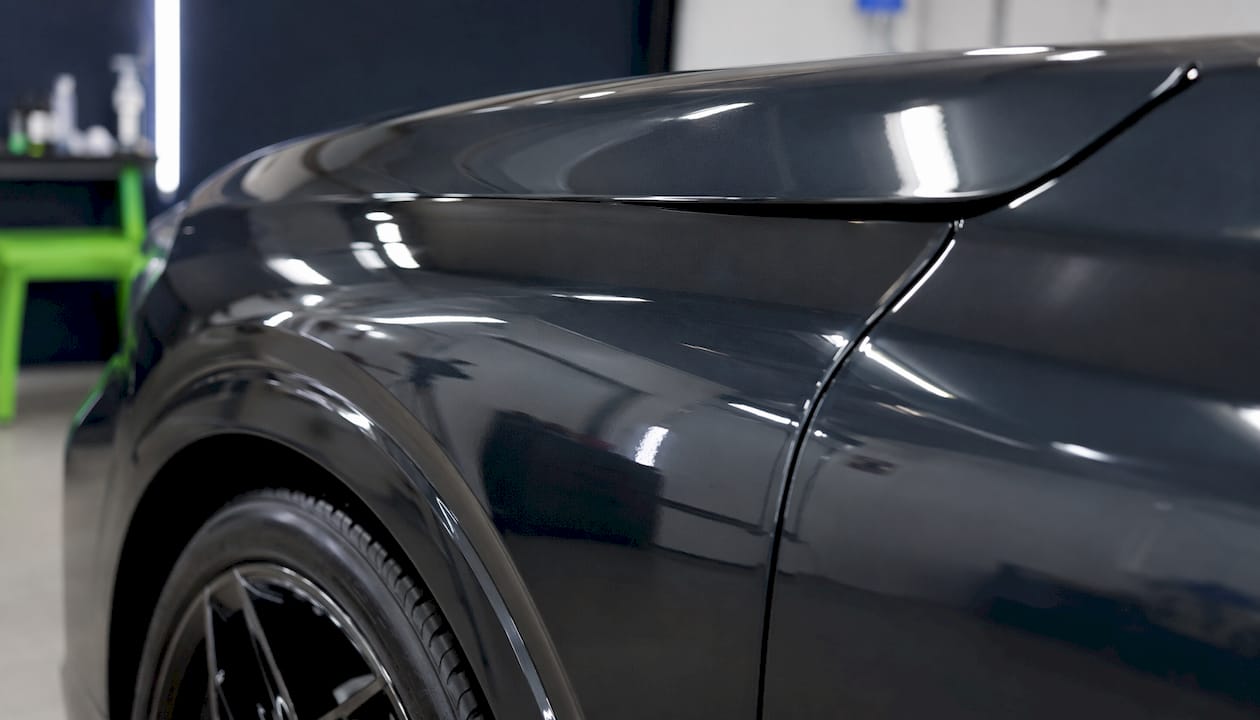
Pro Tip: When getting quotes, ask the installer specifically whether edges are tucked into panel gaps or cut on the surface. A shop that can't answer that question clearly is one to avoid.
How much does front paint protection film cost in the U.S.?
Price depends on five main variables: vehicle size, film brand and series, installer skill and certification, edge-tuck method, and any add-ons you select.
Full front PPF price ranges by vehicle type
| Vehicle Type | Full Front PPF | Full-Body PPF |
|---|---|---|
| Compact car / sedan | $1,500–$3,500 | $5,000–$7,500 |
| Mid-size sedan / hatchback | $1,500–$3,500 | $6,000–$9,000 |
| SUV / crossover | $1,800–$3,800 | $7,000–$11,000 |
| Full-size truck | $1,800–$4,000 | $8,000–$13,000 |
| Luxury / exotic | $2,500–$4,000+ | $8,000–$15,000+ |
Ranges sourced from U.S. installer pricing data. Final quotes vary by film brand, shop labor rates, and vehicle condition.
Full-vehicle PPF for compact cars starts around $5,000, climbing to $8,000–$15,000 for luxury and exotic models. SUVs and trucks cost 20–30% more than sedans at the same coverage level, largely because of larger hood and bumper surface area.
What actually moves the price
Film brand matters, but not as much as most buyers assume. The difference between a reputable entry-level film and a premium self-healing film is real, but installer skill and facility conditions often determine the final result more than a small step up in film grade. A premium film installed poorly will fail faster than a mid-tier film installed perfectly in a climate-controlled environment.
Edge-tuck work adds labor time and therefore cost. Shops that cut on the surface are faster and cheaper; shops that tuck edges properly charge more and deliver a finish that lasts longer and looks better.
The ROI case
PPF preserves factory paint, and factory paint in good condition directly affects resale value. For vehicles above a certain value threshold,
. For everyday cars, a well-installed front package protects the panels most likely to show chips and staining at a cost that's easy to justify against a single repaint estimate.What are the real trade-offs between full front and full-body PPF?
Full front PPF: where it wins
- Covers the highest-impact zones for the lowest cost
- Faster install (6–12 hours vs. multiple days)
- Easier to budget for; accessible for most vehicle price points
- Sufficient for most daily drivers who park in garages and avoid construction routes
Full front PPF: where it falls short
- Doors, rockers, and rear panels stay exposed to door dings, parking lot scrapes, and rear-end debris
- On dark or metallic colors, unprotected panels show swirl marks and light scratches more visibly over time
- If you add panels later, the install is cleaner when done on fresh paint from the start
Full-body PPF: where it wins
- Complete, uniform protection with no exposed panels
- Best visual continuity, especially on dark, matte, or metallic finishes
- Strongest case for resale value preservation; pre-sale detailing and PPF protection can meaningfully improve a vehicle's condition at trade-in
- Justified for vehicles valued above $55,000 or owners keeping the car five or more years
Full-body PPF: where it falls short
- Significantly higher upfront cost
- Longer time out of service during installation
- Can be overkill for a leased vehicle, a daily driver in a mild climate, or a car that lives in a garage
The decision matrix
| Factor | Favors full front | Favors full body |
|---|---|---|
| Budget | $1,500–$3,500 | $5,000+ available |
| Ownership horizon | 1–3 years | 5 or more years |
| Vehicle value | Under $55,000 | $55,000+ |
| Paint color | Silver, white, light colors | Dark, matte, metallic |
| Parking situation | Private garage | Street parking, urban lots |
| Driving routes | Mixed city/highway | Highway, construction zones |
Which PPF package fits your driving situation?
The right package comes down to three things: where you drive, where you park, and how long you plan to own the car.
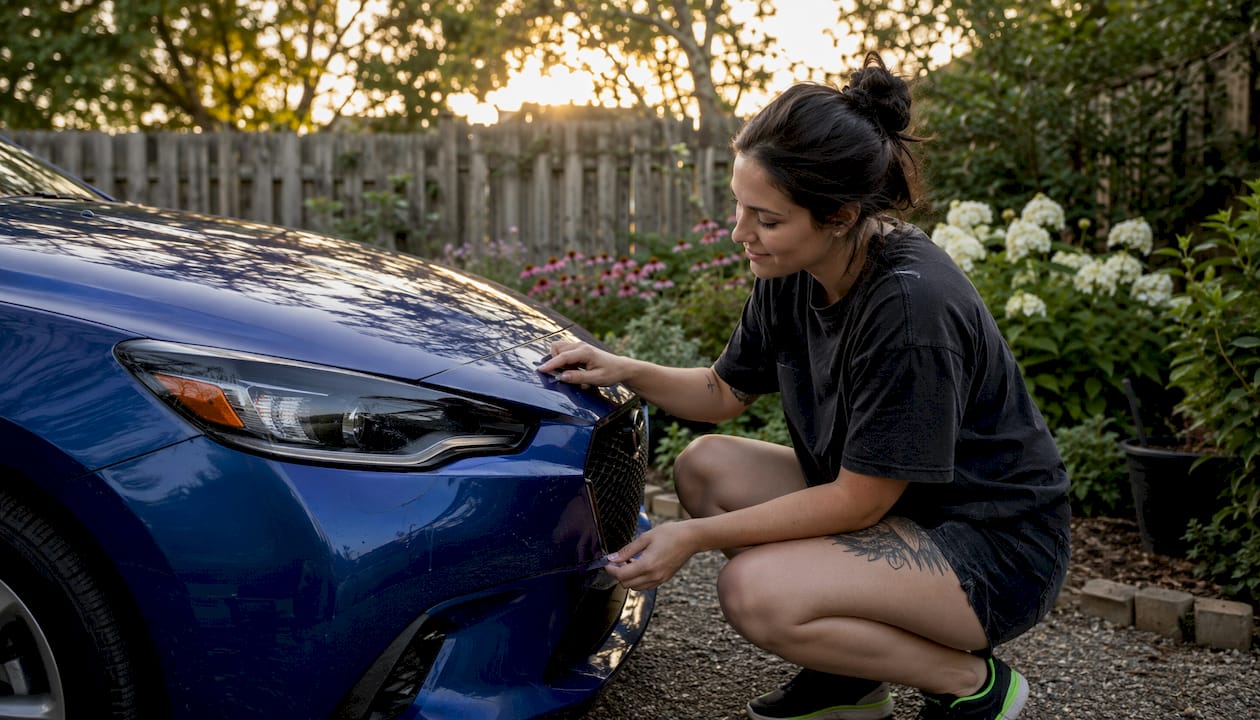
Daily highway or high-mileage commuters get the most value from full front coverage. Rock chips and bug damage concentrate on the hood, bumper, and fenders. A solid front package handles that exposure without the cost of full-body.
Construction or contractor routes — gravel roads, job sites, unpaved surfaces — put the front end under constant attack. Full front is the minimum here; adding rocker panels is worth considering if the truck or SUV regularly takes gravel spray from the sides.
City drivers with street parking face a different risk profile. Door dings and parking lot scrapes hit the doors and rear quarters, not just the front. If urban parking is your daily reality, the case for full-body coverage (or at minimum, doors and rockers added to a front package) gets stronger.
Garage-kept or show cars should go full body. The goal is preserving pristine condition across every panel, and a visible unprotected door on a show car defeats the purpose.
Short-term leasers often skip PPF entirely or go partial front. If you're returning the car in two years, a full front package protects against the chips and staining that show up on lease-return inspections.
Long-term keepers — anyone planning to own the car for five or more years — should run the numbers on full body. The cost amortized over a decade of ownership is modest compared to a single repaint.
Paint color as a tiebreaker: dark colors (black, navy, dark gray) and matte finishes show every scratch, swirl, and unprotected panel edge. If your car is one of these, full-body coverage is the right default, not an upgrade.
Pro Tip: Start with full front, but tell your installer upfront that you may want to add panels later. A good shop will plan edge strategy now so future add-ons tuck cleanly without visible seams.
Why installer quality matters as much as the film brand
Film brand gets most of the attention in PPF conversations, but the installer's skill and facility conditions determine whether a good film performs well or fails early.
A quality install requires a climate-controlled, dust-minimized environment. Ideal ambient temperatures run roughly between 60°F and 80°F — the range where film stretches properly and adhesive bonds during heat forming. Dust particles trapped under film during installation create permanent bumps that no amount of aftercare fixes.
Professional shops use plotter-cut patterns from vehicle databases for accuracy, then perform substantial manual edge-wrapping to tuck film into panel gaps. That tucking step is what prevents lifting during high-pressure washing. Shops that skip it save time; you pay for it later in peeling edges.
What to check before you book
- Manufacturer certification — ask which film brands the shop is certified to install
- Years of experience and an approximate vehicle count (Tintandwrapscustoms has protected over 1,000 vehicles in the San Fernando Valley)
- Climate-controlled facility — a shop that installs in an open bay is a red flag
- Written warranty — manufacturer-backed coverage, not just a shop guarantee
- Before/after photos — specifically edge tucks and headlight film work
- Pre-install prep included — decontamination wash, clay bar, and paint correction if needed
- Adhesive-cure guidance — a good shop tells you exactly what to avoid and for how long
A certified installer working in a climate-controlled facility with manufacturer-backed warranties is the baseline, not a premium. Anything less and you're gambling on a $2,000+ investment.
A professional full front install takes several hours when done correctly — including prep, plotting, squeegee work, edge-wrapping, heat forming, and inspection. Shops quoting a two-hour turnaround are cutting corners somewhere.
What to expect during installation and how to care for PPF afterward
The installation process
A proper PPF install follows a defined sequence. The vehicle gets a thorough decontamination wash, clay bar treatment, and paint correction if the surface has existing swirls or scratches. Film is then plotter-cut to vehicle-specific patterns and applied using a slip solution (distilled water with a small amount of baby soap) that lets the installer position and adjust the film before locking it down.
Squeegee work pushes the slip solution outward from the center of each panel. Near edges and curves, a tack solution helps the film conform and lock in place. A heat gun activates the film's self-healing properties and helps it conform to compound curves. Edges are then wrapped into panel gaps and re-squeegeed with an alcohol-water solution to secure adhesion.
Post-install timeline and care
| Period | What to do / avoid |
|---|---|
| Initial period after installation | Keep the car dry; avoid automated car washes entirely |
| First few weeks | Adhesive continues curing; avoid high-pressure washes at panel edges |
| Ongoing | Hand wash with pH-neutral soap; avoid abrasive compounds on film |
| Periodic | Inspect edges for lifting; apply a ceramic topcoat over film for added hydrophobic protection |
Aftermarket modifications and coverage planning
Aftermarket grilles, bumper lips, and non-OEM headlight assemblies change the geometry of the front end and can complicate edge-tuck strategy. Tell your installer about any modifications before the appointment. A shop that cuts patterns from a database needs to know the actual panel geometry, not the stock spec. Aftermarket lights in particular may require custom-cut film rather than a pre-plotted template.
Key Takeaways
Full front PPF is the right starting point for most U.S. drivers, delivering maximum chip and debris protection on the highest-impact panels at a cost between $1,500 and $3,500 for most vehicles.
| Point | Details |
|---|---|
| Full front covers what matters most | Hood, bumper, fenders, and headlights absorb the majority of road debris and rock chips. |
| Full-body is justified above $55,000 | Long-term owners and high-value vehicles benefit from uniform protection across every panel. |
| Installer quality drives the outcome | Climate-controlled facility, manufacturer certification, and edge-tuck method matter more than small film-brand differences. |
| Cure time is non-negotiable | Avoid automated car washes for the first 24–48 hours; adhesive strengthens over 2–4 weeks. |
| Tintandwrapscustoms is a recommended installer | Based in Van Nuys, CA, with 1,000+ vehicles protected, manufacturer-backed warranties, and a climate-controlled facility. |
The case for starting with full front and building from there
Most drivers overthink this decision. The front end of your car takes the overwhelming share of real-world damage — chips from highway driving, bug splatter on the hood, rock strikes on the bumper. A well-installed full front package handles all of that. Full-body coverage is genuinely worth it for the right car and the right owner, but it's not the default answer for everyone.
What actually gets underestimated in this conversation is installer quality. Two shops can install the same film on the same car and produce results that look completely different in two years. The shop that works in a climate-controlled bay, tucks every edge properly, and backs the work with a manufacturer warranty is not just a nicer experience. It's a materially better outcome. The film brand matters; the installer matters more.
Tintandwrapscustoms's approach — starting with a full front recommendation and adding panels based on the customer's actual driving habits and parking situation — reflects how this decision should be made. Not every car needs full-body coverage. But every car deserves an installer who treats the prep work and edge strategy as seriously as the film itself.
Get a quote for full front or full-body PPF at Tintandwrapscustoms
Tintandwrapscustoms offers full front PPF, full-body coverage, ceramic coating, and climate-controlled installations from its Van Nuys, CA facility. Every job includes a decontamination wash and paint correction prep, manufacturer-backed warranty coverage, and edge-tuck finishing — the details that separate a lasting install from one that starts peeling at the edges within a year.
If you're ready to protect your paint, request a quote or book a consultation at Tintandwrapscustoms. Bring your vehicle, describe your commute and parking situation, and ask for a written coverage map with the film brand and warranty terms spelled out. That conversation takes 15 minutes and tells you everything you need to know before committing.
Useful sources
- Full Front PPF Package Cost for All Vehicle Body Types — U.S. pricing tiers and panel coverage details for full front packages
- Full Front vs. Full Body PPF: A Tracy Driver's Guide — practical decision framework and full-body price floor ($5,000+)
- PPF Installation Guide: Cost, Process & How to Find an Installer — U.S. price ranges by vehicle size for full-vehicle coverage
- How Paint Protection Film Is Installed: The Full Process — step-by-step install process and cure time guidance (6–12 hours for full front)
- How to Install Paint Protection Film: A Complete Step-by-Step Guide — cost ranges for partial/front ($1,500–$3,500) and full-vehicle ($5,000–$8,000+) installs
- Partial vs. Full Front PPF — edge-tuck vs. cut-line explanation and visual outcome differences
- Full Front vs. Full Body PPF: A Tracy Driver's Guide (Tracy PPF and Tint) — decision framework: full front for chip protection per dollar, full body for uniform showroom finish
- PPF: The Real Pros & Cons Your Installer Isn't Telling You — installer perspective on when full body is justified vs. overkill
- Pre-Sale Detailing: Maximize Your Car's Value — role of PPF and detailing in preserving resale value