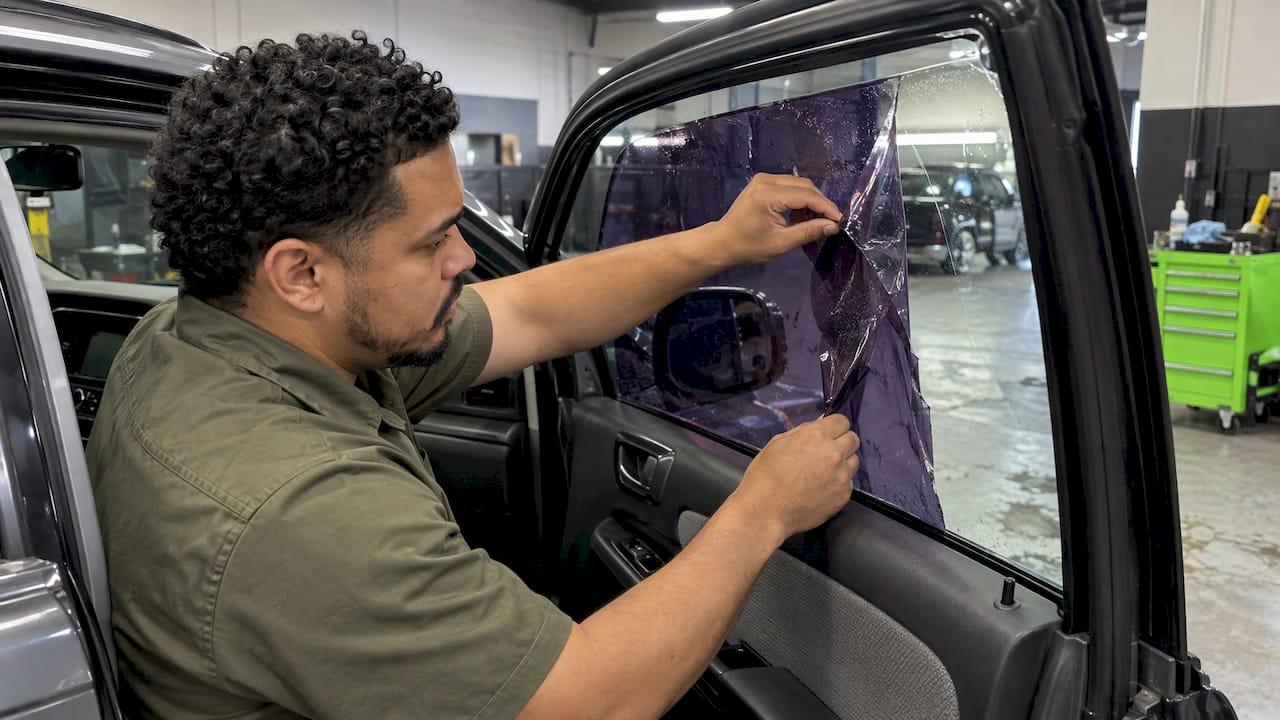
Purple, bubbled window tint is film that has reached the end of its life, and it will not clean off with a wipe or a cleaner. The film and the adhesive underneath it have to come off the glass together, and the rear window, where the defroster lines sit, is where most of the damage happens. At Tint & Wraps Customs in Van Nuys, CA, tint removal is one of our listed services, and we handle it in a climate-controlled facility so the glass is bare and ready for new film. This guide covers why tint turns purple, what proper removal involves, and where it goes wrong.
TL;DR
- Purple film is failed film. Tinting over it or polishing it does not bring the color back; it has to be removed.
- Removal is two jobs: peeling the film, then clearing every trace of adhesive from the glass.
- The rear window is the risk. Defroster lines can be damaged by scraping, so steam and soft tools matter there.
- New film should not go on until the glass is fully clean, and the adhesive needs time to be cleared properly first.
- We remove old tint at our Van Nuys shop and can fit new carbon or ceramic film afterward.
Table of Contents
- Why window tint turns purple
- What removing purple tint actually involves
- The rear window is where removal goes wrong
- Why shop removal is the better route
- What the process looks like at our shop
- Choosing the film that replaces it
- Book removal and retint in Van Nuys
- Our perspective
- FAQ
- Sources
Why window tint turns purple
Purple tint is the result of film aging in the sun. Lower-grade dyed film carries its color in a dye layer, and years of UV exposure and heat break that dye down until the film shifts toward purple. Southern California sun is hard on any film, which is why you see so many purple, bubbled windows on older cars in the San Fernando Valley.
The color change usually arrives with other symptoms:
- Bubbles or blisters where the adhesive has let go of the glass.
- Peeling edges along the top or the rear window.
- Haze that makes the glass look cloudy from the inside.
- Lost heat rejection, so the cabin feels hotter than it did when the film was new.
We cover how to recognize a failing film, and what a warranty-backed fix looks like, in our guide to window tint fading and purple film.
There is no way to reverse the color. Anything that claims to "restore" purple film is covering the symptom. The practical choice is to remove it and replace it with a film that holds its color.
What removing purple tint actually involves
Tint removal has two stages, and the second is the one people underestimate.
Stage one: the film. The film has to be released from the glass. Heat softens the adhesive so the film can be peeled slowly and at a low angle. Film manufacturers' own installation bulletins describe starting from a corner after lightly warming the film with a heat gun, without overheating the film or the glass, then peeling slowly. Old film is brittle, so it often tears into strips rather than coming off in one sheet. That is normal for aged film and is what makes the job slow.

Stage two: the adhesive. What remains is a sticky layer across the whole window. It has to be softened, lifted and wiped away until the glass is completely clear. Any adhesive left behind shows up as smears or a hazy patch under the new film.
Both stages are physical, careful work, and both put the glass and the defroster at risk if done with the wrong heat or the wrong tool.
The rear window is where removal goes wrong
Side windows are plain glass. The rear window is not. Its defroster is a set of thin conductive lines on the inside surface, and the old film sits directly on top of them. Pull or scrape too hard and the lines come away with the film, which leaves a dead section of defroster.

Film makers are specific about this. One manufacturer's removal guidance says a scraper is only recommended on side windows without a defroster, that using one on a defroster will damage it, and that a steamer is recommended for rear windows. The same guidance advises masking non-window areas the cleaner may touch, to protect the finish and the interior.
That is the reason we start with steam on rear glass. It softens the adhesive without sharp metal on the lines. We explain the approach in detail in our posts on steam-first removal and rear window defroster damage and on tint removal around defroster lines.
Other places damage tends to happen:
- Interior trim and door panels. Cleaner and water run down into door cards and speaker areas if the surrounding surfaces are not protected.
- Rear glass antennas and sensors. Many cars carry antenna elements or other electronics in or near the glass.
- Window seals. Aggressive scraping at the edges can nick the rubber.
- Glass itself. A blade held at the wrong angle, or one with a dull edge, can leave scratches that show in sunlight for as long as you own the car.
Why shop removal is the better route
Purple film is the hardest kind to remove at home. It has been baking on the glass for years, so the adhesive has hardened and film tears into small pieces rather than peeling away cleanly. The cost of a mistake is concentrated on the one window that is most expensive to fix, the defroster glass.
Doing it at a shop changes the picture in a few concrete ways:
- Controlled conditions. Our installation facility is climate-controlled and dust-free, so the glass is cleaned and prepared in the same conditions the new film will be installed in.
- The right order of work. Film comes off, adhesive is cleared, glass is inspected, and only then does new film go on.
- One appointment. If you want the windows retinted, removal and installation happen under one roof, and bundling both can lower the cost. Our breakdown of tint removal and retint costs by vehicle shows how that is itemized.
- A warranty-backed result. New film from us carries a manufacturer-backed warranty, so the fix does not end up purple again.
Solid time expectations help too. One independent tint retailer's guide puts professional removal at 30 to 60 minutes per window and 1 to 3 hours for a full vehicle. Heavily degraded film can run longer, which is a good reason to book rather than lose a weekend to it.
What the process looks like at our shop
When a car with purple tint comes in, this is the sequence we follow:
- Inspect the windows. We check which windows carry film, how far it has failed, and whether the rear glass has defroster lines, antennas or other features to protect.
- Protect the interior. Door panels, seats and trim are covered so water and cleaner do not reach them.
- Release the film. We soften the adhesive and peel the film slowly from a corner at a low angle, using steam on the rear window.
- Clear the adhesive. Residue is softened and removed from the glass using soft tools on defroster glass, so the lines stay intact.
- Clean and check. The glass is cleaned inside and out and inspected for any remaining adhesive in sunlight-style lighting.
- Retint if you want it. New film goes on in the clean, dust-free bay.
For Tesla and other EV owners, this care carries extra weight. Large glass roofs, rear glass with embedded features and sensors near the glass all call for a careful install. Our Tesla and EV work is built around precise, interference-free fitting, and the same attention applies when old film comes off.
Choosing the film that replaces it
The reason your old tint turned purple is the film it was made from, so the replacement matters as much as the removal. We offer two options on our window tinting page:
| Film | What it is | Good fit for |
|---|---|---|
| Carbon window tint | A film with a dark, matte look that is built to hold its color | Drivers who want a sleek look and a long-lasting upgrade over dyed film |
| Ceramic window tint | A nano-ceramic film | Families, commuters and EV owners who want strong sun and heat protection on every window |
Both come with manufacturer-backed warranties. If you are shielding children from sun in the back seat, ask us about ceramic film for the rear and side glass when you book.
After new film goes on, give it time. Fresh tint needs a short curing period before you roll windows down, and our guide on window tint curing time explains when it is safe to use your car normally. Once cured, the safe cleaning steps for tinted windows keep the film looking right for years.
Book removal and retint in Van Nuys
If your tint has gone purple, bubbled or started to peel, we can remove it and put a color-stable film on the same visit. We work from our climate-controlled facility in Van Nuys and serve drivers across the San Fernando Valley, and we have protected more than 1,000 vehicles. Our window tint removal service page lays out what we do, and you can reach us there to book.
If you also want to protect the paint while the car is with us, our paint protection film options and ceramic coatings can be planned around the same visit.
Our perspective
Most people come to us after they have tried to fix the tint themselves, or after a quote for a quick scrape-and-go job. Purple film is a sign the film failed, and the job is to take it off without leaving anything behind.
We think of removal as part of the install, not a separate chore. A clean, dust-free bay, a steady hand on the rear window and a proper film choice afterward are what separate a window that looks right for years from one that is purple again in a few seasons.
That is why we do both under one roof, with manufacturer-backed warranties on the new film and a careful approach for Teslas and other EVs. You bring the car, and you leave with clear glass and a tint you do not have to think about again.
Jake
FAQ
Why did my window tint turn purple?
The dye in lower-grade film breaks down under years of sun and heat, and the film drifts toward purple. Bubbles and peeling usually follow as the adhesive fails. The color cannot be restored, so the film needs to be removed and replaced.
Can I just tint over purple window film?
No. New film needs bare, clean glass to bond properly. Laying it over old film traps the failing layer, and the bubbles and haze show through. The old film and all its adhesive come off first.
Will removing tint damage my rear defroster?
It can if sharp tools or aggressive scraping are used. Manufacturer guidance says a scraper should not be used on a defroster and that steam is recommended for rear windows. We use steam and soft tools on rear glass to protect the lines.
How long does tint removal take?
A full vehicle typically takes one to three hours according to an independent tint retailer's guide, and badly degraded film can take longer. If you are retinting, we plan the removal and the new install together.
Can I get new tint on the same day?
In many cases removal and retint can be planned as one job. Contact us with your vehicle and the condition of the film, and we will tell you how we would schedule it.
Sources
- Avery Dennison, Instructional Bulletin 7.1, Automotive Window Film Installation
- Madico, How to Remove Automotive Window Tint Adhesive
- How to Remove Window Tint With DIY or Professional Methods