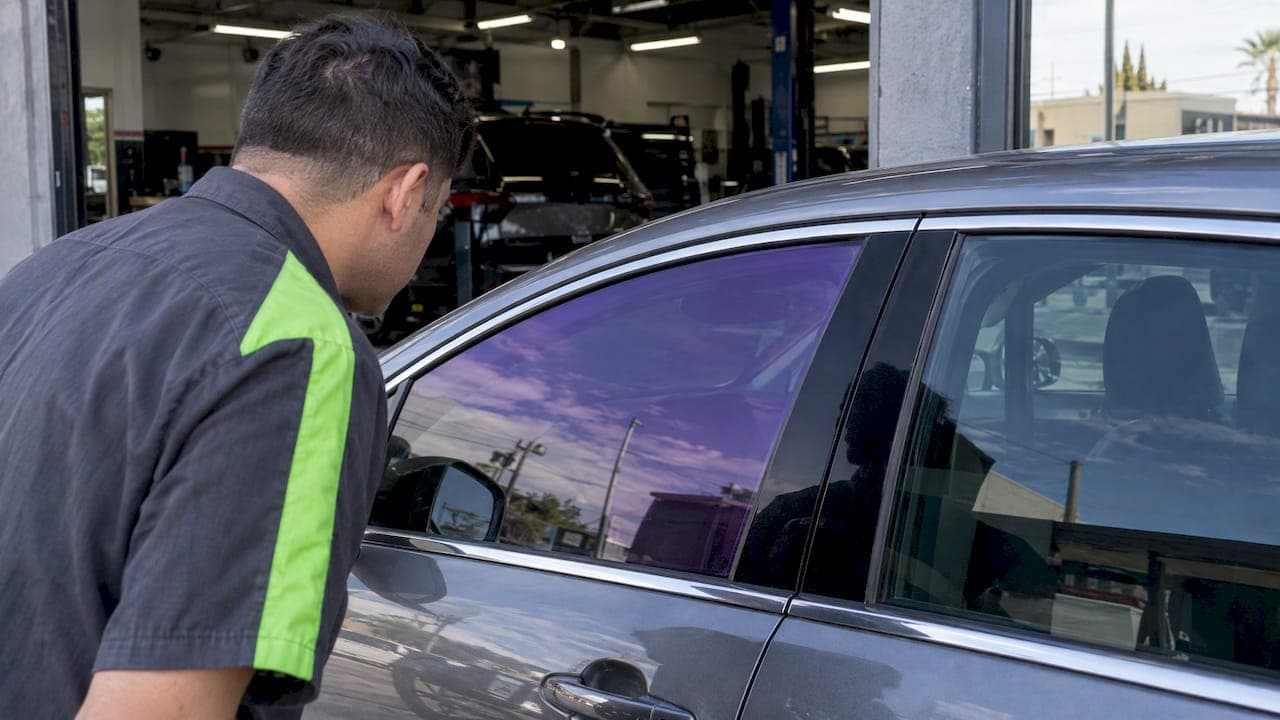
Most window tint that turns purple, hazy, or bubbly has broken down from years of UV and heat exposure. If you see purpling, haze, or bubbling that won't go away, the film usually needs professional removal and re-tinting. Stop using ammonia-based cleaners right now, and book an inspection if bubbles or peeling are showing.
TL;DR:
- Basic dyed film may start shifting color after 3–5 years, especially in strong sun; carbon and ceramic films can last a decade or longer.
- Uneven purple or pink color points to dye breakdown, while bubbles, lifting edges, or peeling usually signal adhesive or installation failure.
- Keep newly tinted windows up for 48–72 hours, and clean with ammonia free, nonabrasive products to protect the adhesive and film topcoat.
- Professionals can reseal small bubbles or slight edge lift, but widespread bubbling, extensive purpling, and failed adhesive require full film removal.
Table of Contents
- How different tint materials age
- How to tell fading from adhesive or installation failure
- How long window tint should last
- What actually causes tint to fade
- How to prevent window tint fading
- When to repair, remove, or replace
- An installer's take on fading tint
- Book an inspection and warranty-backed replacement
- FAQ
- Sources
How different tint materials age
Not every film ages the same way, and the material tells you a lot about what your fading means.
- Dyed film relies on organic dyes. Under constant UV, those dyes can fade at different rates, which is what produces the purple cast. Dyed tint may fade over time and typically rejects less heat than carbon or ceramic.
- Carbon film uses carbon particles instead of unstable dye layers to block UV and heat. That is why it resists fading and purpling.
- Nano-ceramic film combines strong heat rejection, low reflectivity, and UV protection. Infused ceramic films also resist purpling better than many dyed products, and our nano-ceramic tint breakdown covers the benefits in more detail.
- Metalized film is long-lasting and durable, but the metal content can interfere with radio and GPS signals, so it suits some vehicles better than others.
Quality and warranty tie directly to longevity. Premium films from established manufacturers are built with UV-stable materials, and that is where lifetime warranties tend to appear.
How to tell fading from adhesive or installation failure
Two different problems can look similar from the driver's seat. Fading is the film's dye or pigment breaking down. Adhesive failure is the bond between film and glass letting go. The fix for the second is rarely about the film's color at all.
- Dye breakdown: a purple or pink shift, usually uneven across a window and often strongest on the sunniest side of the car.
- Adhesive or installation trouble: bubbles, lifting edges, cracking, or flaking adhesive.
- Quick home checks: compare color across all your windows, look closely at the edges for lift or trapped moisture, and notice whether your cabin feels hotter than it used to.
Mild, uniform lightening is something you can monitor. Bubbling and peeling mean replace now, because the film is no longer bonded to the glass and will only get worse.
Pro Tip: Check your windows in direct daylight from inside and outside the car. Purpling and haze that only show up at certain angles are easy to miss in a garage.
How long window tint should last
Lifespan depends on film type, installation quality, and how much sun your car sees every day. Basic dyed films may begin to fade or shift color within 3–5 years, while high-quality ceramic and carbon films are engineered with UV-stable materials and can last a decade or longer. Some of those premium films come with lifetime warranties.
Context matters too. Another source notes that organic-dye tint can show noticeable change in 3–5 years in very sunny locations, while carbon or mineral pigment films typically do not fade. If you park outside all day in strong sun, expect your film to land at the short end of its range. A car kept in a garage may stretch well beyond it.
So how do you know whether your fading is normal or premature? If you have a basic dyed film that is several years old and sits in the sun, purpling is more or less expected. If you have a carbon or ceramic film that is discolored after only a few years, something went wrong, either in the film's quality or in the installation. That is exactly the situation a manufacturer-backed warranty and a careful installer are meant to cover. For a deeper comparison of the two upgrade paths, see our explainer on ceramic versus carbon tint.

What actually causes tint to fade
Understanding the mechanism makes the warning signs easier to read.
UV exposure is the main driver. The purple look comes from uneven dye decay: the yellow dye components often fade first, leaving the red and blue dyes behind. Films without unstable organic dye layers avoid this pattern.
Heat is the second culprit. Constant high temperatures and infrared load wear down the adhesive and topcoat over time, which is why dashboards and rear windows tend to fail first.
Cleaning chemicals speed things up. Ammonia-based or abrasive cleaners can degrade the film's scratch-resistant topcoat and accelerate hazing and damage.
Installation errors cause failures that look like fading but aren't. Trapped moisture, dust or contaminants along the edges, and rushed prep all lead to bubbles and lifting. A dirty install environment can cause good film to fail early.

How to prevent window tint fading
You can't stop UV, but you can lower its load and avoid the mistakes that shorten tint life.
- Clean smart: use non-abrasive, ammonia-free cleaner with a soft cotton or microfiber cloth. Never use razor blades or scouring pads on the interior film.
- Respect the cure time: keep windows up after installation. Installers commonly recommend waiting 48–72 hours before rolling windows down or washing, so the adhesive can set.
- Cut sun exposure: park in shade or a garage when you can, and use a sunshade on the windshield to reduce the heat and UV your cabin absorbs.
- Inspect regularly: look at the edges for lift every few weeks, and wash off bird droppings and other acidic contaminants quickly.
- Go easy on new film: skip automatic high-pressure washes until the film has fully cured.
Skipping the cure period is a leading cause of edge lift. Failing to respect the 48–72 hour wait is a common cause of edge lifting and installation failure, so patience on day one protects the whole job.
Good habits stretch the life of any film, but they can't rescue a low-grade dyed film in harsh sun. For help picking a film that holds up, our guide on heat rejection tint explains what actually keeps a cabin cool. A practical guide on ceramic tint lifespan also covers how to maximize it.
When to repair, remove, or replace
A few problems are fixable. Small bubbles or a lightly lifting edge can sometimes be settled with professional heat and resealing, as long as the film is otherwise sound. Extensive purpling, widespread bubbling, or adhesive that has broken down cannot be patched. Those need full removal.
Here is how a professional job typically runs:
- Inspect the film and glass to confirm whether the problem is dye breakdown or a bond failure.
- Remove the old film carefully, working around defroster lines and glass edges to avoid damage.
- Clear all adhesive residue from the glass so the new film bonds cleanly.
- Prep the window in a clean, dust-controlled space.
- Install the new film and let it cure with the windows up.
We recommend a pro for this because glass safety and residue removal are easy to get wrong at home. Cost varies by film type and vehicle, and a manufacturer-backed warranty is worth weighing in the decision, since it covers the exact problems that brought you here. Cost is available on request.
An installer's take on fading tint
Two patterns can appear repeatedly: dyed film gone purple, and edges lifting on jobs done in dusty conditions. Most of it traces back to film quality and the environment of the install. That's why we do our installs in a climate-controlled, dust-free facility, where the bond between film and glass has the best chance of lasting. If your tint is bubbling, hazy, or noticeably purple, don't wait for it to get worse: get it inspected.
— Jake
Book an inspection and warranty-backed replacement
If your tint is failing, we can take it from diagnosis to a clean re-tint. We inspect the film, remove it safely, and install carbon or ceramic film in our climate-controlled Van Nuys facility, backed by manufacturer-authorized warranties.
- Professional inspection to confirm fading versus adhesive failure
- Careful removal with all adhesive residue cleared
- Color-stable film installed in a dust-free, climate-controlled shop
- Manufacturer-backed warranties
Ready to fix it for good? Request a quote or schedule an inspection on our window tinting page, and we'll get your vehicle looking right again.
FAQ
How long does window tint last before fading?
It depends on the film. Basic dyed tint can begin changing color in a few years, while carbon and ceramic films are built to last much longer. Quality films may last a decade or more, especially with proper installation.
Does carbon tint fade or turn purple?
Carbon tint generally holds its color because it uses carbon particles rather than unstable organic dyes. That makes window tint fading of the purple kind far less common on carbon film than on dyed film.
How long should I keep my windows up after tinting?
Plan on keeping them up for about 48–72 hours. That window lets the adhesive cure and lowers the risk of edge lift, as installer guidance recommends.
Why is my window tint peeling or bubbling?
Peeling and bubbling usually point to adhesive or installation failure rather than simple fading. Trapped moisture, edge contamination, or rolling windows down too soon are common causes, and the film typically needs removal and replacement.
Sources
- Does Car Window Tint Fade Over Time? How Long Tint Lasts | Madico, Inc.
- Automotive Window Tint Frequently Asked Questions | LLumar
- 3M™ Automotive Window Film Obsidian Series | 3M United States
- Does window tint degrade over time?