
What does a window tint warranty actually cover?
A window tint warranty is a manufacturer's or installer's guarantee that your film will perform as promised, free from defects, for a defined period. Most coverage protects against the most common failure modes: bubbling, peeling, cracking, adhesive failure, discoloration, and demetallization. What it does not cover is equally important to understand before you sign anything.
Here is what standard automotive tint warranties typically include and exclude:
- Covered defects: Bubbling, peeling, cracking, delamination, adhesive failure, and color fade or demetallization caused by manufacturing flaws
- Duration range: Entry-level dyed films often carry 1–3 year warranties; mid-grade carbon and metalized films typically run 5 years to lifetime; premium nano-ceramic films frequently come with lifetime coverage tied to vehicle ownership
- Excluded damage: Glass breakage, defroster wire damage, scratches from physical contact, and any damage caused by improper cleaning or owner misuse
- No-fault coverage: Some premium warranties include a one-time accidental damage replacement for scratches or vandalism, usually limited to a single panel
- Transferability: Most manufacturer warranties cover the original owner only and are non-transferable upon vehicle sale, though select high-end programs do allow transfer
- Registration requirement: Coverage is almost always contingent on warranty registration and proof of purchase being submitted after installation
The gap between a 1-year dyed film warranty and a lifetime ceramic warranty is not just marketing. It reflects real differences in film chemistry, UV stability, and adhesive durability.
Table of Contents
- Conditions you must meet to keep your warranty valid
- How to care for your tint and protect your coverage
- How insurance interacts with your tint coverage
- What Tintandwrapscustoms knows about warranties that most shops won't tell you
- How to file a window tint warranty claim the right way
- Tintandwrapscustoms: manufacturer-backed protection for your vehicle
- Key Takeaways
Conditions you must meet to keep your warranty valid
A warranty is only as good as the conditions attached to it. Miss one, and the coverage disappears regardless of how clear the defect is.
- Authorized installation: Manufacturers like Avery Dennison require that film be installed by authorized dealers following their specific guidelines. DIY installation or work by an uncertified shop voids the manufacturer warranty outright.
- Warranty registration: Many programs require registration within 30 days of installation. V-KOOL, for example, requires a signed registration form submitted within 30 days to activate coverage. Miss that window and you have no protection.
- Legal compliance: If your tint violates your state's VLT (visible light transmission) laws, the warranty is void. Noncompliance places full liability on the vehicle owner, not the installer or manufacturer.
- Proof of purchase: Keep your invoice and warranty card. Each card typically includes a roll number that verifies film authenticity and is required to process any future claim.
- Cleaning restrictions: Ammonia-based cleaners chemically break down the film's adhesive layer. Using them voids coverage in virtually every warranty program.
- Installation warranty vs. product warranty: These are separate. If the film bubbles because of a bad installation, that falls on the installer's workmanship warranty, not the manufacturer. If the film itself fails due to a manufacturing defect, that is the manufacturer's responsibility. Know which one applies before you call.
How to care for your tint and protect your coverage
Proper maintenance is the single most controllable factor in whether your warranty stays valid and your film lasts.
- Wait before cleaning: After installation, keep windows closed for at least 24 hours. Most films need several days to fully cure before any cleaning, and some take longer in cold or humid climates.
- Use approved cleaners only: Stick to mild, ammonia-free soap or a product specifically recommended by your installer. Ammonia-based products cause irreversible film delamination and immediately void your warranty.
- Soft cloths, not abrasives: Microfiber cloths are the standard. Paper towels and rough sponges scratch the film surface over time, which is not covered under any manufacturer warranty.
- Avoid sharp objects near windows: Seatbelt buckles are the most common culprit. Letting a buckle drag across a tinted window repeatedly will scratch the film, and that damage is on you.
- Address imperfections early: Small bubbles that appear during curing usually resolve on their own. Bubbles that persist after the curing period, or new ones that appear months later, are potential warranty claims. Document them with photos and contact your installer promptly.
- Keep your paperwork: Store your warranty card, installation invoice, and any registration confirmation together. You will need all of it if you ever file a claim.
Pro Tip: Set a phone reminder for 30 days after your tint installation to confirm your warranty registration is complete. It takes two minutes and can save you hundreds of dollars if a defect appears later.
How insurance interacts with your tint coverage
Standard window film warranties and auto insurance serve different purposes, and understanding where one ends and the other begins saves a lot of frustration.
A manufacturer's warranty covers defects in the film itself, not physical damage from outside events. If a rock chips your window or a vandal keys your tint, that is not a warranty issue. No-fault warranty plans from premium installers can bridge part of that gap, typically offering a single one-time replacement for accidental damage like scratches or tears, usually limited to one panel.
Auto insurance with comprehensive coverage may pay for tint damage caused by a covered event, such as hail, theft, or vandalism, but coverage varies significantly by insurer and policy. Some policies reimburse the cost of tint replacement as part of a glass claim; others treat it as a separate line item subject to your deductible. Tint warranties do not cover auto glass breakage, and neither does the film manufacturer if a defroster wire causes a crack. Your insurer handles glass; your warranty handles film defects.
The smart move is to call your insurer before something goes wrong. Ask specifically whether tint replacement is included in your comprehensive or glass coverage, and what documentation they require. Pair that with a no-fault warranty option from your installer, and you have covered most damage scenarios.
What Tintandwrapscustoms knows about warranties that most shops won't tell you
The most common reason warranty claims get denied has nothing to do with the film. It is paperwork. Owners lose their warranty card, never register online, or cannot produce the original invoice. By the time a defect appears, the coverage is gone.
Tintandwrapscustoms installs premium nano-ceramic and carbon window films in a climate-controlled facility that eliminates the dust and humidity contamination responsible for most early adhesion failures. That controlled environment is one reason their installations hold up under warranty scrutiny. The shop also carries manufacturer-backed warranties on every installation, which means the film manufacturer stands behind the product and Tintandwrapscustoms stands behind the work.
There is also a meaningful difference between film types and what they warrant. Dyed films fade faster and carry shorter coverage periods. Metalized films resist heat well but can interfere with signals. Ceramic films, particularly nano-ceramic, offer the longest warranty periods because the technology is simply more stable. Understanding professional installation benefits and film-type differences before you buy is how you avoid paying for a short warranty when a lifetime one was available for a modest upgrade.
Pro Tip: Ask your installer to show you the specific warranty document for the film brand they are using, not a generic shop warranty. Manufacturer-backed coverage and installer-only coverage are not the same thing.
How to file a window tint warranty claim the right way
Filing a claim incorrectly is the second most common reason coverage gets denied. Here is the process that actually works.
Step 1: Document the defect. Take clear, well-lit photos of the affected area as soon as you notice the problem. Note when the issue appeared and whether it has changed over time.
Step 2: Gather your paperwork. You need your original installation invoice, warranty card (with roll number), and proof of warranty registration. Without these, most manufacturers will not process a claim.
Step 3: Contact your installer first. Most warranty claims start at the shop level. The installer contacts the manufacturer on your behalf or handles the claim directly under their workmanship warranty. An authorized service provider must inspect the window before any claim is approved.
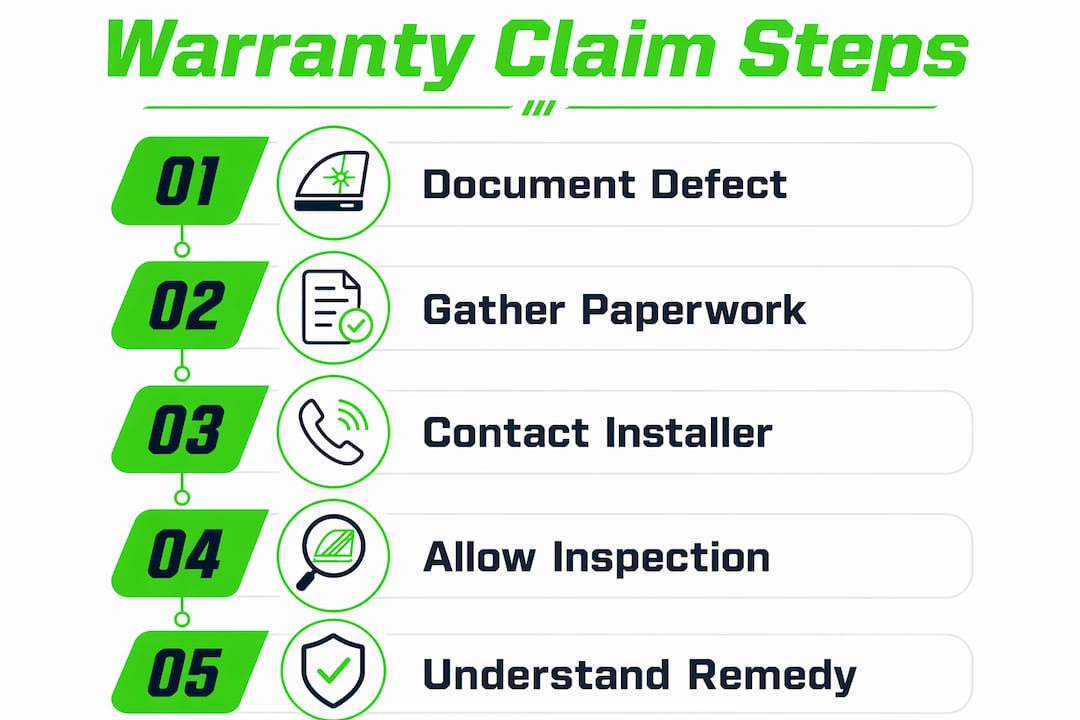
Step 4: Allow the inspection. The manufacturer or authorized dealer will physically inspect the film to confirm the defect is a manufacturing issue, not owner damage. This step is non-negotiable.
Step 5: Understand the remedy. Most warranties cover replacement of the defective film, limited to the original invoice value and the specific windows affected. They do not cover labor upgrades, film upgrades, or consequential costs.
Claims are settled faster when your documentation is complete from day one. Keep everything in a folder in your glove box or scanned to your phone.
Tintandwrapscustoms: manufacturer-backed protection for your vehicle
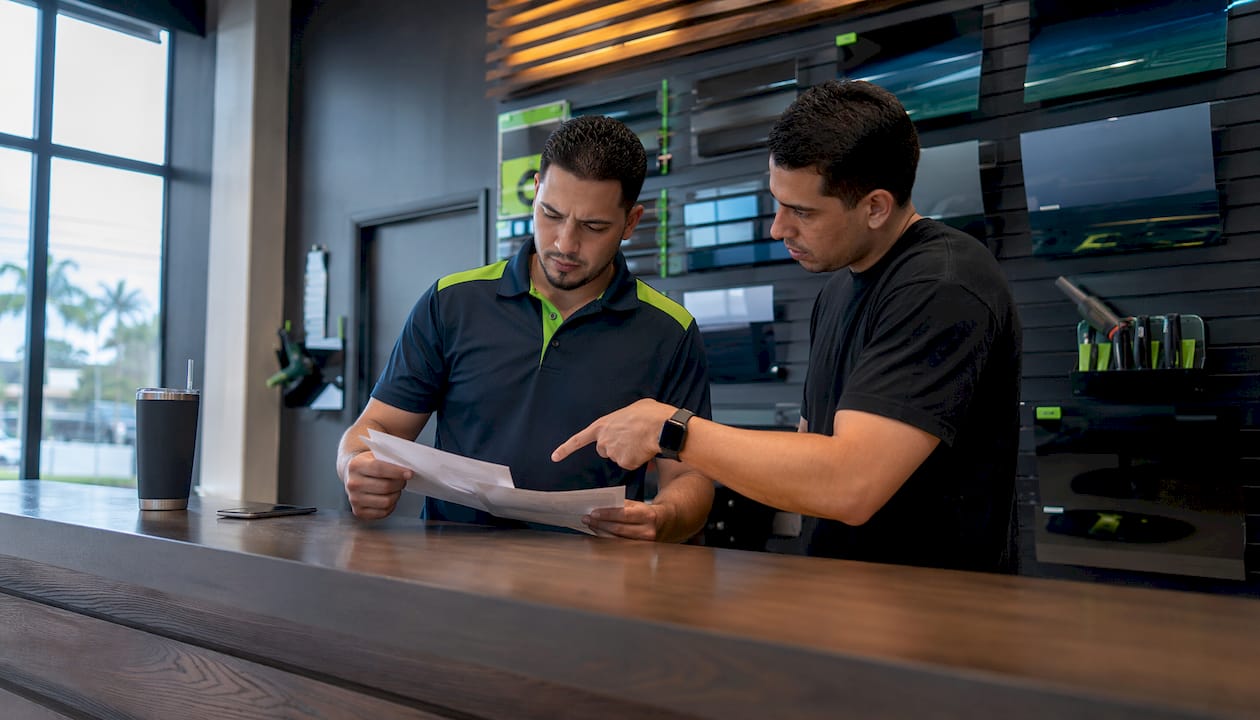
Most shops hand you a warranty card and send you on your way. Tintandwrapscustoms does the registration with you, explains exactly what the manufacturer covers, and installs in a climate-controlled environment that protects the film from day one. That combination of process and environment is why their installations consistently hold up under warranty inspection.
Whether you drive a Tesla, a daily commuter, or a fleet vehicle, Tintandwrapscustoms offers professional window tinting with manufacturer-backed warranties on nano-ceramic and carbon films. Serving the San Fernando Valley from Van Nuys, CA, with over 1,000 vehicles protected and a 5-star rating from verified customers. Get a quote and book your installation today.
Key Takeaways
A window tint warranty covers manufacturing defects only. Registration, authorized installation, and proper care are what keep it valid.
| Point | Details |
|---|---|
| Coverage scope | Warranties cover defects like bubbling, peeling, cracking, and adhesive failure, not physical damage or accidents. |
| Duration by film type | Dyed films typically carry 1–3 years; ceramic and nano-ceramic films often come with lifetime coverage. |
| Warranty killers | Ammonia-based cleaners, missing registration, and non-authorized installation are the top three reasons claims get denied. |
| Insurance vs. warranty | Auto insurance with comprehensive coverage may handle tint damage from accidents; warranties handle film defects only. |
| Tintandwrapscustoms | Offers manufacturer-backed warranties with climate-controlled installation and hands-on registration support in Van Nuys, CA. |