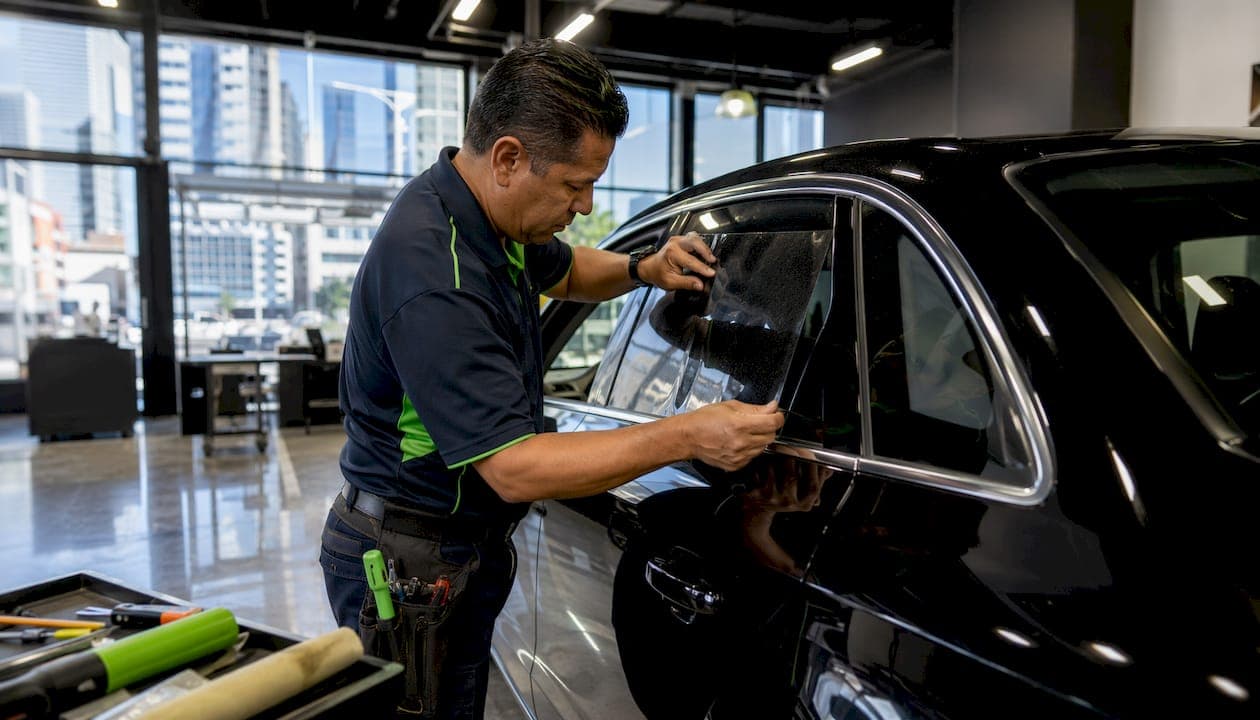
For most drivers, ceramic tint is the better choice. It rejects more heat, holds its clarity longer, and blocks close to 99% of UV rays without touching your phone signal or GPS. If you park outside in California, Arizona, Texas, or anywhere the sun is relentless, ceramic is worth the premium.
That said, carbon tint is not a consolation prize. For a garage-kept vehicle, a lease you're returning in two years, or a budget that caps out before ceramic pricing kicks in, quality carbon film delivers real performance at a lower installed cost.
- Hot climate, daily outdoor parking: Go ceramic. The cabin temperature difference under peak sun is measurable, and the long-term UV protection pays off in preserved interiors.
- Mild climate, garage-kept, or budget-conscious: Quality carbon film is a genuine upgrade over dyed tint and costs significantly less upfront.
Tintandwrapscustoms, based in Van Nuys, CA, installs both films and can match the right product to your specific vehicle and use case.
Table of Contents
- What are carbon tint and ceramic tint, exactly?
- Ceramic vs carbon tint: how do they actually compare?
- How do you choose the right film for your situation?
- How can you tell what tint you already have?
- What should you expect from installation, maintenance, and warranty?
- Why installer quality changes everything about your tint
- Key Takeaways
- The tint decision most people overthink
- Get your tint installed right at Tintandwrapscustoms
- Useful sources
What are carbon tint and ceramic tint, exactly?
The difference comes down to what's embedded in the film and how that material handles solar energy.
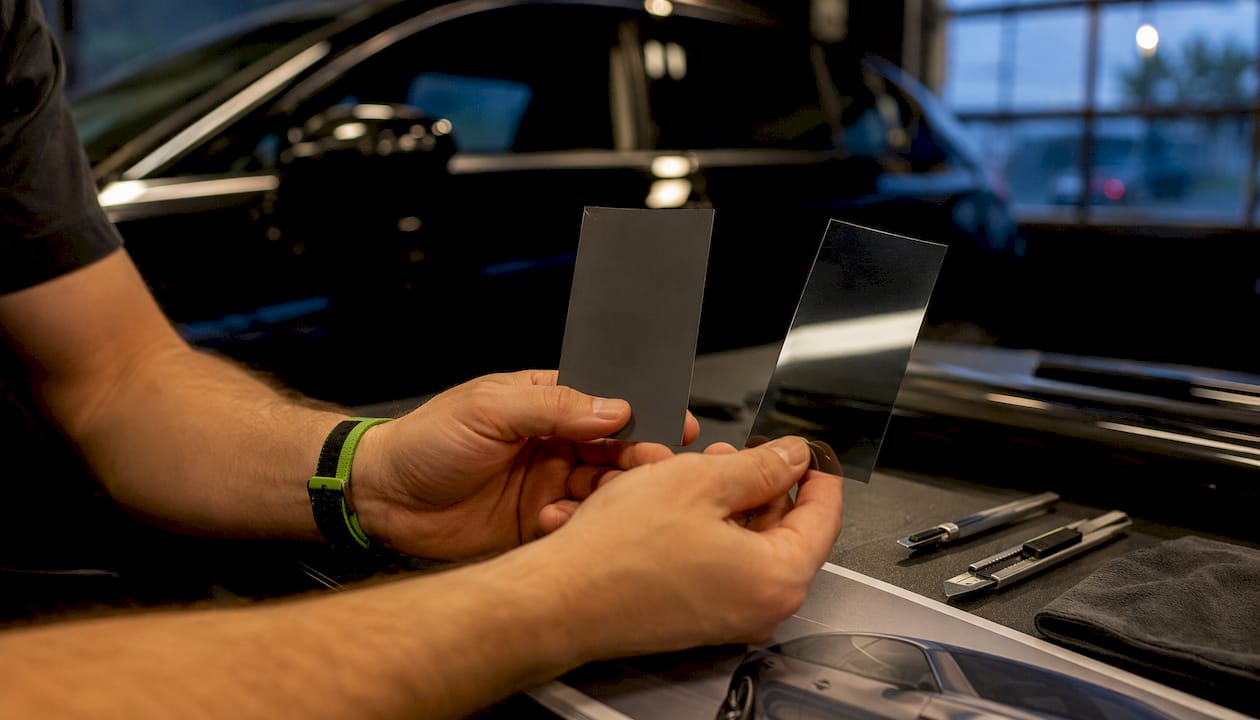
Carbon tint uses carbon particles layered into the film. It's non-metallic, which means it won't interfere with your phone, GPS, or keyless entry. Carbon absorbs infrared radiation and dissipates that heat rather than reflecting it back. The result is a noticeable upgrade over basic dyed tint, with a slightly warmer, matte visual character that many drivers find appealing.
Ceramic tint uses nano-ceramic particles, also non-metallic, but engineered to reflect and filter infrared radiation rather than absorb it. That distinction matters in practice: ceramic keeps the glass itself cooler, which means less radiant heat bleeding into the cabin. Both film types are signal-transparent and typically achieve 99%+ UV protection at premium grades.
Quick visual reference:
- Carbon: Matte finish, slightly warmer color cast, darker appearance at equivalent VLT
- Ceramic: Neutral grey or near-clear optics, cleaner look at lighter VLTs, retains color stability longer over time
Both are a major step up from dyed tint. The question is how much performance gap matters for your situation.
Ceramic vs carbon tint: how do they actually compare?
Here's where the numbers tell the story.
| Dimension | Carbon Tint | Ceramic Tint |
|---|---|---|
| Heat / TSER rejection | ~40–60% (quality film) | ~55–80%+ (quality nano-ceramic) |
| UV blocking | ~99% (premium grades) | ~99% (premium grades) |
| Visible light clarity | Good; matte/warmer cast | Excellent; neutral, optically clear |
| Signal interference | None (non-metallic) | None (non-metallic) |
| Durability / fade resistance | Good; more stable than dyed | Superior; minimal color shift long-term |
| Appearance | Darker, matte look | Cleaner, near-factory look |
| Typical installed cost (full car) | $150–$450 | $300–$1,000 |
| Warranty expectation | Varies by shop; typically 5 years | Typically lifetime at quality shops |
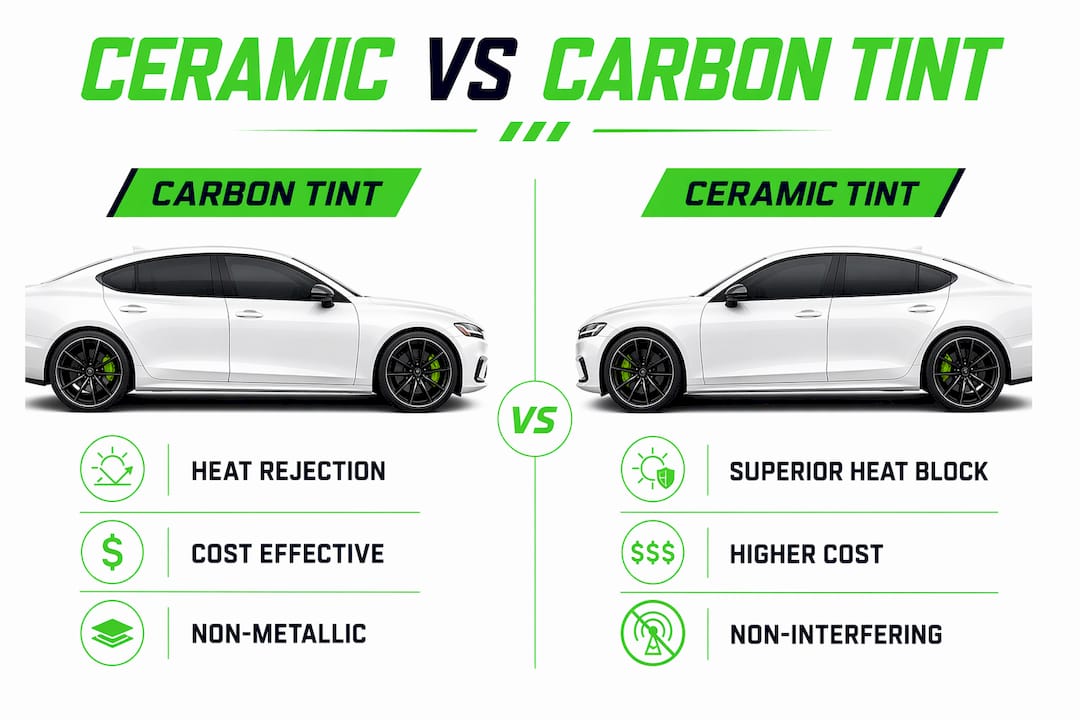
On heat rejection: The TSER gap between carbon and ceramic is real and felt. Real-world thermal tests show ceramic can keep cabin temperatures noticeably cooler than carbon under peak sun conditions. For EV owners, that translates directly into less HVAC load and preserved range. For everyone else, it means you're not burning your hands on the steering wheel after a summer parking lot stop.
On optics: Carbon's matte cast is a style preference for some drivers. Ceramic's neutral look tends to age better, with less hazing or color shift over years of sun exposure.
On cost: The price gap is real but not always as wide as it looks. A quality carbon install at $300 and a mid-tier ceramic at $400 is a $100 decision, not a $500 one. The math changes at the premium end of ceramic, where specialty brands push toward $800–$1,000 for a full car.
One thing worth knowing: A quality carbon film from a reputable manufacturer will outperform a cheap or mislabeled "ceramic" film every time. The category label matters less than the actual test data behind the product.
How do you choose the right film for your situation?
Match your profile to the film, not the other way around.
- You park outside in a hot climate (Southwest, Southeast, Southern California): Ceramic. The TSER advantage compounds over years of daily sun exposure, and the interior protection alone justifies the cost difference.
- You drive an EV or a vehicle with ADAS sensors and radar: Ceramic, and confirm with your installer that the specific film is verified non-metallic. EVs benefit from reduced HVAC load, and ADAS systems need signal-transparent film.
- You keep your car in a garage most of the time: Carbon is a smart call. The peak-heat performance gap matters less when the car isn't baking in a parking lot all day.
- You're on a lease or plan to sell within three years: Carbon. You'll get the UV protection and comfort upgrade without paying for a lifetime ceramic warranty you won't use.
- You want the best possible performance and plan to keep the vehicle long-term: Ceramic, full stop. The longevity and optical stability make it the better investment over five-plus years.
- You want to balance budget and performance across a full car: Ask your installer about a hybrid approach. Ceramic on the front windows (where heat load and driver exposure are highest) and carbon on the rear windows is a common professional strategy. When matched correctly, the visual difference is negligible.
Questions to ask any installer before you pay:
- Can you show me the manufacturer's TSER or IR rejection data for this specific film?
- What does the warranty actually cover, and is it manufacturer-backed or shop-only?
- Is your installation bay climate-controlled?
- What's the curing time, and when can I roll my windows down?
- Do you offer test strips so I can see the VLT before committing?
Red flags to watch for:
- "Nano ceramic" marketing with no lab data to back it up
- A lifetime warranty with no written paperwork
- An installer who can't name the film manufacturer
- A shop without a climate-controlled install area (dust and humidity ruin film adhesion)
How can you tell what tint you already have?
Start with the easy checks before assuming you need an upgrade.
First, look at the edge of your window film near the door seal. Some installers leave a small label or cut sheet with the film brand and series. If you have that, a quick search of the manufacturer's product line will tell you whether it's carbon or ceramic.
No label? Check your original installer paperwork. A reputable shop documents the film used at the time of install.
If you have neither, try these physical checks. Carbon film tends to have a slightly warmer or darker visual cast, especially on rear windows. Ceramic film usually looks more neutral, almost grey-clear, and maintains that look even at lighter VLTs. Neither will interfere with your phone signal, so signal testing won't differentiate them.
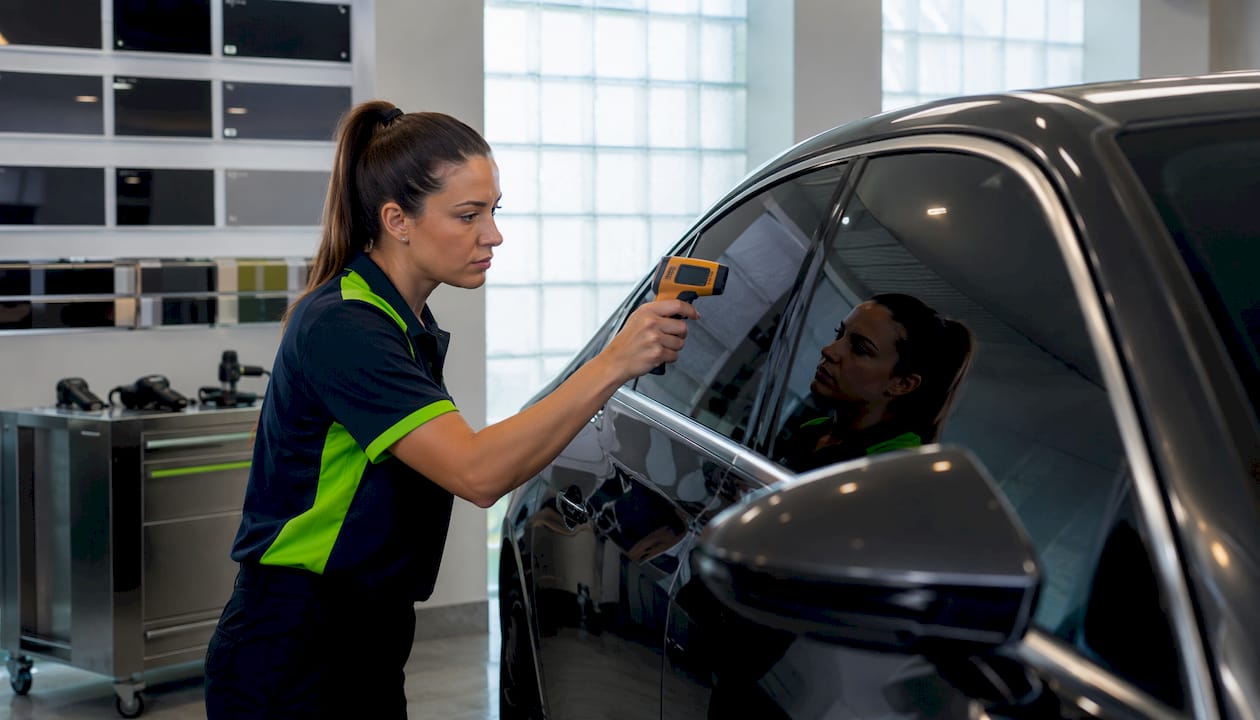
The only reliable way to confirm IR rejection performance is a shop-level spectrometer test or a heat lamp demonstration. Any quality installer can run this in a few minutes with a handheld meter.
Pro Tip: Ask the installer to hold a heat lamp on a sample of the film they're proposing and measure surface temperature with an IR gun. A true nano-ceramic film will run measurably cooler on the glass-facing side than a carbon or dyed film under the same lamp. This is the single most honest demonstration of real-world performance, and any shop confident in their product will do it without hesitation.
What should you expect from installation, maintenance, and warranty?
| Carbon Tint | Ceramic Tint | |
|---|---|---|
| Typical installed cost (full car) | $150–$450 | $300–$1,000 |
| Expected lifespan | 5 years | Often vehicle lifetime |
| Typical warranty | 5 years (varies by shop/brand) | Lifetime at quality shops |
| Fade / color shift risk | Low (vs. dyed); moderate long-term | Very low; high optical stability |
Installation environment matters more than most buyers realize. Film applied in a dusty, humid, or temperature-unstable bay will develop bubbles, lifting edges, and adhesion failures within months, regardless of how good the film itself is. A climate-controlled install bay is not a luxury feature; it's the baseline for a clean, lasting result.
After installation, avoid rolling windows down for at least 48–72 hours. The adhesive needs time to cure against the glass. Small water bubbles visible in the first week are normal and will flatten as the film dries. Avoid ammonia-based cleaners on tinted glass permanently; they degrade the film over time. A microfiber cloth and a mild soap solution is all you need.
What a solid warranty should cover: manufacturer defects, bubbling, peeling, and color change. What typically voids it: physical damage, improper cleaning products, and film applied over existing tint. Get the warranty terms in writing before the install starts, not after.
Why installer quality changes everything about your tint
The film category is only half the equation. A premium ceramic film installed poorly will underperform a mid-grade carbon film installed correctly. Edge work, surface prep, and the installation environment determine whether a film lasts two years or fifteen.
Tintandwrapscustoms operates out of a climate-controlled facility in Van Nuys, CA, specifically to eliminate the dust, humidity, and temperature variables that cause premature film failure. With over 1,000 vehicles protected and a 5-star rating from customers across the San Fernando Valley, the shop has developed particular depth in EV and Tesla installations, where film selection intersects with ADAS sensor placement and antenna locations.
For Tesla owners and other EV drivers, this matters practically. Ceramic film's non-metallic composition keeps it safe for radar and camera systems, but the template work around sensor housings requires experience. A shop that has done it hundreds of times handles those details differently than one doing it for the first time.
Manufacturer-backed warranties at Tintandwrapscustoms mean the coverage follows the film, not just the shop's goodwill. If you're investing in a quality ceramic install, that distinction is worth asking about directly. Drivers considering performance upgrades for daily drivers often find that window tinting is one of the highest-impact, lowest-maintenance additions they can make.
Key Takeaways
Ceramic tint outperforms carbon on heat rejection and long-term clarity, but quality carbon film remains a strong choice for budget-conscious buyers or garage-kept vehicles in mild climates.
| Point | Details |
|---|---|
| Ceramic wins on heat | Ceramic achieves significantly higher TSER compared to carbon at equivalent VLT. |
| UV protection is equal | Both premium carbon and ceramic films block nearly all harmful UV rays. |
| Carbon is the value pick | Full-car carbon installs typically cost noticeably less than ceramic installs. |
| Ask for lab data | Always request manufacturer TSER specs before paying a premium for any film. |
| Tintandwrapscustoms installs both | The Van Nuys shop matches film to your vehicle, climate, and use case with manufacturer-backed warranties. |
The tint decision most people overthink
There's a version of this comparison that gets written as if ceramic is obviously correct and carbon is for people who don't know better. That framing misses something real.
The performance gap between a quality carbon film and a mid-tier ceramic film is noticeable in Phoenix in July. It's less pronounced in San Francisco in November. Climate and parking habits are the actual variables that determine whether you'll notice the difference in daily life.
What I'd push back on more firmly is the assumption that the film category is the most important decision. It isn't. The installer is. A shop that uses a climate-controlled bay, documents the film manufacturer, provides written warranty terms, and can show you heat lamp test data will give you a better result with carbon than a careless shop will give you with ceramic. The film is only as good as the hands that put it on.
The other thing buyers underestimate is the hybrid approach. Ceramic front, carbon rear is not a compromise. It's a deliberate, professional strategy that concentrates the heat-rejection benefit where the driver and front passenger actually feel it, while keeping the total cost reasonable. Ask about it. A shop that knows what they're doing will have a clear answer.
Get your tint installed right at Tintandwrapscustoms
If you've read this far, you know what film you want. The next step is getting it installed in conditions that make it last.
At Tintandwrapscustoms in Van Nuys, CA, every install starts with a vehicle inspection and a film recommendation based on your specific use case, not a one-size-fits-all upsell. The shop's climate-controlled bay handles everything from daily drivers to Teslas, and every job comes with documented, manufacturer-backed warranty coverage so you know exactly what's protected and for how long. Typical turnaround is same-day for most passenger vehicles.
Book your window tinting appointment directly on the site, or stop by for a quote and a heat lamp demonstration before you commit to a film. Pricing is transparent, the warranty paperwork is real, and the shop has the track record to back it up.
Useful sources
- KSB Window Film: Nano Ceramic vs Carbon Window Film — TSER and IR rejection range comparisons, product quality guidance
- WindowTint.com: Ceramic vs Carbon Window Tint — UV protection data, signal interference facts
- TintGrade: Ceramic Tint vs. Carbon Tint — optical clarity, durability, and installed cost ranges
- Jalopnik: Ceramic vs. Carbon Window Tint — real-world thermal testing and cabin temperature data
- HighCool: Carbon vs Ceramic Window Tint — technology overview and buyer decision framework