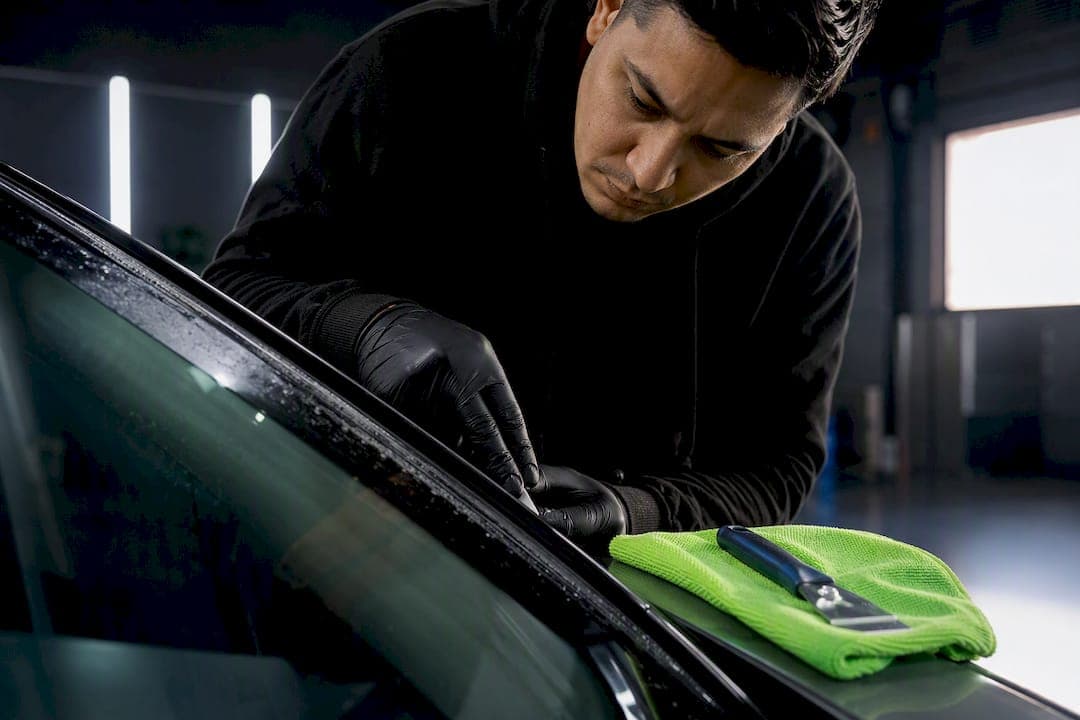
Professional tint removal typically runs $25 to $60 per side window, $75 to $200 for a rear windshield, and $120 to $450 for a full vehicle depending on size and film type. Most sedan owners land between $150 and $250. Always hire a pro for rear defroster glass, and if you're re-tinting afterward, ask about bundle pricing before you book removal separately.
TL;DR:
- Removing tint from rear windows with defroster lines costs at least $75 and can exceed $175 due to the need for careful handling of delicate conductive strips.
- Larger vehicles like SUVs and trucks typically range from $200 to over $450 for full removal, mainly because of increased glass surface and complexity.
- Films such as metallic or ceramic tend to take more time to remove than dyed films, with poor-quality older films possibly increasing labor by 20 to 30 minutes per window.
- DIY removal costs are lower but carry risks of damaging glass or defroster lines, which could lead to windshield replacement costs ranging from hundreds to over a thousand dollars.
- Getting an itemized, in-person estimate and choosing a climate-controlled shop reduces the likelihood of errors, scratches, or damage requiring expensive repairs later.
Table of Contents
- How Much Does Window Tint Removal Cost Per Window and Per Vehicle?
- Why Vehicle Size and Film Type Change Your Price
- What Actually Drives Your Quote Higher (and What's a Fair Add-On)
- Should You Remove Tint Yourself or Pay a Pro?
- How to Get a Quote You Can Actually Trust
- Why the Shop You Choose Matters More Than the Price Sheet
- Get an Itemized Tint Removal Estimate in Van Nuys
- Sources
How Much Does Window Tint Removal Cost Per Window and Per Vehicle?
Side windows are the cheapest piece of glass to strip, usually running $25 to $60 each. The front pair, since they're smaller and often easier to access, tends to sit at the low end unless the film has degraded badly. Rear windows cost more across the board, and the rear windshield is almost always the priciest single piece of glass in the job.
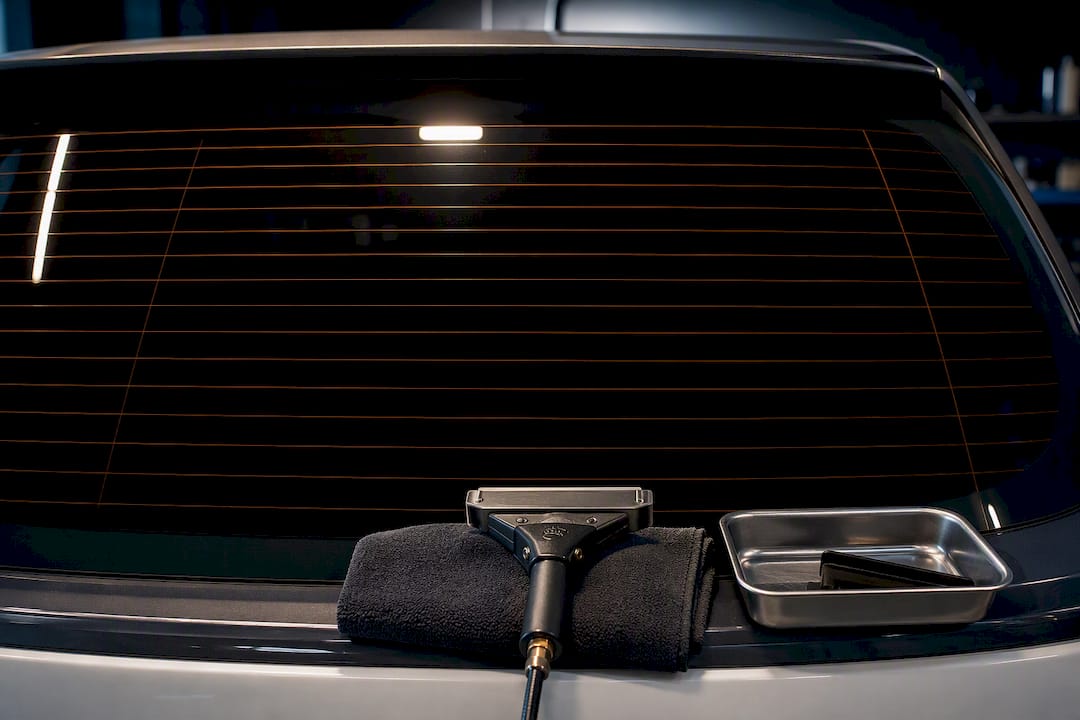
Why? Defroster lines. Every rear windshield with a built-in defogger has dozens of thin conductive strips bonded to the inside of the glass, and scraping tint off that surface without a heat gun, the right blade angle, and a steady hand risks lifting or snapping them. That precision work is why rear glass commonly starts at $75 and can run past $175 even on an otherwise routine job.
Here's what full-vehicle totals tend to look like:
- Compact car or coupe (4 windows, no rear defroster complexity): $120 to $200
- Mid-size sedan (5-6 windows including rear windshield): $150 to $280
- SUV or crossover (more glass, quarter windows): $200 to $350
- Full-size truck or three-row SUV: $250 to $450+
Typical range: Most sedans fall in the $120 to $180 band for a standard job, climbing toward $350 to $450 when the film is old, multi-layered, or the vehicle has extra glass like a panoramic sunroof. If your car has visible bubbling, purple discoloration, or peeling at the edges, plan for the higher end of whatever range applies to your vehicle type. Professional shops routinely quote $50 to $150 per window when a window presents unusual difficulty, so a single stubborn rear windshield can push an otherwise cheap job well past the average.
Why Vehicle Size and Film Type Change Your Price
A compact sedan and a three-row SUV are not the same job, even when both just need tint stripped. Square footage of glass is the first variable: SUVs and trucks carry quarter windows, larger rear glass, and sometimes a cargo area window that a sedan simply doesn't have. More glass means more labor hours, and labor is what you're actually paying for.
Film type matters just as much as vehicle size, sometimes more.
- Dyed film is the easiest to remove. It typically comes off in sheets with heat and patience, keeping labor time low.
- Metallic or metalized film bonds more aggressively and tends to shatter into small pieces rather than peel, adding scraping time.
- Ceramic and carbon film removal time varies a lot depending on the adhesive used by the original installer, but these premium films often resist heat guns better than dyed film.
- Multi-layer or older aftermarket films are usually the hardest of all, especially once they've started to degrade.
Age is the hidden cost driver here. Low-quality dyed film that's baked in the sun for eight or ten years tends to turn purple and grow brittle, which means it flakes instead of peeling in one piece. That single characteristic can add 20 to 30 minutes per window in scraping and solvent application, and it's the most common reason a quote comes in higher than the shop's advertised starting price.
What Actually Drives Your Quote Higher (and What's a Fair Add-On)
Shops price tint removal one of two ways: a flat per-vehicle or per-window rate, or straight hourly labor. Hourly billing is more common for jobs with unknown film condition, and $60 to $120 per hour is a normal range for a shop with trained technicians and proper tools.
Beyond the base labor rate, a few line items show up on legitimate invoices:
- Defroster protection fees — extra time spent working around rear-window heating elements carefully instead of quickly.
- Mobile service or travel fees — if a technician comes to you instead of you driving to the shop.
- Materials and disposal — solvent, blades, and proper disposal of old film aren't free inputs.
- Sales tax — varies by state and sometimes by city.
- Antenna line or sensor complexity — some rear windows have embedded antennas that need the same careful treatment as defroster lines.
Regional labor rates swing totals too. Differences of roughly 15% to 25% between markets aren't unusual, and shops that primarily do mobile work will almost always tack on a travel fee separate from labor. Bundling removal with a fresh tint job is where you actually save money. Shops that handle both in one visit routinely knock 10% to 20% off the combined price versus paying for two separate appointments.
Pro Tip: Ask every shop to break the quote into labor hours, materials, and travel fees on paper before you agree to anything. A shop that won't itemize is a shop that's leaving room to pad the invoice later.
Should You Remove Tint Yourself or Pay a Pro?
A DIY kit, steamer or heat gun plus ammonia-free solvent and a razor blade, costs roughly $15 to $60. That's real savings on paper. The catch is time and risk. A pro typically clears a full vehicle in 1 to 3 hours because they've done it hundreds of times and know exactly how much heat each film type tolerates. DIYers routinely spend 2 to 6 hours on the same job, often longer if the film fights back.
The bigger issue is what goes wrong. Common DIY failure modes include:
- Scratched glass from an aggressive blade angle
- Melted or lifted defroster lines on the rear windshield
- Leftover adhesive residue that requires a second cleanup pass or a glass replacement to fix properly
That last one is the expensive mistake. Rear-window defroster damage from a DIY attempt can require a full windshield replacement, and that bill often runs several hundred dollars to well over $1,000, dwarfing whatever you saved on the kit.
The rule of thumb worth following: DIY is fine on side windows with intact, easy-to-peel film. Hand the rear defroster glass to a professional every time.
How to Get a Quote You Can Actually Trust
Most shops won't give you a firm number sight unseen, since film condition is the biggest unknown until a technician looks at your car in person. That's normal. What isn't normal is a vague verbal quote with no breakdown.
Before you book, run through this checklist:
- Request an itemized estimate covering labor, materials, per-window fees, travel or mobile charges, tax, and a contingency line for unexpected film condition.
- Ask about bundling with a new tint installation. Combined jobs often save 10% to 20% versus two separate visits.
- Get written confirmation on defroster protection procedures and post-removal glass cleanup.
- Ask if they photograph the vehicle before starting work, which protects both of you if a dispute comes up later.
- Prep your car by clearing loose items from the interior and, if possible, scheduling indoor shop time rather than a driveway job in direct sun.
If you're removing tint specifically to switch to a windshield tint strip or a different film category, mention that upfront. It changes how the shop preps the glass afterward.
Why the Shop You Choose Matters More Than the Price Sheet
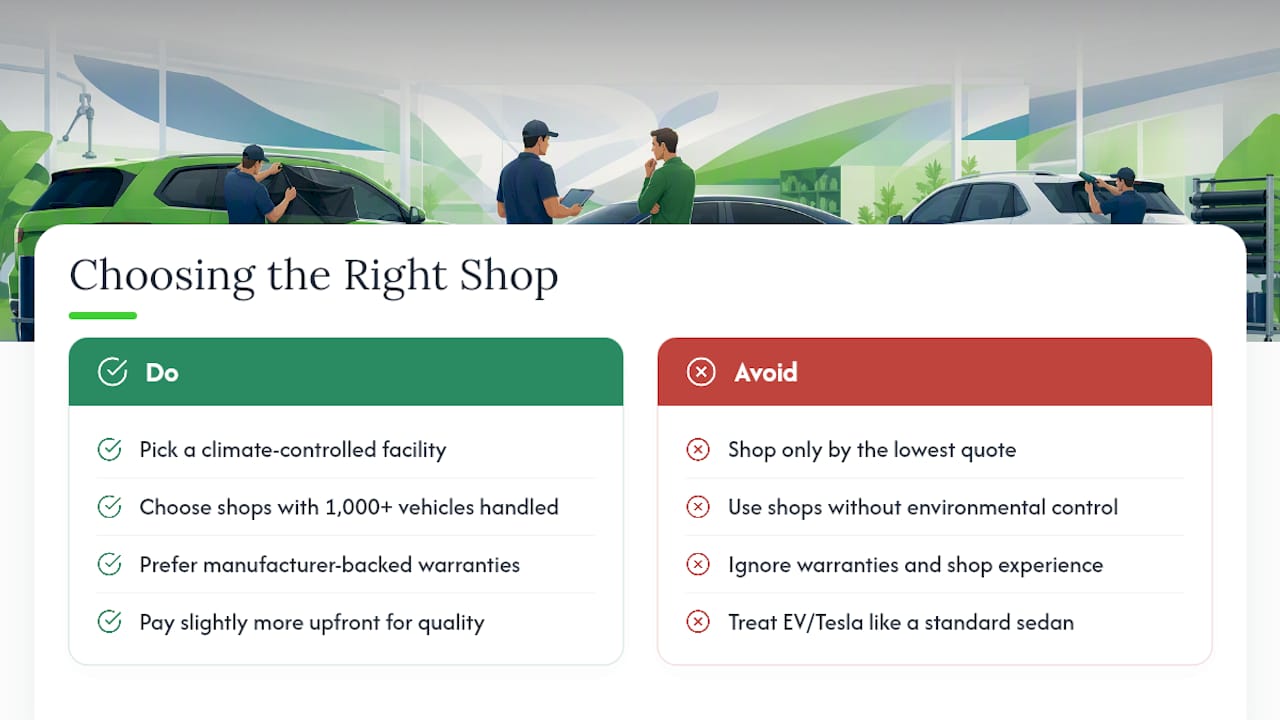
The conventional advice is to shop by the lowest quote. That's backwards for tint removal, because the real cost isn't the invoice, it's the rework when something goes wrong.
A climate-controlled facility isn't a luxury add-on, it's a technical requirement for consistent adhesive release. Heat and humidity swings change how film and glue respond to solvent and heat guns, which is exactly why shops without environmental control see more scratched glass and more damaged defroster lines. Tint & Wraps Customs runs removal work in a controlled bay for that reason, and the same precision that matters on a standard sedan matters even more on an EV or Tesla, where glass geometry and sensor placement leave less room for error.
Over 1,000 vehicles through the shop and manufacturer-backed warranties on the work aren't marketing lines, they're the reason fewer customers come back with a cracked defroster line or a windshield that needs replacing. That's the actual math behind "cheap now, expensive later." Paying slightly more upfront for a shop that gets it right the first time is usually the cheaper outcome over a year, not just a nicer experience.
— Jake
Get an Itemized Tint Removal Estimate in Van Nuys
Tint & Wraps Customs handles tint removal the way it should be done: in a climate-controlled bay, with defroster lines protected, and with a written estimate before anything gets scraped. If you're planning to switch films afterward, whether that's clear ceramic for UV protection without the dark look or a full ceramic upgrade, removal and re-tint get bundled into one visit and one price.
Tesla and EV owners get the same manufacturer-backed warranty coverage as any other vehicle in the shop, which matters given how unforgiving newer glass and sensor housings can be during removal. Before your next appointment, take a few minutes to clean the glass properly so a technician can get an accurate read on film condition when you arrive.
Call the shop, request a mobile inspection, or book your itemized estimate online and get a number you can actually plan around before any work starts.
Sources
- Window Tint Removal Cost 2026: $50-$150 Per Window
- Cost to Remove Tint From Car Windows – Cost Insider
- Tint Removal Cost: What to Expect | Granbury
- Professional Window Tint Removal Service: Costs, Process & What to Expect | Window Film Depot
- Window tint removal cost (FlexiPPF)