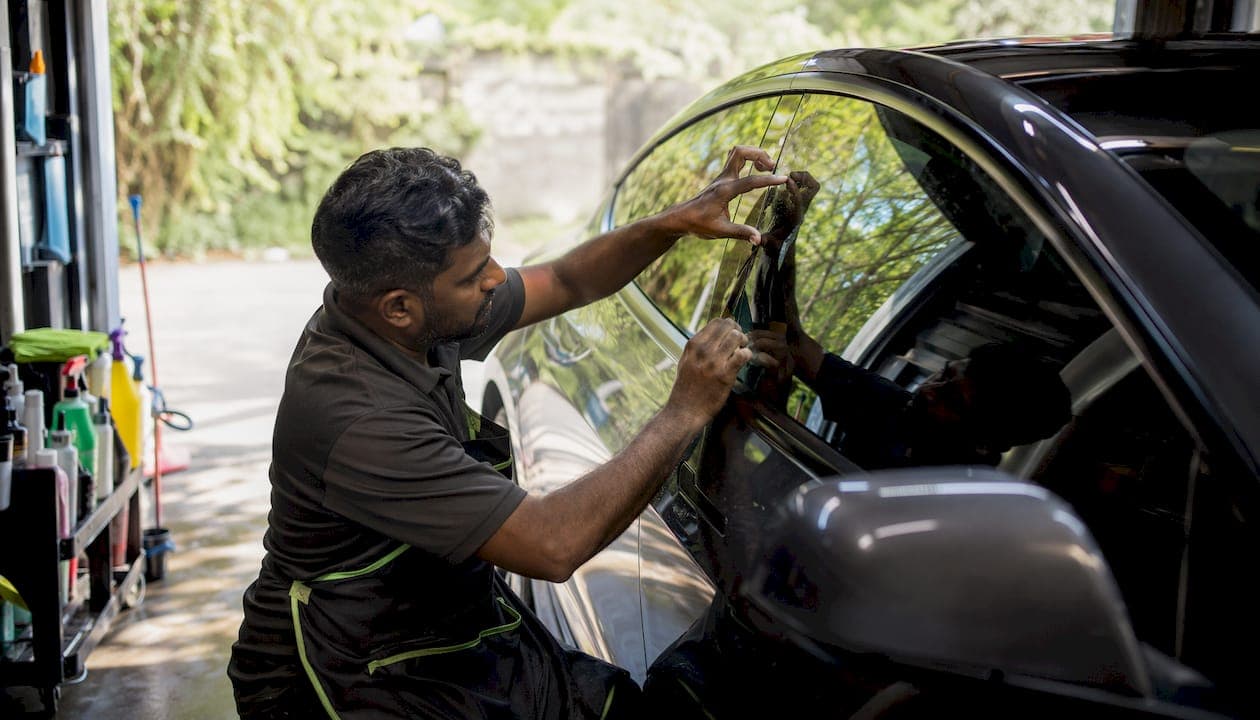
Yes, tint your Tesla. Nano-ceramic film is the single best first upgrade you can make for heat control, UV protection, and keeping your car's cameras and sensors signal-safe. A full-car ceramic install typically runs in the mid hundreds to low thousands of dollars depending on your model, film grade, and whether you add the windshield or panoramic roof. Budget extra cost for the glass roof alone.
A few things to lock in before you book:
- Film type: Nano-ceramic is the clear winner. It delivers high IR rejection at lighter visible darkness levels, so you get real heat control without blacking out your cabin.
- VLT: Check your state's legal limits before choosing darkness. Front side windows have the tightest restriction in most states.
- Installer: Use a shop with documented Tesla experience. Frameless doors and panoramic glass punish inexperienced installers fast.
- Tintandwrapscustoms in Van Nuys, CA handles Tesla-specific installs with a climate-controlled facility and manufacturer-backed warranties.
Table of Contents
- What type of window film actually works best for a Tesla?
- Why tinting a Tesla pays off beyond just looks
- Tesla Shop (XPEL) vs. aftermarket installers: which should you choose?
- What are the legal VLT limits for Tesla window tint in the US?
- How much does Tesla window tinting cost, and how long does it take?
- Why Tesla installations require a different level of skill
- How to care for your tint and what warranties actually cover
- Key Takeaways
- The case for getting this right the first time
- Book your Tesla tint appointment with Tintandwrapscustoms
- Useful resources for deeper research
What type of window film actually works best for a Tesla?
Not all window films are built the same, and the gap between the cheapest and best options is wider on a Tesla than on most vehicles.
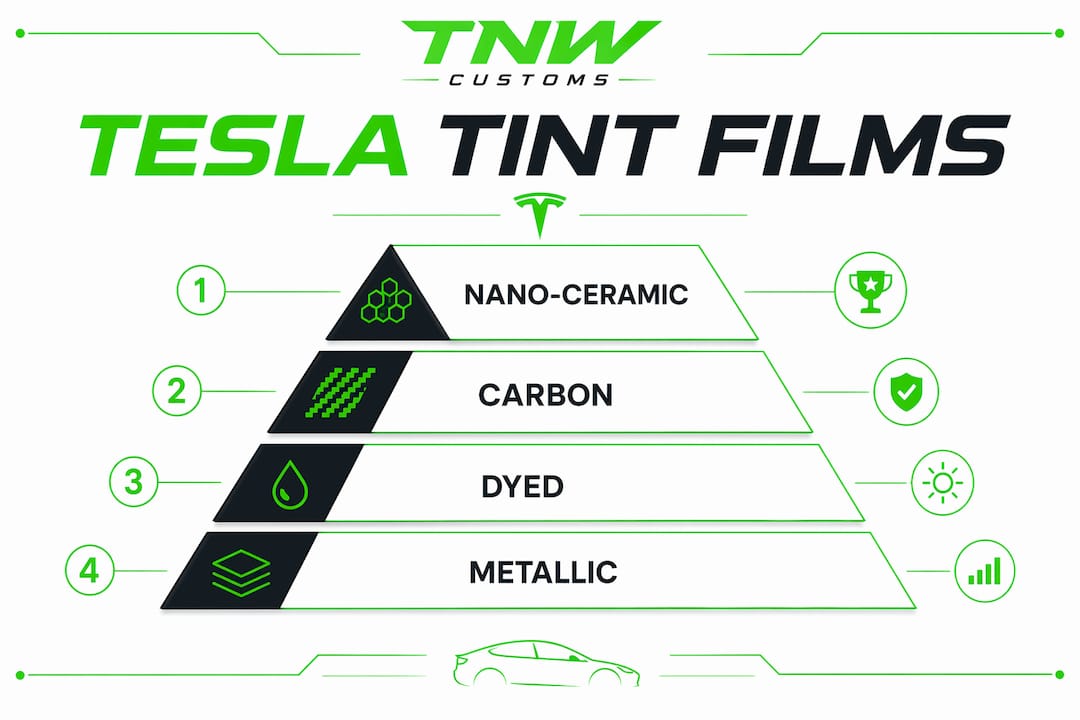
Dyed film is the entry point. It absorbs light to reduce glare and adds some privacy, but it does almost nothing for heat. Color fades over time, often turning purple within a few years. For a Tesla, it is a waste of money.
Carbon film is a step up. It delivers mid-level infrared rejection and holds its color better than dyed film. Decent for budget builds, but it still falls well short of ceramic performance.
Metallic film rejects heat well but creates a real problem for Teslas: the metal layer interferes with GPS, cellular, and Wi-Fi signals. Given how much a Tesla depends on connectivity, metallic film is essentially off the table.
Nano-ceramic film is where the conversation ends. It uses non-metallic ceramic particles to block infrared heat without touching your signal strength. Film technology ranks dyed < carbon < ceramic for both IR rejection and long-term color stability, and ceramic is the only category that holds up on all four counts: heat, clarity, signal safety, and longevity.
Why IR rejection matters more than darkness
Here is the part most owners get wrong: visible darkness (VLT) does not predict heat rejection. A dark dyed film at 20% VLT can let in far more infrared heat than a light ceramic film at 70% VLT. IR rejection is the metric that determines how hot your cabin gets, not how dark the glass looks from the outside.
For Teslas specifically, this matters because the panoramic glass roof is the biggest heat source in the car. Tesla's factory glass blocks roughly 98–99% UV, but it does not stop infrared heat transfer. Adding a ceramic film addresses that gap directly.
Recommended VLT setup by panel:
- Windshield: 70%+ clear ceramic (maximum visibility, legal everywhere, strong IR block)
- Front side windows: 35% or 50% depending on your state's legal limit
- Rear side windows: 20% for privacy and heat control
- Panoramic roof: 50–70% VLT ceramic to cut IR heat without darkening the interior experience
Pro Tip: When reading spec sheets, look for three numbers: IR rejection %, UV block %, and VLT. A film advertising "99% UV block" but listing no IR % is almost certainly a dyed or basic carbon product. Ceramic films from reputable brands publish all three.
Why tinting a Tesla pays off beyond just looks
The practical case for tinting a Tesla is stronger than for most vehicles, for a few specific reasons.
Cabin heat and HVAC load. Tesla's large glass panels, especially the panoramic roof, turn the cabin into a greenhouse on hot days. Ceramic tint reduces that heat transfer meaningfully. Owners consistently report faster cooldown times and less aggressive air conditioning use after installing quality ceramic film. Lower HVAC demand translates to modest but real range improvements in hot climates, though the exact gain varies with driving habits and temperature.
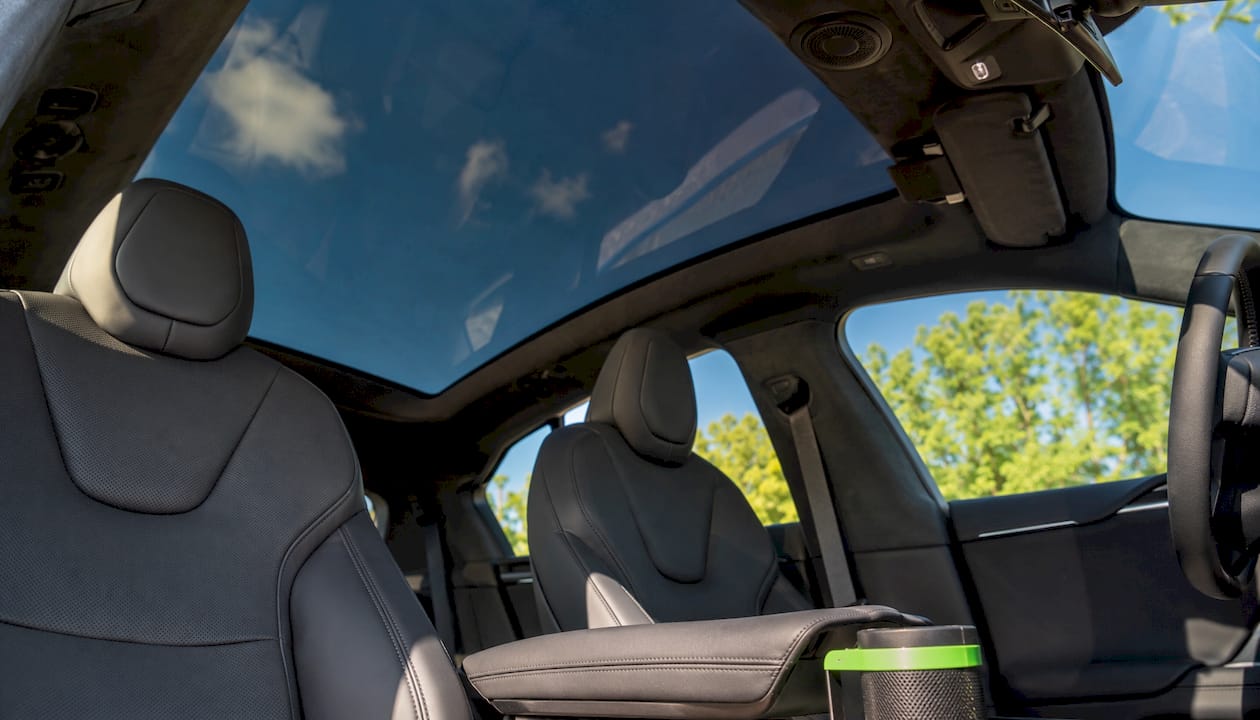
UV protection. Quality nano-ceramic films block 99%+ UV radiation, which protects your dashboard, seats, and trim from fading and cracking. Tesla interiors, particularly the white vegan leather and the large touchscreen surround, are expensive to replace. Tint is cheap insurance against long-term sun damage.
Factory glass is not enough on its own. Tesla's rear privacy glass looks dark, but it uses a dye-based process that blocks visible light while only partially blocking infrared. Adding a light ceramic film over factory privacy glass significantly improves heat rejection even when the visible change is subtle.
Privacy and glare. If you have child seats in the rear, keep valuables in the car, or drive frequently in direct afternoon sun, 20% rear tint makes a noticeable difference. Glare reduction on the large center touchscreen is a real comfort improvement many owners underestimate until they have it.
Tesla Shop (XPEL) vs. aftermarket installers: which should you choose?
Tesla sells an official XPEL window tint through its online shop, and it is a legitimate option worth understanding before you decide.
The Tesla Shop XPEL route gives you a factory-channel product with straightforward warranty registration tied to your Tesla account. XPEL's PRIME XR nano-ceramic film delivers approximately 78% IR rejection, and the PRIME XR PLUS achieves up to approximately 96%, both with 99%+ UV block. The appeal is simplicity: one vendor, one warranty, and Tesla-authorized patterns.
The tradeoff is flexibility. Tesla Shop pricing tends to run at the higher end, appointment availability can be limited depending on your region, and the package options are more fixed. If you want to mix film grades across panels (lighter ceramic on the windshield, darker on the rear), or add a glass roof package at a different spec, a local shop often gives you more control.
Experienced aftermarket shops can install the same XPEL films or comparable nano-ceramic products, often with more scheduling flexibility and competitive pricing. A shop that specializes in Tesla installs will have plotter-cut pattern files for your specific model, the climate-controlled environment to prevent dust contamination, and the file-to-edge technique your frameless doors require.
Quick comparison:
| Factor | Tesla Shop (XPEL) | Experienced aftermarket shop |
|---|---|---|
| Film quality | XPEL PRIME XR / XR PLUS | XPEL or comparable nano-ceramic |
| Warranty registration | Via Tesla account | Manufacturer + installer warranty |
| Scheduling flexibility | Limited by Tesla service centers | Generally more flexible |
| Package customization | Fixed packages | Mix-and-match by panel |
| Typical full-car price | Higher end of market | — |
For most owners, an experienced local shop with documented Tesla installs offers better value, especially for glass roof and windshield add-ons where the technical difficulty justifies paying for proven expertise.
What are the legal VLT limits for Tesla window tint in the US?
Window tint laws are state-specific, and the rules for Teslas follow the same vehicle-class framework as any other car or SUV. Getting this wrong costs you a ticket and a redo job.
How VLT limits are structured:
- Windshield: Most states allow only a non-reflective tint strip along the top (typically the top 4–6 inches). A few states permit clear ceramic film across the full windshield if it meets their VLT threshold.
- Front side windows: The tightest restriction. California, for example, requires front side windows to allow more than 70% VLT. Many states sit in the 35–70% range.
- Rear side windows and rear windshield: Generally more permissive, especially for SUVs and multi-purpose vehicles.
Model Y classification note. The Model Y is typically classified as an SUV or multi-purpose vehicle in most states, which often allows darker rear window tint than a sedan classification. The Model 3 is a sedan and follows sedan rules. Confirm your state's vehicle classification for your specific model before choosing rear darkness.
How to check your state's rules:
- Search your state's Department of Motor Vehicles website for "window tint law" or "vehicle code tint."
- Ask your installer for a tint certificate after installation. Reputable shops provide one that lists the VLT of each panel.
- Carry that certificate in your car. If you are ever pulled over, it is your documentation.
Red flags for illegal configurations: Any front side window darker than your state allows, any reflective metallic film visible from outside, and any windshield tint that extends below the AS-1 line without a medical exemption.
How much does Tesla window tinting cost, and how long does it take?
Typical price ranges
Prices vary by market, film brand, and model complexity. A Model Y with a panoramic roof costs more to tint than a Model 3 because of the additional glass area and technical difficulty.
What drives cost up:
- Film IR rejection % (higher-spec films cost more per square foot)
- Panoramic glass roof (larger surface, more precision required)
- Windshield add-on (requires clear ceramic and precise cutting around sensors)
- Existing tint removal ($75–$200 depending on adhesive condition)
- Labor market rates in your city
Installation timeline
- Appointment length: 3–6 hours for a full-car install including roof and windshield
- Cure time: 3–5 days before rolling windows down or applying pressure to the glass
- Car wash: Wait at least 7 days before running through an automatic wash
- Full cure: Film reaches full adhesion in 2–4 weeks depending on temperature and humidity
Pro Tip: Schedule your install at the start of a week when you can leave the windows up for several days. Avoid booking right before a road trip or rain event during the cure window.
Why Tesla installations require a different level of skill
Teslas are not difficult to tint because they are electric. They are difficult because of the glass.
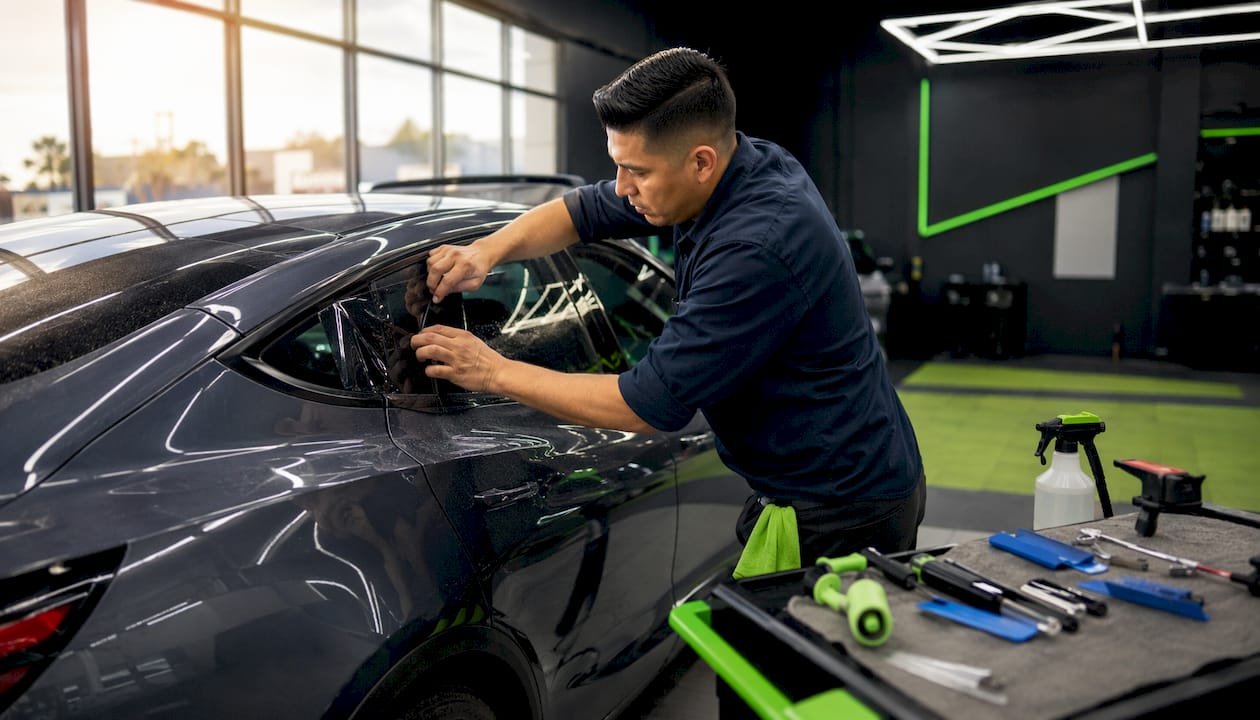
Large compound-curved panels, frameless door windows, and a panoramic roof that spans the entire ceiling create challenges that expose inexperienced installers quickly. The frameless windows are the biggest technical hurdle: without a door frame to tuck film under, the installer must use a file-to-edge technique where the film is precision-cut directly to the glass edge. Any gap or overcut is visible every time the window drops.
DIY tinting is strongly discouraged for Teslas. The curved panels need professional-grade plotter-cut patterns, and the install environment needs to be climate-controlled to prevent dust contamination under the film. A redo on a Tesla glass roof is not cheap.
Questions to ask any installer before booking:
- How many Tesla installs have you completed in the last six months?
- Do you use plotter-cut pattern files for Tesla models, or do you hand-cut?
- Is your facility climate-controlled?
- What workmanship warranty do you offer, and what does it cover?
- Can you show me before/after photos of Tesla installs?
Red flags to walk away from:
- No documented Tesla experience
- Hand-cutting only, no plotter
- No workmanship warranty
- Vague or no cure policy
- No tint certificate provided after install
How to care for your tint and what warranties actually cover
Post-install care
The first two weeks after installation are when most problems occur, and almost all of them are preventable.
- Do not roll windows down for at least 3–5 days after install
- Avoid car washes for 7 days minimum; hand wash only after that
- Small water bubbles under the film in the first week are normal. They disappear as the film cures. Do not try to push them out.
- Cleaning: Use an ammonia-free cleaner (Invisible Glass or a diluted dish soap solution work well). Ammonia degrades the film adhesive over time.
- No squeegees on the interior glass surface for the first 30 days
What warranties typically cover
| Warranty type | Typical coverage | Common exclusions |
|---|---|---|
| Manufacturer warranty | Bubbling, peeling, color fade, delamination | Physical damage, improper cleaning, DIY removal |
| Installer workmanship warranty | Edge lifting, installation defects, re-do if film fails at install | Damage from rolling windows too early, accidents |
| Duration | Lifetime (manufacturer) / 1–3 years (installer) | Varies by shop |
To make a warranty claim, most installers require photos of the defect, your original invoice, and the tint certificate from your install. Keep all three in a digital folder.
Key Takeaways
Nano-ceramic film is the right choice for Tesla window tinting because IR rejection, not visible darkness, determines how much heat actually enters the cabin.
| Point | Details |
|---|---|
| Film type to choose | Nano-ceramic delivers approximately 78% IR rejection for PRIME XR and up to approximately 96% for PRIME XR PLUS, both with 99%+ UV block and no signal interference. |
| Legal check first | Confirm your state's front side window VLT limit before choosing darkness; Model Y often qualifies for SUV rules. |
| Roof and windshield | Add 50–70% VLT ceramic to the panoramic roof and a clear ceramic film to the windshield for maximum heat control. |
| Cost to budget | A full-car premium nano-ceramic install typically runs —; rear-only starts around $250. |
| Tintandwrapscustoms | Tintandwrapscustoms in Van Nuys offers Tesla-specific installs in a climate-controlled facility with manufacturer-backed warranties. |
The case for getting this right the first time
Window tint is one of those upgrades where the gap between a good job and a bad job is invisible until it is not. You will not notice the difference between a properly file-to-edge installed ceramic film and a hand-cut job on day one. You will notice it on day 90 when the edge starts lifting on your frameless Model 3 door.
The bigger mistake most owners make is treating VLT as the primary spec. They ask for "20% all around" without ever asking what the IR rejection percentage is. A 20% dyed film and a 20% nano-ceramic film look identical from the outside. Inside, on a 95-degree afternoon in the San Fernando Valley, they feel completely different.
There is also a real argument for doing the full package at once: windshield, sides, and roof. The incremental cost of adding the windshield and roof during the same appointment is almost always lower than booking a second visit. And the heat reduction difference between tinting just the sides versus tinting everything is substantial, especially on a Model Y where the panoramic roof covers most of the cabin.
One more thing worth saying plainly: the Tesla Shop XPEL option is not a bad product. XPEL PRIME XR and XR PLUS are genuinely excellent films. But buying through Tesla's storefront does not guarantee a better install. The film quality is the same whether it goes on at a Tesla service center or at a shop that has done 500 Tesla installs. The installer's skill and facility are what determine the outcome.
Book your Tesla tint appointment with Tintandwrapscustoms
If you are in the San Fernando Valley and want the install done right the first time, Tintandwrapscustoms in Van Nuys is built for exactly this. The shop runs a climate-controlled facility, uses plotter-cut patterns for Tesla models, and registers manufacturer-backed warranties on every job.
Packages start with rear-window installs for owners who want a quick privacy and heat upgrade, and scale up to full-car builds that include the panoramic roof and windshield clear ceramic. Every Tesla that comes through gets a pre-install inspection to flag existing damage and confirm the right film spec for your state's VLT rules.
To book, get a quote online or call the shop directly. Bring your registration and any notes on your preferred VLT or film grade. Turnaround on a full-car Tesla install is typically one day, and the team walks you through cure instructions and warranty registration before you leave.
Useful resources for deeper research
- Tesla Shop XPEL Window Tint: The official Tesla storefront listing for XPEL film, useful for comparing factory-channel pricing and package options.
- Tesla Window Tint Guide (Tesla DIY Repair): Covers film technology comparisons, recommended VLT setups by panel, and DIY vs. professional guidance.
- Tesla Window Tinting and PPF Owner's Guide (Tinterz): Detailed installer perspective on frameless window techniques, panoramic roof challenges, and post-install care.
- Your state's DMV website: Search "[your state] window tint law" for the current VLT limits by window position and vehicle class. This is the only authoritative source for legal compliance in your jurisdiction.
- Tintandwrapscustoms: Van Nuys shop for Tesla-specific installs, package pricing, and appointment booking.