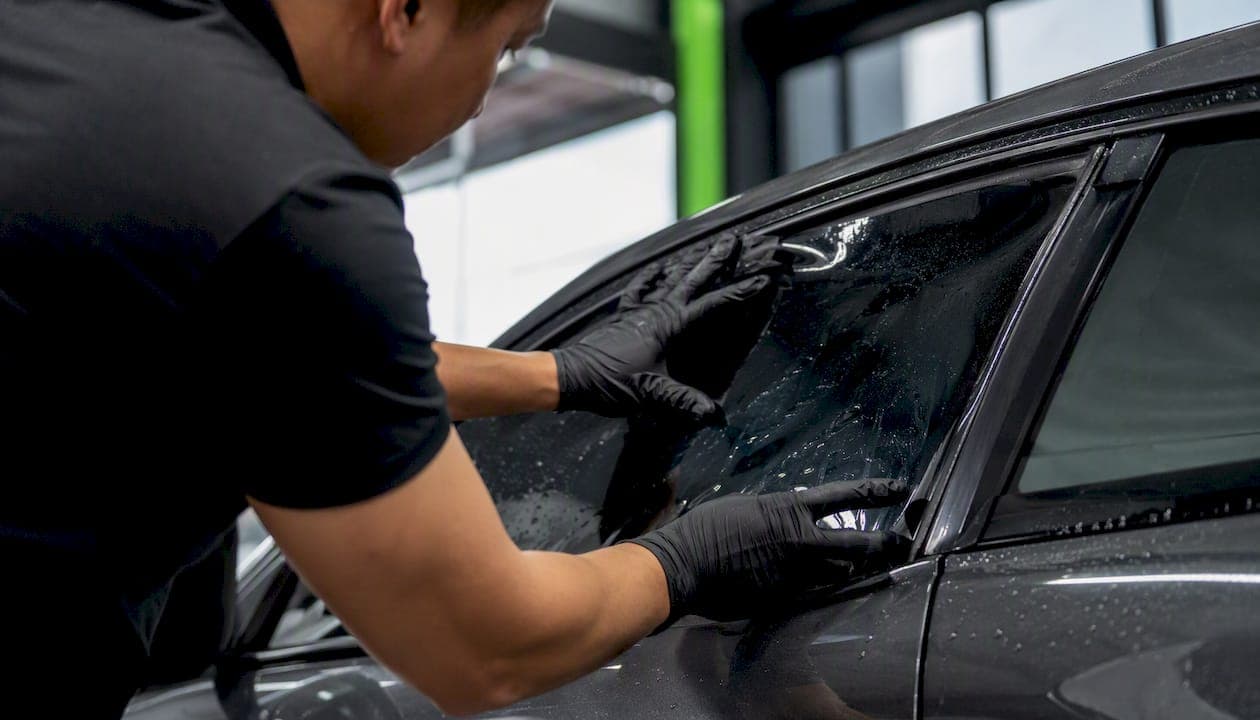
Tint percentage is the Visible Light Transmission (VLT) reading of a window: the share of visible light that passes through the glass and film combined. Lower numbers mean darker glass. A 5% tint blocks nearly everything; a 70% tint barely changes what you see.
For most drivers, the smartest move is picking the darkest VLT your state allows for front windows while still keeping enough light in for safe night driving. That number tends to land around 35%, which is why installers call it the sweet spot. It balances privacy and heat control against clear nighttime visibility.
A single VLT number touches three things you'll notice every time you drive:
- Privacy: how easily someone outside can see into your cabin
- Glare and heat: how much sun punches through on a hot afternoon
- Night visibility: how well you see the road once the sun goes down
Pro Tip: Don't pick a percentage off a chart alone. Sit in a friend's car with the shade you're considering, once during the day and once after dark, before you commit.
Key Takeaways
Tint percentage measures Visible Light Transmission, and choosing the darkest legal front-window VLT paired with quality ceramic film beats maxing out darkness with cheap dyed film.
| Point | Details |
|---|---|
| VLT is the core metric | Lower VLT numbers mean darker glass; final VLT is film VLT multiplied by glass VLT. |
| 35% is a common sweet spot | It balances privacy and glare control with comfortable night visibility for most drivers. |
| Darker doesn't mean better performance | Ceramic film often beats dyed film on heat and UV rejection regardless of VLT. |
| Legal limits vary by state and window | Always confirm your state's front-window minimum before booking an install. |
| Measure before you trust a number | A handheld meter or professional readout is the only reliable way to confirm net VLT. |
| Quality installation protects the investment | Tintandwrapscustoms installs in a climate-controlled Van Nuys facility with manufacturer-backed warranties and Tesla-specific expertise. |
Table of Contents
- How Tint Percentage Is Measured and Reported
- Common Tint Percentages and How They Actually Look
- Does a Darker Tint Actually Mean Better Performance?
- How State Tint Laws Work and How to Check Yours
- A Decision Checklist for Choosing Your Tint Percentage
- How to Check What Tint You Already Have
- Why Film Quality and Installation Skill Change the Outcome
- What Installers Wish Every Customer Knew
- Getting Your Tint Done Right in Van Nuys
- Frequently Asked Questions
- Sources
How Tint Percentage Is Measured and Reported
VLT sounds simple until you realize two different numbers get thrown around: the film's rated VLT and the glass's actual VLT once the film is on. They're not the same thing, and confusing them is how people end up with an illegal window without meaning to.
Your factory glass already blocks some light before the film goes on, especially on rear windows with built-in privacy tint. The real number that matters, the one law enforcement measures, is the combined result.
The formula installers use is straightforward: final VLT equals film VLT times glass VLT, divided by 100. A calculator built around this exact multiplication shows why layering matters so much. Put 35% film over glass that's already at 70% VLT, and you get roughly 24.5%, not 35%.
| Window position | Typical OEM glass VLT | What it means for final tint |
|---|---|---|
| Windshield | 70% | Film here is usually limited to a strip; most factory glass stays very clear |
| Front side windows | 70% | Close to clear glass, so film VLT and final VLT stay fairly close |
| Rear side/privacy glass | 5% | Adding film on top can push net VLT far below what the film label suggests |
Pro Tip: Always ask your installer for the measured net VLT after the film cures, not just the film's rated percentage. That reading is what a police officer's meter will show, and it's the number that determines whether you pass a road check.
Common Tint Percentages and How They Actually Look
Numbers on a spec sheet don't tell you much until you picture them on a real car in real light. Here's what each common shade tends to look and feel like from the driver's seat and from the curb.
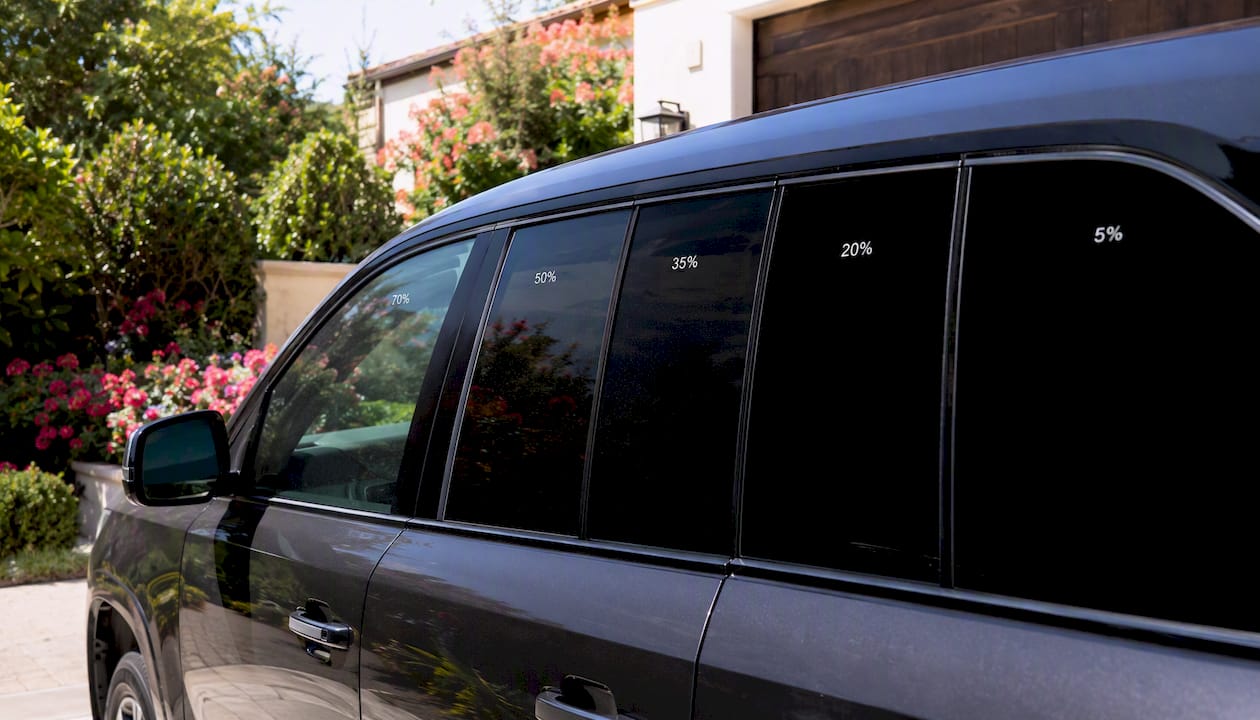
You'd need to look closely to notice a difference from bare glass. It offers minimal privacy but keeps night driving essentially unaffected, which is why it's often the factory or dealer-installed option on windshields and front windows in stricter states.
Glare drops noticeably on sunny commutes, and the cabin stays visible enough that most people wouldn't call it "tinted" at a glance. Compared to 70%, 50% trims more glare and heat while giving up a small amount of clarity, a trade worth making if you drive west-facing routes at sunset.
A medium tint that is noticeably darkened, increasing privacy and reducing glare, is where tint starts to look intentional. Passengers get real privacy, sun glare drops further, and most drivers still report comfortable night vision. This is the shade installers recommend most often for front doors when state law allows it.
A darker tint providing higher privacy but may reduce night visibility, reads as dark. From outside, you can tell someone's in the car but not much else. Night driving takes a small adjustment period, particularly in unlit areas, but most drivers adapt within a week.
An extremely dark tint popular for privacy in rear windows but often illegal on front windows, often called limo tint, blocks nearly all visibility from outside. It's popular on rear windows and back glass for privacy and security, but it's rarely legal on front windows anywhere and demands real caution at night.
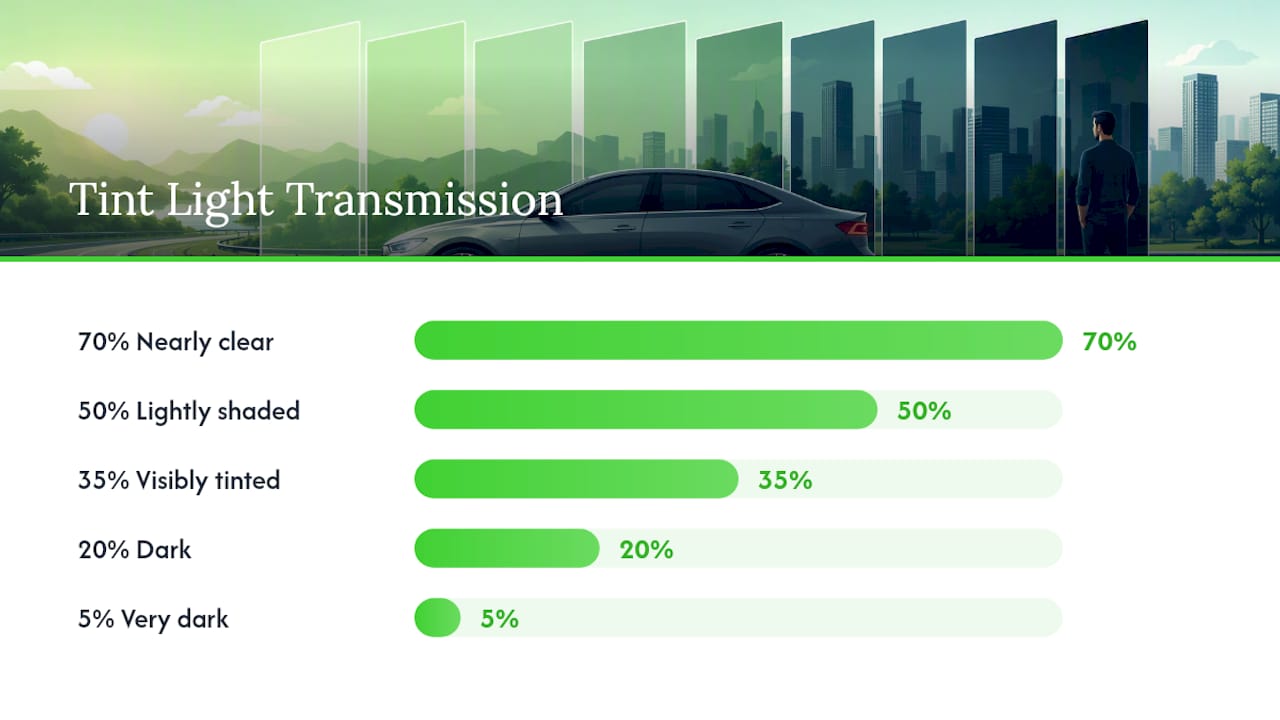
| Tint level | Daytime look | Privacy | Common placement | Night driving note |
|---|---|---|---|---|
| 70% | Nearly clear | Minimal | Windshield, front doors (strict states) | No noticeable change |
| 50% | Lightly shaded | Low | Front or rear doors | Slight glare reduction, easy visibility |
| 35% | Visibly tinted | Moderate to good | Front doors, rear windows | Comfortable for most drivers |
| 20% | Dark | High | Rear windows, some fronts | Short adjustment period |
| 5% | Very dark | Maximum | Rear windows, back glass | Requires extra caution |
Does a Darker Tint Actually Mean Better Performance?
Not automatically. VLT only measures visible light, and it says nothing about how much heat or UV radiation a film blocks. That's the single biggest misconception drivers walk into a shop with.
Film technology, not darkness, is usually what separates a film that keeps your dashboard cool from one that just looks dark. A lighter ceramic film can outperform a darker dyed film on infrared heat rejection and UV blocking, sometimes by a wide margin, because ceramic particles scatter infrared wavelengths that dyed film simply lets through.
Here's what tint percentage actually influences versus what depends on film chemistry:
- Visible glare reduction: tied directly to VLT, so darker generally does cut more glare
- Heat/infrared rejection: depends heavily on whether the film is dyed, carbon, or ceramic
- UV protection: most quality films block the large majority of UV rays regardless of darkness, but cheap dyed films vary widely
- Night visibility and safety: driven almost entirely by VLT, since darker glass simply passes less light after dark
If heat is your main complaint, chasing genuine heat rejection performance matters more than chasing a lower VLT number.
How State Tint Laws Work and How to Check Yours
Every state sets its own minimum VLT for front-side windows, and most allow darker film on rear windows and rear windshields than up front. There's no single national standard, which is exactly why a tint job that's fine in one state can get you pulled over in another.
The gap between states can be significant. California typically requires around 70% VLT on front side windows, while other states like Florida allow front windows as dark as 28%. These are representative examples, not a full list, and rules change, so treat any percentage you read online as a starting point, not gospel.
| Window position | Typical rule pattern | What to verify |
|---|---|---|
| Front side windows | Usually the strictest minimum VLT | Your exact state's minimum percentage |
| Rear side windows | Often allows darker film | Whether your state permits any percentage back there |
| Rear windshield | Frequently unrestricted with dual side mirrors | Mirror requirements tied to rear tint |
| Windshield | Usually limited to a top strip only | Strip height allowed above the AS-1 line |
Here's how to confirm your state's actual rules before you book an install:
- Search your state's official DMV or highway safety website for "window tint law" rather than relying on tint shop marketing pages
- Check your state's vehicle or transportation code directly, since DMV summaries sometimes lag behind law changes
- Ask a reputable installer for a written measurement certificate after the job, which some states accept as proof of compliance
- Look into medical exemption programs if a driver in the household needs darker tint for a documented light sensitivity condition
Officers typically confirm compliance using a handheld VLT meter during a stop, not a visual guess, so a film that "looks about right" can still fail a real reading. If your state offers medical exemptions, get the paperwork filed before the install, not after a citation.
A Decision Checklist for Choosing Your Tint Percentage
Picking a percentage gets a lot easier once you run through priorities in order instead of guessing from a chart.
- Confirm your state's legal minimum for front windows first. This eliminates options before you fall in love with a shade that isn't street-legal where you drive.
- Weigh privacy against night visibility. If you drive a lot after dark on unlit roads, lean toward the lighter end of what's legal; if privacy and security matter more, lean darker on rear windows.
- Choose film technology before you choose darkness. Ceramic film at 35% often beats dyed film at 20% for heat and UV control, so decide on quality first.
- Confirm the installer's warranty and ask for a meter reading after install. A shop that hands you a written net VLT reading is one that stands behind its work.
Budget and timing matter too. A typical ceramic tint job runs a predictable cost range depending on vehicle size and film grade, and most installs take a few hours, with full curing taking several days before you roll windows down.
Pro Tip: Installers often recommend pairing the darkest legal front-window VLT with a high-performance ceramic film rather than maxing out darkness with a cheaper dyed film. You get comparable privacy with meaningfully better heat and UV control.
How to Check What Tint You Already Have
If you bought a used car or you're not sure what's currently on your windows, there are quick ways to get a rough idea, and one reliable way to know for certain.
Start with the easy checks. Look for a small manufacturer sticker in the corner of the rear window, often tucked near the edge, which sometimes lists the film brand and percentage. Compare your windows side by side with a car you know the tint percentage on. Neither method is precise, since factory glass, film age, and lighting all throw off a visual guess.
For a real answer, you need a meter reading:
- Locate a shop or tint installer that owns a handheld VLT meter, a small clamp-style device that reads light transmission directly through the glass.
- Ask for a reading on each window separately, since front, rear, and windshield often differ.
- Request the number in writing if you're checking compliance for registration, insurance, or to contest a citation.
- Compare that reading against your state's posted minimum for that window position.
DIY visual checks are fine for curiosity, but a meter or professional shop readout is the only method that holds up if you're contesting a ticket or confirming compliance for registration. Tools to look for:
- A handheld VLT meter (the standard tool shops and some law enforcement units use)
- A written measurement certificate from the installer
- Your state's official minimum VLT chart for comparison
Why Film Quality and Installation Skill Change the Outcome
Two cars with the same rated tint percentage can look and perform completely differently a year later, and it almost always comes down to film quality and how it was installed.
Cheap film and rushed installs show up as bubbling, peeling at the edges, and a purple or hazy tint after a year or two of sun exposure. A climate-controlled installation bay matters more than people expect here, since dust and humidity are the enemies of a clean adhesive bond. Film applied in a dust-free, temperature-controlled space cures flatter and holds its edge seal far longer than film applied in an open garage bay.
A manufacturer-backed warranty is one of the clearest signals of film quality you can check before booking. A real warranty typically covers fading, bubbling, and adhesive failure for as long as you own the vehicle, which tells you the manufacturer trusts the film not to degrade.
A driver who installs a quality ceramic film in a controlled environment tends to see stable color and consistent heat rejection for years, while a rushed dyed-film job in a dusty bay often shows visible haze and edge lift inside 18 months.
That gap is why the install environment matters almost as much as the film brand itself.
What Installers Wish Every Customer Knew
Talk to enough people who tint windows for a living and the same handful of pieces of advice come up again and again.
Check the final measured VLT before you leave the shop, not the number you asked for. Installers will tell you a requested percentage and a delivered percentage can drift slightly depending on the glass, and a two or three point difference matters if you're right at your state's legal line.
Ceramic film earns its higher price tag on hot climates and long ownership. Anyone doing serious highway miles or parking outside all day tends to notice the heat difference within the first summer, not the tint darkness.
Give the film its full curing window before you touch the windows. Rolling a window down too early, sometimes within the first three to five days, can pull the edge away from the glass and create a permanent bubble that no amount of reheating fixes later.
Bring the car back for a post-install check if anything looks off in the first week. A shop confident in its work will look at a hazy edge or a small bubble without pushback, because catching it early is a five-minute fix instead of a full re-do.
One thing that surprises new customers: the darkest legal option isn't always the most requested comeback job. It's usually the cheapest dyed film at any percentage, because dye fades and purples faster than ceramic or carbon regardless of how dark it started.
Getting Your Tint Done Right in Van Nuys
Reading about VLT numbers only gets you so far. At some point you need someone with a meter, a clean bay, and film that actually performs the way the label claims. Tintandwrapscustoms runs every install in a climate-controlled facility in Van Nuys, which is the difference between film that lays flat for a decade and film that bubbles by next summer.
The shop's nano-ceramic film options are built for drivers who want the darkest legal front-window VLT without sacrificing heat rejection, and every job comes with a manufacturer-backed warranty covering fading, bubbling, and adhesive failure. Tesla and EV owners get specific attention too, since battery-powered cars have their own glass specs and thermal management needs that a generalist shop can miss.
Every install includes a measured VLT reading before you drive off, so you leave knowing your exact numbers instead of guessing. If you're ready to stop debating percentages on a forum and get a real answer for your car, you can book an appointment and get a free measurement at the Van Nuys shop.
Frequently Asked Questions
What does tint percentage actually mean? Tint percentage is the Visible Light Transmission, or VLT, reading of a window. It states the share of visible light that passes through the glass and any film applied to it.
It depends on your priority. 70% keeps visibility closest to stock glass with almost no glare reduction, while 50% cuts noticeably more glare and heat while still staying easy to see through.
What's the darkest legal tint percentage for front windows? There's no single national answer, since every state sets its own minimum. Check your state's official DMV or transportation code directly rather than relying on a shop's general chart.
Does a darker tint block more UV rays? Not necessarily. UV protection depends mostly on the film's construction rather than how dark it looks.
How can I find out what tint percentage my car currently has? Check for a small manufacturer sticker near the edge of a rear window as a rough clue, but for a precise number, have a shop measure it with a handheld VLT meter. That's the only method that gives you a reading you can trust for legal compliance.
This article provides general information about tint percentages and typical state tint law patterns. Tint regulations change and vary by state and window position, so confirm current rules with your state's official DMV or legislative resources, or a licensed installer, before installing or modifying window tint.
Sources
A few references are worth bookmarking if you want to dig past this article, whether you're double checking a legal limit or comparing film specs.