Ceramic window tinting costs vary for a full vehicle and depend on size, film quality, and installer. A sedan typically costs less than larger vehicles such as SUVs, trucks, and luxury vehicles, which tend to cost more. That's a real premium over dyed or carbon film, and it's one worth understanding before you book an appointment.
How much does ceramic tint cost by vehicle type?
Vehicle size is the single biggest driver of price. More glass means more film and more labor hours, and that math adds up fast.
Here's a quick breakdown of typical ceramic tint pricing by vehicle class for a full installation:
- Compact car / coupe: $300–$600
- Sedan (4-door): $400–$800
- SUV / crossover: $500–$1,000
- Truck (crew cab): $450–$900
- Minivan: $550–$1,100
- Luxury / performance vehicles: $600–$1,200+
- Tesla Model 3/Y: $500–$900 (includes panoramic roof)
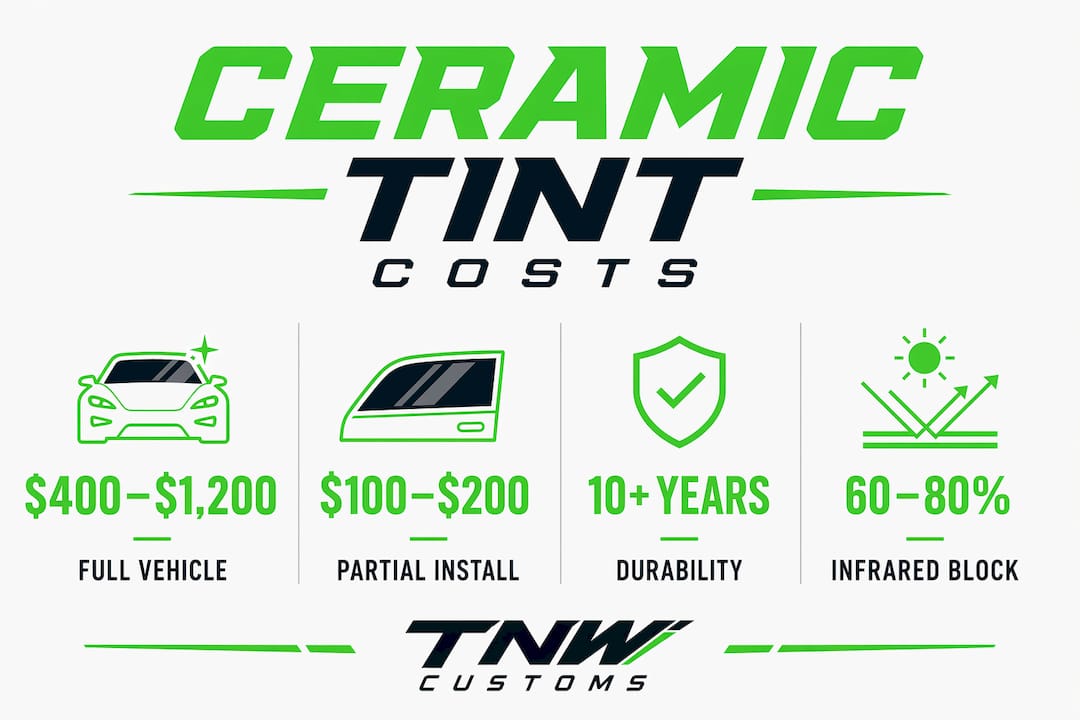
Partial installs cost less. Front two windows only in ceramic film typically runs $100–$200. All four side windows land around $200–$350. Adding the rear windshield brings you to the full-car range above. If you want the windshield tinted too, budget an extra $150–$350 on top of that.
Ceramic film sits at the top of the standard tint market. Dyed film runs $150–$300 for a sedan, carbon film $250–$450. The ceramic premium buys you meaningfully better heat rejection and a film that won't fade or turn purple after a few summers.
What factors push ceramic tint prices up or down?
Price quotes for the same vehicle can vary by hundreds of dollars. That gap almost always comes down to film quality, not labor.
Film quality and brand tier drive the largest share of cost. Film accounts for 40–60% of the total price, with labor making up roughly 30–40%. Mid-range ceramic brands like Llumar CTX and SunTek CXP sit in the standard ceramic tier. Premium brands like XPEL Prime XR and 3M Crystalline push prices 20–40% higher. At the top end, nano-ceramic films deliver 70–95% infrared rejection and typically carry lifetime warranties.
Key factors that affect your final quote:
- Number of windows: Each additional window adds material and time. Windshield tinting is the most labor-intensive single piece.
- Window complexity: Curved, large, or unusually shaped glass (common on sports cars and some luxury SUVs) takes longer to cut and apply cleanly.
- Old tint removal: If your vehicle already has tint, expect to add $50–$200 for removal before the new film goes on.
- Installer certification: Certified installers charge a $50–$150 premium over non-certified shops, but that cost comes with manufacturer warranty registration and verified workmanship.
- Geographic market: Shops in high-cost metros charge more for the same film and labor than shops in smaller markets.
Pro Tip: If a shop quotes you "ceramic tint" for under $150 on a full car, ask them to name the film brand and series. Legitimate ceramic film costs well above that just for materials before labor is factored in.
Why ceramic tint outperforms other film types
The performance gap between ceramic and cheaper films is real, and it shows up every time you get into a hot car.
Ceramic tint blocks 60–80% of infrared radiation and 99% of UV rays without interfering with GPS, cell signals, or toll transponders. Older metallic films can disrupt those signals. Dyed film, the cheapest option, blocks only 15–30% of infrared heat and fades within a few years, often turning purple.
Here's how the main film types compare:
| Film Type | Heat Rejection | UV Block | Lifespan | Signal Safe? |
|---|---|---|---|---|
| Dyed | 15–30% | 99% | 3–5 years | Yes |
| Carbon | 40–60% | 99% | 10 years or more | Yes |
| Ceramic | 60–80% | 99% | 10+ years | Yes |
| Nano-ceramic | 70–95% | 99% | Lifetime | Yes |
Ceramic film lasts 10+ years with no fading or discoloration. That durability alone changes the cost math. A dyed film that needs replacing every four years costs more over a decade than a ceramic film installed once.
One underappreciated benefit: ceramic tint lets you run a lighter shade while still blocking serious heat. As Consumer Reports auto technician Mike Crossen notes, you can have a lighter tint that still offers superior protection, which matters in states with strict visible light transmission laws.
What professional installation actually includes
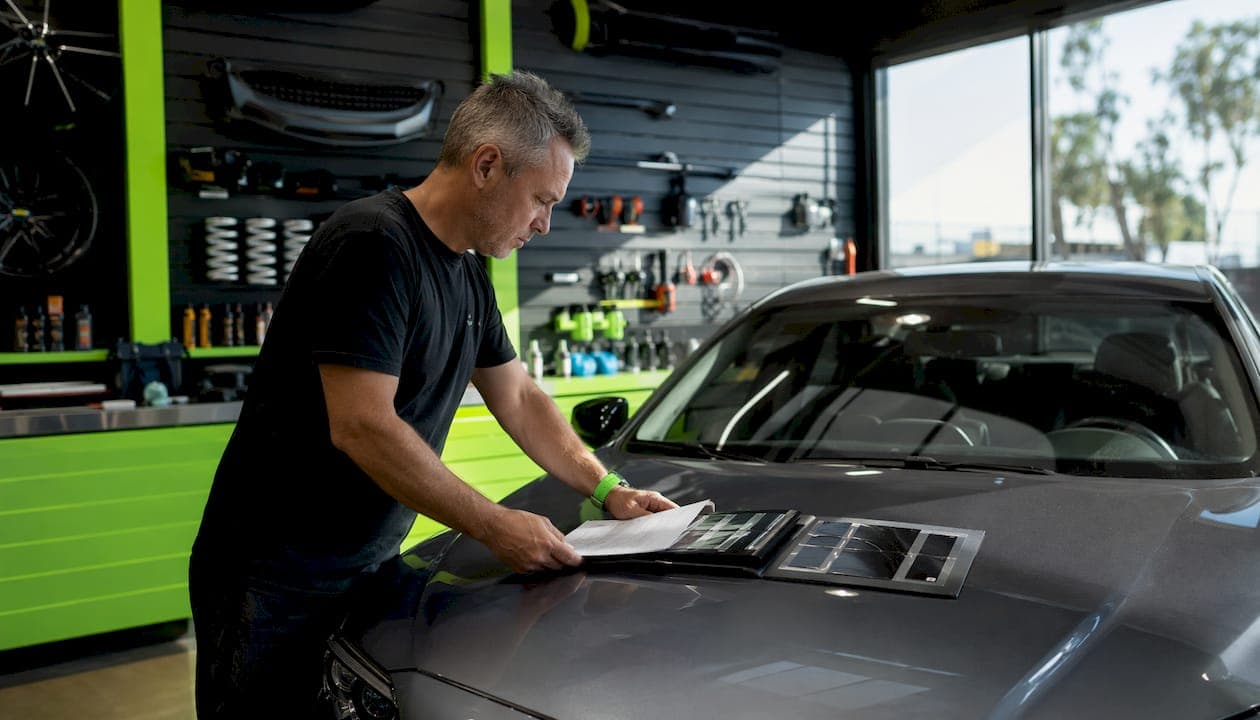
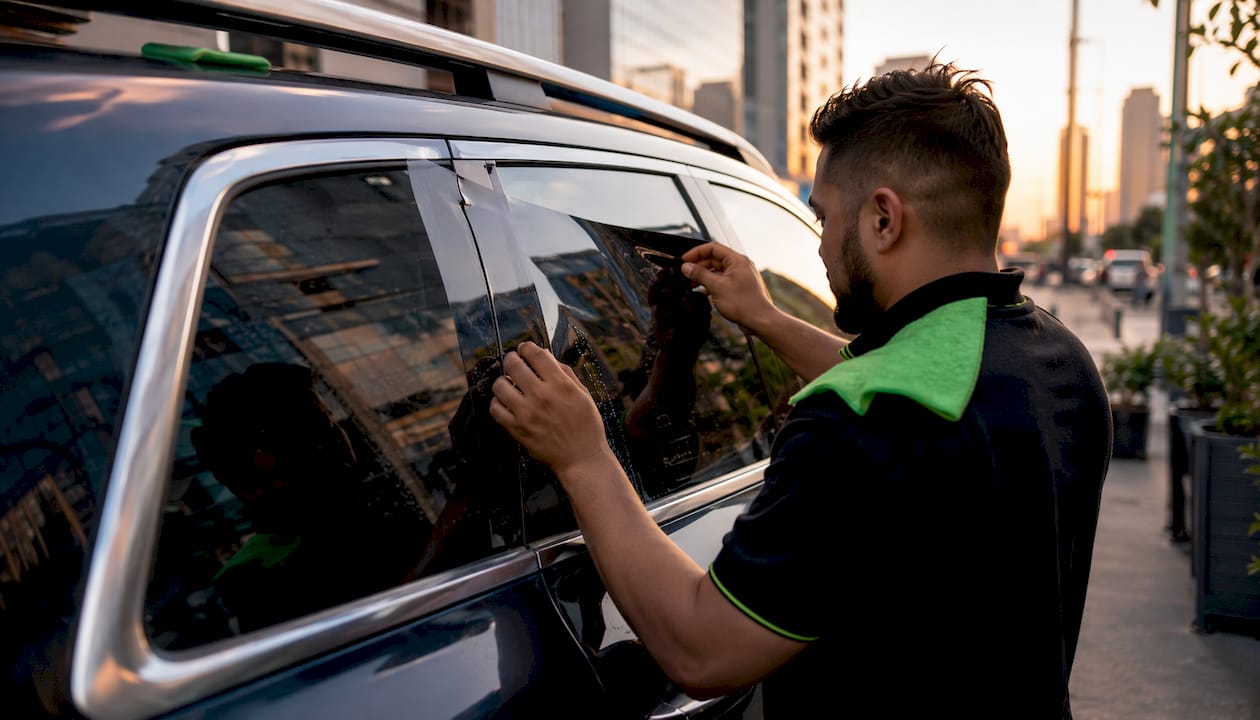
Professional ceramic tint installation on a sedan typically takes 2–3 hours. SUVs and vehicles with complex glass run 3–4 hours. That time covers precise film cutting, surface prep, application, and a curing period before the vehicle is returned.
What separates a quality professional install from a rushed one:
- Climate-controlled environment: Dust and debris are the enemy of a clean tint job. Shops with enclosed, climate-controlled bays produce far fewer contamination bubbles.
- Certified installer training: Shops certified by film brands like XPEL, Llumar, or 3M meet ongoing quality standards and are audited by the manufacturer.
- Manufacturer warranty registration: When a certified installer applies your film, the warranty registers directly with the manufacturer, not just the shop. That warranty stays valid even if the shop closes years later.
- Proper tools and technique: Professional installers prevent bubbling and peeling that commonly result from DIY attempts.
"In general, ceramic is more effective than traditional tint. It's going to block a higher percentage of light, which will keep the car cooler and slow the fading of your car's interior. It also adds protection from the sun's rays without the need for darker tint. You can have a lighter tint that still offers superior protection." — Mike Crossen, Consumer Reports auto technician
Tintandwrapscustoms operates out of a climate-controlled facility in Van Nuys, CA, with manufacturer-backed warranties and a 5-star rating built on over 1,000 vehicles protected. Their team has specific expertise with Tesla installations, which require careful handling of the panoramic roof glass and embedded sensors.
DIY ceramic tint kits vs. professional installation
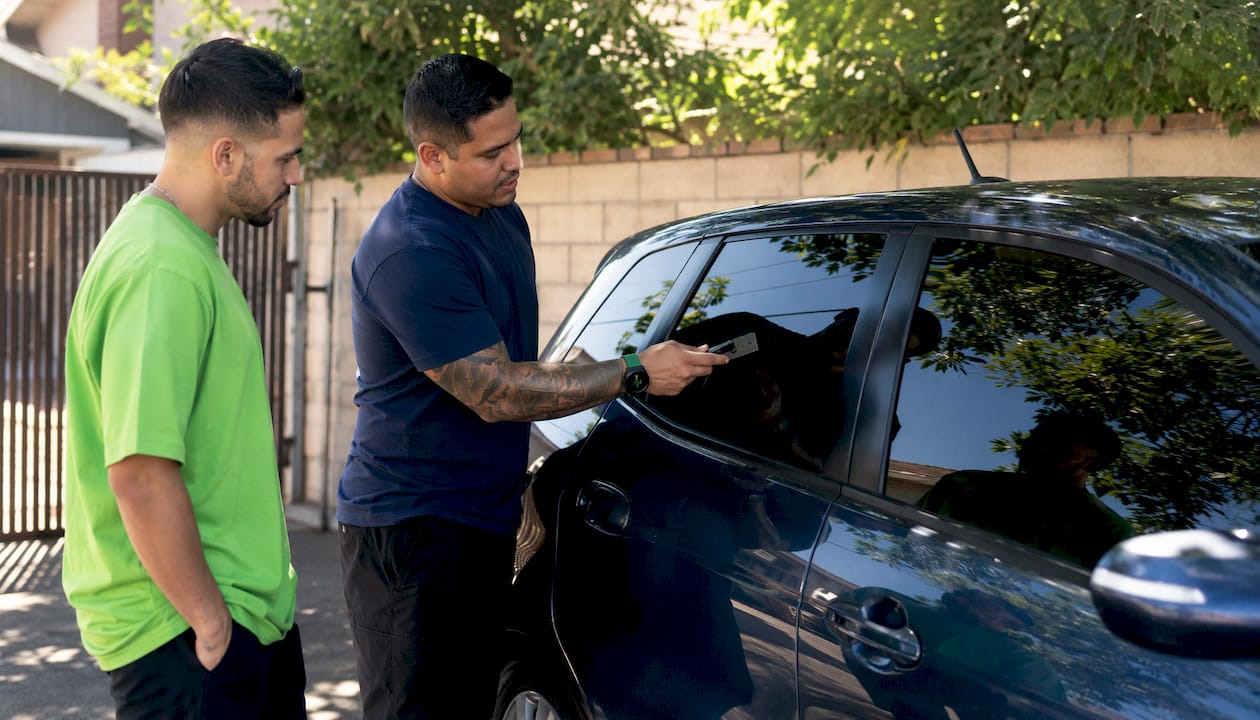
DIY ceramic tint kits are available and genuinely cheaper upfront. A kit for a full sedan runs roughly $50–$150 in materials. Professional installation for the same vehicle in ceramic film costs $400–$800.
The gap looks significant until you factor in what can go wrong. Ceramic film is unforgiving. It requires precise cuts, a dust-free environment, and technique that takes professional installers years to develop. Bubbles, lifting edges, and misaligned cuts are common in first-time DIY installs, and fixing them means paying for removal and a professional redo anyway.
DIY also voids most manufacturer warranties. The film's warranty is tied to certified installation, so a self-applied ceramic film typically carries no coverage at all. For a product you expect to last a decade, that's a meaningful trade-off.
Long-term savings that offset the upfront cost
Ceramic tint's higher price looks different when you spread it across years of ownership. In hot climates like the Southwest and Southeast, ceramic tint can cut fuel costs by roughly $100–$150 per year by reducing the load on your air conditioning. Over five years, that's $500–$750 in fuel savings alone.
Interior protection adds another layer of value. UV-related fading and cracking on dashboards, leather seats, and door panels can cost thousands to repair or replace. Ceramic film's 99% UV block slows that damage significantly.
Some auto insurance providers offer discounts for vehicles with window film, recognizing the theft deterrent and safety benefits of tinted glass. It's worth asking your insurer directly, since policies vary.
If you plan to keep your vehicle three or more years, the math on ceramic tint tends to work out. The film outlasts cheaper alternatives, the savings accumulate, and you avoid the cost of replacing a faded or peeling dyed film midway through ownership.
How long does ceramic tint last, and what does replacement cost?
Professionally installed ceramic tint lasts 10 years or more under normal conditions. Nano-ceramic premium films often carry lifetime warranties. That's a stark contrast to dyed film, which typically degrades within 3–5 years.
Replacement cost mirrors original installation pricing. If you need to replace ceramic tint after a decade, expect to pay current market rates for film and labor, plus $50–$200 for removal of the old film. The good news is that a quality ceramic install rarely needs early replacement. Peeling, bubbling, and color shift are problems associated with lower-grade films, not ceramic.
Keeping your tint in good shape is straightforward. Avoid ammonia-based cleaners, which degrade the film over time. Use a soft microfiber cloth and a mild, film-safe cleaner. Most professional installers recommend waiting at least a week after installation before cleaning the windows, allowing the film to cure fully.
Key Takeaways
Ceramic window tint costs $400–$1,200 for a full vehicle, with film quality and vehicle size driving most of the price variation, and professional installation protecting both performance and warranty.
| Point | Details |
|---|---|
| Cost by vehicle size | Sedans run $400–$800; SUVs and trucks push $500–$1,000 for a full ceramic install. |
| Film quality drives price | Film accounts for 40–60% of total cost; brand tier matters more than labor differences. |
| Performance advantage | Ceramic blocks 60–80% of infrared heat and 99% of UV rays, lasting 10+ years without fading. |
| Professional installation value | Certified installers add $50–$150 over non-certified shops but provide manufacturer warranty registration. |
| Long-term savings | Fuel savings of $100–$150 per year in hot climates, plus interior protection, offset the upfront premium. |
Is ceramic tint actually worth the price?
The honest answer depends on where you live and how long you keep your vehicles. If you're in Phoenix, Houston, or Los Angeles and you park outside regularly, ceramic tint pays for itself faster than most people expect. The cabin temperature difference on a 95-degree afternoon is not subtle.
Where I think buyers go wrong is treating this as a pure price comparison against dyed film. That's the wrong frame. Dyed film is a different product with a different lifespan and a fraction of the heat performance. The real comparison is ceramic tint once versus dyed film twice, plus the interior damage that accumulates in between.
One thing worth verifying before you commit: ask the shop to name the specific film series they're quoting. "Ceramic tint" is not a regulated term, and some shops apply it loosely to carbon or hybrid films. A legitimate ceramic install from a brand like Llumar, XPEL, or 3M Crystalline will always have a named product behind it. If the installer can't tell you the film series, that's your answer.
For drivers in the San Fernando Valley and greater Los Angeles area, Tintandwrapscustoms offers ceramic and nano-ceramic installations with manufacturer-backed warranties in a climate-controlled facility. Given the Southern California sun, ceramic film here isn't a luxury. It's the practical choice.