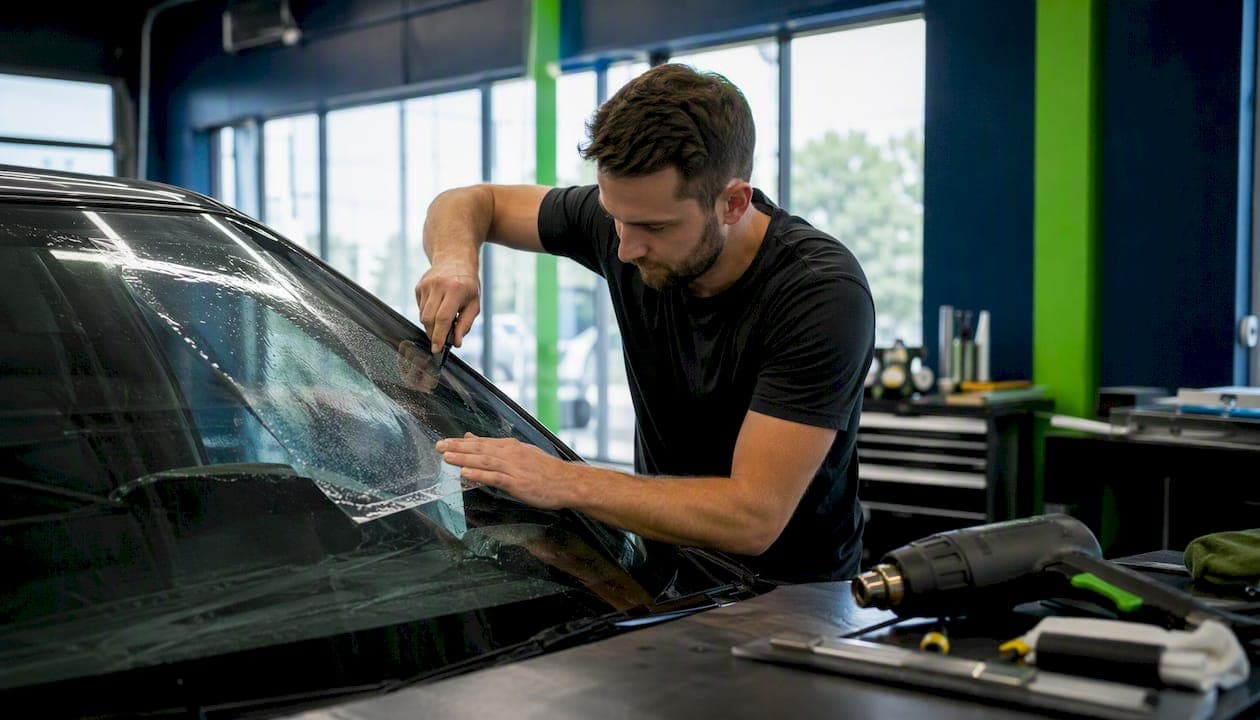
Clear ceramic tint is a nano-ceramic window film engineered to block UV radiation and reject infrared heat while keeping your glass nearly transparent. The verdict: it delivers real, measurable protection without changing how your car looks from the outside or limiting your visibility from the inside.
Top three practical benefits at a glance:
- UV protection: Premium clear ceramic films commonly block over 99% of UV radiation, which matters for both skin health and interior fading.
- IR/heat rejection: Nano-ceramic construction rejects a substantial portion of infrared heat, reducing cabin temperatures noticeably in hot climates, as reported by installers.
- Signal-friendly clarity: No metal in the film means GPS, Bluetooth, keyless entry, and radar sensors work without interference.
Before you book an install, check your state's windshield VLT rules. Most states allow high-VLT ceramic film on front windows, but windshield coverage above the AS-1 line is where rules vary.
Key Takeaways
| Point | Details |
|---|---|
| UV and IR performance | Premium clear ceramic films commonly block 99%+ of UV and reject — of infrared heat. |
| VLT and legality | A 70%+ VLT film meets most U.S. state windshield minimums; always verify your state's DMV rules before installing. |
| Spec sheet first | Always request the manufacturer's lab-tested IRER, TSER, and VLT data from your installer before committing. |
| Professional install matters | Climate-controlled installation, manufacturer-backed warranties, and proper edge sealing determine long-term clarity and durability. |
| Tintandwrapscustoms | Offers clear ceramic film installs with manufacturer-backed warranties, EV expertise, and a climate-controlled facility in Van Nuys, CA. |
Table of Contents
- What is clear ceramic window film and how does it work?
- What performance can you actually expect from clear ceramic film?
- How to read VLT and choose the right level for your windows
- Pros and cons of choosing clear ceramic tint
- Is clear ceramic tint legal on windshields and front windows in the U.S.?
- What product lines and options are available in the U.S.?
- DIY kits vs. professional installation: costs, lifespan, and aftercare
- Why a professional installer like Tintandwrapscustoms makes a difference
- A shop perspective on what customers actually need
- Tintandwrapscustoms installs clear ceramic film the right way
- Sources
What is clear ceramic window film and how does it work?
The term "clear ceramic tint" is a consumer shorthand. The industry calls it a nano-ceramic or ceramic window film at high visible light transmission (VLT). Understanding what that means helps you read spec sheets without getting lost.
The film itself is a thin polymer layer, typically polyethylene terephthalate (PET), embedded with ceramic nanoparticles. Those particles are neither metal nor dye. They are inorganic compounds, often titanium nitride or similar metal-oxide derivatives, sized at the nanometer scale so they scatter and absorb specific wavelengths of light without blocking visible light the way a dark tint does.
Here is how the filtering works in practice. Sunlight arrives as a mix of ultraviolet (UV, roughly 280–400 nm), visible light (400–700 nm), and near-infrared (NIR, 700–2500 nm). The ceramic nanoparticles are tuned to absorb and reflect UV and NIR wavelengths while allowing most visible light to pass through. The result: the glass looks clear to your eyes, but the film is actively working against the wavelengths that heat your cabin and damage your skin.
How clear ceramic differs from other film types:
- Dyed films: Absorb visible light to create darkness; fade over time; minimal IR rejection.
- Metallic films: Reflect heat well but interfere with GPS, cell signals, and keyless entry.
- Carbon films: Better IR rejection than dyed, no signal issues, but still add visible darkness. A detailed ceramic vs. carbon comparison breaks down when each makes more sense.
- Clear ceramic: No color, no metal, low signal interference, strong UV and IR performance.
SunTek's CoolSight clear series is one example of a manufacturer marketing this construction as "virtually imperceptible" while still delivering measurable heat and UV protection. 3M Crystalline, LLumar's CTX line (distributed by Eastman), and Johnson Window Films each offer their own premium clear ceramic product lines in the U.S. market. The underlying nano-ceramic construction across these brands follows the same physics, though specific VLT, IR rejection, and TSER values differ by product.
What performance can you actually expect from clear ceramic film?
Numbers on a spec sheet mean nothing until you know what they feel like in a car. Here is what the metrics translate to in real driving conditions.
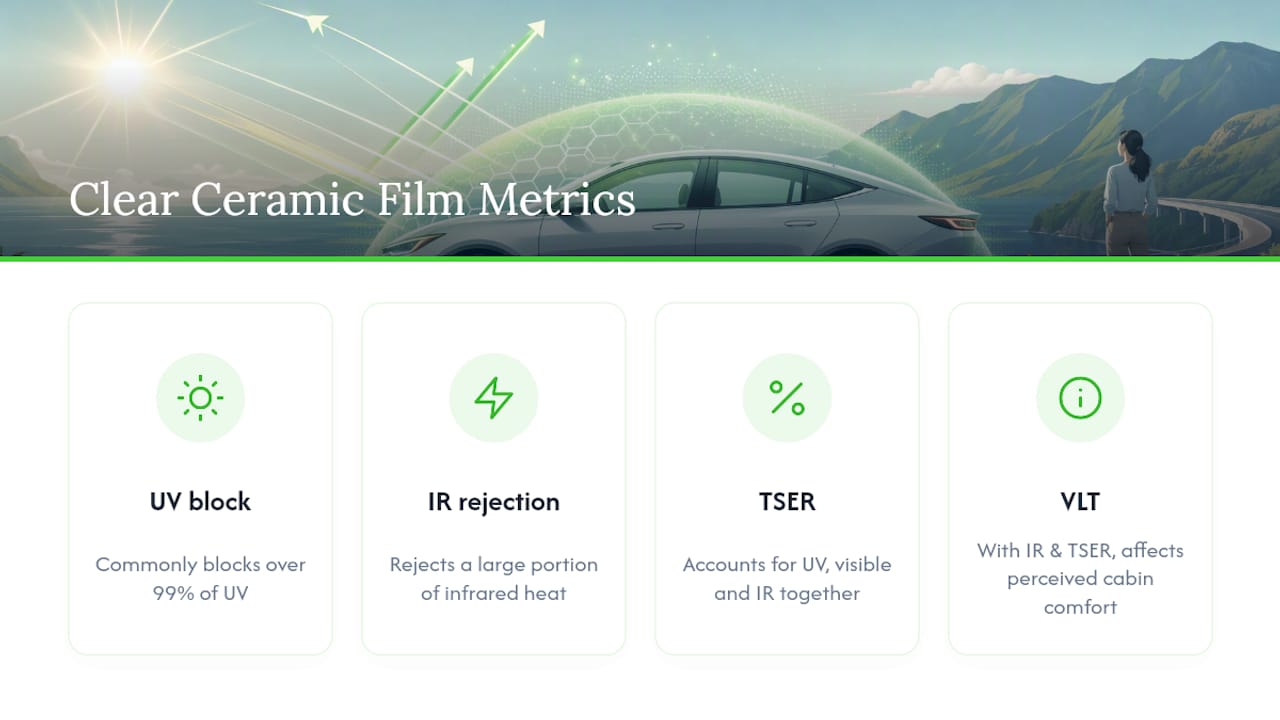
Typical lab specs for premium clear ceramic films:
Premium clear ceramic films can reject a large portion of infrared heat while commonly blocking over 99% of UV, and installers report noticeable cabin temperature reductions under real-world conditions. The TSER figure is the most honest single number: it accounts for UV, visible, and IR together, so a film with a high TSER but modest IR rejection is not hiding anything.
The relationship between VLT, IR rejection, and TSER and how they combine to produce perceived cabin comfort is worth understanding before you compare quotes.
Pro Tip: When reading a manufacturer spec sheet, look for IRER (Infrared Energy Rejected) and TSER side by side. A film that lists only "IR rejection" without specifying the wavelength range tested can be cherry-picking a narrow band. Ask the installer for the full spectral data or the IWFA/AIMCAL-tested figures.
How to read VLT and choose the right level for your windows
VLT is the percentage of visible light a window allows through after the film is applied. The higher the number, the clearer the glass looks.
Practical VLT selection by use case:
- Daily driver in a sunny climate (California, Arizona, Texas): 70–75% VLT gives you the legal minimum for most windshields while maximizing IR and UV rejection. The heat benefit is real; the visibility change is minimal.
- Night driving sensitivity or older eyes: 80–90% VLT keeps the glass as close to stock as possible. You sacrifice a small amount of IR rejection compared to a 70% film, but the optical experience is nearly identical to unfilmed glass.
- Rear and side windows (not windshield): You have more flexibility here. A 50% VLT ceramic film on rear windows adds privacy and more aggressive heat rejection without touching windshield legality.
What to check on a spec sheet before committing:
- VLT percentage (and whether it accounts for the glass's own VLT)
- Visible haze rating (lower is better for optical clarity; anything above 0.5% is noticeable)
- Exterior reflectance (high reflectance can create glare for other drivers)
- Whether the VLT is measured on the film alone or on film plus standard automotive glass
The 50 vs. 70 tint question comes up often. A 70 percent ceramic tint on the windshield is nearly invisible and legal in most states.
Pros and cons of choosing clear ceramic tint
Pros:
- Blocks 99%+ of UV radiation, protecting skin and slowing interior fading
- Rejects meaningful infrared heat without adding visible darkness
- No metal construction means zero interference with GPS, Bluetooth, radar, or keyless entry
- Glass-holding property: the film keeps shattered glass together on impact
- Legal for windshield use in most U.S. states when VLT meets the threshold
- Color-stable over time; ceramic films do not purple or fade the way dyed films do
Cons:
- Higher upfront cost than dyed or carbon films
- Does not provide privacy; if that is a goal, a darker film on rear windows is still needed
- Some films have higher exterior reflectance, which can create a slightly mirrored look in direct sun
- DIY installation on curved windshields is genuinely difficult; bubbles and edge lifting are common
- Warranty coverage varies widely; some manufacturer warranties require professional installation to be valid
Tradeoff snapshot:
| Consideration | Clear ceramic tint | Darker ceramic tint (e.g., 50% VLT) |
|---|---|---|
| Visibility | Near-stock | Noticeably reduced, especially at night |
| Heat rejection | Moderate to strong | Strong to very strong |
| Privacy | Minimal | Moderate to high |
| Windshield legality | Typically compliant | Often non-compliant for front glass |
| Cost | Higher than dyed/carbon | Similar or slightly higher |
Ceramic vs. carbon tint covers those tradeoffs in more detail.
Is clear ceramic tint legal on windshields and front windows in the U.S.?
The short answer: legality varies by state, and windshield rules are stricter than side-window rules in almost every state. The most common pattern is that windshield film is only permitted above the AS-1 line (the manufacturer's top strip, typically the top 5–6 inches) unless the film's VLT is high enough to meet the state's minimum threshold for the full windshield.
How to confirm legality before you install:
- Visit your state DMV website. Search for "window tint law" or "vehicle equipment regulations." Most states publish the minimum VLT percentages for windshield, front side, rear side, and rear windows separately.
- Measure your glass's existing VLT. Factory glass already absorbs some light. A 70% VLT film on glass that transmits 85% of visible light results in a combined VLT of roughly 60%, which may fall below your state's threshold. Ask your installer to measure this with a tint meter before cutting film.
- Confirm the film's VLT on the spec sheet. The number on the box is the film alone. The installed VLT is what law enforcement measures.
- Ask for installer certification. Some states require or recognize certified installers; a certified shop will know your state's rules and apply them.
- Request documentation. Get the film's spec sheet and the manufacturer's lab test data at the time of install.
These are illustrative examples; always confirm current rules with your state DMV directly, as laws change.
Pro Tip: Ask your installer for a printed copy of the film's spec sheet and the manufacturer's lab certification before you leave the shop. If you are ever stopped for a tint check, having the documented VLT and UV specs on hand gives you a clear paper trail. Some installers will also provide a window tint certificate card you can keep in the glove box.
What product lines and options are available in the U.S.?
Customers shopping for clear ceramic film in the U.S. encounter three broad categories of product, and the differences between them matter more than the brand name on the box.
Premium OEM ceramic lines are manufactured by established film companies and sold exclusively through certified installer networks. SunTek CoolSight, 3M Crystalline, LLumar CTX (Eastman), and Johnson Window Films' ceramic series all fall here. These films carry published lab specs, manufacturer-backed warranties (often lifetime for the original vehicle owner), and are applied by trained installers who can register the warranty on your behalf. The price is higher, but the spec transparency and warranty coverage are the strongest in the category.
Installer-branded ceramic films are often sourced from the same manufacturing base as OEM lines but rebranded under a shop's own label. Performance can be comparable, but warranty terms are typically shop-backed rather than manufacturer-backed, which means the coverage depends on the shop staying in business.
Retail nano-ceramic rolls are available on Amazon and similar platforms. The technology is real, but the installation challenge on curved automotive glass is significant, and most retail rolls do not include the scratch-resistant hard coat or the adhesive quality of professional-grade film.
Questions to ask any installer before committing:
- What is the film's IRER and TSER, and can you show me the manufacturer's lab data?
- Is the construction metal-free (important for EV and modern vehicle sensors)?
- Does the film have a scratch-resistant hard coat?
- Is the warranty manufacturer-backed or shop-backed, and what does it cover?
- Will you register the warranty with the manufacturer on my behalf?
- What is the installed VLT on my specific glass, measured with a tint meter?
The spec sheet is the most important document in this transaction. Any installer who cannot or will not produce it is a shop to avoid.
DIY kits vs. professional installation: costs, lifespan, and aftercare
Cost comparison:
DIY nano-ceramic rolls for a single windshield typically run $30–$80 for the film itself, plus tools. A full-vehicle professional install with premium clear ceramic film runs considerably more, and ceramic tint cost varies by vehicle size, film brand, and region. The price gap narrows quickly when you factor in the risk of a botched DIY install, which wastes the film and your time.
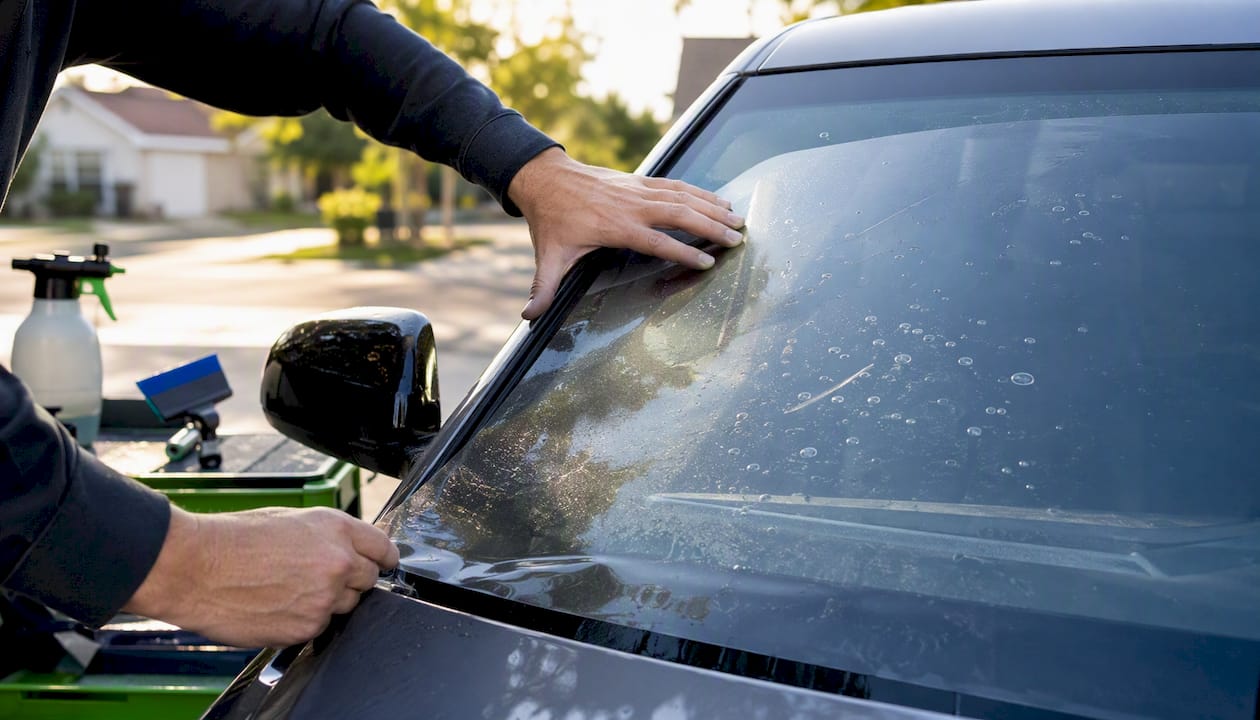
Professional installs on windshields and front windows carry manufacturer-backed warranties that typically cover delamination, bubbling, color change, and cracking for the life of the vehicle or a set number of years. DIY installs carry no such coverage.
Curing time and aftercare:
Ceramic films need time to cure after installation. During the curing period, you may see small water bubbles under the film; these are normal and disappear as the adhesive sets. Do not roll your windows down for at least 3–5 days after install. Avoid cleaning the interior glass surface during this period.
Once cured, clean tinted glass with an ammonia-free cleaner. Ammonia degrades the film's adhesive over time. A microfiber cloth is the right tool; paper towels can scratch the hard coat on cheaper films.
Lifespan and durability:
Premium clear ceramic films from established manufacturers are rated for 10+ years under normal conditions. The ceramic nanoparticle construction does not fade, purple, or delaminate the way dyed films do. Scratch resistance depends on the hard coat; professional-grade films have a harder, more durable surface layer than most retail rolls.
What voids warranties: ammonia-based cleaners, rolling windows before the cure is complete, and installation by an uncertified shop (for manufacturer-backed warranties).
Pro Tip: Before you leave the shop after a professional install, inspect the film in direct light at a low angle. Look for edge lifting, visible bubbles larger than a pinhead, and any debris trapped under the film. Small water bubbles are fine and will cure out; debris and edge gaps will not. Address them before you drive away.
Why a professional installer like Tintandwrapscustoms makes a difference
The gap between a good install and a mediocre one is almost entirely about the environment and the process, not the film itself. Tintandwrapscustoms operates a climate-controlled installation facility in Van Nuys, CA, which eliminates the dust contamination and temperature-related adhesive issues that cause bubbles and edge lifting in standard shop installs.
What the shop brings to a clear ceramic install:
- Climate-controlled bay that keeps dust and humidity out of the installation environment
- Manufacturer-backed warranties registered on the customer's behalf at time of install
- Specialized experience with Tesla and EV installations, where sensor placement and glass geometry require extra precision
- Over 1,000 vehicles protected, with a 5-star customer rating reflecting consistent quality
- Full spec-sheet handoff at the end of every job, so customers have documentation for law enforcement or resale
The process at a professional shop should include a pre-install inspection of the glass (checking for chips, existing film, or contamination), a demonstration of the film's performance on a sample, and a walkthrough of the warranty terms before any film is cut. At Tintandwrapscustoms, window tint warranty coverage is manufacturer-backed, which means the protection does not depend on the shop's future availability.
For Tesla owners specifically, the combination of large panoramic glass, built-in sensors, and the brand's own tint recommendations makes professional installation with a certified, EV-experienced shop the only practical choice. The Tesla window tint guide covers the film and placement considerations specific to those vehicles.
A shop perspective on what customers actually need
The most common request we see is a windshield film that does something real without making the car look tinted. Drivers want the UV protection and the heat reduction, but they do not want to explain to a cop why their windshield looks dark.
EV owners, particularly Tesla customers, ask about sensor interference more than anything else. The answer is straightforward: a metal-free nano-ceramic film does not interfere with radar, cameras, or Autopilot sensors. The concern is real for metallic films; it is not a concern for ceramic.
On realistic expectations: clear ceramic film will not turn your car into an air-conditioned bubble. The UV protection data is more clear-cut: 99% UV block is 99% UV block, and that matters for anyone spending significant time behind the wheel.
Tintandwrapscustoms installs clear ceramic film the right way
Most drivers who want clear ceramic tint on their windshield or front windows have already done the research. What they need is a shop that does the install correctly the first time, in a controlled environment, with paperwork they can actually use.
Tintandwrapscustoms handles clear ceramic film installs for all vehicle types, including Tesla and EV models, out of a climate-controlled facility in Van Nuys, CA. Every install comes with manufacturer-backed warranty registration, a spec-sheet handoff, and the kind of attention to edge sealing and optical clarity that shows up in the finished product. The shop has protected over 1,000 vehicles and holds a 5-star rating from customers who noticed the difference a professional environment makes.
Bring your vehicle model and your target VLT to the conversation. Request a quote or book an inspection at Tintandwrapscustoms and walk out with documentation, a warranty, and glass that actually performs.
Sources
- Clear Ceramic Tint on Windshield: Benefits, Legality & Installation Tips Explained