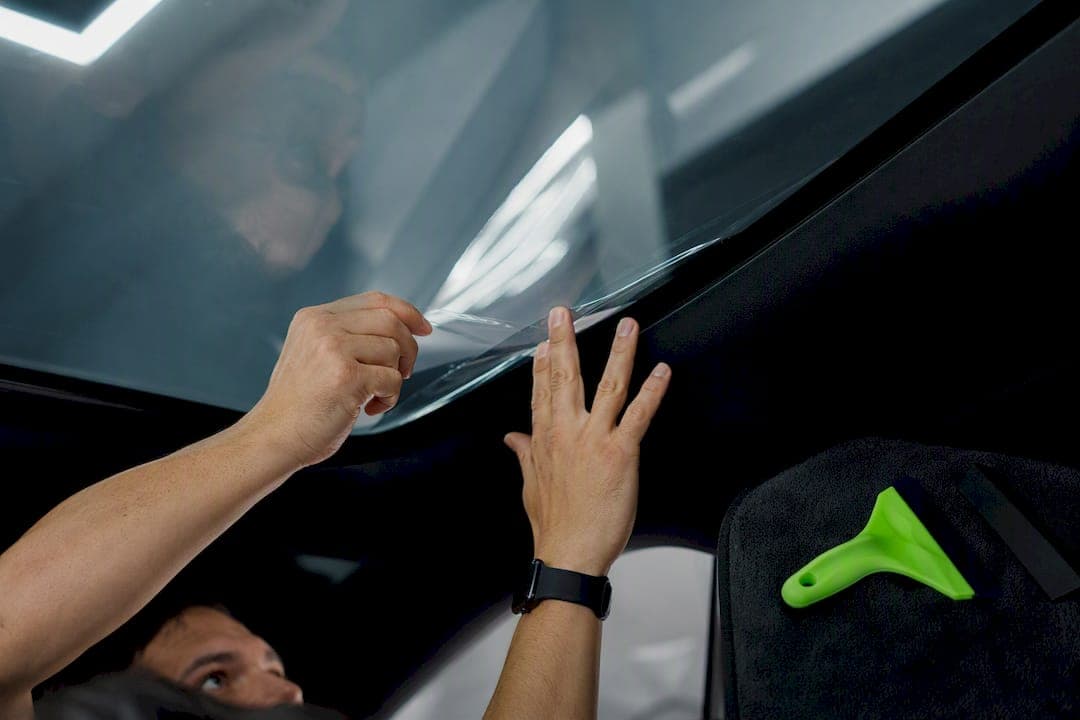
Yes, you can tint a panoramic roof, and for most owners it's worth doing. Use a proper ceramic or pano-specific film installed by someone who actually works on curved glass, not just doors and rear windows. The real decision isn't whether to tint. It's how dark to go without losing your sky view, and whether your state's rules even allow the shade you want. Check your state's VLT limits, then book an inspection with a shop that backs the work with a manufacturer warranty.
TL;DR:
- Lighter ceramic films in the 50 to 70% VLT range provide effective heat rejection and UV protection without significantly blocking the view through a panoramic roof.
- The type of film, whether interior ceramic or exterior TPU, affects durability, impact resistance, and compatibility with factory glass coatings or aftermarket panels.
- Proper installation by an experienced, climate-controlled shop ensures the film bonds correctly to curved glass and maintains warranty coverage, avoiding defects like bubbling or peeling.
- State VLT regulations vary, so owners should check local laws before selecting a film darker than 20% VLT, especially if nighttime visibility or stargazing is desired.
- Cost depends on film type and roof complexity, with ceramic and specialty exterior films costing more, and multi-panel roofs requiring longer, more labor-intensive installation.
Table of Contents
- Can You Tint a Panoramic Roof? How It's Done and When to Skip It
- Types of Tint Film That Work on Panoramic Glass
- What VLT Percentage Should You Choose for a Panoramic Roof?
- Installation, Warranty, and Legal Checks Before You Book
- What Panoramic Roof Tinting Costs and How Long It Takes
- Caring for Your Panoramic Roof Tint After Installation
- Why a Climate-Controlled, Warranty-Backed Shop Actually Matters
- A Practical Take on Forum Advice Versus Shop Reality
- Ready to Tint Your Panoramic Roof? Here's What We Do
- Sources
- FAQ
Can You Tint a Panoramic Roof? How It's Done and When to Skip It
Panoramic roof glass isn't built like a side window, and that changes how tinting works. Most factory panoramic roofs use tempered glass, though some automakers use laminated glass on the front section for extra sound dampening and impact resistance. A few models ship with a factory low-E or infrared-reflective coating baked into the glass itself. That coating matters because installers need to know it's there before adding film on top of it, since layering the wrong product over factory coating can trap heat between layers instead of rejecting it.
There are two ways to apply tint to this kind of glass. Interior film goes on the underside, same concept as a standard window tint, and it's the most common approach for panoramic roofs. Exterior film is a different animal: it's a TPU based product applied to the outside of the glass, closer to paint protection film than traditional window tint. Specialty exterior panoramic films are built to handle UV exposure and road debris that interior film never touches, and they add a layer of impact resistance interior tint simply can't offer.
Not every panoramic roof is a good candidate. Watch for these before you book anything:
- Deep scratches or pitting in the glass, since film won't hide surface damage and can actually make it more visible under certain light
- Two-piece roof designs with a center seal, where uneven film tension at the seam can cause premature lifting
- Glass that's already been replaced with an aftermarket panel, which sometimes lacks the OEM coating and behaves differently under film
- Existing tint with visible bubbling or adhesive failure, which usually means the glass needs full stripping before anything new goes on
If your roof checks any of those boxes, get it inspected before assuming a straightforward install.
Types of Tint Film That Work on Panoramic Glass
Film choice matters more on a panoramic roof than almost anywhere else on the car, because you're staring at it constantly and it takes more sun exposure than any single side window. Multiple film types exist and each handles heat, UV, and clarity differently.
- Ceramic film uses nano-ceramic particles instead of dye or metal to block infrared heat. It's the top performer for heat rejection without going dark, and it won't interfere with GPS, cell signal, or a Tesla's built-in sensors.
- Carbon film sits a notch below ceramic on heat rejection but costs less and still resists fading better than dyed film over time.
- Metalized film reflects heat well but the metallic layer can interfere with radio and cellular signal, which is a real problem for a roof panel positioned right above your infotainment antenna.
- Dyed film is the budget option. It cuts glare and adds privacy but does little for heat rejection, since darkness and heat rejection aren't the same thing.
- Specialty exterior TPU film adds physical protection against rock chips and abrasion on top of solar rejection, which regular interior tint can't do at all.
Pro Tip: If you love the open-sky feel a panoramic roof gives you, don't assume darker is better. A lighter ceramic film in the 50 to 70% VLT range can reject more infrared heat than a much darker dyed film, because the ceramic particles do the heat blocking, not the tint of the film itself. You get a barely visible tint and still cut cabin temperature.
High-quality ceramic and carbon films can block close to 99% of UV rays regardless of how dark you go, which is why UV protection and darkness are two separate decisions. Owners chasing pure UV blocking without changing the look of their roof should look at clear ceramic options before assuming they need a darker film. For a deeper technical breakdown of ceramic versus carbon performance, see this comparison.
What VLT Percentage Should You Choose for a Panoramic Roof?
Visible Light Transmission, or VLT, measures the percentage of light that passes through the glass and film combined. A 70% VLT film lets 70% of light through; a 5% VLT film is nearly opaque. Lower VLT means more heat and glare rejection and more privacy, but it also means a darker cabin, reduced night visibility, and less of that open-sky feeling panoramic roofs are supposed to deliver.
Here's how most owners approach the decision, based on what they're actually trying to solve:
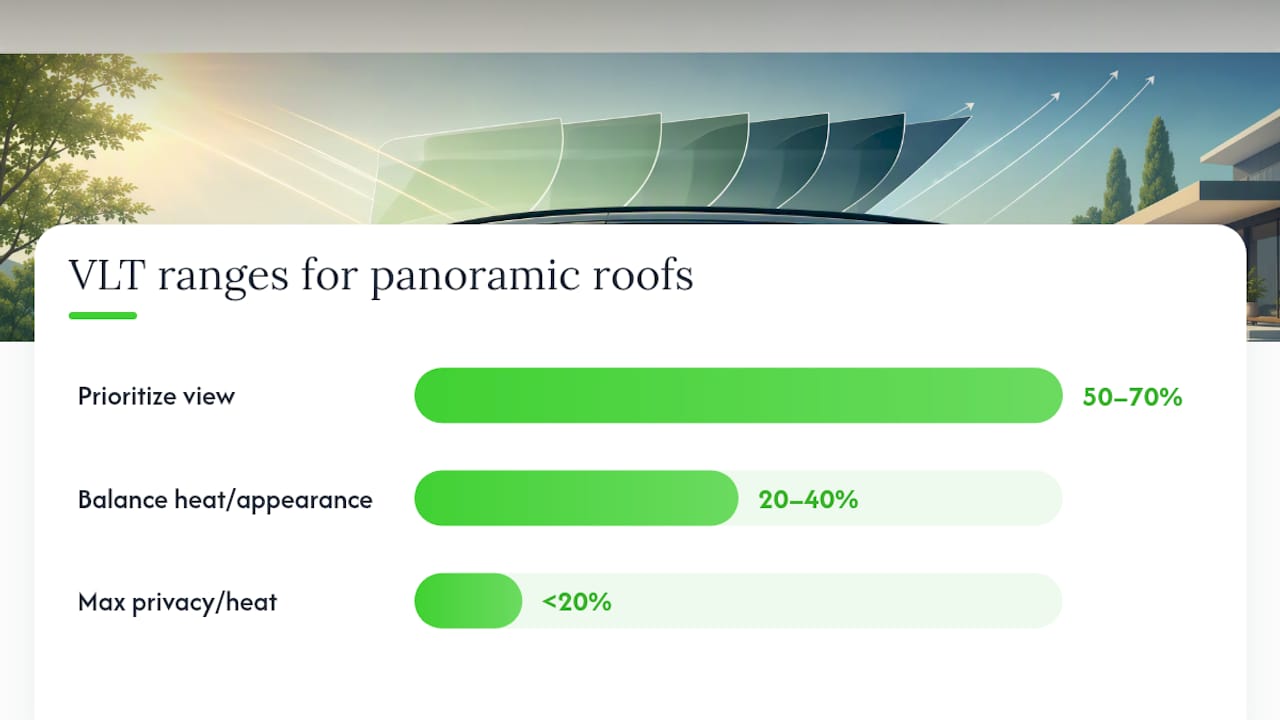
- Prioritizing the view. Stick to 50 to 70% VLT. You get meaningful heat and UV reduction with almost no visible change to the glass, which suits anyone who chose a panoramic roof specifically for the openness.
- Balancing heat reduction and appearance. The 20 to 40% range is the most common middle ground. It noticeably cuts cabin temperature and glare while still letting in enough light that the roof doesn't feel like a solid panel from inside.
- Maximizing privacy and heat rejection. Below 20% VLT delivers the strongest heat and glare control but comes with real tradeoffs at night, when a very dark roof can make it harder to see stars or read ambient light cues while driving.
Owner reports on enthusiast forums show a wide spread in practice. Discussions on sites like Tundras show owners landing anywhere from 5% to 20% VLT on their panoramic glass, with ceramic film around 20% coming up repeatedly as the sweet spot between visible heat reduction and still being able to see the sky clearly during the day. A handful go as low as 5% for maximum darkness, usually owners who treat the roof more like a sunshade than a view panel, and they typically report noticeably reduced visibility at night.
If you drive a lot after dark or you specifically bought a panoramic roof for stargazing or an open cabin feel, skip anything under 20% VLT. You'll fight the tint every night instead of enjoying it.
Installation, Warranty, and Legal Checks Before You Book
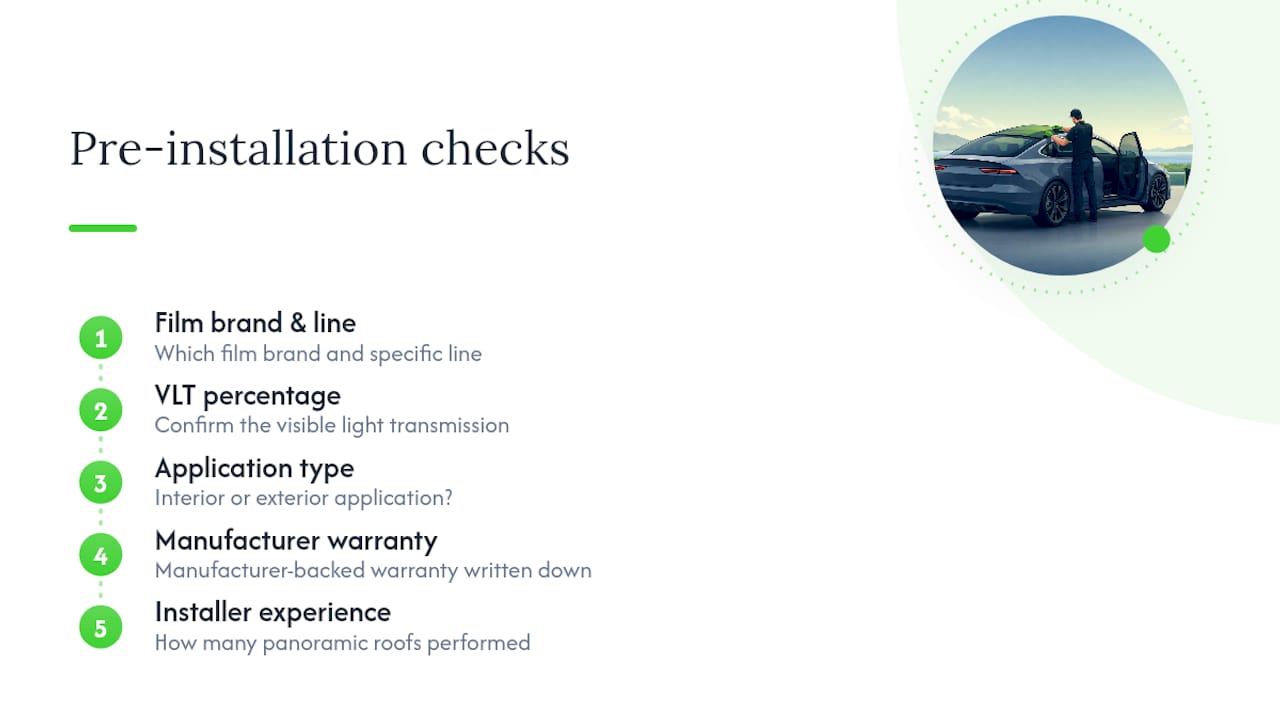
Before any installer touches your roof, ask five things: what film brand and line are they using, what VLT are they installing, is it interior or exterior application, is there a manufacturer-backed warranty, and how many panoramic roofs has this specific installer done. That last question matters more than people expect, because curved and multi-panel glass behaves differently than a flat door window during application.
Aftermarket tint can complicate a factory glass warranty in some cases, particularly if the automaker later needs to diagnose a defect in the glass itself and the tint obscures inspection. Ask any shop to put the warranty terms in writing before you pay, including what happens if the film needs to be removed for a glass related repair down the line. A documented warranty protects you if bubbling, peeling, or discoloration shows up later.
Climate matters more than most owners realize. Professional installers report that dust, humidity, and temperature swings during application are a leading cause of installation defects on complex glass shapes, which is exactly why a climate-controlled shop reduces the odds of trapped debris or poor adhesion on a curved panoramic panel.
On the legal side, VLT limits vary significantly by state, and front-side windows typically carry stricter minimums than rear glass or roof panels. Some states don't regulate roof glass the same way they regulate windshields and front windows at all. Don't assume your state's rear-window rule applies to your roof. Look up your state's specific tint law before settling on a VLT percentage, especially if you're leaning toward anything under 20%.
What Panoramic Roof Tinting Costs and How Long It Takes
Price depends heavily on film type and roof complexity. Dyed film sits at the low end, carbon in the middle, and ceramic or specialty exterior TPU films command the highest price because of material cost and the extra labor curved glass requires. Multi-panel panoramic roofs with a center seal take longer to fit correctly than a single sheet of glass, which shows up in the labor line.
A few things push the price higher than a base quote:
- Removing old, failing tint before applying new film, which adds labor time
- Seal or trim repairs if the roof's weatherstripping was already compromised
- Custom-cut exterior TPU application, which requires more precise templating than interior film
Cure time typically runs a few days depending on film type and weather, and installers generally advise avoiding the sunroof shade or aggressive cleaning during that window. For a full breakdown of what "cured" actually means and when it's safe to use the roof normally, this cure-time guide covers it in detail.
Caring for Your Panoramic Roof Tint After Installation
Good film can fail early if it's cleaned wrong in the first few weeks. Follow this sequence:
- Wait for full cure before cleaning the glass at all, since early contact can shift film that hasn't fully bonded.
- Use an ammonia-free glass cleaner with a soft microfiber towel and light pressure. Ammonia breaks down the film's adhesive and dye layers over time.
- Skip high-pressure washers near the edges, where water can force its way under the film border and lift the seal.
- Check the edges monthly for small bubbles or lifting, which usually signal early adhesive failure rather than a defect that will resolve on its own.
- Call your installer at the first sign of a problem, not after it's spread across the whole panel, since most manufacturer-backed warranties require the issue to be reported within a defined window.
Some shops recommend periodic ceramic coating maintenance alongside tint care to keep both surfaces performing, and general upkeep guidance for ceramic coated panels applies reasonably well to the glass surrounding your tinted roof too.
Why a Climate-Controlled, Warranty-Backed Shop Actually Matters
A dust-free, temperature-controlled bay isn't a marketing detail. It's the difference between film that bonds cleanly to curved glass and film that traps a speck of debris under the surface, where it stays visible for the life of the tint. Protection has been installed on many vehicles in climate-controlled facilities, including some Tesla and EV roofs, where sensor placement and glass curvature demand more precision than a standard sedan window.
Before you commit anywhere, get these in writing:
- The exact film model and brand being installed
- The VLT percentage for your specific roof
- The warranty period and what it covers
- Cure instructions specific to your vehicle and climate
A Practical Take on Forum Advice Versus Shop Reality
Forum threads are useful for seeing what real owners actually chose, but they skip the part where a bad install shows up six months later as a bubble near the seam nobody warned them about. My take: unless you specifically want a blacked-out roof for privacy, a lighter ceramic or a pano-specific exterior film gets you almost everything you want, heat rejection, UV protection, a cooler cabin, without sacrificing the reason you bought a panoramic roof in the first place. Check your state's VLT rules first, then get the film spec and warranty terms in writing before anyone touches the glass.
— Jake
Ready to Tint Your Panoramic Roof? Here's What We Do
A professional shop installs every roof film in a climate-controlled bay to avoid dust specks trapped under the film and rushed edges on curved glass. That's the difference between a tint job that still looks clean in three years and one that starts lifting at the seam by summer.
A booked appointment starts with an inspection of your specific roof glass, followed by a documented film spec, meaning you'll know the exact brand, line, and VLT percentage going on your car before installation begins. Every job comes with a manufacturer-backed warranty card and clear cure guidance so you know exactly when it's safe to use the roof shade again. Some shops have experience handling Tesla and EV roof installs, so complex sensor layouts and curved glass aren't a guessing game. If you're ready to stop weighing options and get your panoramic roof done right, book your tint appointment and get a documented quote for your specific vehicle.
Sources
- What Are the Different Types of Car Window Tint? - AutoZone
- Car Window Tinting: 7 Things You Need to Know - Kelley Blue Book
- Covrgard PANO | Panoramic roof film, dual purpose protection
FAQ
Should You Tint a Panoramic Roof?
Yes, for most vehicles it's worth doing, since a properly chosen ceramic or pano-specific film cuts cabin heat and blocks UV rays without permanently darkening the glass if you pick a higher VLT.
Is It Worth It to Get a Sunroof Tinted?
It's worth it if UV protection and cooler cabin temperatures matter to you, especially since quality film can block up to 99% of UV rays even at lighter VLT percentages that preserve your view.
What Is the Best Tint for a Sunroof?
Ceramic film is generally the strongest choice for sunroofs and panoramic roofs because it rejects heat without relying on darkness, and it won't interfere with GPS or cellular signal the way metalized film can.
Can You Put Window Tint on a Sunroof?
Yes, both interior film and exterior TPU-based pano film can be applied to sunroof and panoramic glass, though the right choice depends on your glass type and whether you want added impact protection alongside heat rejection.