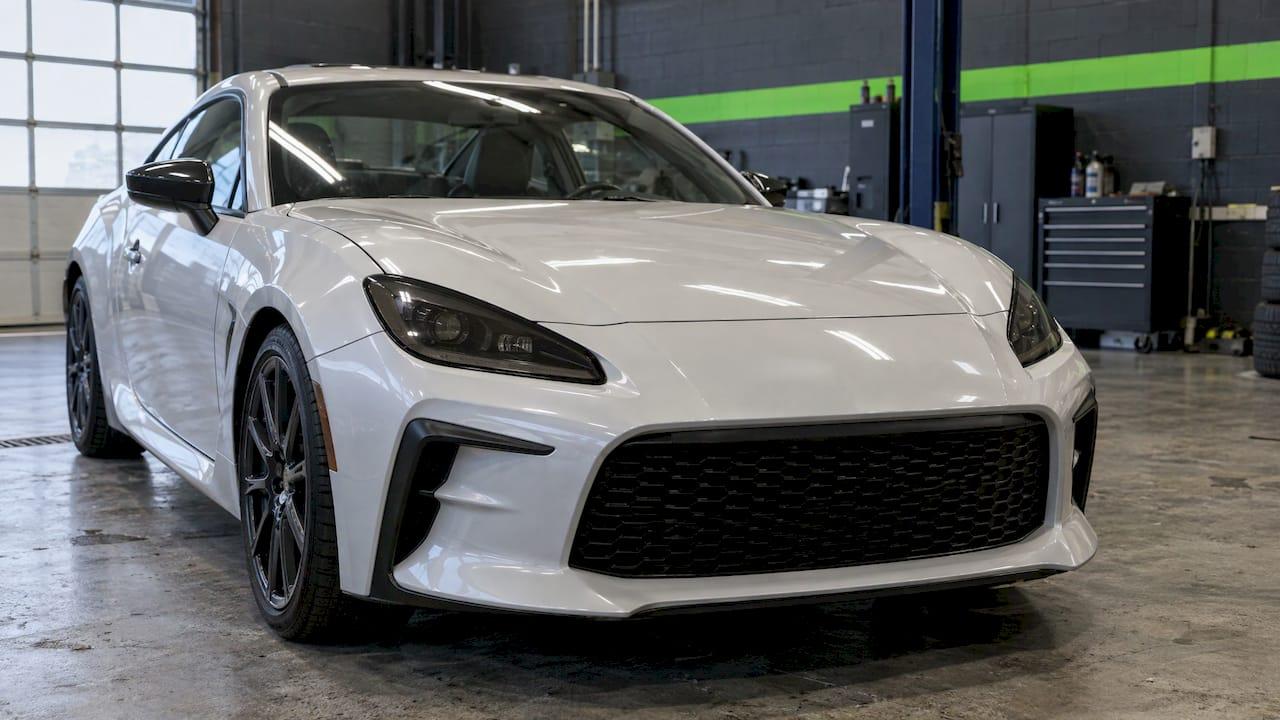
The headlight tint colors most drivers choose are smoke in light, medium and dark shades, plus yellow and amber. Smoke is a neutral gray look, and yellow and amber add a warm tone. Smoke shades are sold by visible light transmission (VLT): the higher the number, the more light passes through the film. Before you pick a shade, check your state's rules on lamp covers, because headlights are regulated by state and the color of the light is part of the law. A professional installer can match a shade to your lamp shape and walk you through the legal side before any film goes on.
This guide covers each color, what the VLT numbers mean, how shade affects what you see at night, what the law says, how long film lasts and how it comes off.
TL;DR
- Smoke comes in light, medium and dark shades. Manufacturers list them by VLT, from roughly 24% to 51% for smoked headlight PPF.
- Yellow and amber films give a warm look. Blue, red and chameleon colors are the ones to avoid on public roads.
- Lighter shades pass more light. Dark shades look more aggressive but take more output from the lamp.
- Headlight rules are set state by state, and several states bar tinted or colored lamp covers. Check yours first.
- Quality film is installed in a clean, dust-free space. Bubbles and dust under the film scatter light and ruin the finish.
Table of Contents
- The headlight tint colors you will actually see
- Quick comparison of shades
- How shade changes what you see at night
- Is headlight tint legal? Check your state
- Tinted film versus clear PPF on headlights
- How to choose your shade: a short decision path
- Installation: why the room matters as much as the roll
- How long headlight film lasts
- Taking tint off
- Promo: tint, protect, or both
- Our perspective
- FAQ
- Sources
The headlight tint colors you will actually see
Color choices fall into a few families. Shade names vary by brand, but the families stay the same.
Smoke: light, medium and dark
Smoke is the default. It dulls the lens to a gray or charcoal look that blends with a dark body color and the housing's black trim. Makers publish smoke levels as VLT percentages. One headlight PPF line lists three smoke levels: Dark at 24% VLT, Medium at 35% and Light at 51%. Another product range offers five tones from 30% to 50% VLT, including a neutral gray at 50%, a blue-purple-leaning 45%, a charcoal at 34% and a 30% darkest tone.

How to read these numbers: a 50% VLT film lets about half of the visible light through, and a 30% film lets about a third through. Most drivers who want a subtle look land in the light-to-medium range. Dark smoke is the style choice for show vehicles and for cars that mostly drive in daylight.
Yellow and amber
Yellow and amber films warm up the lens. The same product range lists a bright yellow-amber film at 85% VLT, which is far lighter than any smoke. That high transmission is the reason yellow and amber are popular with drivers who want color without a big loss in light. One lighting retailer's guide lists clear, yellow, amber and smoke as the most popular shades and notes that smoke and amber tend to work best over bright LED or halogen bulbs.

Clear
Clear film is not a color, but it belongs on this list. It keeps the factory look and still guards the lens against chips and UV. For many owners it is the first choice, and the same film can be installed in a tinted version later.
Blue, red, holographic and chameleon
Specialty vinyl exists in blue, red, holographic and color-shifting finishes. Online film catalogs list many of these, from smoke-blue to holographic smoke. They are made for show cars and photography. One lighting guide advises that blue, red or chameleon colors should be avoided on local roads and highways. If your car sees public roads at night, stay with clear, light smoke, yellow or amber, and confirm that your state allows it.
Quick comparison of shades
| Shade | Typical VLT range | Look | Best fit |
|---|---|---|---|
| Clear PPF | Near 100% | Factory | Daily drivers that want lens protection only |
| Yellow / amber | Around 85% in one listed range | Warm, vintage or rally feel | Drivers who want color with minimal light loss |
| Light smoke | About 45% to 51% | Subtle gray | A hint of shade on any color car |
| Medium smoke | About 34% to 35% | Noticeably dark | Dark and black cars, blacked-out styling |
| Dark smoke | About 24% to 30% | Aggressive, near blackout | Show builds and mostly daytime driving |
The ranges come from the manufacturer pages linked above. Individual product lines differ, so the number on the specific film your installer uses is the one to go by.
How shade changes what you see at night
Any tint absorbs some of the light the lamp produces. That is how the smoked look works. Headlamps are designed to put a precise pattern of light on the road, so a darker film means less light out front, and you notice it most on unlit roads and in rain.
Two habits keep that in check:
- Pick the lighter shade when you drive at night a lot. A higher VLT passes more of the beam. If you commute on dark rural roads or drive often in the rain, light smoke or amber is the sensible range.
- Insist on a clean install. Film that traps dust, or that is not perfectly smooth, can scatter light. Scattered light creates glare for oncoming drivers, and glare matters. NHTSA's literature review explains that glare reduces visibility by creating a veil of scattered light inside the eye. A dust-free install room is not a luxury here. It is how you keep the beam clean.
That second point is why we install in a climate-controlled, dust-free facility in Van Nuys. Film applied in open air picks up lint and debris, and on a lens the flaws show up as haze at night.
Is headlight tint legal? Check your state
There is no single national answer. States set the rules, and the details differ. Treat the points below as the framework, then confirm your own state with its motor vehicle code or state police.
- Color of the light. Headlamps are generally required to project white light. Some states allow amber or yellow only on auxiliary fog lamps.
- Lamp covers. Some states prohibit covers or films on headlamps outright. The Maryland State Police states that any headlamp with an aftermarket clear, tinted or screen-type cover is prohibited. New Hampshire's rules for street rods likewise say colored headlamps, covers or tinted lenses are not permitted.
- Minimum transmission. Because the federal government leaves this to the states, some states allow tint only above a minimum VLT, with 70% cited in one guide, and others are stricter still.
In practice, the safest approach is to match the film to the rules where the car is registered. In California, our own six-step headlight tint checklist lays out what to confirm before you book. Tinting taillights and other lamps follows its own rules, so ask about each lamp separately.
If you are unsure, call before you pay for film. A short conversation about your state and your lamp type avoids a ticket and a second job to take the film off.
Tinted film versus clear PPF on headlights
Color is only half the decision. The other half is the material.
Thin vinyl tint. It is inexpensive and comes in many colors. Vinyl scratches more easily, does not self-heal and degrades faster in UV. One film maker's guide says it offers little impact protection.
TPU paint protection film. Thermoplastic urethane film absorbs UV before it reaches the polycarbonate lens, which helps prevent oxidation and yellowing. It also takes rock chips, scratches and chemical damage, and premium films can self-heal light scratches with heat, according to that same guide. Tinted PPF adds the color shift on top of that protection.
Manufacturer specs show the scale of protection. One 8-mil headlight film lists protection against rock chips, cracks, scratches, delamination and oxidation with a 7-year warranty. Another maker lists a 10-year warranty against delamination, yellowing, bubbling and cracking. Warranty terms vary by product, so ask what the film we install is covered for. We offer manufacturer-backed warranties on our installations.
For a deeper read on the film itself, see our guides to headlight PPF and self-healing PPF.
How to choose your shade: a short decision path
- Start with your state. Confirm what it says about lamp covers and color. If tint is restricted, clear PPF still protects the lens and keeps the factory look.
- Match shade to your driving. Mostly daylight or city streets with good lighting? Medium smoke is workable where permitted. Dark rural roads, rain or long night drives point to light smoke, amber or clear.
- Match shade to your body color. Light smoke on white, silver or red cars adds contrast without a harsh blackout. Medium smoke suits black, gray and dark blue.
- Consider your bulbs. Bright LED or halogen output shows through film better, as the lighting guide cited above notes.
- Plan the taillights together. Matching front and rear shades makes the car look finished. Our headlight and taillight tinting covers both.
- Decide on protection. If you want chip and UV defense as well as color, choose a TPU film rather than basic vinyl.
Installation: why the room matters as much as the roll
Headlight lenses are curved, with tight corners and molded edges. Film has to be stretched, heated and trimmed to follow those curves. Three things go wrong most often.
- Dust and lint under the film. Tiny specks look like dots on a gloss lens and scatter light at night.
- Overstretching. Overheated or stretched film thins out and can leave uneven tint, which shows as blotchy shade at some angles.
- Lifted edges. Edges that are not sealed let water and dirt creep in, then the film peels.
A controlled, dust-free bay, a clean lens and careful edge work address all three. This is also why a roll of film bought online is a different proposition from a finished job. Skill and environment decide how the film looks in a year.
How long headlight film lasts
Warranty periods on quality film run from five to ten years, depending on the product, as the manufacturer pages above show. One industry guide says that a properly installed TPU film lasts three to seven years before replacement. Climate, how much the car sits in the sun and how it is washed all play a part. Hand washing and regular care keep film looking its best; our PPF maintenance guide explains the routine.
Taking tint off
Film comes off when you sell the car, move to a state with tighter rules, or simply want a change. Removal is controlled work: the film needs gentle, even heat to soften the adhesive, and the lens needs to be protected from scratches and residue. Rushing it with too much heat risks warping the plastic. We handle tint removal at our shop, which saves you from a damaged lens and leftover adhesive.
Promo: tint, protect, or both
If you want a shade chosen for your car and your state, our headlight and taillight tinting service starts with that conversation. We are based in Van Nuys, we install in a climate-controlled facility, and our work carries manufacturer-backed warranties. Combine it with paint protection film on the front end and the lamps get the same protection as the paint.
Our perspective
Most people ask us about color first. We start with the lens. A headlight is a safety part, and the film that goes over it should leave the beam clean.
That is why we put so much weight on the room and the install. Our facility is climate-controlled and dust-free, because dust under a film is the flaw that hurts at night. We also work with manufacturer-backed films, so you have a warranty behind the job.
Our advice: choose the shade for how you drive, not only for how it looks in the driveway, and check your state's rules before you book. If you want protection with a subtle shift in color, TPU film does both in one install.
Jake
FAQ
What is the most popular headlight tint color?
Smoke is the most common choice, usually in a light or medium shade. Yellow and amber are the main alternatives for a warmer look. Clear film is popular with owners who want protection and no visible change.
Are colored headlight tints legal?
It depends on your state. Headlamps are generally required to emit white light, and some states, such as Maryland, prohibit tinted or screen-type covers on headlamps. Check your state's vehicle code before you choose a color, or ask us which options fit your registration state.
Does a darker shade reduce visibility more?
Yes. A lower VLT passes less of the beam, and the effect is most noticeable on dark roads and in rain. Light smoke or amber keeps more output than a dark smoke. A clean, dust-free installation also keeps the beam free of scatter.
Can I switch from tint to clear later?
Yes. Film can be removed and replaced with clear PPF or another shade. Proper removal uses controlled heat to protect the lens, and our shop handles it.
How long does headlight tint film last?
That depends on the film and care. Manufacturer warranties on quality headlight film run from 5 to 10 years, and one industry guide puts typical service life at three to seven years. Washing by hand and limiting harsh chemicals helps.
Sources
- STEK USA: Light Protection Film
- UPPF USA: Headlight PPF
- Headlights.com: headlight tint shades and legality
- NHTSA: Annotated Summary of Literature on Headlamp Performance and Glare
- Maryland State Police: Vehicle Equipment FAQs
- N.H. Admin. Code Saf-C 3244.09
- eBay Motors: Tinted or Smoked Headlights
- YW Film: Headlight PPF guide