Front side windows in California must let in at least 70% combined light, and any aftermarket film applied to them must carry a manufacturer VLT rating of 88% or higher. That rules out popular shades like 35% and 20% for the front windows, no matter how good they look on someone else's car. If you're unsure whether your existing tint qualifies, ask your installer for the compliance certificate or get the glass measured with a VLT meter before you get pulled over.
TL;DR:
- Front window film in California must have a manufacturer VLT rating of at least 88%, and the combined glass and film must transmit at least 70% of light.
- Films with a VLT percentage below 88% or marketed as 50%, 35%, or 20% are illegal on front side windows, regardless of appearance.
- Medical exemptions do not allow darker film but require a certificate verifying a light-sensitivity condition, which must be kept in the vehicle.
- Inspection with a handheld VLT meter measures the combined glass and film, with non-compliance typically resulting in a fix-it ticket that requires removal or replacement of tint.
- Proper installation and documentation, including a certificate with specific details, are critical to maintaining legal tint and avoiding fines or re-inspections.
Table of Contents
- California Tint Law Front Windows: What CVC 26708 Actually Requires
- Windshield, Rear Windows, and Rear-Side Glass: Where the Rules Loosen Up
- Do Medical Exemptions Let You Go Darker Up Front?
- How Officers Check Your Tint, and What Happens If You Fail
- Your Front-Window Compliance Checklist
- Why Installation Quality Determines Whether You Actually Stay Legal
- A Shop's-Eye View on Avoiding Tickets
- How Tint & Wraps Customs Keeps Your Front Windows Legal and Protected
- Sources
- FAQ
California Tint Law Front Windows: What CVC 26708 Actually Requires
California doesn't regulate front side window tint the way most states do, with one flat percentage. Instead, Vehicle Code Section 26708 sets up a two-part test, and both parts have to pass.
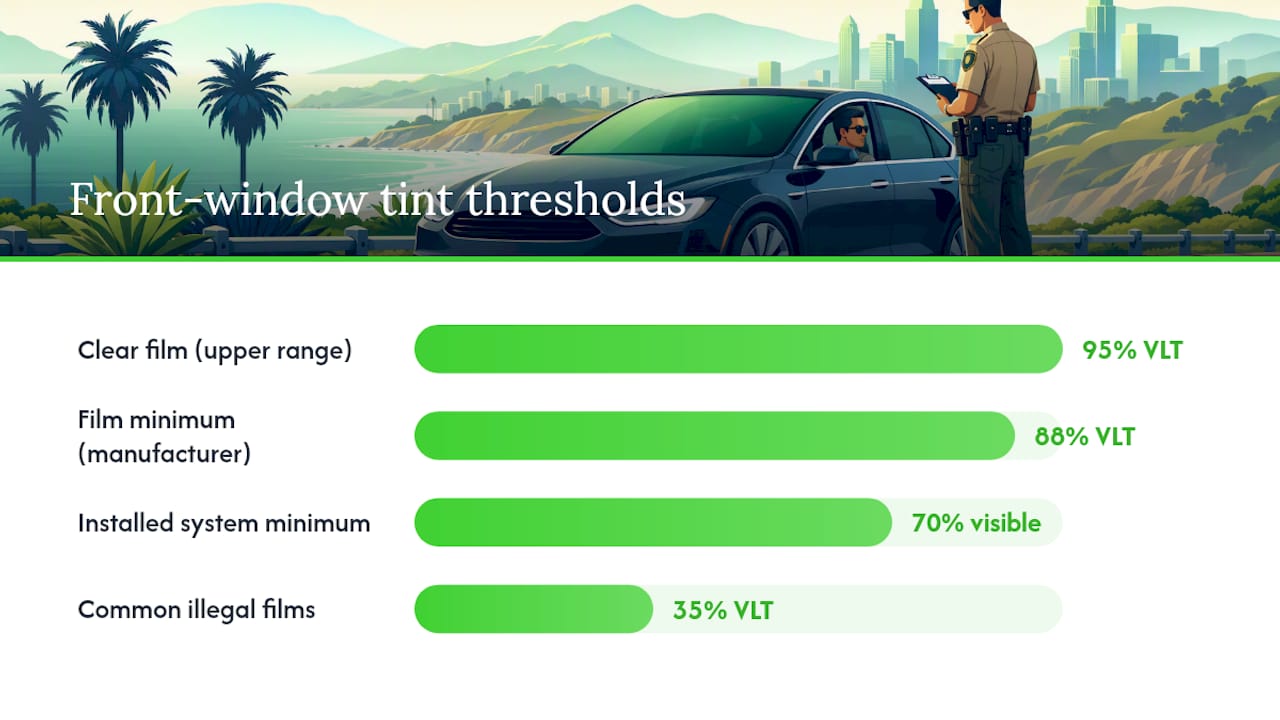
First, the film itself must be rated at 88% VLT or higher by the manufacturer. Second, once that film is on the glass, the combined system, factory glass plus film, has to transmit at least 70% of visible light. That 70% threshold comes straight from Federal Motor Vehicle Safety Standard No. 205, which California references directly rather than writing its own separate standard.
Why two numbers instead of one? Factory automotive glass already absorbs some light on its own, typically enough that even a nearly clear film pushes the combined reading close to the legal floor.
In practice, this means:
- Films marketed as "clear" or "UV block" ceramic products, usually in the 88 to 95% VLT range, are your only legal options for front doors.
- Anything marketed as 50%, 35%, or 20% is built for rear glass or other markets and is illegal on California front side windows, full stop.
- "Factory tint" on the glass itself doesn't count toward your film allowance. It's part of what the combined reading already accounts for.
It's the built-in cushion for the light your windshield glass and door glass already absorb before any film goes on, as explained under FMVSS 205's glazing standard.
Windshield, Rear Windows, and Rear-Side Glass: Where the Rules Loosen Up
Front doors get the strictest treatment in California, but the rest of the vehicle plays by different rules.
- Windshield: tint is allowed only on the top strip, above the manufacturer's AS-1 line (usually marked on the glass). No red or amber tint is permitted anywhere on the windshield, strip included.
- Rear side windows and the rear windshield: California places no darkness limit here. You can run near-black film on the back doors and rear glass legally.
- Dual mirrors requirement: if you tint the rear window dark enough that visibility through it is compromised, you're required to have functioning outside mirrors on both sides of the vehicle, not just the driver's side.
- SUVs, trucks, and minivans: the front-side window rule (88% film, 70% combined) applies exactly the same way it does to sedans. Body style doesn't change the front-door math.
That's the trade most people don't realize they're making. You can go as dark as you want on the back glass. The front doors are the one area where California draws a hard line, and it applies to every vehicle type on the road.
Do Medical Exemptions Let You Go Darker Up Front?
Not the way most people assume.
There are two separate paths, and they cover different situations:
- Dermatologist-signed certificate for film. If a licensed dermatologist documents a light-sensitivity condition, a driver can qualify for a certificate supporting the use of window film. That certificate does not authorize darker-than-legal film. The 88% film minimum and 70% combined minimum still apply.
- Doctor or optometrist letter for removable sun screens. This path covers non-permanent shade devices, like clip-on visors or clear screens, rather than adhesive tint applied to the glass itself.
Either way, the certificate has to specify the condition, the treating provider's information, and it legally has to stay in the vehicle at all times, available if an officer asks for it. There's no medical workaround for the numeric threshold, only documentation supporting why you're using the darkest legal film available.
How Officers Check Your Tint, and What Happens If You Fail
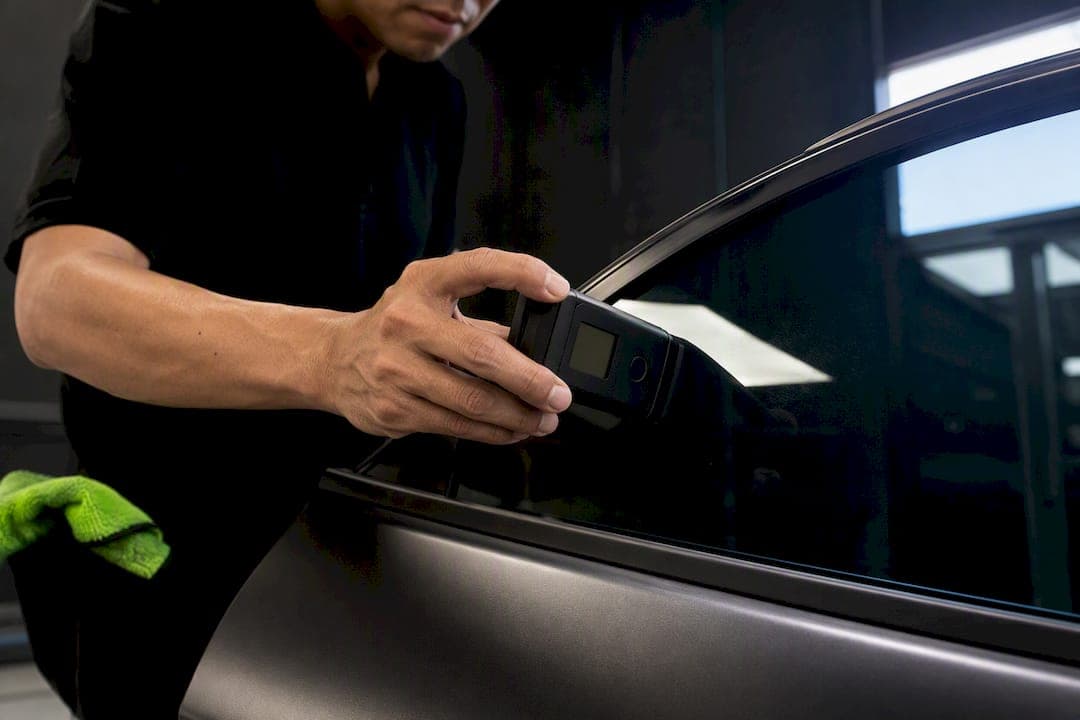
Officers verify compliance with handheld VLT meters that clamp onto the glass and read light transmission directly, measuring the combined glass-plus-film reading rather than trusting a sticker or a guess.
Most first-time violations result in what's commonly called a "fix-it ticket," a correctable violation rather than a criminal charge. The California DMV's guidance on equipment compliance outlines how these corrections get processed:
- You get a set window to fix the issue, usually by having the film removed or replaced with compliant film.
- Proof of correction, sometimes signed off by a mechanic, tint shop, or in some cases a court clerk, gets submitted to dismiss the citation.
- Ignore it, and the fix-it ticket can escalate into a standard fine and points against your driving record.
Pro Tip: Keep your installer's certificate and a dated photo of the film application in your glovebox. If you're stopped, handing over documentation on the spot often ends the conversation faster than any explanation you could give verbally.
Your Front-Window Compliance Checklist
Before you approve any front-door tint job, run through this list with whoever's doing the install:
- Confirm the film's manufacturer VLT rating is 88% or higher. Ask to see the spec sheet, not just take someone's word for it.
- Ask about FMVSS 205 compatibility and AS-14 abrasion resistance. Reputable ceramic and ultra-clear films are built to meet this standard; cheap film often isn't tested against it at all.
- Request UV-A blocking documentation. Most compliant clear films block 99% of UV rays even without visible darkness, which is the actual health benefit you're paying for anyway.
- Get a signed certificate at pickup. It needs the installer's and manufacturer's full names and street addresses, the film model, and the installation date.
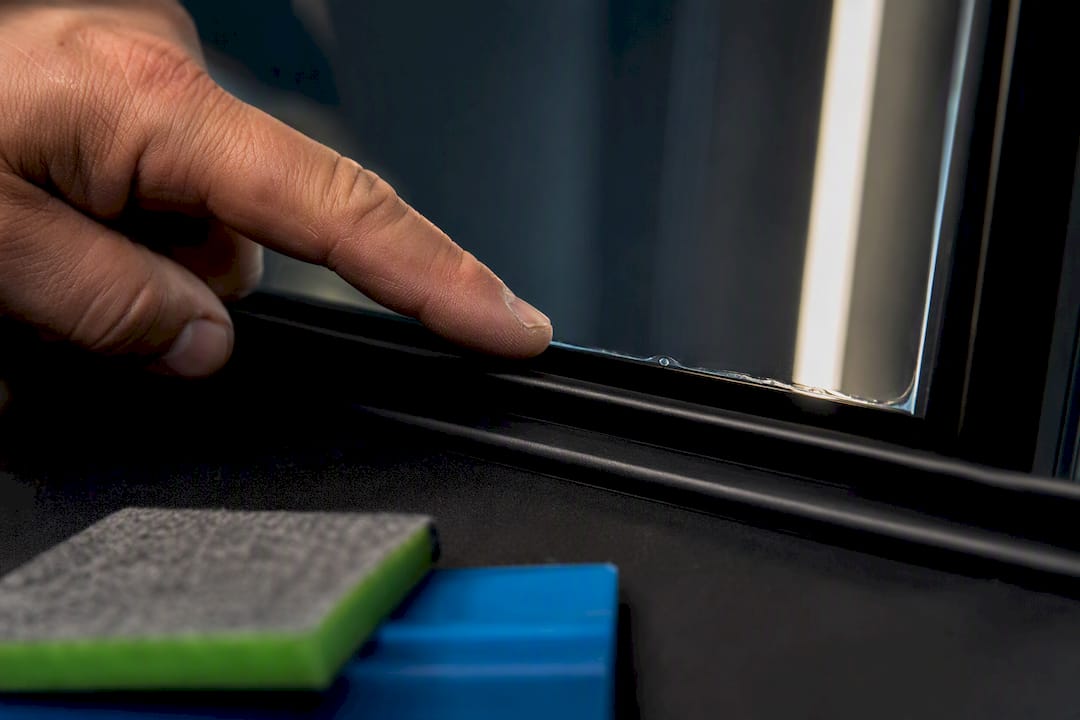
- Inspect the finished install for bubbles, edge lift, or haze. Installation flaws can drag a legally rated film's actual measured VLT below the compliant range over time.
Worth remembering: professional installation typically runs $100 to $600 for a standard four-door vehicle, with ceramic films sitting toward the top of that range. That's a modest cost against the hassle of a fix-it ticket and a second trip to have film redone.
Why Installation Quality Determines Whether You Actually Stay Legal
Bubbles, edge lift, and premature degradation all change what the glass actually reads, regardless of what the box said.
A reputable shop may perform every front-window install inside a climate-controlled facility, which matters because dust and temperature swings during application are two of the biggest causes of bubbling and edge separation down the road. Such shops have protected many vehicles, including those with curved glass and camera sensors that make clean application harder to get right.
What a reputable shop might provide at pickup:
- An installation certificate naming the film model used.
- Warranty coverage in case of bubbling, peeling, or discoloration.
- A post-install recheck to help confirm the combined VLT reading is within compliant range.
A Shop's-Eye View on Avoiding Tickets
The most common mistake is picking a film for looks rather than legality. Always keep your installation certificate, and ask for a recheck measurement within a week or two after installation to catch any early film shift.
— Jake
How Tint & Wraps Customs Keeps Your Front Windows Legal and Protected
Getting front-window tint right in California isn't about finding the darkest film that technically slides under the radar. It's about picking film that's rated correctly from the start, installed clean, and documented so you're never scrambling for proof at a traffic stop. This level of service helps drivers ensure compliance with tint laws.
A typical appointment runs measure, then film selection, then installation inside the climate-controlled bay, then certificate issuance, then a post-install check to confirm your combined VLT reading. Tesla and EV owners can receive specialized installation services tailored to curved glass and sensor-heavy trim. If your current tint is questionable or you're planning a fresh install, book a compliance-focused appointment and get it done once, correctly.
Sources
- Vehicle Code Section 26708 - California Legislative Information
- 49 C.F.R. §571.205 — Federal Motor Vehicle Safety Standard No. 205
- California DMV guidance (reg256a.pdf)
- California law on tinted windows: rules and penalties — LegalClarity
FAQ
Is 20% tint legal in California for front windows?
No. Front side windows require a combined VLT of at least 70%, and 20% film falls far below that threshold under CVC 26708.
Can you tint your front door windows in California?
Anything darker than that is not street legal on front doors.
Is 35% window tint legal in California?
Not on front side windows.