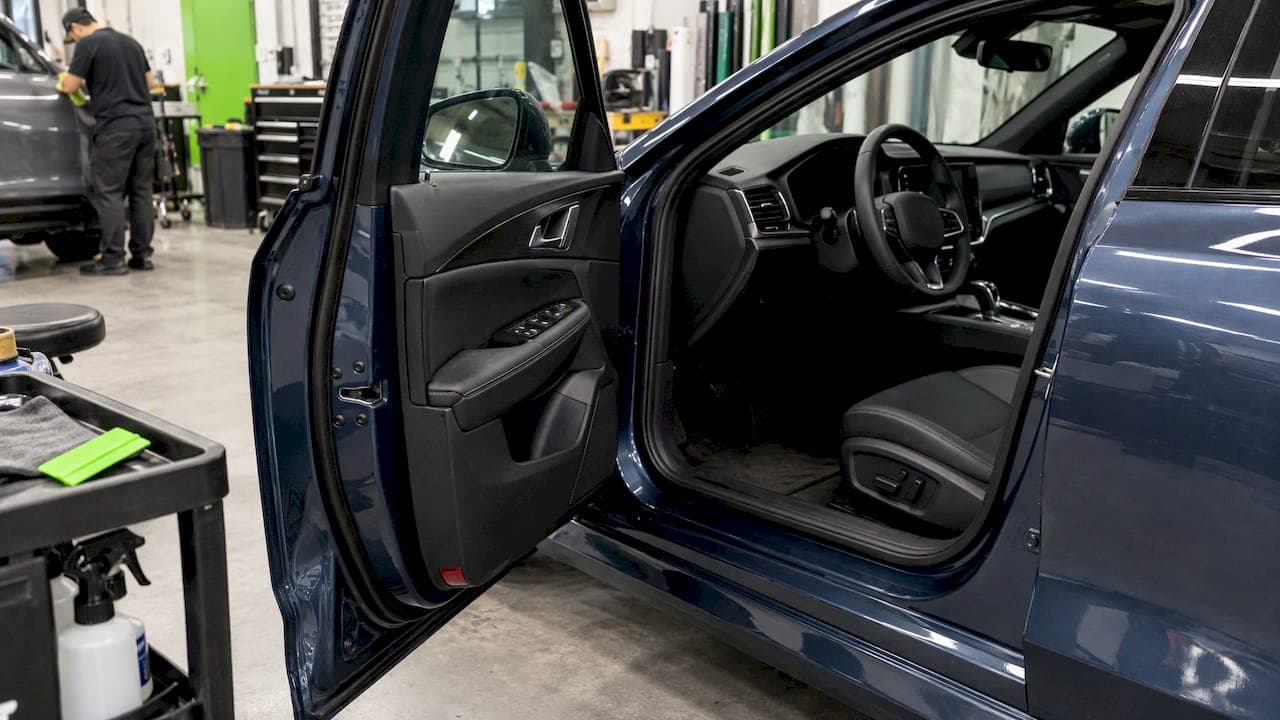
A door jamb wrap covers the painted strips you see when you open a door, the hood or the trunk, so the color change continues past the visible edge of the panel. It is worth paying for when your factory color clashes strongly with the new film or when the car will be seen with its doors open. Expect it to add roughly $200 to $500 to a typical quote, because the work is slow and detailed. For a daily driver whose original color sits close to the new one, a partial treatment usually does the job.
Below: when jambs matter, what they cost, how a careful installer handles them, how long they last, and how to look after them.
TL;DR
- Wrap the jambs if the old and new colors contrast sharply, if the car will be shown with doors open, or if you want the closest thing to a paint change.
- Full jamb coverage is commonly quoted at $200 to $500 on top of the base wrap, and can add about a day and a half of labor when doors have to come apart.
- A partial wrap, tucking film a quarter to half an inch into the jamb, is the cost-effective middle ground.
- Lifespan depends far more on prep, install quality, sun exposure and washing habits than on the jamb itself. Hand wash and garage the car when you can.
- Ask any shop exactly what "jambs included" means in writing before you book.
Table of Contents
- What a door jamb wrap actually is
- Should you wrap your door jambs?
- What door jamb wrapping costs
- How a jamb wrap is installed
- How long does a door jamb wrap last?
- Care and maintenance for wrapped jambs
- Our perspective: where jambs are worth the money
- Door jamb wrap versus other options
- Get a jamb wrap quote in Van Nuys
- FAQ
- Sources
What a door jamb wrap actually is
The jamb is the painted surface around the door opening, the edge of the door itself and the inner faces of the body where the door seals. When you wrap a car, the film normally stops at the visible edge of each panel. The original paint in these hidden areas stays as it was, and you see it every time you open a door.
There are three levels of coverage, and quotes can differ a lot depending on which one the shop means:
- Edge wrap only. The film folds around the door edge so no paint shows from outside when the door is closed. This is standard on any competent color change.
- Partial jamb wrap. The film goes a short way into the opening. Standard practice is to wrap to the edge and tuck about a quarter to half an inch into the jamb so the seam is not visible with the door closed.
- Full jamb wrap. Every painted surface inside the opening gets film, which usually means removing or working around weatherstripping, hinges, latches and sometimes trim.
The third option is the one that moves the price.
Should you wrap your door jambs?
The honest answer depends on the contrast between your paint and the new color, and on how the car will be used. According to a wrap supplier's guide, jamb wrapping is considered worth it in three situations:
- The factory color strongly clashes with the new vinyl.
- The vehicle will be displayed with the doors, hood or trunk open.
- You want a near-complete color change that hides traces of the original paint.
The same source notes it may be unnecessary on daily drivers where the factory and wrap colors blend well. Edmunds adds a useful point: black vehicles make unwrapped jambs less noticeable.
Cases where it makes sense
- White to matte black, or red to anything dark. Every time you open the door, a bright strip of the old color stares back.
- Show cars and photo cars. If it will sit at events with the hood and doors up, a half-finished interior edge looks unfinished.
- Resale or leasing questions. Some owners want no trace of the original color visible, for their own satisfaction.
- Tesla and other EVs with large, frameless-looking door openings. The jamb area is prominent when you climb in and out, so mismatched color is easy to notice.
Cases where you can skip it
- Similar shades. Silver to gunmetal, or dark blue to black, barely shows a difference.
- Black or dark cars. The jamb reads as shadow.
- Tight budgets. Put the money into better film or paint protection on the high-impact panels instead.
Partial coverage is the reasonable compromise. You get a clean closed-door look and a less jarring open-door look without the labor of dismantling.
What door jamb wrapping costs
No one number fits every car, so treat these as ranges and get a written quote.

Pricing roundups put full door jamb coverage at about $200 to $500 on top of most vehicle wrap quotes, with the spread depending on vehicle design, scope, removal work, finish type and the shop's standards. Edmunds reports that matching the door jambs can add a day and a half to the job because the doors must be taken apart, which is why labor, not film, drives the cost.
What pushes the price up or down
| Factor | Why it matters |
|---|---|
| Number of doors | A two-door coupe has fewer, though often larger, openings than a four-door SUV. |
| Hood and trunk or liftgate | Each added opening adds surface and time. |
| Door disassembly | Removing panels, seals and sometimes doors themselves is where the extra day goes. |
| Film finish | Gloss and satin are generally simpler to work with in tight recesses than heavily textured or specialty films. |
| Original paint condition | Chips, peeling clear coat and rust need correction before any film goes on. |
| Vehicle design | Deep recesses, sharp returns and electronics near the edges slow the work. |
We do not publish flat jamb prices on our site, because the scope genuinely differs from car to car. The useful move is to ask every shop the same three questions: Which openings are included? Are doors disassembled or is the film tucked? What film brand and warranty apply? Quotes that look cheap often answer "tucked only" to the second question.
How a jamb wrap is installed
This is the part people underestimate. Jambs are a collection of tight returns, sharp edges and seals, and film has to stretch into places it does not want to go. A forum thread on the topic puts it plainly: jambs are harder to wrap than most body panels and take patience, though it is possible.

Preparation
Clean every edge, remove wax and sealant residue, and check the paint. Film only holds well on sound, clean paint. Anything loose or flaking will lift under the wrap. Our guide on how pros prevent paint damage before wrapping covers why preparation matters well before any film touches the car.
Application
- Decide tuck or disassemble. Tucking leaves hardware in place and wraps what can be reached. Disassembly gives cleaner results in the deepest areas.
- Lay the film and let it relax. The installer positions the film so it is not overstretched, then works from the center out.
- Apply firm, even pressure on edges and overlaps. Avery Dennison's installation bulletin recommends firm, uniform pressure on edges, overlaps and seams.
- Post-heat stretched areas. The same bulletin calls for heating stretched areas to 70 to 80°C so the film relaxes and takes a permanent set. In a jamb, where film is pulled into recesses, skipping this step is a common reason for edges lifting later.
- Finish cuts without blades on paint. 3M's tips and tricks guide says to use knifeless tape for finishing cuts around body-panel edges and never a knife or razor blade. Cutting freehand against painted jambs is how scratches happen.
Why the shop environment matters
Dust trapped under film in a jamb is visible every time you open the door, and heat or humidity swings affect how adhesive behaves. Our Van Nuys shop is climate controlled and dust free for exactly this reason: small jobs like jambs, edges and returns show contamination more than a flat door skin does.
How long does a door jamb wrap last?
A jamb gets less sun than a hood or roof, but it takes plenty of abrasion from door seals, hands, shoes and entry and exit. Film warranties give a reference point for the material itself.
- 3M says Wrap Film Series 2080 is intended for full, partial and accent wraps, with a warranty of up to 8 years on vertical exposure and up to 3 years on horizontal exposure, depending on exposure angle and geographic zone. The warranty excludes misuse, accidents, misapplication, ordinary wear and rock or road-debris impacts, and it does not cover paint pull on removal. Desert areas of the Southwestern US may receive reduced warranties.
- Avery Dennison's Supreme Wrapping Film data sheet describes a cast film designed for full or partial wraps that conforms to compound curves and deep recesses, with expected outdoor life of up to 10 years under its specified vertical-exposure conditions. It adds that real life varies with preparation, application, environment and cleaning.
- Edmunds says a well-maintained wrap can last up to about 5 years.
Those figures are ceilings under ideal conditions, and a Southern California car parked outside lives in the harsher end. Interior jamb surfaces typically last as long as or longer than exterior panels because they are shaded, but the high-wear zones near the latch and sill, where you step and brush the door, can show wear first. For a wider look at what to expect, see our guide to car wrap lifespan.
Choosing the film
Jamb work rewards a conformable cast film from a major manufacturer. If you are weighing brands for protection film as well as color, this XPEL vs 3M comparison walks through how the two stack up on durability, and our own take on XPEL vs 3M PPF covers the protection side.
Care and maintenance for wrapped jambs
The door jamb is where water, road salt and dirt collect, and it is the part people forget to wash. Good habits keep edges down.
- Wash by hand. 3M's guide lists hand cleaning and avoiding industrial car washes and aggressive high- or low-pH soaps as proper maintenance. Edmunds also warns that automatic washes can scratch or lift film.
- Use soft microfiber. Wipe the jamb gently, especially near edges where film turns a corner.
- Remove contaminants quickly. Edmunds lists insects, bird droppings and poor cleaning as factors that shorten wrap life.
- Garage or shade the car. Prolonged sun exposure shortens life, and covered parking helps.
- Avoid pressure-washing edges. Hitting an edge at close range can lift film. Keep the nozzle back and angle it away from seams.
- Mind the latch and sill areas. Wipe boots and keep sharp objects, such as keys and tool bags, away.
For a fuller routine, read our vinyl wrap maintenance guide.
Our perspective: where jambs are worth the money
We wrap and protect cars every day in the San Fernando Valley, and our approach to jambs is about honest trade-offs rather than upselling. With more than 1,000 vehicles protected, the pattern we see is simple: owners regret skipped jambs when the color contrast was extreme, and almost never regret leaving them alone when the colors were close.
Our advice:
- Decide before you pick the color. If you love a color that sharply contrasts with your factory paint, budget for the jambs from the start. Browsing color change wrap ideas with that in mind avoids a surprise at the quote stage.
- Use the factory-color shortcut where it fits. A dark or similar paint plus a clean edge wrap can look right without the added labor.
- Ask for scope in writing. "Jambs included" should list which doors, whether the hood and trunk are covered, and whether panels are removed.
- Protect the exposed paint inside too. Door edges and sill areas take daily knocks, so protection film on the high-contact spots makes sense on cars with a paint finish you want to keep.
- Tesla owners, pay attention to sensors. Door and pillar areas on EVs often sit near sensors and trim. We specialize in Tesla and EV installations so film fits without interfering with them.
Also keep in mind that all film work is only as good as the paint underneath and the person applying it. Our climate-controlled facility and manufacturer-backed warranties exist to take the guesswork out of that.
— Jake
Door jamb wrap versus other options
If your goal is a different look without the full jamb cost, compare alternatives by type.
| Option | Best for | Trade-off |
|---|---|---|
| Edge wrap only | Daily drivers, similar colors | Original color visible when doors open |
| Partial jamb wrap | Most color changes | Tuck line can show in deep recesses |
| Full jamb wrap | Show cars, strong contrast | Highest labor, can require disassembly |
| Repaint of jambs | Permanent change | Cost, downtime and a long-term change to the car |
A wrap is meant to be temporary and not a substitute for paint. That is part of its appeal, and it is why we like film for owners who want options later. If you are curious about paint safety on removal, our guide to whether a wrap damages paint explains the factors.
Get a jamb wrap quote in Van Nuys
If you are planning a color change, we will go over your factory color, your target color and how you use the car, then tell you plainly whether jambs are worth including. See our vinyl wraps in Van Nuys page for the brands we install, including 3M, Avery, Inozetek and KPMF, or start from the Tint & Wraps Customs home page to request a quote. Businesses wrapping several vehicles can look at our fleet wraps options.
FAQ
Should you wrap door jambs?
Wrap them when your original color strongly clashes with the new film, when the car will be shown with the doors open, or when you want a near-complete color change. If the colors are close or the car is black, an edge wrap with a short tuck is usually enough.
How much does it cost to wrap car door jambs?
Full jamb coverage is commonly quoted at about $200 to $500 on top of a standard wrap, and it can add around a day and a half of labor because doors must come apart. Your car's design, the number of openings and the film finish change the final figure, so get the scope in writing.
How long does a door jamb wrap last?
Manufacturer warranties on wrap film run up to 8 years on vertical surfaces for 3M's 2080 series and expected outdoor life reaches up to 10 years for Avery Dennison's Supreme film under ideal conditions. In real use, Edmunds puts a well-maintained wrap at up to about 5 years. Shade, hand washing and careful entry and exit extend it.
Can you wrap a door jamb yourself?
You can try, and some owners do, but jambs are harder than flat body panels and mistakes show every time you open the door. Tight returns, seals and edge cuts reward experience, and a bad cut can scratch the paint beneath. A professional install in a controlled shop gives a cleaner result and a warranty.
Does a jamb wrap damage the paint?
It should not on sound, properly prepared factory paint. Problems come from poor prep, cuts made with blades against the paint, or paint that was already compromised. 3M notes its warranty does not cover paint pull on removal, which is another reason to check the paint's condition first.
Sources
- Vinyl Wrap Door Jambs: Should You Wrap Them or Leave Them Factory Color
- Car Wrap: Pros and Cons of Wrapping a Car, Edmunds
- Vehicle Wrap Pricing: Real Costs
- Avery Dennison IB 1.20 Application Bulletin
- 3M Tips & Tricks Installation Guide
- 3M Wrap Film Series 2080, 3M United States
- Avery Dennison Supreme Wrapping Film Product Data Sheet