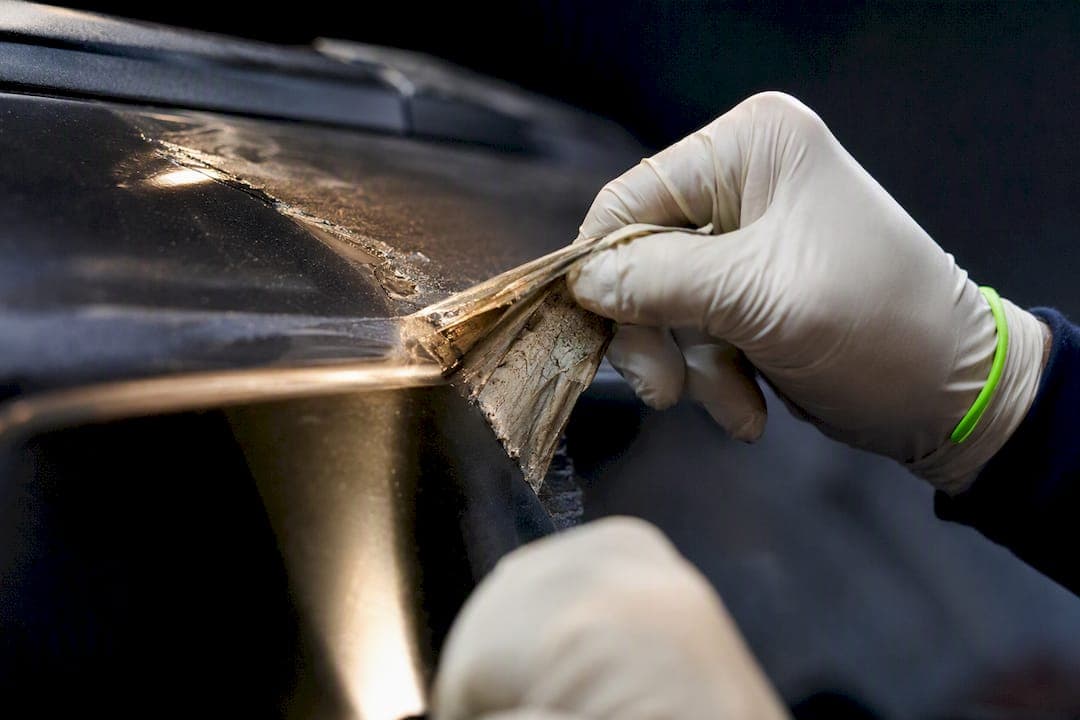
Professional wrap removal typically runs $300 to $1,200 for a standard car, with vans, box trucks, and old, sun-baked wraps climbing to $1,500 or more. The biggest swing factor is age: a wrap past its rated lifespan can double your labor hours. DIY saves money upfront but risks a paint repair bill that erases the savings, so get an itemized quote before deciding either way.
TL;DR:
- Wraps older than five years tend to become brittle, often increasing removal labor by 50 percent or more due to film flaking and tearing.
- Vehicles with complex graphics, multiple panels, or deep body lines require significantly more time and cost during removal than simple color-change wraps.
- DIY removal risks damaging the paint through overheating or improper technique, leading to costly repairs that may surpass professional removal costs.
- Professional removal typically costs between $300 and $1,200 for passenger vehicles, with regional labor rates and vehicle complexity being key price drivers.
- Climate-controlled environments, detailed inspections, and warranties are common practices in reputable shops that help protect your vehicle’s paint.
Table of Contents
- How Much Does Wrap Removal Cost by Vehicle Type?
- What Affects the Price of Wrap Removal?
- DIY vs. Professional Removal: Weighing the Real Cost
- How Do Shops Charge for Wrap Removal?
- What Happens During a Wrap Removal Appointment?
- How to Save Money and Avoid Surprise Charges
- Where Does the Old Vinyl Go? Disposal and Environmental Rules
- What Shop-Proven Practices Actually Protect Your Paint
- Get an Itemized Wrap Removal Quote in Van Nuys
- Sources
- FAQ
How Much Does Wrap Removal Cost by Vehicle Type?
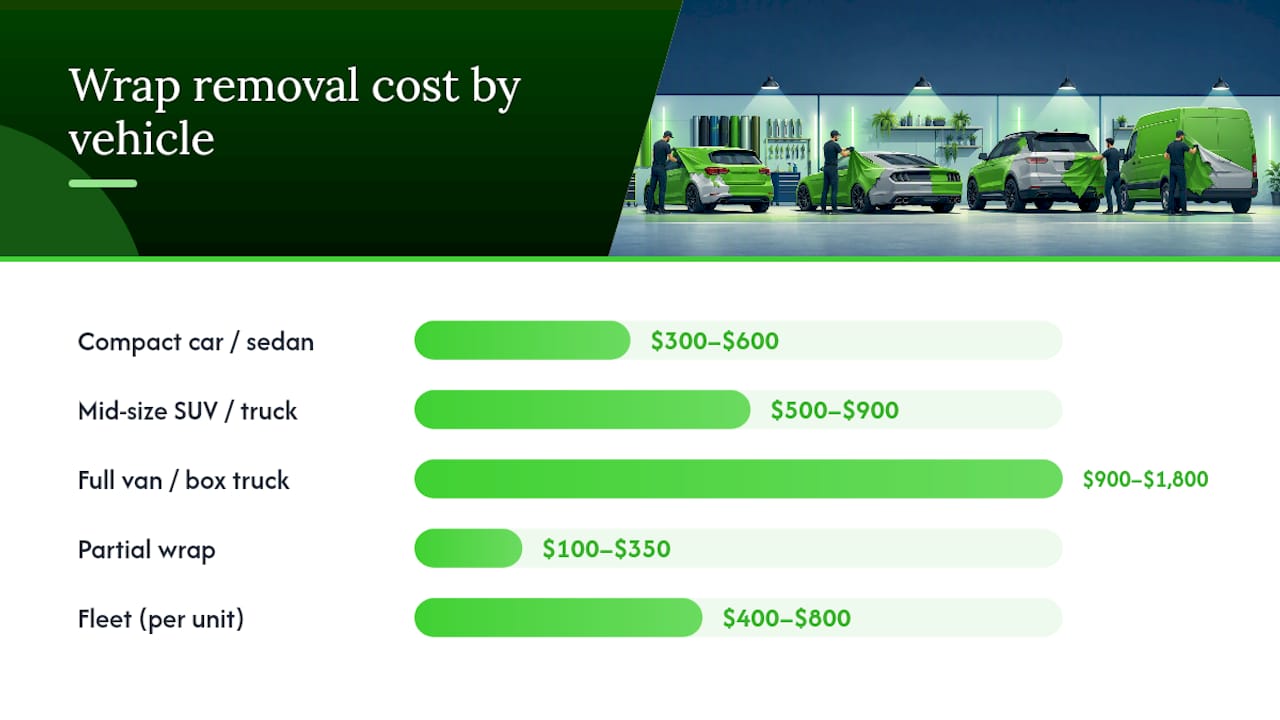
Size and complexity drive most of the price gap between a compact car and a box truck. A small sedan with a straightforward color-change wrap sits at the low end. A cargo van covered in printed graphics, with multiple panels and tight edges around mirrors and handles, sits at the high end almost every time.
Here's what typical jobs run:
- Compact car or sedan: $300–$600, usually 4–6 hours of labor
- Mid-size SUV or truck: $500–$900, usually 5–8 hours of labor
- Full van or box truck: $900–$1,800, often 8–15 hours depending on graphics
- Partial wrap or single panel: $100–$350, typically 1–3 hours
- Fleet vehicles (per unit, bulk booking): $400–$800 per vehicle, with volume discounts common
Most removal jobs take about 4 to 8 hours for a standard passenger vehicle, and shops commonly bill between $75 and $150 an hour depending on the market. Run the math yourself: a 6-hour sedan job at $100 an hour lands at $600, right in the middle of the typical range. A 10-hour van job at $125 an hour comes out to $1,250, which tracks with the higher-end estimates reported for larger vehicles and older films.
Statistic Callout: Professional removal for passenger vehicles commonly falls between $300 and $1,200, with regional labor rates and vehicle size explaining most of the spread. If a quote comes in well outside that band without a clear reason (printed graphics, extreme age, fleet discount), ask why.
If you're weighing a fresh wrap against removal costs down the road, our Los Angeles wrap cost guide breaks down what installation runs, which helps frame the full lifecycle cost.
What Affects the Price of Wrap Removal?
Four variables move the number more than anything else, and none of them show up until a tech actually looks at the vehicle in person.
- Age and UV exposure. Vinyl rated for 5 to 7 years becomes brittle once it passes that window, and sun-baked film flakes apart during removal instead of peeling in clean sheets. That single factor can push labor hours up by 50 percent or more.
- Film type. Cast vinyl (the higher-quality option used on most premium wraps) tends to release cleaner than calendared vinyl, which is thinner, cheaper, and prone to tearing during removal.
- Adhesive grade. Aggressive, permanent adhesives take longer to soften and often leave more residue than removable adhesive systems designed for shorter-term wraps.
- Vehicle complexity. Cars with deep body lines, multiple mirrors, door handles recessed into panels, or printed graphics and window perforations all add labor time.
- Hidden damage. Techs sometimes find prior paint chips or rust spots the wrap was covering, which turns into a separate conversation about repair, not removal.
Printed and specialty films complicate things further. Block-out vinyl and window perf material need different solvents and more careful handling than a plain color-change wrap, and that shows up as extra line items on the invoice. A 3-year-old solid color wrap and a 6-year-old printed fleet wrap on the same body style can land $500 or more apart in final cost.
DIY vs. Professional Removal: Weighing the Real Cost
DIY looks cheap on paper. Heat guns, plastic scrapers, and adhesive remover run $50 to $150 in supplies, and a weekend of work seems like a fair trade for a few hundred dollars saved. The math falls apart the moment something goes wrong.
The most common DIY failure isn't a stubborn corner. It's heat damage. Too much heat from a handheld gun softens clear coat along with the adhesive, and once that happens, you're not looking at a removal job anymore. You're looking at a paint correction or repaint, which can cost several times more than professional removal would have.
Professional removal earns its price through the right tools for the job:
- Steam systems that loosen adhesive without overheating clear coat
- Plastic (not metal) scrapers that won't scratch factory paint
- Citrus-based solvents formulated to dissolve residue without attacking the finish underneath
- A warranty on the work, so if something does turn up wrong, it's covered instead of billed separately
Hire a professional when the wrap is past 5 years old, when it includes printed or specialty film, or when the vehicle has paint you genuinely care about protecting. A shop that includes adhesive remediation and a light polish in the base price is doing you a favor most owners don't ask about until it's too late.
How Do Shops Charge for Wrap Removal?
Hourly billing is standard for removal because no two wraps come off at the same speed, even on identical vehicle models. A flat fee works fine for installation, where the job is predictable. Removal isn't predictable until the tech has the wrap half off and can see what's underneath.
Expect hourly rates in the $75 to $150 range, with your final bill equal to hours worked times that rate, plus materials. A shop quoting 6 hours at $110 an hour comes to $660 before add-ons. Common extras include:
- Heavy adhesive removal on older wraps
- Paint correction if UV damage or scratches surface once the vinyl is gone
- Trim or badge removal and reinstallation
- Rush or weekend scheduling fees
Pro Tip: Ask for a labor cap in writing before work starts. A cap of, say, 10 hours protects you from an open-ended bill if the wrap turns out to be worse underneath than it looked from the outside.
Bundling helps too. If you're planning a retint or new ceramic coating after the wrap comes off, ask whether combining services trims the total.
What Happens During a Wrap Removal Appointment?
A standard passenger vehicle takes 4 to 8 hours in the shop. Vans, trucks, and heavily graphic-wrapped vehicles run longer, sometimes spanning two days if the adhesive proves stubborn or the crew finds paint issues mid-job.
The workflow usually goes:
- Inspection. The tech checks wrap age, film type, and edge condition to estimate hours before quoting a final price.
- Strip. Heat or steam loosens the vinyl, which comes off in sections rather than one piece.
- Adhesive removal. Solvent breaks down leftover residue without damaging clear coat.
- Surface clean and polish. A final wipe down and light polish reveal the paint condition underneath.
Before you drop the vehicle off, pull personal items out, mention any paint problems you already know about, and plan for the vehicle to be out of commission for a full day at minimum.
How to Save Money and Avoid Surprise Charges
Timing matters more than almost anything else you control. Removing a wrap before it hits the 5-year mark keeps the vinyl flexible and the job fast, which keeps the bill low. Wait past that window, especially in a hot climate, and you're paying for hours the sun already cost you.
- Get an itemized quote and a labor cap before the tech touches the vehicle
- Ask about bundling removal with a retint, new wrap, or ceramic coating to shave the total
- Send photos of the current wrap and disclose how the car was stored (garage vs. outdoor parking) for a more accurate estimate
- Choose premium cast vinyl on your next wrap. It costs more upfront but releases cleaner at removal time
- If attempting a partial DIY removal, stick to low-risk areas like a single trim panel or roof section rather than the whole vehicle
Pro Tip: If you're only removing a roof wrap or single panel, cost and risk drop significantly. Check our roof wrap cost breakdown for size-specific numbers before you commit to a full-vehicle job.
A labor-cap agreement in particular keeps a project within predictable budget limits while still giving the shop room to flag unexpected adhesive issues instead of eating the cost silently.
Where Does the Old Vinyl Go? Disposal and Environmental Rules
Old wrap material doesn't just disappear once it's peeled off. Vinyl film and its adhesive backing are petroleum-based products, and most municipal recycling programs don't accept them curbside, which means responsible shops route the waste through commercial disposal services rather than a regular dumpster.
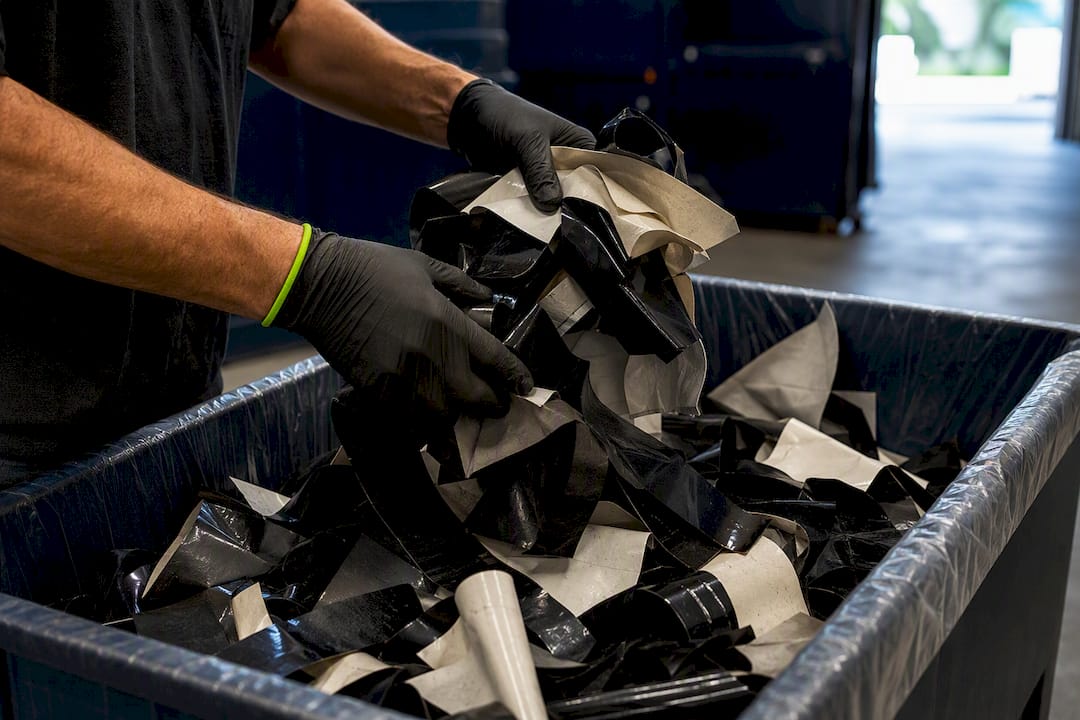
Some cities and counties classify large volumes of vinyl waste, especially adhesive-laden scraps, as material that needs proper handling rather than standard trash pickup. That's less of a concern for a single sedan's wrap and more relevant for fleet operators removing wraps from a dozen vehicles at once, where disposal volume adds up fast.
A handful of shops pass along a small disposal or shop supply fee, usually in the $10 to $30 range, to cover proper waste handling rather than folding it invisibly into labor. If you see this on a quote, it's a legitimate line item, not padding. If you don't see it, it's worth asking whether disposal is included or billed separately, since surprise environmental fees are one of the more common complaints owners raise after the fact.
Fleet owners planning a multi-vehicle removal should ask specifically about bulk disposal handling. Our fleet wrap cost guide covers per-unit budgeting that factors this in.
What Shop-Proven Practices Actually Protect Your Paint
A wrap removal quote tells you less than a shop's track record does. Climate control matters more than most owners realize. Vinyl and adhesive respond to temperature, and a bay held at a consistent temperature behaves more predictably under heat or steam than a garage swinging between hot afternoons and cold mornings. That consistency is part of why Some shops perform removals in a climate-controlled facility rather than an open bay.
Ask any shop you're considering three questions: what warranty covers the work if paint issues surface after removal, whether the estimate is itemized or a single lump number, and how they handle Tesla and EV panels specifically, since aluminum and different clear coat formulations respond differently to heat than steel panels do. A shop with manufacturer-backed warranties and documented experience across more vehicles has already answered those questions before you ask.
Third-party accountability signals matter too. A verified BBB business profile is one example of the kind of outside validation worth checking before you hand over your car.
— Jake
Get an Itemized Wrap Removal Quote in Van Nuys
Some shops take the guesswork out of wrap removal pricing by quoting the job after a hands-on inspection, not a phone estimate that changes once the vinyl comes off. Some removals happen in a climate-controlled bay, which keeps adhesive behavior predictable and protects paint during the heat and steam stages described above, and some jobs carry a manufacturer-backed warranty.
Some quotes break down labor hours, adhesive treatment, and any recommended paint correction or polish separately, so you know what you're paying for before work starts. Attention to panel materials and clear coat formulations that differ from traditional steel bodies can factor into how crews approach heat and steam. Shops with extensive experience and positive reputations have seen most of what can go wrong during removal, and build their processes to avoid it. Request a detailed wrap removal quote and get your vehicle scheduled for an inspection.
Sources
- Engineerskill
- Car Wrap Removal Cost & How To Avoid Paint Damage - Fleet Wrap HQ
- Car wrap removal cost guide for U.S. buyers - Cost Insider
- How Much Does Wrap Removal Cost in the USA? (Full Guide) - VinylWrapRo
FAQ
How hard is it to remove a wrap?
Difficulty depends almost entirely on age and film type. A wrap under 3 years old with cast vinyl typically comes off in clean sheets within a few hours, while a wrap past 5 to 7 years old often turns brittle and flakes, adding significant labor time.
Does removing a wrap damage the paint?
Not when done correctly with steam, plastic scrapers, and solvent formulated for adhesive removal, but improper heat from a DIY heat gun can soften clear coat and cause visible damage. Professional shops that include adhesive remediation and a light polish in the price substantially reduce this risk.
Does a car lose value if you wrap it?
A well-maintained wrap that's been properly removed by a professional generally doesn't hurt resale value, since it protected the factory paint underneath. Value loss typically comes from paint damage during a rushed or DIY removal, not from having worn a wrap in the first place.
Can a wrapped car go through a car wash?
Most vinyl wraps handle touchless or hand washes fine, but automatic brush washes can lift edges and accelerate wear, especially as the wrap ages. Avoiding brush washes is one of the simplest ways to keep a wrap in easy-to-remove condition when the time eventually comes.
How much does wrap removal typically cost for a standard car?
Most passenger vehicles run $300 to $1,200 for professional removal, with the final number depending on wrap age, film type, and vehicle complexity. Getting an itemized quote before work starts is the best way to confirm where your specific vehicle falls in that range.