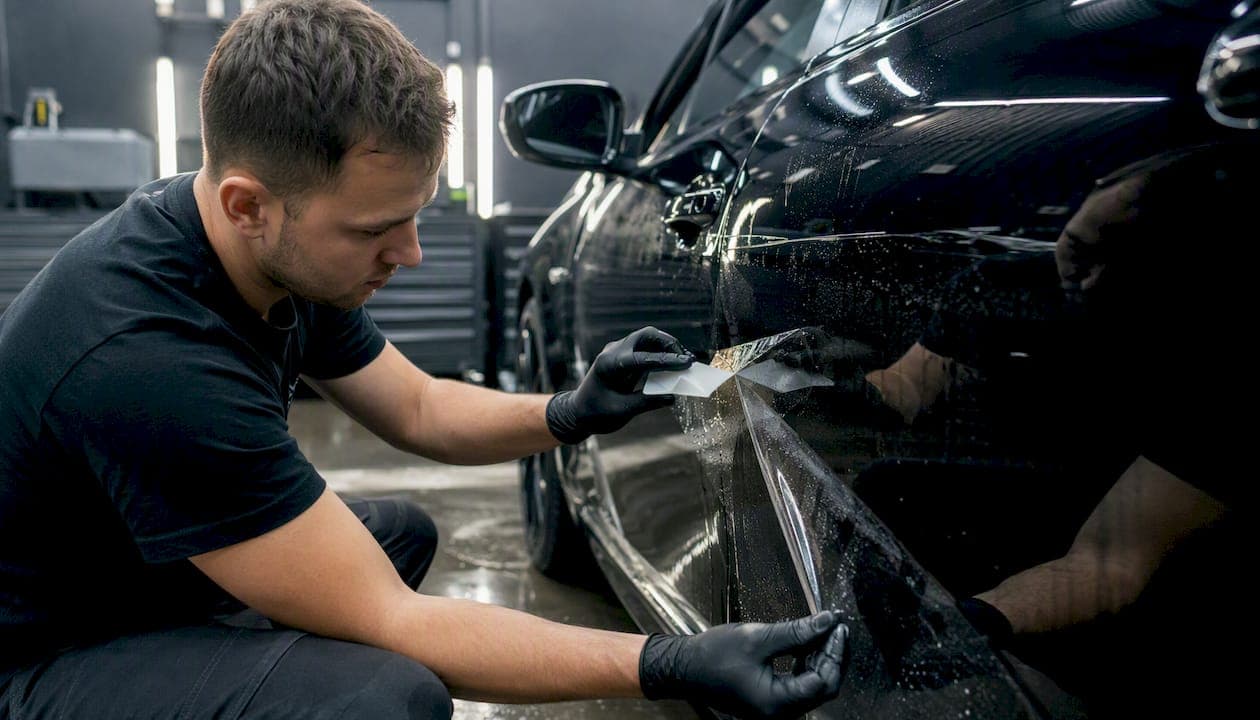
Professional PPF removal for a typical mid-size sedan generally costs between $500 and $1,500, with compact cars typically less expensive and full-size SUVs or trucks more costly, especially when the film is aged or has heavy adhesive. The quick recommendation: hire a professional unless the film is less than two years old, you know the brand, and you have hands-on experience with heat guns and solvents. Shops like Tintandwrapscustoms in Van Nuys, CA, and manufacturers like XPEL set the standard for what a clean, documented removal looks like. According to industry cost data, labor alone accounts for 60–80% of the total bill, which means the shop's hourly rate and the film's condition matter far more than any materials cost.
For budgeting purposes, professionals typically charge a moderate rate per panel for common removal areas like the hood, bumper, and fenders, with full-vehicle jobs varying widely based on vehicle size, film age, and adhesive condition.
Table of Contents
- What drives PPF removal cost?
- DIY removal: is the savings worth the risk?
- What paint damage can actually cost you
- How to get a reliable quote and spot red flags
- Why shop quality matters more than you might expect
- Key Takeaways
- The real trade-off most people miss
- Get an itemized removal quote from Tintandwrapscustoms
- Useful sources
What drives PPF removal cost?
Labor is the single biggest line item, and it is not close. A shop's hourly rate, multiplied by the time the film demands, sets the floor for every quote you receive.
Here are the core cost layers:
- Labor: Shop rates typically run $60–$150 per hour across U.S. markets, with coastal metro areas at the high end. A compact sedan in good condition takes 4–6 hours; a large truck with degraded film can exceed 12 hours.
- Adhesive-residue treatment: Technicians classify residue as light, moderate, or heavy. Light residue is usually included in base labor. Moderate and heavy residues increase treatment time and cost, sometimes significantly, due to additional solvent cycles.
- Paint correction: When the film bonds to the clear coat or leaves staining, paint correction may be needed, ranging from a light machine polish to more intensive two-stage correction or even panel repainting.
- Film brand and age: Premium films from XPEL, STEK, and 3M tend to release in larger sheets with less residue than unknown budget films. The adhesive formulations in premium brands are engineered for cleaner removal, which directly reduces labor time. Budget or off-brand film behaves unpredictably, especially after five or more years.
- Vehicle size and panel complexity: More surface area means more hours. Panels with tight curves, vents, hood scoops, or integrated sensors (common on Tesla and other EVs) add time because technicians must work slowly around edges to avoid lifting clear coat.
- Region: A shop in Los Angeles or New York charging $130/hr will produce a quote that looks very different from a shop in the Midwest at $70/hr, even for identical work.
Pro Tip: Ask every shop for an itemized quote that separates labor hours, adhesive-treatment contingencies, and any expected paint correction. A shop that refuses to break out those line items is one that will surprise you at pickup.
DIY removal: is the savings worth the risk?
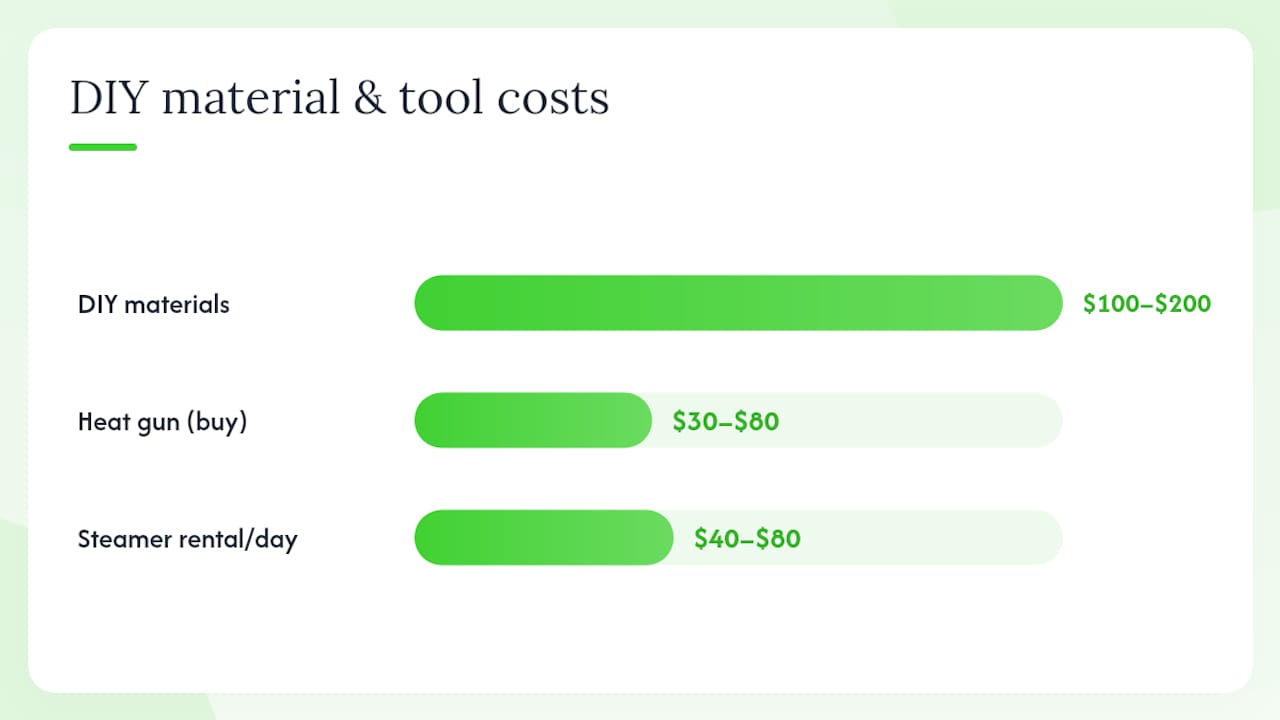
DIY removal is possible with materials costing on the order of a couple hundred dollars. However, this may require significant time and effort compared to professional removal.
The problem is time and hidden cost. A first-time DIY job on a full vehicle typically takes 8–20 hours, and that estimate assumes the film cooperates. If it does not, you are looking at a weekend project that ends with adhesive staining or worse.
DIY tool and material checklist:
- Heat gun (purchase $30–$80) or steamer rental ($40–$80/day)
- Plastic trim tools and soft scrapers (not metal)
- Adhesive remover or isopropyl alcohol (70%+ concentration)
- Microfiber towels and detailing clay
- Single-stage machine polish and applicator pad
Comparing the two approaches honestly:
| Factor | DIY | Professional |
|---|---|---|
| Materials cost | $100–$200 | Included in labor rate |
| Time | 8–20 hours | 4–6 hours to over 12 hours |
| Paint damage risk | Medium–High | Low–Medium |
| Adhesive treatment | Manual, inconsistent | Tiered, systematic |
| Warranty / liability | None | Shop-dependent |
The math shifts fast when paint correction enters the picture. A single repainted panel can be costly, as can bumper resprays and paint correction polishes, making paint damage repair potentially more expensive than professional removal. One mistake on a hood can cost more than the entire professional removal would have.
Pro Tip: Never attempt DIY removal on film older than 7 years, film from an unknown brand, or any vehicle you plan to sell or trade within 12 months. The financial exposure from a botched job far exceeds the cost of hiring a pro.
When DIY makes sense: the film is less than two years old, you know the brand (XPEL, STEK, or 3M), the adhesive is light, and you have prior experience with heat-based detailing work. That is a narrow window.
What paint damage can actually cost you
Clear-coat lift is the most serious risk in PPF removal, and it happens when adhesive bonds more strongly to the paint than to the film backing. This is most common on film older than 7 years, film applied over repainted panels, or budget film with aggressive adhesive chemistry.
The shatter zone is a real phenomenon: film past roughly 7 years often crumbles rather than peeling, forcing technicians to work in tiny fragments. Each fragment is a separate adhesive-release event, and the cumulative stress on the clear coat adds up.
| Film age / condition | Adhesive difficulty | Paint damage probability |
|---|---|---|
| Under 3 years, premium brand | Light | Low |
| 3–6 years, premium brand | Moderate | Low–Medium |
| 3–6 years, unknown brand | Moderate–Heavy | Medium |
| 7+ years, any brand | Heavy to shatter-zone | High |
| Applied over repaint | Unpredictable | Medium–High |
Repair cost examples when damage occurs:
- Single-stage machine polish: $150–$350 (covers minor marring)
- Full panel respray: $800–$2,500 per panel
- Plastic bumper respray: $500–$1,500
A single hood respray can cost more than a full professional removal job. That is the core financial argument for hiring an experienced shop. Shops with climate-controlled bays and experienced technicians use controlled heat, proper solvent sequences, and eraser wheels at calibrated settings to keep damage probability low. The difference between a careful technician and a careless one shows up directly in your paint.
Practical steps shops take to reduce risk: working in a temperature-stable environment (heat and cold both affect adhesive behavior), using plastic tools exclusively during peeling, applying solvent in stages rather than flooding the panel, and inspecting under LED lighting between each step.
How to get a reliable quote and spot red flags
Getting comparable quotes requires asking the same questions at every shop. Here is the checklist:
Questions to ask:
- Do you quote by labor hour or flat rate? What is your hourly rate?
- How do you handle adhesive residue, and what are the contingency tiers?
- Will you document which panels are included in writing before you start?
- Do you expect paint correction to be needed, and how do you price that?
- What is your turnaround time, and do you have a climate-controlled bay?
- Do you carry liability coverage if paint is damaged during removal?
Proof to request:
- Before-and-after photos from comparable removal jobs
- A written scope document listing every panel included
- Manufacturer warranty references (XPEL, STEK, or 3M documentation if applicable)
- Shop experience: years in business and approximate number of PPF jobs completed
Red flags:
- A shop that gives you a single flat number with no breakdown
- No written adhesive contingency ("we'll see how it goes" is not an answer)
- No before-and-after portfolio for removal jobs specifically
- No climate-controlled facility for a job that involves heat and solvents
- Unwillingness to put scope in writing before starting
Shops that publish itemized labor hours and adhesive contingencies produce fewer surprise bills. That transparency is also a signal of experience. A shop that has done hundreds of removals knows exactly how to tier the work and communicate it.
Why shop quality matters more than you might expect
The facility a shop works in directly affects removal outcomes. Heat and humidity affect adhesive behavior during removal. A climate-controlled bay keeps conditions stable, which means the technician can apply consistent heat and solvent without fighting ambient temperature swings. That consistency reduces the risk of clear-coat lift and adhesive staining.
Tintandwrapscustoms operates a climate-controlled installation facility in Van Nuys, CA, with manufacturer-backed warranties and more than 1,000 vehicles protected. Their experience with Tesla and EV installations is relevant here because EVs often have tighter panel tolerances and more integrated sensors, which demand slower, more careful removal work. A shop that handles EVs regularly has already solved the edge-case problems that trip up less experienced technicians.
What to look for in a qualified shop:
- Climate-controlled bay (temperature and humidity managed)
- Manufacturer-backed warranties on installation and removal work
- Documented experience with the specific film brand on your vehicle
- Before-and-after portfolio that includes removal jobs, not just installs
- Verifiable review history and star ratings from real customers
A shop's climate-controlled facility is not a marketing detail. It is the physical condition that determines whether your adhesive releases cleanly or bonds harder under heat stress. Ask to see the bay before you commit.
Key Takeaways
Professional PPF removal typically costs $500–$1,500 for most sedans, with labor as the largest cost component. Bundling removal with fresh installation often leads to a significant discount on the removal portion.
| Point | Details |
|---|---|
| Typical cost range | Most sedans run $500–$1,500; SUVs and trucks with aged film can reach $2,500–$3,000+. |
| Labor dominates the bill | Labor accounts for 60–80% of total cost; shop hourly rates range from $60–$150 across U.S. markets. |
| Adhesive contingencies matter | Heavy residue increases treatment time and cost, sometimes significantly. |
| DIY is a narrow option | DIY materials cost roughly $100–$200, but a single damaged panel respray runs $800–$2,500. |
| Tintandwrapscustoms | Offers climate-controlled removal in Van Nuys, CA, with manufacturer-backed warranties and 1,000+ vehicles protected. |
The real trade-off most people miss
Most vehicle owners frame PPF removal as a cost problem. The actual problem is a risk problem that has a cost consequence.
The shops that charge more per hour are usually the ones who have seen what happens when removal goes wrong. They have dealt with shattered film, adhesive that bonds to bare metal under a repainted panel, and clear coat that lifts on a car the owner was about to sell. That experience is priced into their rate, and it is worth paying for.
The DIY argument falls apart the moment you factor in what a single panel respray costs. The math is not close. And the film-age variable is the one most people underestimate. Film that looks intact from a distance can be in the shatter zone structurally, and you will not know until you apply heat and it crumbles. At that point, you are committed to a job that is going to take three times as long as you planned and leave you with a paint surface that needs professional correction anyway.
The one case where DIY genuinely makes sense: recent premium film (XPEL, STEK, or 3M), under three years old, on a vehicle you are not selling, with prior detailing experience. Outside that window, the professional removal cost is the cheaper option when you account for everything that can go wrong.
Get an itemized removal quote from Tintandwrapscustoms
Tintandwrapscustoms handles PPF removal the way it should be done: documented before the job starts, tiered adhesive contingencies in writing, and a climate-controlled bay that keeps conditions stable throughout. For Tesla and EV owners, the shop's experience with tight panel tolerances and integrated sensors means the removal process is calibrated for your vehicle, not adapted from a generic procedure.
Bundled removal and fresh PPF installation is available, and that combination typically reduces the removal portion of your bill significantly compared to scheduling them separately. To get an accurate quote, have your vehicle's year, make, and model ready, along with whatever you know about the current film (brand, approximate age, and condition). The more detail you provide, the more precise the estimate.
Book your removal quote at Tintandwrapscustoms in Van Nuys, CA, and get a written scope document before any work begins.
Useful sources
- PPF Removal Cost: What You'll Actually Pay in 2026 (By Vehicle & Scenario)
- Paint Protection Film Removal Cost 2026 – Adnan Painting and Remodeling - Digital Database
- Can PPF Be Removed? (guide and sample pricing)
- Can PPF Be Removed Safely? Removal Costs & Process
- PPF Cost in 2026: What Every Vehicle Owner Should Know
- STEK vs XPEL PPF: Which Film Is Right for You?
- Van Nuys Window Tinting & Vehicle Protection | Tint & Wraps Customs