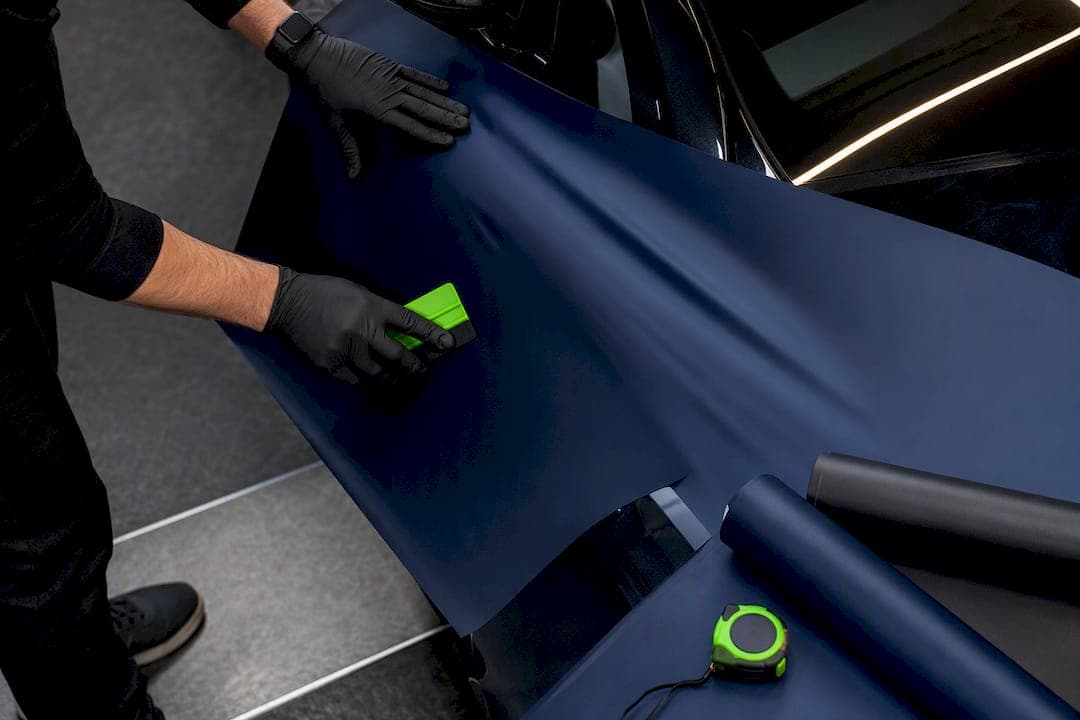
A full color-change wrap typically runs $2,500 to $7,000, while a partial wrap covering a hood, roof, or mirrors costs $300 to $2,000. Quality cast vinyl lasts 5 to 7 years with proper care. The spread comes down to vehicle size, film grade, and where you're getting it installed. Below, you'll find the exact ranges by vehicle type, the factors that push a quote up or down, and a checklist to make sure your estimate isn't hiding fees.
TL;DR:
- Vehicle size, panel complexity, and regional labor rates primarily determine the cost of a wrap, with larger and more intricate vehicles costing significantly more.
- Materials such as cast vinyl cost more upfront but last longer, while specialty finishes like chrome or color-shift films can double or triple the base price.
- Fleet and commercial wraps offer volume discounts, reducing the per-vehicle cost when multiple vehicles are wrapped simultaneously.
- Additional fees for old wrap removal, paint correction, custom design, or rush jobs can add hundreds to several thousand dollars to the initial quote.
- Choosing an experienced, climate-controlled shop with a proven track record reduces the risk of defects and ensures a predictable, long-lasting result.
Table of Contents
- How Much Does a Car Wrap Cost by Coverage Type?
- What Actually Drives the Price of Your Quote?
- What Does a Wrap Cost for My Specific Vehicle?
- Which Material and Finish Should You Budget For?
- Full Wrap or Partial Wrap: What Should You Choose?
- What Extra Fees Should You Expect on Top of the Base Quote?
- Is DIY Wrapping Actually Cheaper Than Hiring a Pro?
- What Should You Ask Before Booking a Wrap Installer?
- Why the Shop You Choose Changes What You're Actually Paying For
- Author Perspective: Balancing Budget, Longevity, and Resale
- Ready to Get a Real Quote for Your Vehicle?
- Sources
- FAQ
How Much Does a Car Wrap Cost by Coverage Type?
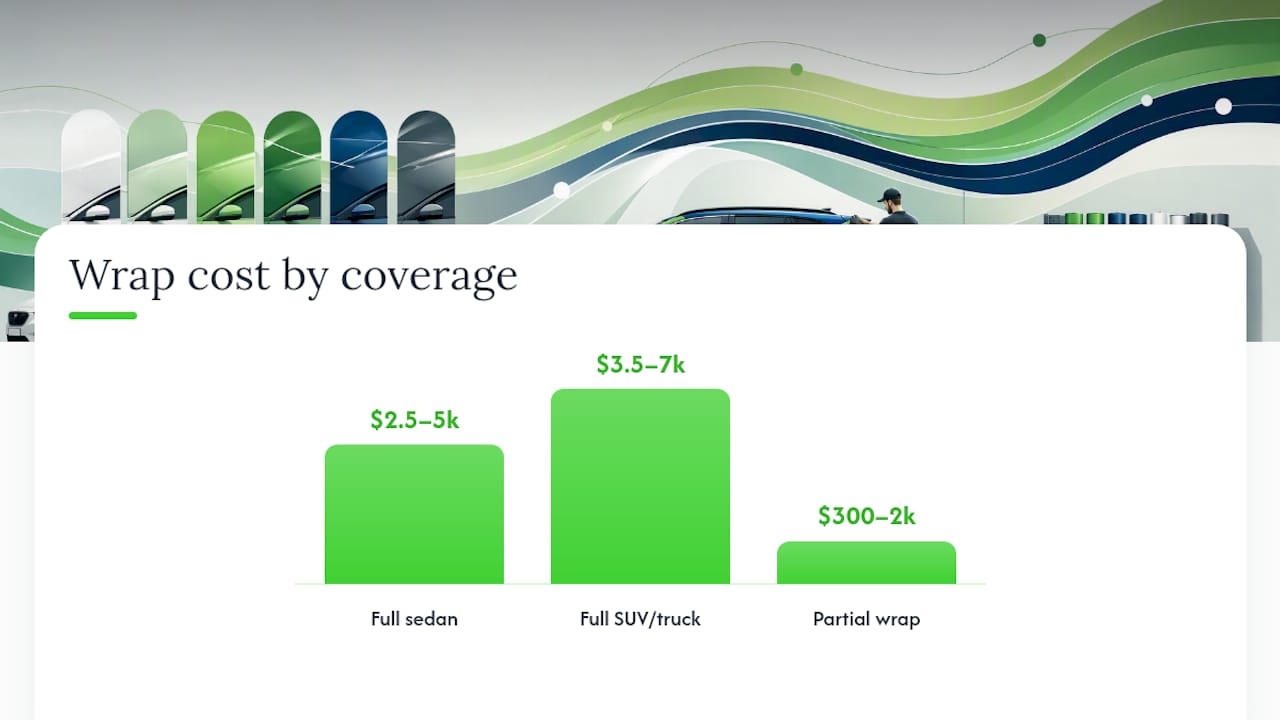
Full wraps and partial wraps sit at opposite ends of the budget spectrum, and the gap between them is bigger than most first-time buyers expect. A full color-change on a standard sedan typically lands between $2,500 and $5,000, while SUVs and trucks push that range up to $3,500 to $7,000 because of the extra surface area and body panel curves.
Shops publish these as national averages, but real quotes vary by region and by how much design work the job needs. Here's how the tiers generally break down:
- Full sedan wrap: $2,500 to $5,000
- Full SUV or truck wrap: $3,500 to $7,000
- Partial wrap (hood, roof, or mirrors): $300 to $2,000, with common packages landing around $450 to $1,200
- Commercial or fleet wraps: Priced per vehicle, often with volume discounts once you commit to five or more units
Fleet pricing works differently because installers quote based on batch efficiency, not one-off labor. A shop wrapping ten identical vans will often shave 10 to 20% off the per-vehicle rate compared to a single walk-in job. If you're managing a company vehicle rollout, it's worth reading up on fleet wrap pricing and ROI before requesting quotes, since the math changes once volume enters the picture.
None of these numbers account for design complexity or specialty film, which is where the next section comes in.
What Actually Drives the Price of Your Quote?
Every wrap quote comes down to four inputs: surface area, material, labor, and waste. Installers calculate square footage of your vehicle, multiply it by the cost of the chosen film, then add installation hours at their regional labor rate. A pricing model like this is why two shops can look at the same car and land $1,500 apart.
Here's the order these factors usually move a quote, from biggest to smallest impact:
- Vehicle size and panel complexity. A boxy van wraps faster than a car with wraparound mirrors, wheel wells, and door handles.
- Film type and waste factor. Economy calendared vinyl runs cheaper than cast film, but installers still budget 10 to 15% extra material for trimming and mistakes.
- Regional labor rate. Installers in dense metro markets typically charge more per hour than shops in smaller towns, and that gap can widen quotes noticeably in high-cost areas.
- Prep and paint correction. Swirl marks, old adhesive residue, or a previous wrap that needs stripping all add hours before the new film ever touches the car.
- Design and artwork fees. Custom graphics, fleet branding, or color-shift patterns require design time billed separately from installation.
Pro Tip: Ask your installer for a written breakdown of material cost versus labor hours. If a shop doesn't separate the two, you have no way to tell whether you're overpaying for film or for time.
What Does a Wrap Cost for My Specific Vehicle?
Sedans are the cheapest and fastest wraps to price out, but the moment you add curves, height, or aftermarket parts, the labor clock runs longer. Here's what typical jobs look like across common vehicle classes:
- Sedans and coupes: $2,500 to $5,000 for a full wrap; simple body lines keep install time predictable.
- SUVs and crossovers: $3,500 to $6,500, with roof racks and larger mirrors adding trim time.
- Trucks: $3,500 to $7,000, especially with bed rails, toolboxes, or lifted suspensions that complicate panel access.
- Vans and cargo vehicles: Often priced like fleet work even for single units, typically $3,000 to $7,000 depending on box size.
- Exotics and low-volume vehicles: Can exceed $7,000 due to compound curves, carbon fiber trim, and the extra care high-end paint demands.
Aftermarket spoilers, wide-body kits, and lowered suspensions all add time because installers have to work around parts that weren't designed with wrap film in mind. Tesla owners see this often, since panel gaps and camera housings on Model 3 and Model Y require careful trimming. Some shops quote Tesla jobs as a packaged price rather than itemizing by panel, which is worth asking about if you're budgeting for an EV-specific paint protection plan.
Which Material and Finish Should You Budget For?
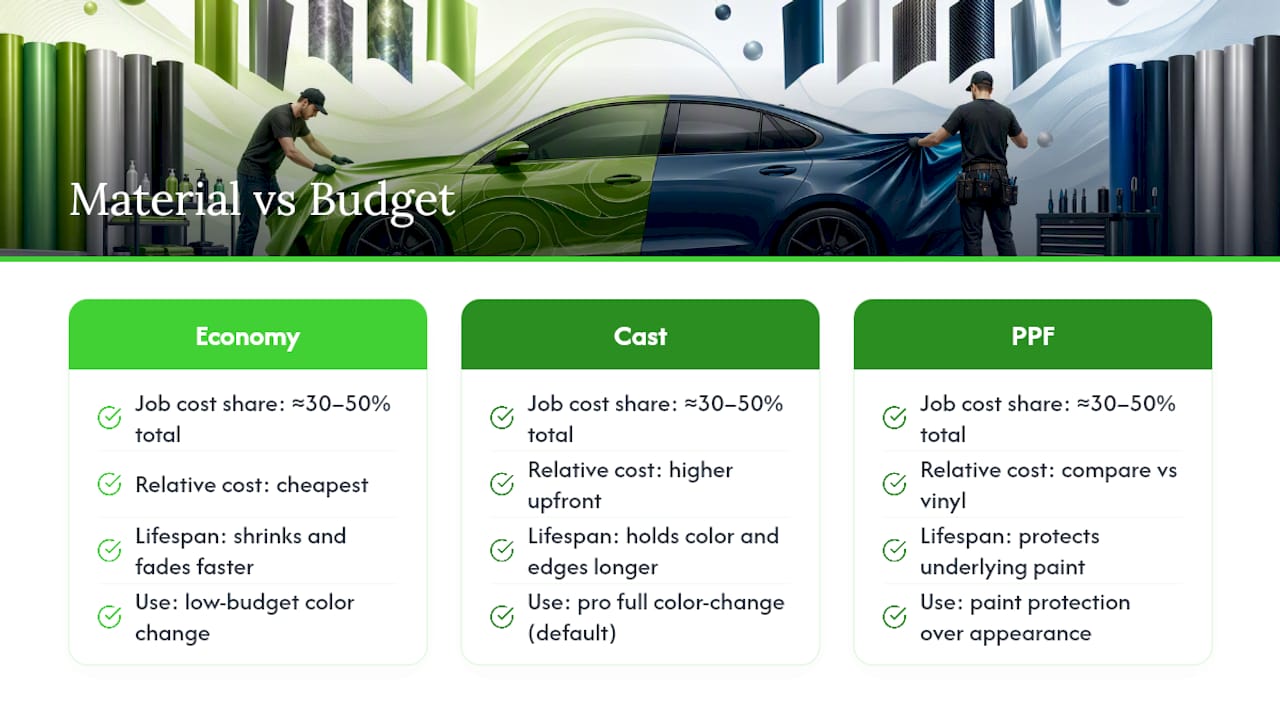
Material choice accounts for roughly 30 to 50% of your total job cost, and it's the lever with the most control over both price and how long the wrap actually lasts. Economy calendared vinyl is the cheapest option but tends to shrink and fade faster. Cast vinyl costs more upfront and holds color and edge adhesion far longer, which is why most professional installers default to it for full color-change work.
Finish complexity adds its own premium on top of material grade. Chrome and color-shift films can add 40 to 100% to base material and labor costs because they demand more experienced installers and carry higher risk of visible seams if the job isn't done right.
If your priority is protecting the paint underneath rather than changing its look, PPF is worth comparing against vinyl before you commit. Our breakdown of PPF versus vinyl wrap covers which one actually fits your goal.
Full Wrap or Partial Wrap: What Should You Choose?
A full wrap covers every exterior panel and changes the entire vehicle's color or finish. A partial wrap covers select panels, like a roof, hood, or mirror caps, while leaving the factory paint visible elsewhere. Accent wraps and decals sit even smaller in scope, often just badges, trim pieces, or lettering for a business vehicle.
- Full wrap: Best for a total color change or maximum paint protection.
- Partial wrap (roof, hood, mirrors): Delivers strong visual impact at a fraction of full-wrap cost.
- Accent or trim wraps: Cheapest option, ideal for small style touches.
- Decals and lettering: Common for fleet branding, priced per vehicle or per design.
A hood and roof combo is often the sweet spot for budget-conscious owners, since it changes the car's visual profile without committing to full coverage. If you're leaning toward a roof-only job, roof wrap pricing breaks down how vehicle size and roof shape affect that specific quote.
What Extra Fees Should You Expect on Top of the Base Quote?
Base wrap quotes rarely include everything. Budget for these common add-ons before you sign off on an estimate:
- Old wrap removal: $500 to $1,000, depending on how long the previous film sat on the car.
- Paint correction: $200 to $1,500 depending on scratch and swirl severity.
- Custom design work: Billed separately from installation, especially for fleet graphics.
- Rush fees: Common if you need the job done faster than the shop's normal turnaround.
- Sales tax and door jamb wrapping: Often overlooked in initial quotes but standard on a finished job.
Warranty terms vary by material brand, so ask what's covered before you pay a deposit.
Is DIY Wrapping Actually Cheaper Than Hiring a Pro?
Material alone for a DIY full wrap can run $300 to $800 if you buy vinyl in bulk rolls, which sounds like a massive discount against a $2,500 professional job. The catch is time and skill: a first-time DIYer can easily spend 20 to 30 hours on a job a trained installer finishes in a day, and mistakes on curved panels or door jambs often mean buying replacement film.
- Budget DIY only for flat, low-risk panels like a hood or trunk lid where mistakes are cheap to fix.
- Expect zero installer warranty on DIY work. If the film lifts or bubbles, you're on your own for materials and labor.
- Hire a pro for full wraps, specialty finishes, or anything on a vehicle you plan to resell, since a bad DIY job can actually hurt paint condition underneath.
Pro Tip: If you're on the fence, try a small DIY panel first, like a mirror cap. It teaches you how unforgiving vinyl is before you risk a $600 hood.
What Should You Ask Before Booking a Wrap Installer?
Before you request a quote, photograph your vehicle from all four sides, note any existing scratches or dents, and decide on your target finish (gloss, matte, satin, or color-shift). Bring that information to every shop you contact so the quotes you get back are comparable.
- Ask for a line-item quote separating material, labor, and design fees.
- Confirm whether the price includes door jambs, mirrors, and trim pieces, or just flat panels.
- Ask what warranty applies to both the material and the installation labor.
- Request the exact film brand and line being used, not just a vague "premium vinyl" label.
- Treat a quote far below the national average as a red flag. It usually means economy film, rushed labor, or both.
Why the Shop You Choose Changes What You're Actually Paying For
Two quotes with the same dollar figure can represent very different outcomes if one shop installs in an open bay and the other uses a climate-controlled facility. Dust, temperature swings, and humidity all affect how vinyl adheres, and a flawed install often means bubbling or lifted edges within months, not years.
A shop that has wrapped over 1,000 vehicles and backs its work with manufacturer-supported warranties isn't just selling you film. It's selling you predictability: the same result on your car that it delivered on the last thousand.
Tesla and EV owners in particular benefit from installer experience with panel gaps and sensor housings that differ from combustion vehicles. When you're comparing shops, ask directly whether they've handled your specific make, whether their facility is climate-controlled, and what warranty backs the material they're proposing.
Author Perspective: Balancing Budget, Longevity, and Resale
A reversible wrap almost always beats a repaint when resale value matters. Paint jobs are permanent and rarely recoup their cost at trade-in; a wrap protects the factory finish underneath and can be removed cleanly before you sell. I've seen a straightforward sedan job turn into a two-day project once swirl marks showed up under shop lighting.
— Jake
Ready to Get a Real Quote for Your Vehicle?
Most online calculators give you a range. What you actually need is a shop that inspects your car, tells you what condition your paint is really in, and gives you a line-item number you can trust. Some shops run installs in climate-controlled facilities, which helps reduce dust contamination and humidity swings mid-job; experienced shops have handled many vehicles including Tesla and EV-specific installs that require extra care around panel gaps and sensors.
Every estimate appointment includes a full vehicle inspection and a written, itemized quote so you know exactly what you're paying for before any film gets cut. If your paint needs correction first, that gets flagged during the same visit instead of showing up as a surprise mid-install. Book an estimate through Tint & Wraps Customs and get a number based on your actual car, not a national average.
Sources
- Vehicle Wrap Cost 2026: $2,500 Sedan vs $10K Paint Job
- Wrapsize vehicle pricing calculator details
- Vehicle Wrap Pricing: Real Costs, calculator and Price Factors
FAQ
Is It Cheaper to Paint Your Car or Wrap It?
Wrapping is generally cheaper than a quality paint job. A full wrap runs $2,500 to $5,000 for a sedan, while a comparable professional paint job often exceeds $10,000, especially with color-matching and multi-stage clear coat work.
How Long Does a Car Wrap Last?
Quality cast vinyl typically lasts 5 to 7 years with proper washing and garage or covered parking. Specialty finishes like chrome or color-shift tend to hold up for only 2 to 5 years before fading or edge lifting appears.
How Much Should a Full Wrap Cost?
A full color-change wrap on a standard sedan typically costs $2,500 to $5,000, while SUVs and trucks run $3,500 to $7,000 due to larger surface area and more complex panels.
Is It Expensive to Wrap My Car?
Compared to a repaint, wrapping is the more affordable way to change your car's color, and it's fully reversible. Compared to leaving the factory paint alone, it's a real expense, but one that also protects the paint underneath from UV exposure and minor scratches.