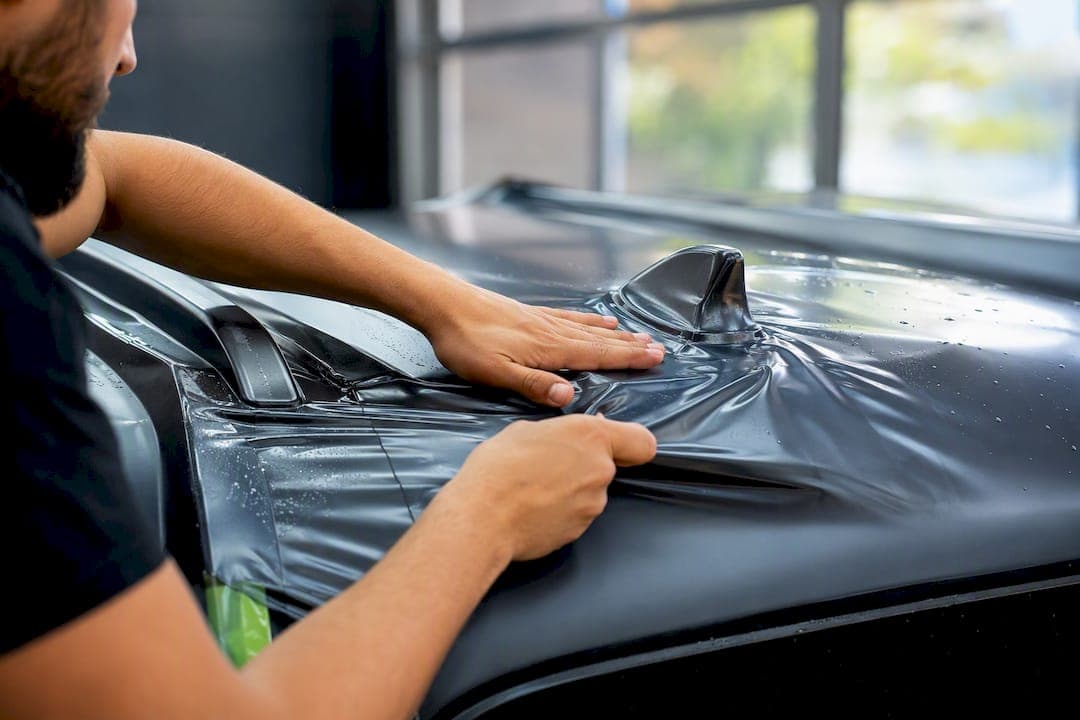
A roof-only vinyl wrap typically runs within a broad range installed, with most sedans and small SUVs falling in the mid price spectrum. Vehicle size and roof contour complexity drive most of that spread, not the brand of vinyl. DIY kits cost far less upfront, but a professional install buys you a warranty and a finish that won't bubble at highway speed.
TL;DR:
- Roof wrap costs vary mainly based on contour complexity, with flat roofs costing between $250 and $900, while intricate designs can reach $1,800 or more.
- Premium finishes like textured carbon fiber or chrome can add 15% to 30% to material costs, especially on complex rooflines or when using high-gloss colors.
- DIY roof wrap kits are less expensive but risk wrinkles, bubbles, and poor adhesion, making professional installation with warranty the safer choice for premium finishes.
- The lifespan of a roof wrap depends on material quality, with cast vinyl lasting 5 to 7 years, and premium films exceeding 10 years with proper maintenance.
- Regional factors like climate, shop density, and facility conditions influence prices, with climate-controlled shops charging a premium but offering more consistent results.
Table of Contents
- How Much Does a Roof Wrap Cost by Vehicle and Material?
- Why Do Roof Wrap Quotes Vary So Much?
- DIY Roof Wrap Kits vs. Professional Installation
- How Long Does Installation Take and How Long Does the Wrap Last?
- What Should You Ask For in a Roof Wrap Quote?
- What a Professional Roof Wrap Job Looks Like Done Right
- Does Roof Wrap Pricing Change by Region?
- Roof Wrap vs. Full Vehicle Wrap: Which Costs More?
- When a Roof Wrap Beats Paint or PPF
- A Wrap Isn't Always the Right Call
- Get a Written Roof Wrap Quote Built Around Your Vehicle
- Sources
How Much Does a Roof Wrap Cost by Vehicle and Material?
Roof wrap cost breaks down cleanly once you separate material from labor. Standard cast vinyl material commonly runs $2.50 to $6.00 per square foot, while labor for a professional install falls between $1.50 and $4.50 per square foot depending on your local shop's rates and the roof's shape. Premium films, including 3D textured carbon and specialty color-shift finishes, often push past $6.00 per square foot on material alone.
Here's how that shakes out by vehicle type, based on average roof surface area and typical shop pricing:
| Vehicle Type | Low | Typical | High |
|---|---|---|---|
| Small car (Civic, Corolla) | $250 | $250 | $900 |
| Sedan (Camry, Model 3) | $300 | $600 | $900 |
| SUV/crossover | $250 | $900 | $1,200 |
| Van/full-size truck | $250 | $900 | $1,800 |
Sedans landing between $250 and $900 installed is the norm for a standard gloss cast vinyl job with no major complications. The high end of every row assumes a premium finish, a complex roofline, or both stacked together.
A few things push any of these numbers higher:
- Gloss black and other high-gloss finishes carry a shop premium because they show every speck of dust and every seam under direct light.
- Textured carbon fiber and chrome finishes typically add 15% to 30% over standard gloss cast vinyl.
- Vehicles with panoramic sunroofs or split rooflines eat more material and labor time regardless of overall size.
If you're weighing whether the same logic applies at whole-vehicle scale, a per-square-foot pricing breakdown for full wraps shows the same material and labor bands scaling up, which is useful context if you're deciding between a roof-only job and a color change down the road.
Why Do Roof Wrap Quotes Vary So Much?
Two roofs that look identical in a parking lot can generate wildly different quotes, and it almost never comes down to the shop trying to overcharge you. It comes down to contour complexity: the shape, seams, and attachments on your specific roof.
A flat panel roof with no rails and no antenna is about as simple as vinyl work gets. Add a shark-fin antenna, roof rails, a moonroof cutout, or deep double curves near the pillars, and labor hours climb fast because the installer has to stretch, heat, and trim around every obstacle without leaving a visible seam. Contour complexity, not raw square footage, is the primary driver of labor cost on most roof jobs.
Prep work is the other quiet cost multiplier. A roof with existing clear coat damage, old wax buildup, or previous adhesive residue needs extra cleaning and sometimes paint correction before vinyl will bond correctly. Skipping that step is how wraps peel within months.
Other factors that shift your quote:
- Trim, antenna, and roof rail removal (often called "de-trim" work) adds separate labor time and carries a small risk of clip breakage during removal.
- Edge sealing around the roof perimeter takes extra material and technician time but prevents lifting.
- Regional labor rates and a shop's reputation for glossy, blemish-free finishes both factor into the final number.
Pro Tip: Ask upfront whether de-trim work is quoted separately. A shop that itemizes antenna and rail removal is usually more transparent than one that buries it in a flat "roof wrap" price.
DIY Roof Wrap Kits vs. Professional Installation
The math looks tempting on paper: a DIY kit costs $50 to $300, while a pro install starts around $250. But that comparison only holds if the DIY job goes perfectly, and roof panels are one of the least forgiving surfaces on a car because of their curves and visibility.
- Kit cost and tools. Budget kits include vinyl and a squeegee; you'll still need a heat gun, cutting blades, and a lot of patience for edge wrapping.
- Common mistakes that add cost. Bubbles, wrinkles, and miscuts are the three most frequent DIY failures, and fixing them usually means buying a second roll of vinyl.
- What professional labor buys you. A trained installer typically finishes a roof in a few labor-hours with a manufacturer-backed warranty attached, something no DIY kit includes.
- The finish-risk trade-off. DIY kits rarely include edge sealing, which is exactly where wind and car washes cause lifting first.
If you want gloss black, chrome, or any finish where imperfections show at a glance, pay for the professional install. Save the DIY route for satin finishes on flat, simple rooflines.
How Long Does Installation Take and How Long Does the Wrap Last?
A roof-only install typically takes 4 to 8 hours for a simple roof and stretches to 1 to 2 days when trim removal, sunroof work, or extensive prep is involved.
Lifespan depends heavily on material grade:
- Economy calendared vinyl: 1 to 3 years before fading or edge lifting.
- Cast vinyl (the industry standard for most roof wraps): 5 to 7 years with normal care.
- Premium films: 7 to 10+ years when maintained properly.
A wrap's lifespan roughly doubles from economy to cast vinyl, and doubles again with premium film and proper upkeep. A ceramic coating or PPF overwrap on top of the vinyl extends gloss retention further and makes washing easier. Manufacturer warranties typically track the material grade, so ask exactly what years and defects the warranty on your quote actually covers. Regular washing habits matter here too, and a maintenance routine built around the wrap's material will get you closer to the top of these ranges than the bottom.
What Should You Ask For in a Roof Wrap Quote?
A vague number over the phone tells you almost nothing. Get every quote in writing and insist on these specifics before you book:
- Material brand and part number, not just a color name.
- Warranty terms in writing, including what's covered and for how long.
- Full prep scope, meaning what cleaning or correction happens before vinyl goes on.
- Line-item pricing for antenna, sunroof, and trim removal.
- Edge sealing as a stated, included step, not an assumption.
- Photos of comparable jobs on the same or similar vehicle.
- A realistic start and completion timeline.
Watch for these red flags before you hand over a deposit:
- Pricing quoted as "up to" a number with no vehicle-specific breakdown.
- No mention of warranty at all when asked directly.
- No photo examples of roof-specific work, only full-wrap portfolio shots.
- Reluctance to itemize de-trim or edge sealing separately.
A shop that answers all seven questions without hedging is one you can trust with a $600 to $900 job.
What a Professional Roof Wrap Job Looks Like Done Right
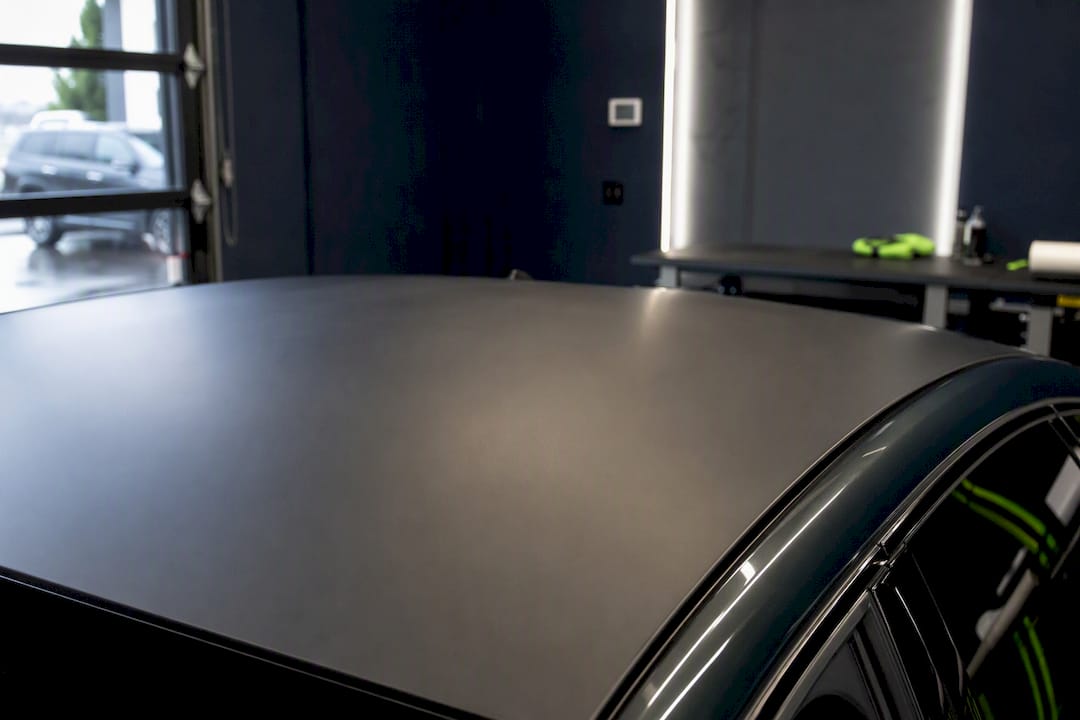
Tintandwrapscustoms runs every roof wrap through a climate-controlled installation bay, which matters most on gloss black and other high-shine finishes where dust or humidity shows up as a flaw under sunlight. That environment is a direct answer to the gloss premium mentioned earlier: it's the reason a controlled bay justifies its price over a garage install.
A typical roof-only quote from the shop includes:
- Full prep and surface correction before any vinyl goes down.
- Trim, antenna, and rail removal handled in-house, itemized rather than buried.
- Edge sealing as a standard step, not an upsell.
- A manufacturer-backed warranty, backed by more than 1,000 vehicles protected to date.
For readers weighing a full color change instead of a roof-only job, the PPF versus vinyl wrap comparison and a real-world car wrap pricing breakdown both go deeper into how those decisions play out on actual vehicles.
Does Roof Wrap Pricing Change by Region?
Yes, and it's not just about cost of living. Labor rates in dense metro markets with higher shop rents naturally run higher than rural areas, but the bigger regional swing usually comes from climate. Shops in hot, sun-heavy regions see more demand for UV-resistant premium films, which shifts the average job toward the higher end of the price range simply because customers are choosing better materials, not because labor got more expensive.
Shop density matters too. A market with several established wrap shops competing for business tends to hold pricing closer to the mid-range, while areas with only one or two options can see prices creep toward the high end regardless of job complexity. Availability of specific film lines also varies by distributor relationships. A shop with direct access to premium cast vinyl brands can often price more competitively than one sourcing through a middleman, even in the same city.
Humidity and temperature at the time of install affect outcomes more than most car owners realize. Vinyl adhesive cures differently in a controlled 70 degree bay than it does in a garage swinging between 50 and 90 degrees across a single day, which is part of why climate-controlled shops can charge a premium and still deliver more consistent results. If you're comparing quotes across two different cities, weigh the shop's facility conditions alongside the dollar figure. A slightly higher quote from a controlled environment often beats a cheaper quote from an open-air setup, especially on gloss finishes.
Roof Wrap vs. Full Vehicle Wrap: Which Costs More?
A roof wrap costs a fraction of a full vehicle wrap because you're covering maybe 15 to 20 square feet instead of the 250 to 300 square feet a full wrap demands. Where a roof-only job lands between $250 and $1,800, a full color change wrap on the same vehicle typically runs several times that, scaling with the same per-square-foot material and labor rates covered in the full vehicle wrap cost breakdown.
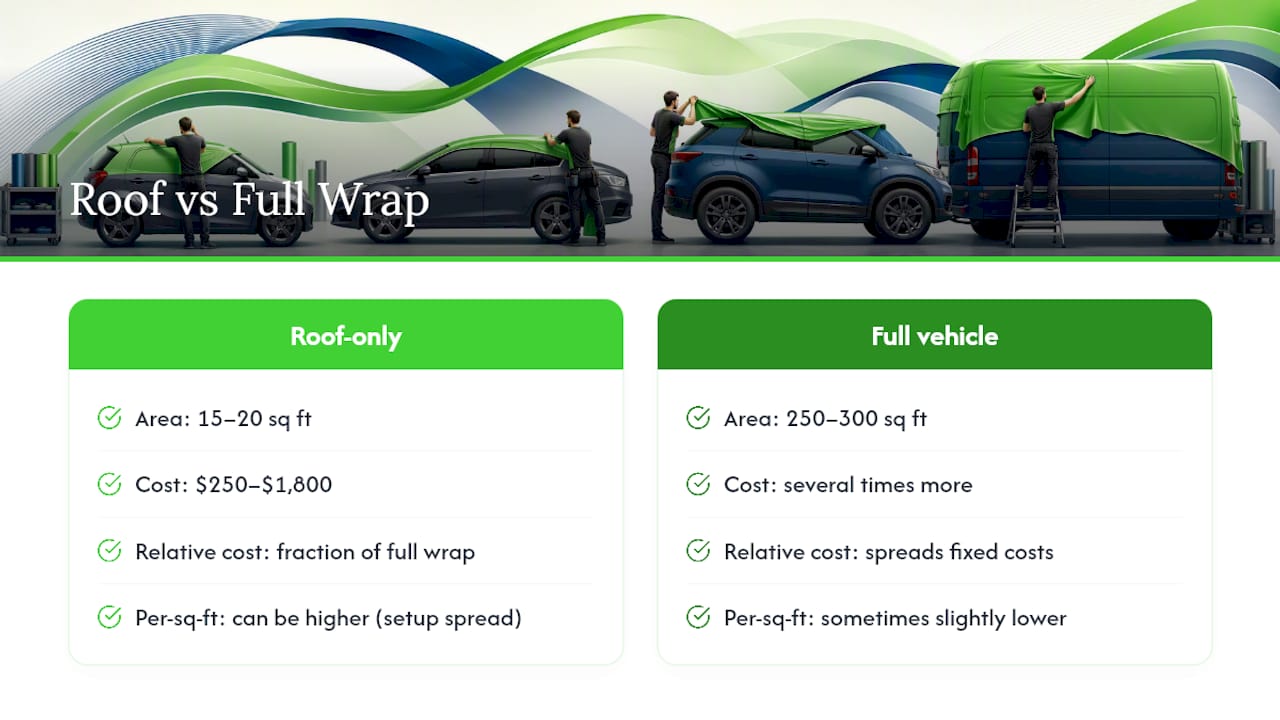
The math isn't purely proportional, though. A full wrap spreads fixed costs like design proofing and vehicle prep across a much larger job, so the effective cost per square foot on a full wrap sometimes runs slightly lower than an isolated roof panel once you factor in setup time. That's part of why some shops offer a roof wrap paired with a chrome delete or accent package at a bundled rate rather than pricing each separately.
Choosing between the two comes down to intent. A roof wrap gives you a contrast accent, hides sun fading, and costs a fraction of a full wrap while still transforming how the car reads from a distance. A full wrap changes the entire vehicle's identity, which makes sense for fleet branding or a total color change but is overkill if all you want is a black roof against a white body. If your budget caps out under $1,000 and you're chasing one visual change, roof-only is almost always the better allocation of that money.
When a Roof Wrap Beats Paint or PPF
Design complexity moves roof wrap price more than most owners expect going in. A single flat color, whether gloss black or satin gray, uses one roll and one cut pattern, keeping the job close to the standard ranges above. Custom graphics change that equation entirely.
Multi-color designs, gradient or color-shift finishes, and any layout requiring precise masking around roof rails or antenna bases all add design time before the vinyl even gets cut. A shop typically charges for digital print and lamination separately from standard cast vinyl material, since custom graphics usually require a printed film rather than a solid color roll off the shelf. That printed film often carries its own per-square-foot premium on top of the standard $2.50 to $6.00 material range.
Installation complexity rises too. A logo or pattern that needs to align precisely with body lines or panel gaps takes an installer longer to position and adjust than a solid color that only needs even stretching. Expect custom graphic roof work to land at the higher end of the price bands, often $800 to $1,200 and up, even on a small car, because you're paying for design proofing, specialty printing, and more careful hands-on installation time. If budget is tight, a solid premium color still delivers most of the visual impact custom graphics chase, at a noticeably lower price point.
A Wrap Isn't Always the Right Call
Roof wraps make sense when you want a reversible aesthetic change or light UV protection without committing to permanent paintwork. They're the wrong tool if your roof has existing paint damage or you need real long-term protection against rock chips and scratches. For that, paint correction or a proper PPF installation does more, and how you actually use the car should settle which one wins.
— Jake
Get a Written Roof Wrap Quote Built Around Your Vehicle
Skip the phone-quote guesswork. Tintandwrapscustoms builds every roof-only estimate around your actual vehicle, not a generic size chart, so the number you get matches the roof you're standing next to. Every job runs through a climate-controlled bay built specifically for gloss and premium finishes, meaning fewer dust specks and less rework than an open-air garage setup.
A typical quote covers full prep, itemized trim and antenna removal, edge sealing, and a manufacturer-backed warranty spelled out in writing before you commit. With over 1,000 vehicles protected at the Van Nuys facility, the shop has already worked through most of the roofline shapes and gloss finishes owners bring in. Request a written estimate with vehicle-specific photos and see exactly what your roof will cost before you book anything.
Sources
- Gloss Black Vinyl Roof Wrap Cost and Installation Guide – New England Metal Roof
- Car Roof Wrap Cost Guide for U.S. Buyers 2026 – One and Done Prep
- Cost To Wrap The Car Roof – vinylfrog
- Car Roof Vinyl Wraps Cost, Benefits, and Installation Tips – VinylTaj