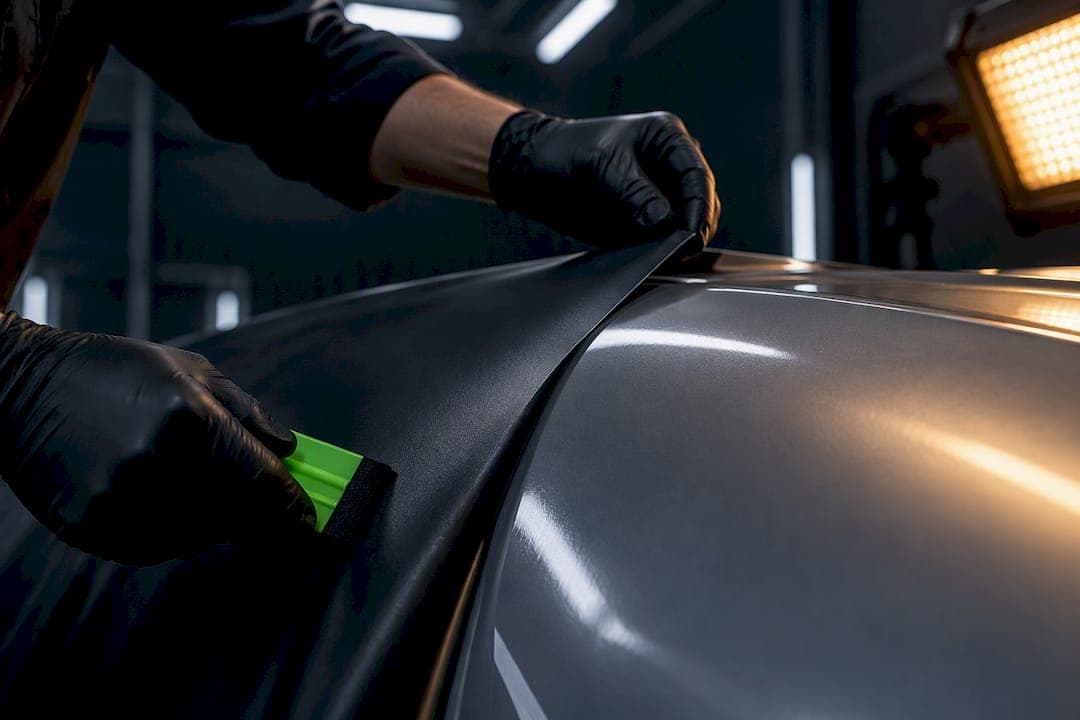
No, a properly installed and removed vinyl wrap will not damage healthy factory paint. The exceptions are real but predictable: paint that's already failing, cutting or removal mistakes, and pulling a wrap before it's had time to bond correctly. The risk lives almost entirely in prep, installation environment, and technique, not in the vinyl itself.
TL;DR:
- Properly installed vinyl wraps generally do not damage healthy factory paint, but issues arise if the clear coat is already damaged or if installation mistakes occur.
- Wrap adhesion mainly bonds to the clear coat, which must be intact and non-oxidized for safe application and removal.
- Wrapping over recently repainted or damaged panels requires a minimum of three to four weeks of curing time to prevent bubbling or lifting.
- Proper preparation and professional installation techniques, such as dust-free environments and knifeless cutting tape, significantly reduce the risk of paint damage.
- Wrap lifespan typically exceeds several years in favorable conditions, with proper maintenance and good removal practices preventing paint issues.
Table of Contents
- How Vinyl Wraps Interact With Factory Paint and Clear Coat
- When and How a Wrap Can Actually Damage Paint
- Wrapping Over Repainted or Damaged Panels: Timing Matters
- How Installers Protect Paint, and How to Remove a Wrap Safely
- Living With a Wrap: Washing, Lifespan, and Long-Term Paint Health
- Why a Wrap Shop's Process Matters More Than the Material
- Ready for a Paint-Safe Wrap? Here's the Next Step
- Sources
- FAQ
How Vinyl Wraps Interact With Factory Paint and Clear Coat
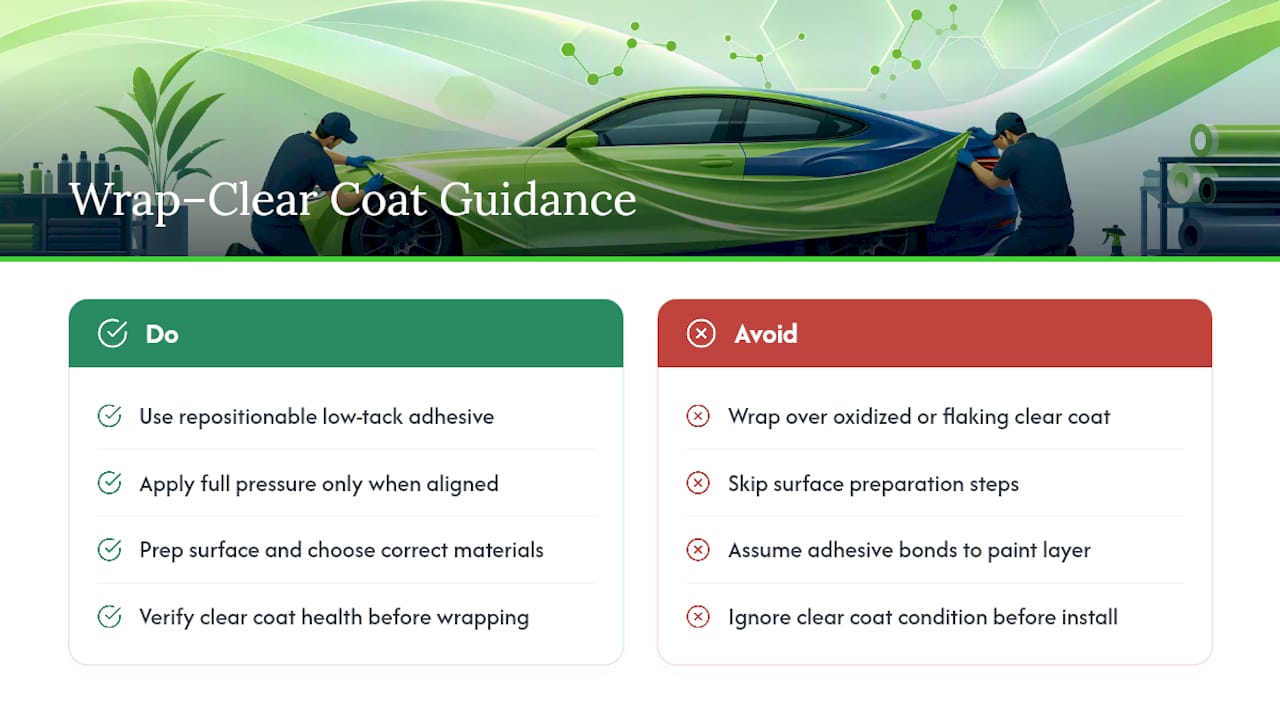
Vinyl wrap adhesive is pressure activated, meaning it bonds to whatever is on the surface of the car, which is the clear coat, not the paint layer underneath. Most installers use a repositionable, low-tack adhesive during install and only apply full pressure once the panel is aligned correctly, which is why a well-installed wrap can usually be adjusted or lifted briefly without leaving a mark.
Once bonded, the vinyl actually works in the paint's favor. It blocks UV rays and creates a physical layer between the clear coat and light abrasions like parking-lot debris or a stray shopping cart. NAPA's guidance on vinyl wrap basics points out that correct prep and material choice determine most of the outcome.
The one condition that changes everything is the clear coat's health going in. Oxidized, flaking, or cracked clear coat gives the adhesive nothing solid to grip, and that's where lifting and peeling problems start, regardless of how good the wrap itself is.
When and How a Wrap Can Actually Damage Paint
The wrap material rarely causes damage. The mistakes happen around it, on the installer's side, the owner's side, or the paint's own condition before the vinyl ever touches it.
- Cutting straight onto the paint. A blade dragged across a body line without a buffer can score straight through clear coat.
- Excessive pressure or sloppy edge work during trim, which thins the clear coat at seams and creates future lift points.
- Removing the wrap too soon, before adhesive has fully settled, which pulls unevenly and can strip clear coat with it.
- Using harsh chemical removers or aggressive scraping to fight leftover adhesive residue instead of heat and patience.
- Wrapping over cracked, rusted, or previously lifted panels, where the wrap has no stable surface to bond to in the first place.
Heat cycling, long-term sun exposure, and repeated flexing near seams can also loosen edges over years, which is a maintenance issue more than a defect.
Wrapping Over Repainted or Damaged Panels: Timing Matters
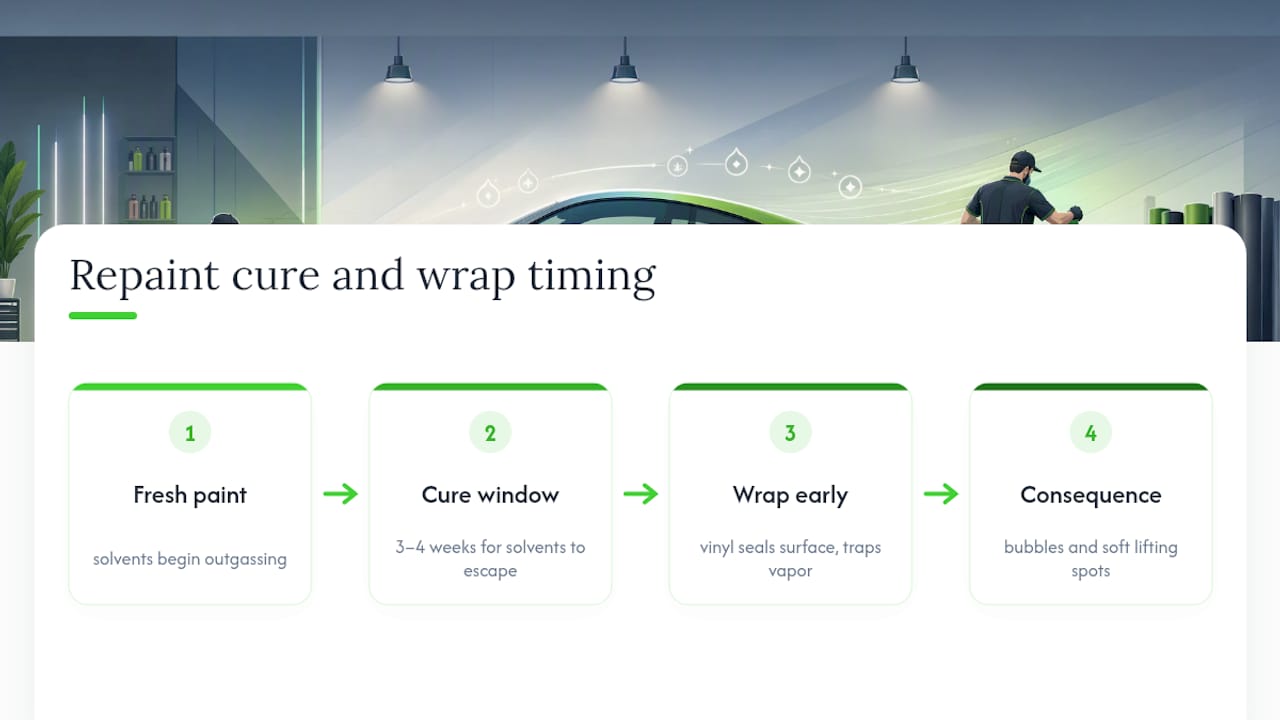
Fresh paint needs time to finish curing before it can safely take a wrap. Most shop guidance points to a minimum of 3 to 4 weeks of cure time after a repaint, since solvents trapped inside the paint layer are still working their way out during that window.
Wrap too early, and that outgassing has nowhere to go. Vinyl seals the surface, trapping solvent vapor underneath, which shows up as small bubbles or soft lifting spots within days or weeks of installation, usually right where the repaint was heaviest.
A shop that takes this seriously will ask about repair history before quoting anything. If a panel was resprayed recently, patched over rust, or shows uneven texture, the honest move is recommending either a longer cure window or paint protection film instead of a full wrap, at least until the paint stabilizes. Reviewing real scenarios where wrapping over bad paint backfired is a useful gut check before booking anything.
How Installers Protect Paint, and How to Remove a Wrap Safely
Good installers control the two variables that matter most: contamination and contact. Work happens in a climate-controlled, dust-free bay, because stray particles under the vinyl create pressure points that show up as bubbles later. Before any vinyl goes on, the surface gets fully decontaminated, sometimes clayed, so the adhesive bonds to clean clear coat instead of road film.
The bigger safeguard is how the vinyl gets trimmed. Professional shops use knifeless cutting tape instead of a blade riding directly on the body, which removes the single most common cause of installer-side paint damage: a slipped cut through clear coat.
If you're prepping your own car for a wrap appointment:
- Wash the vehicle thoroughly and skip waxing beforehand, since wax interferes with adhesion.
- Disclose any repaint, dent repair, or rust treatment history, even minor touch-ups.
- Ask directly whether the shop uses knifeless tape and works in a climate-controlled bay.
- Confirm what the warranty covers and what their removal process looks like before you ever need it.
Removal follows its own rules. Gentle heat, applied evenly, softens the adhesive enough for a slow peel at a low angle, so you're pulling the vinyl back on itself rather than up and away from the panel. Stubborn adhesive gets a proper solvent, not a razor blade or heavy scraping. If a section resists more than the rest, that's a sign to stop and check the paint underneath before continuing.
Pro Tip: If a wrap won't release evenly under gentle heat, don't force it. Uneven resistance usually means the adhesive bonded to a weak clear coat spot, and pulling harder is how paint actually comes off with the vinyl.
Living With a Wrap: Washing, Lifespan, and Long-Term Paint Health
Hand washing is the safest option for a wrapped car, and touchless washes work fine too. Soft-cloth automatic washes are generally okay short term, but repeated friction can dull the vinyl finish over time, so they're not ideal for the long haul. Two-bucket washing with a proper pre-wash also cuts down on swirl marks, a habit worth keeping even after the wrap eventually comes off.
Most quality wraps hold up well for several years, with sun exposure, road salt, and parking habits doing most of the aging. Underneath, the paint stays shielded from UV and minor abrasion the entire time, provided edges are checked periodically for lifting.
When it's time to remove a wrap, itemized removal quotes typically run $300 to $1,200 depending on vehicle size and adhesive age.
Why a Wrap Shop's Process Matters More Than the Material
The vinyl itself is rarely the problem. What separates a clean wrap job from a paint-damage story is the process around it: how the shop assesses the vehicle before quoting, whether they're honest about panels that need repair first, and whether their install bay is actually built for the job.
A climate-controlled facility isn't a marketing detail. Dust and temperature swings during install are exactly what cause the small defects that show up months later as edge lift or bubbling. Tesla and other EV panels raise the stakes further, since factory paint on some EV body panels runs thinner than on traditional stamped steel, and a shop without that specific experience is more likely to misjudge pressure and cut depth.
The honest answer, most of the time, is that a wrap protects paint better than it risks it, as long as the shop tells you the truth about your car's condition before the vinyl goes on, not after.
— Jake
Ready for a Paint-Safe Wrap? Here's the Next Step
Some shops install every wrap in a climate-controlled, dust-free facility, which helps avoid bubbling and lifting problems. That environment, combined with knifeless cutting techniques, can improve the durability of a wrap installation.
Whether you're considering a full vehicle wrap, a chrome delete, or you're weighing wrap against paint protection film for a high-risk panel, a professional shop will assess your paint's condition before recommending anything. If you're already wearing a wrap that's due for a change, request an itemized removal quote before booking so there are no surprises on cost or condition. Start by scheduling an assessment through Tintandwrapscustoms and get a straight answer on what your paint can handle.
Sources
- Wrap vs paint guidance
- Arlon / wrap installation guide (knifeless cutting guidance)
- Wrap effects on fresh paint and cure-time guidance
FAQ
Is There a Downside to Wrapping a Car?
The main downside is cosmetic risk if the underlying paint is already compromised or if installation and removal are handled poorly. On healthy factory paint installed and removed correctly, the practical downside is minimal, and the wrap generally adds a layer of UV and scratch protection instead.
Can a Wrapped Car Go Through a Carwash?
Hand washes and touchless carwashes are both safe for a wrapped vehicle. Soft-cloth automatic washes are acceptable occasionally, but frequent use over several years can dull the vinyl finish faster than hand washing would.
How Long Will a Wrap Last on a Car?
Most quality wraps last several years depending on sun exposure, climate, and how the car is parked and stored. Garage-kept vehicles in milder climates tend to see the longest wrap life.
Is It Better to Wrap or Repaint?
It depends on the vehicle's paint condition and your goals: wraps preserve healthy factory paint and suit customization, while repainting fits vehicles with body damage or failing clear coat. A shop assessment before booking will tell you which side of that line your car falls on.
What Does It Cost to Remove a Wrap?
Removal typically runs $300 to $1,200, depending on vehicle size, wrap age, and adhesive condition. Getting an itemized quote upfront avoids surprise charges if the shop finds paint issues once the vinyl comes off.