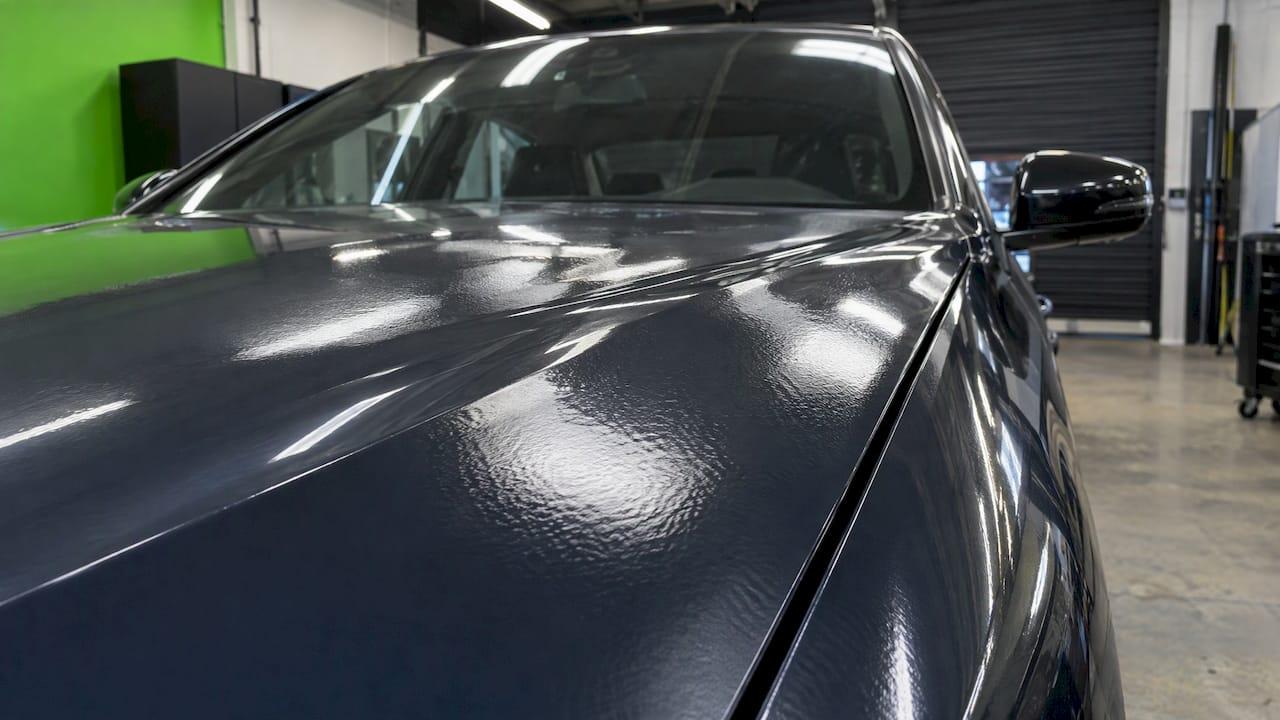
Yes, vinyl wrap can go over orange peel paint, and most cars with mild, factory-level texture wrap without trouble. The catch is that the film follows the surface it sits on, so the texture can still show, and it shows most under high-gloss films. How much you see depends on how heavy the orange peel is, which finish you choose, and how the surface is prepared. The safest route is to have a professional shop judge the paint in person before you pick a color.
TL;DR
- Wrap can be applied over orange peel, but 3M states that paint defects, orange peel included, may show through its film and that high-gloss films magnify them.
- Light factory texture is usually a cosmetic question. Heavy texture calls for professional paint correction before the film goes on.
- The paint must be sound: rust, bubbling, peeling or poorly bonded paint is a bigger problem than texture.
- Installation conditions matter: a clean, dust-free space and the right temperature decide how well the film bonds and how smooth it looks.
Table of Contents
- What orange peel is and why it matters under vinyl
- How much texture will show through
- Orange peel is one problem. Damaged paint is another.
- What good preparation looks like
- Three realistic scenarios
- Wrap or repaint for textured paint?
- Get a wrap that suits your paint
- FAQ
- Sources
What orange peel is and why it matters under vinyl
Orange peel is the slightly dimpled texture in a paint's clear coat, named for its resemblance to the skin of an orange. Nearly every painted car has some. Factory finishes have a little by design, and respray jobs often have more, especially when the paint was applied quickly or without being flattened and polished afterward.
On bare paint, you see orange peel as a slight waviness in reflections. Under vinyl, the same thing happens. Wrap film is thin and flexible, and its job is to conform to whatever is underneath. It does not fill in the dimples the way a fresh coat of clear would. So the film's top surface takes on a softened version of the texture below.
That is why two cars wrapped in the same film can look different. One has smooth paint and the wrap looks like glass. The other has a rippled clear coat and the wrap picks up that ripple in reflections.
How much texture will show through
Three things decide it.
Severity of the texture. A gentle, even texture, typical of many factory finishes, tends to disappear into the overall look of a wrapped car. A deep, uneven texture, with visible peaks and valleys, is the kind that reads through the film.
The finish you pick. According to 3M's installation FAQ for its 2080 wrap films, any paint defect, including scratches, dents, bubbling, pitting, fisheyes and orange peel, may be visible through the film, and high-gloss films magnify these defects. The same document recommends professional paint correction before installation when heavy orange peel is present, otherwise high-gloss films will take on the orange peel appearance.
In practical terms, a gloss black or gloss color is the least forgiving choice over textured paint, because it reflects light in a mirror-like way and every ripple stands out. Lower-gloss finishes scatter light, so in our experience of choosing finishes they draw less attention to the surface. If you are deciding between finishes, our guide to matte vs satin wrap explains how each looks and wears.
Lighting and color. Light colors and strong sunlight raking across a panel make texture easier to see. Dark, deep gloss colors are also demanding. A car that looks fine in a garage can show every ripple at a car show under direct sun.

A simple way to judge your paint
Do this in daylight, not in a dim garage:
- Wash and dry the car so dirt and water spots do not fool you.
- Stand a few feet from a flat panel, such as a door or the hood, and look at a reflection of a straight line, like a roofline or a power line.
- If the line stays fairly crisp with a little softness, the texture is mild. If the line looks broken, wavy or blurred, the texture is heavy.
- Compare panels. Repainted panels often have more texture than the original ones next to them.
This is only a first look. A shop can tell much more by seeing the car under proper lighting and checking the paint's condition at the same time.
Orange peel is one problem. Damaged paint is another.
Most owners who search for this are worried about texture. The bigger risk is usually the paint's condition underneath.
3M's wrap shop FAQ says all wrap films should be applied to a "like new" vehicle finish, and that rust, bubbling, scratches, dents or other damage will be visible through the film and may cause premature film failure. It also tells shops to set proper customer expectations before installing 2080 film, particularly the high-gloss versions.
That gives you a useful way to sort your car:
| Paint condition | What it means for a wrap |
|---|---|
| Smooth, original paint with light factory texture | Usually a good candidate for any finish |
| Moderate texture, no damage | Workable, best with a finish that suits the surface; ask for the shop's view on gloss |
| Heavy texture, such as a rushed respray | Needs professional paint correction first, especially for gloss colors |
| Peeling clear coat, flaking, rust or bubbling | The paint itself needs repair before any film goes on |
| Body filler repairs | Filler areas need proper sanding, priming and finishing first |
The last row comes straight from 3M, which says areas repaired with body filler must be sanded, epoxy primed and ideally finished with OEM paint or clear coat. It also notes that its warranty only applies to vehicles with an excellent bond between paint and substrate. For a deeper look at questionable paint, our shop-tested scenarios for wrapping over bad paint walk through the decisions in order.
Peeling paint and wrap
A common question is whether vinyl will stick to peeling paint. The adhesive bonds to the top layer it touches. If that layer is already letting go of the car, the film can lift it off with it, or fail early. Peeling or flaking paint should be repaired before wrapping, not covered. Orange peel, by contrast, is a texture in sound paint, which is why it is workable.

Recently painted cars
If the car was repainted recently, timing matters. 3M says any recently applied finish must be fully cured according to the paint manufacturer's directions before film goes on. Avery Dennison's application bulletin for its Supreme Wrap Films recommends testing an inconspicuous area for paint and clear coat adhesion before applying film over newly painted or repaired vehicles. Bubbles larger than about half an inch to an inch during that test point to an inadequate method or temperature.
If your paint is new or you are unsure how it was done, tell the shop up front. Our article on how pros prevent paint damage in the weeks before wrapping covers why timing matters.
What good preparation looks like
A wrap over textured paint is only as good as the prep. Here is the sequence a professional install follows, and where each step goes wrong when it is rushed.
1. Inspect the paint before choosing the film
The paint decides the finish. A shop that looks at the car first can tell you whether gloss is realistic or whether a satin or matte film will give a better result. Skipping this step is how owners end up with a gloss wrap that mirrors every ripple.
2. Correct heavy texture first
When orange peel is heavy, the paint is corrected by professionals before the film goes on, which is what 3M recommends for heavy orange peel. Correction can be a limited job on the worst panels or a broader one, depending on the car. Correction only makes sense on paint with enough healthy clear coat left, which a shop checks before touching it. For the PPF side of this question, see our guide to when paint correction is needed before PPF.
3. Repair what is damaged
Chips, dents, rust spots and filler repairs are dealt with before wrapping, following the standards above. Film does not hide them. It outlines them.
4. Clean the surface thoroughly
3M's wrap shop FAQ describes cleaning after a general car wash with its Surface Preparation System, using dust-free, lint-free paper towels, with special attention to recesses where dust, wax and silicone reduce adhesion. It also says to install film immediately after cleaning. Wax and silicone residue are the quiet troublemakers: you cannot see them, but they weaken the bond, and textured paint gives contaminants more places to hide.
5. Install in a clean, temperature-controlled space
Temperature and dust both matter. Avery Dennison's bulletin sets 50°F (10°C) as the absolute minimum application temperature for film, air and surface. 3M adds that high-gloss work needs a clean installation environment with clean floors, and possibly lint-free clothing and hair covers. A speck trapped under film over a textured panel is harder to spot and harder to fix than one on smooth paint.
This is where we do things differently. Our installs happen in a climate-controlled, dust-free facility in Van Nuys, so temperature and airborne dust are not variables on the day of your job.
6. Post-install care
Once wrapped, the film needs proper washing and protection to last. Our vinyl wrap maintenance guide covers it.
Three realistic scenarios
These are illustrations of how the decision usually goes, not case studies.
A five-year-old Tesla with original paint and light texture. The paint is sound and the texture is the kind most factory finishes have. A satin or color-change film is a good fit, and gloss is a realistic choice too, with the expectation that gloss shows more of the surface. Tesla owners also need an installer who works around sensors and trim, so we handle EV installs with that in mind.
A truck with a cheaper respray on the hood and fenders. The hood looks wavy in reflections, and the factory-painted doors look clean. Here, the repainted panels are the problem. The right plan is to correct those panels or choose a lower-gloss film, not to hope the wrap hides it.
A daily driver with a peeling roof clear coat. Orange peel is not the issue. The roof needs repair first. Wrapping over it would trap the failure under the film.
Wrap or repaint for textured paint?
Owners with textured paint often ask whether repainting is the better move. A repaint changes the paint itself, which is a bigger and less reversible commitment. A wrap changes the look while the original finish stays under the film, which is why many enthusiasts choose it. If protection rather than color is your goal, PPF vs vinyl wrap explains how the two differ.
Our view
Most orange peel questions come down to expectations. Owners picture a wrap as a fresh skin that makes every panel flawless, and a good wrap does transform a car, but it follows the surface beneath it. That is why we start every conversation with the paint, not the color swatch.
The finish decision is where we can help most. A gloss film looks stunning on smooth paint and honest on textured paint. A satin or matte film is often a better match when you want the color change without drawing attention to the surface. We would rather talk you into the film that suits your car than sell you the one that looks best in a sample.
We do the work in a climate-controlled, dust-free facility because a clean environment is part of a flawless finish, and our installs come with manufacturer-backed warranties. Whether it is a Tesla, a daily driver or a fleet vehicle, the process is the same: look at the paint, agree on the right finish, prepare the surface properly, and install it cleanly.
Jake
Get a wrap that suits your paint
If you are planning a color change or want to see how your paint will take a film, our team in Van Nuys offers vinyl wraps in a range of finishes, including color change and chrome delete, installed in a climate-controlled facility with manufacturer-backed warranties. Bring the car in and we will go over the paint and the finishes that suit it.
See our vinyl wrap services to start.
FAQ
Will a vinyl wrap hide orange peel?
Not completely. The film follows the surface under it, so some texture can remain visible. According to 3M, high-gloss films magnify paint defects, so the finish you choose affects how much shows. Having your paint looked at before you commit gives you the clearest answer.
Should I fix orange peel before wrapping?
It depends on how heavy it is. Light factory texture is usually acceptable. For heavy orange peel, 3M recommends professional paint correction before installing its 2080 films, particularly if you want a high-gloss look.
Can you wrap over a car that was repainted?
Yes, if the paint is fully cured and well bonded. 3M says a recently applied finish must be cured per the paint manufacturer's directions before film is applied. Tell your installer when and how the car was painted so they can plan for it.
Does the wrap damage orange peel paint?
On sound paint, a professional install and careful removal are designed to leave the paint underneath intact. Paint that is already failing is the risk, which is why peeling or poorly bonded paint should be repaired first. Our article on preparing paint before wrapping goes into detail.
Is orange peel worse under gloss or matte film?
Gloss. Per 3M, high-gloss films magnify surface defects. If your paint has noticeable texture, ask about lower-gloss finishes, and see how matte and satin wraps compare.
Sources
- 3M Wrap Film Series 2080 Frequently Asked Questions
- 3M Questions and Answers for Wrap Shops
- Avery Dennison IB4.08 Application Instructions for Supreme Wrap Films