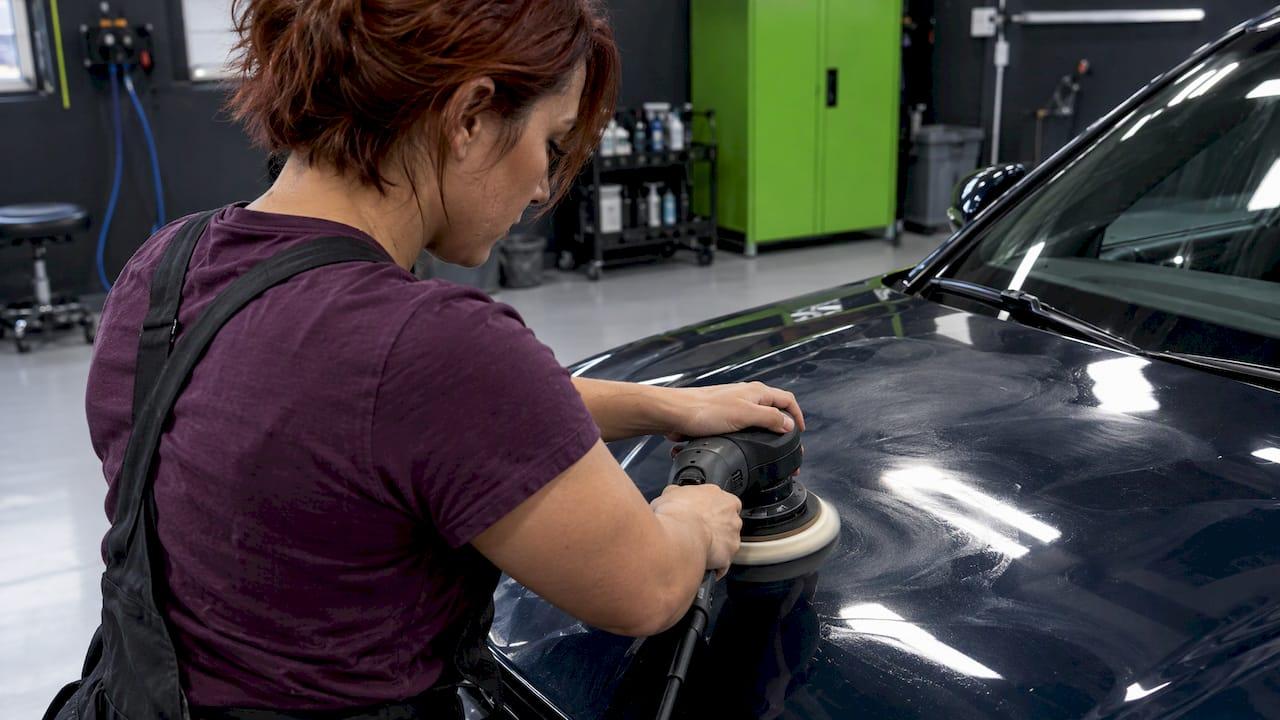
Paint correction before PPF is not always required, but it is worth considering on any car with visible swirls, scratches or etching. Film is a clear layer that follows the surface under it. Light, shallow marring often becomes less noticeable beneath it. Deeper defects, chips and failing clear coat stay visible, and some need repair before film goes on. Every car, correction or not, needs a properly cleaned, decontaminated surface.
This guide explains how to decide, what surface prep for PPF really involves, and how to plan the timing so you do not pay for the same work twice.
TL;DR
- Paint correction is not automatically required before PPF. The need depends on your paint's condition, the film and the finish you expect.
- Every installation needs a clean, decontaminated surface: adhesive cleaner, clay, a glass-cleaner rinse and a final wipe-down, per 3M's guidelines.
- Chips, deep scratches and clear coat failure should be repaired before film, because film follows the surface underneath.
- New cars still need an inspection. Transport marks and dealer polishing are common, and a fresh repaint needs time to cure.
- Agree the plan between detailer and installer before any work starts.
Table of Contents
- The Short Answer: Correct What You Would Not Want Sealed In
- What Paint Correction Actually Is
- Which Defects to Fix Before Film
- Surface Prep That Every PPF Job Needs, With or Without Correction
- New Cars: Do They Need Correction?
- Repainted Panels: Cure Time Comes First
- What Affects the Cost of Correction Before PPF
- Does Correction Help the Film Look Better?
- Perspective
- A Simple Decision Path
- Book PPF in Van Nuys
- FAQ
- Sources
The Short Answer: Correct What You Would Not Want Sealed In
PPF is not a filler. It is a transparent urethane layer that conforms to the paint, so the surface you see after installation is the surface you had before it, seen through film. That one fact drives every decision below.
Think of it as a question about each defect:
- Would I be annoyed to see this every day for the next several years? If yes, fix it first.
- Will it keep getting worse under the film? Chips with exposed edges and failing clear coat can. Fix them first.
- Is it faint, only visible in direct sun at an angle? Film can soften how noticeable it is, so correction may be optional.
Some installers will tell you correction is always part of the job. Others will say it is never needed. The accurate answer sits in between and depends on the car in front of them.
What Paint Correction Actually Is
Paint correction is machine polishing that levels a very thin amount of clear coat to remove swirl marks, light scratches, water spot etching and hazing. It is different from a wash, a wax or a quick "enhancement" polish with fillers. Fillers temporarily hide defects, and that matters for PPF, as covered below.
Correction comes in stages:
| Level | What it does | Typical use before PPF |
|---|---|---|
| Light polish (one step) | Removes light swirls and restores gloss | New or well-kept cars with minor marring |
| Multi-step correction | Cuts deeper defects, then refines the finish | Older daily drivers with heavy swirling |
| Spot repair or touch-up | Fills or repairs chips and deep scratches | Any car with damage through the clear coat |
More aggressive correction removes more clear coat, and clear coat is finite. A good detailer measures and works conservatively rather than chasing every last mark.
Which Defects to Fix Before Film

Light swirls and fine marring
These sit in the top of the clear coat. Under a clear film they are often much less visible, and some owners decide the gloss under the film is good enough. A light polish is a sensible middle path if the car is a keeper and you want the cleanest result.
Deep scratches
If a fingernail catches in a scratch, it is likely deeper than polishing can safely remove. Film will not erase it. Your options are a touch-up or spot repair before PPF, or accepting that the scratch will remain visible beneath the film. Which is right depends on how visible it is and where it sits.
Rock chips and exposed paint
Chips should be repaired before film. A chip with bare primer or metal can keep developing under film, and the film will follow the crater's shape. Repair, let it cure as the repair product directs, then film. If you are partway through scheduling and discover a chip, tell your installer before the appointment so the order of work is right.

Etching, bird dropping marks and water spots
Mineral deposits and acidic stains can etch into clear coat. Light etching may polish out. Deep etching may not, and the film will lay over it. Have it assessed in good light before you commit.
Peeling or failing clear coat
This is the one defect film should never be applied over. If the clear coat is flaking, the film's adhesive can lift more paint when it is eventually removed. Panels like this need refinishing first. Avery Dennison's technical bulletin also states that paint must be completely dry, hardened and free of scratches before film application, which sets the bar for what a sound surface means.
Surface Prep That Every PPF Job Needs, With or Without Correction
Skipping correction is a choice. Skipping surface prep is not. Film adheres to the paint, so anything between them becomes a bump, a lifted edge or a bubble.
3M's published installation guidelines for its paint protection film describe the preparation in plain steps, and most professional shops follow some version of them:
- Confirm there is no ceramic coating on the paint. If one is present, it has to be removed first, per 3M.
- Remove wax, tar and paint sealant with an adhesive cleaner.
- Clean off the residue with a non-ammonia foaming glass cleaner.
- Clay the paint to pull out bonded contaminants like rail dust and overspray.
- Wipe down with clean microfiber and inspect the surface before the film touches it.
3M's Pro Series guide repeats the same core requirements: no ceramic coating, wax, tar and sealant removed, clay used and a final inspection. These steps are not optional extras layered on top of correction. They are the baseline.
Why polishing products matter
Polishing leaves oils and residue on the paint. If a polish with heavy fillers is used, it can mask defects that reappear later and leave a film on the surface that the installer must strip. That is why the detailer and the installer should agree on the plan before work begins. If correction is done without thinking about the next stage, you can end up paying for prep that gets repeated or for a finishing product the installer has to remove.
Practically, that means:
- Tell the detailer the car is going to be filmed.
- Ask that the final wipe leave the paint residue-free rather than topped with wax, sealant or a coating.
- Do not apply ceramic coating beforehand. If you want ceramic as well, it goes over the film afterward. Our guide on ceramic coating over PPF covers the order and the wash wait.
New Cars: Do They Need Correction?
A new car is not automatically flawless. Cars often travel by rail, truck and lot, and dealers sometimes wash or polish them. Swirls from improper washing are common on delivered vehicles. That said, many new cars are in excellent shape and need only the standard prep.
The approach that works:
- Inspect the paint in good light before booking, ideally with the installer present.
- Look at the hood, roof and doors, the panels most likely to show marring.
- Decide by results. Clean paint needs decontamination only. Visible swirling may justify a light polish.
If the car is dark, defects show more. Our article on PPF for black cars explains why dark paint is less forgiving.
Repainted Panels: Cure Time Comes First
Fresh paint is the opposite of a clean slate for film. Solvents are still leaving the paint, and film applied too early can trap them. Avery Dennison's bulletin notes that on most baked paints film can go on after cooling, while air-dried and car-repair paints must be completely dry, because solvent residue may hurt adhesion or cause shrinkage or blistering.
There is no single universal number of days. Follow the paint supplier's cure instructions, and ask the body shop which paint system it used. Many installers prefer a waiting period of several weeks after a respray, and the same bulletin also warns that non-OEM or uncured paint can lead to adhesion problems or damage on removal.
What Affects the Cost of Correction Before PPF
Correction is priced by labor, so what moves the quote is mostly time:
- Vehicle size. A large SUV has far more surface than a coupe.
- Paint hardness. Harder clear coats take longer to cut. Softer ones correct faster but need care.
- Defect depth and density. One pass versus several.
- Scope. Correcting only the panels that will be filmed costs less than the whole car.
- Paint color. Dark colors show every defect, so detailers spend more time refining.
- Repair work. Chip touch-ups or spot repairs are separate line items.
Because the film will cover only certain areas on a partial install, you do not always need to correct the whole vehicle. If you are choosing a front-end package, correction can be limited to those panels, plus the adjacent edges that will be visible beside the film.
Quotes vary widely by shop and region, so get the scope in writing: which panels, how many steps, and which finishing products. That prevents surprises and makes quotes comparable.
Does Correction Help the Film Look Better?
Somewhat, yes, but with a caveat. Film does not hide everything, and the reverse is also true: a perfectly corrected panel looks deeper and clearer under film than a marred one. If gloss is why you are buying the car or the film, correction is where that gloss comes from. If protection is the main goal, say, a daily driver on freeways, the priority is clean prep and a high-quality install.
For matte finishes, correction is not part of the picture at all, since polishing matte paint would ruin the finish. See our matte paint PPF prep steps for what applies there.
Perspective
We install paint protection film at our Van Nuys shop in a climate-controlled, dust-free facility, and we have protected more than 1,000 vehicles. That experience has taught us that most film problems are decided before the film is unrolled: on the condition of the paint and on how clean the surface is.
Our view is simple. Film is the best way to keep good paint good. If your paint is already in excellent shape, you protect it as it is. If it has marks you dislike, deal with them first, because film will preserve whatever is underneath, flaws included. Either way, a clean, contamination-free surface and a dust-free install space are what give you edges that stay down and a finish that looks like paint rather than plastic.
Our work is backed by manufacturer warranties, and we pay special attention to Tesla and other EV owners, where fit around sensors and complex panels has to be precise. When you book, tell us about any repaint, chip or previous coating on the car. That one conversation saves more time and money than any other step.
Jake
A Simple Decision Path
Use this to decide before you call an installer:
- Is the paint original, intact and free of chips or flaking? If no, repair first.
- Has any panel been repainted recently? If yes, confirm cure time.
- Is there any ceramic coating, wax or sealant? Plan for removal or stripping.
- Are swirls or scratches visible in sunlight? Decide between light polish and accepting them under film.
- Is the car dark or glossy-critical? Lean toward correction on the filmed panels.
- Are detailer and installer talking? Make sure they agree on finishing products.
Related reading: what PPF actually does, and how to maintain film once it is on.
Book PPF in Van Nuys
If you are in the San Fernando Valley and planning film, we offer paint protection film in several coverage levels, including The Track Pack, Full Front and Full Body, all installed in our climate-controlled facility. Send us details of your paint's condition and any previous work, and we will tell you how we would approach the car.

We also work on Tesla and EV models, and we back our installs with manufacturer warranties. Many owners pair film with window tint or a ceramic coating applied over the film afterward.
FAQ
Do you need paint correction before PPF?
Not always. Correction is a decision based on the condition of the paint, the film and the finish you want. Light marring is often less noticeable under film, while deep scratches, chips and failing clear coat should be repaired first. Clean, decontaminated paint is needed in every case.
Can you put PPF over scratches?
Yes, but the film follows the surface, so scratches remain visible if they are deeper than the clear coat. Shallow marks may fade from view. Deeper ones are best touched up or repaired before installation if they bother you.
How long should I wait to apply PPF after a repaint?
Follow the paint supplier's cure instructions. Baked paint can be filmed after cooling, while air-dried repair paint must be fully dry, since leftover solvents can cause blistering or adhesion problems, per Avery Dennison. Many installers prefer several weeks.
Should I ceramic coat before PPF?
No. 3M's guidelines require that no ceramic coating be on the paint before film goes on. If you want a coating, it is applied over the film afterward.
What does surface prep for PPF include?
Removing wax, tar and sealant with an adhesive cleaner, rinsing with a non-ammonia glass cleaner, claying the paint and a final microfiber wipe-down and inspection. These steps follow 3M's installation guidance.
Sources
- 3M Paint Protection Film installation guidelines (Revision C, March 2024)
- 3M Scotchgard Paint Protection Film Pro Series installation guide
- Avery Dennison Technical Bulletin 6.1, Color Paint Protection Films application instructions