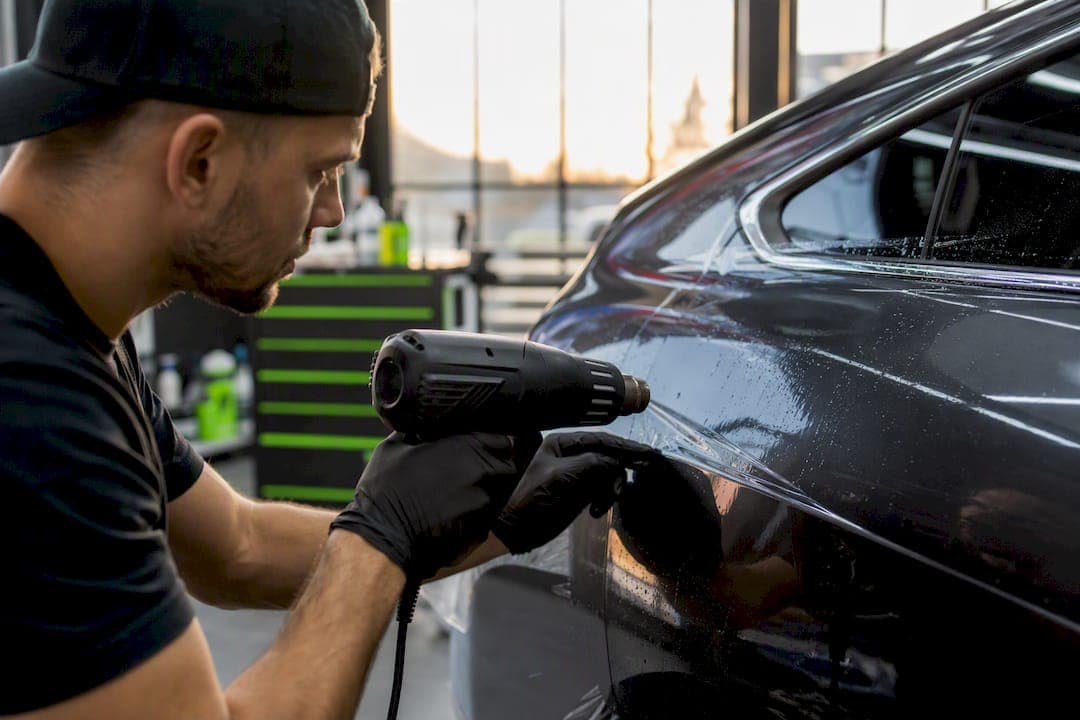
A small, recently lifted PPF edge is usually fixable: clean under the edge, apply gentle heat, and press it back down. Contamination, yellowing, or a lift longer than an inch or two is a different story, and reaching for a heat gun on high or a metal scraper will only make things worse.
Here's the immediate playbook:
- Catch it early. A lift caught within days is far easier to reseal than one that's been flapping for weeks.
- Clean before you seal. If dirt or grit is trapped under the edge, wipe it with isopropyl alcohol before doing anything else.
- Apply low heat and press. Warm the area to roughly 120–140°F and hold pressure with a cloth until it cools.
- Stop if the lift exceeds 1–2 inches or the adhesive stays tacky. Call your installer instead of forcing it.
If the film was installed in the last three days, don't touch it yet. Most installers ask for a 72-hour window before any washing or handling near the edges.
Key Takeaways
Most lifted PPF edges are fixable with cleaning and low heat, but contamination, length beyond an inch or two, or yellowed adhesive mean it's time to call a professional.
| Point | Details |
|---|---|
| Act early, act gently | Catch a lift within days, clean with isopropyl alcohol, and warm to 120–140°F before pressing it down. |
| Never seal over dirt | Resealing a contaminated edge without cleaning underneath almost always causes the repair to fail again. |
| Respect the 72-hour cure | Avoid washing or handling edges for 72 hours after any fresh PPF install. |
| Know your DIY limit | Tacky adhesive, yellowing, or lifts over 1–2 inches call for professional tuck-and-seal or spot replacement. |
| Tintandwrapscustoms handles the hard cases | Their climate-controlled Van Nuys facility offers manufacturer-backed warranties and edge-tuck repair for lifts DIY can't fix. |
Table of Contents
- How to Tell PPF Edge Lifting Apart From Other Film Problems
- Why PPF Edges Lift in the First Place
- Fixing a Small Lifted Edge Yourself
- When to Call in a Professional Instead
- Preventing PPF Edges From Lifting Again
- Who's Behind This Guide
- The DIY-First Mistake Most Owners Make
- Get Your Edges Fixed Right the First Time
- Frequently Asked Questions
- Sources
How to Tell PPF Edge Lifting Apart From Other Film Problems
Not every odd edge is edge lift. Sometimes it's just film settling or a trick of the light. Here's how to check:
- Look for a raised corner or shadow line. True lifting shows a visible gap where the film has pulled away from the paint, often catching light differently than the surrounding surface.
- Check for trapped grit or milky clouding. White haze right at the edge usually means moisture or debris got under the film, which is different from surface scratching.
- Run the press test. Push gently on the edge with a clean finger. If it springs back down and stays, it's minor. If it pops back up or feels loose, the bond has failed.
- Inspect under good indirect light, never on a hot hood or fender, and snap a photo. That photo becomes useful evidence if you end up filing a warranty claim later.
Why PPF Edges Lift in the First Place
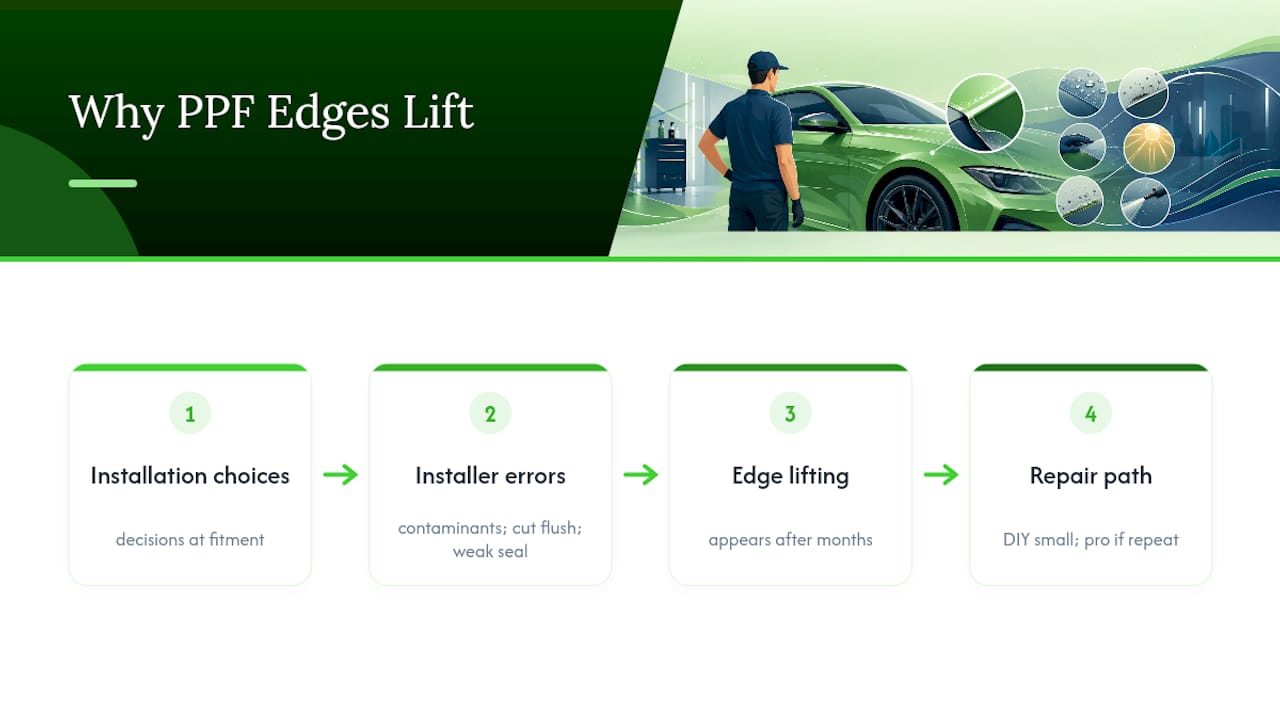
Edge lifting almost always traces back to one of a handful of failure points, and most of them happen during installation, not after.
Surface contamination is the biggest offender. Wax, silicone-based dressings, or oily residue left on the paint before the film goes down blocks the adhesive from ever forming a real bond. It looks fine on day one. It starts peeling three weeks later.
Trim technique matters more than people think. A cut-flush edge sits right at the boundary of stress and airflow, while a properly tucked edge, wrapped slightly under a body line or into a recess, has far more resistance to lifting. Poor surface prep, improper trimming, and insufficient heat sealing are the three most commonly cited installer errors, and they tend to compound each other.
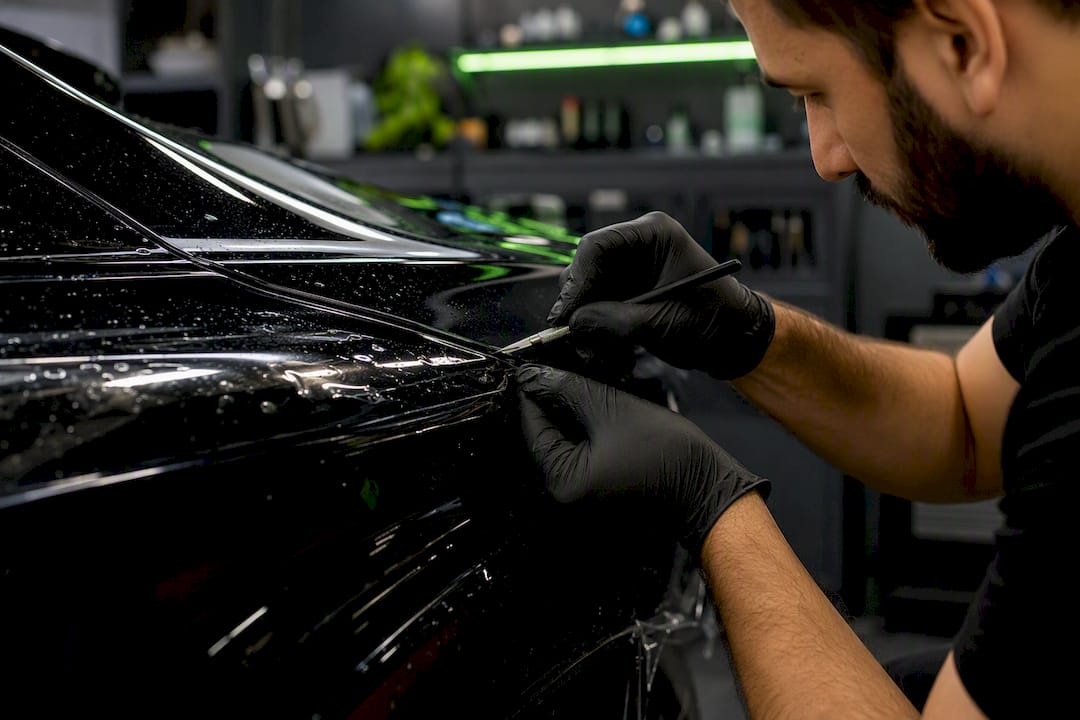
Heat sealing and stretch tension are the finishing steps installers rush. Inconsistent squeegee pressure or over-stretching the film during install creates stress points that separate later, sometimes months down the road, well after the shop has moved on to the next job.
Beyond installation, three things push a marginal bond over the edge:
- Low-grade film with weaker adhesive formulations that degrade faster under stress
- UV exposure and repeated heat cycling, which age adhesive faster than lab testing predicts
- Mechanical abuse: pressure washers aimed directly at seams, stiff wash brushes, curb strikes, or flexing panels near wheel wells
Pro Tip: If you notice lifting only on one side of the car, check whether that's the side that gets the most direct afternoon sun. Heat cycling is rarely random.
Fixing a Small Lifted Edge Yourself
This sequence works for minor lifts with clean edges and no yellowing. It does not work for contaminated or aged film, so read the stop conditions before you start.
- Photograph and inspect first. Then gently brush away any loose surface grit with a dry microfiber towel, working from the center of the lift outward.
- Clean under the edge if contaminated. Lift the smallest possible section, apply isopropyl alcohol with a folded towel corner, and let it air dry completely. Resealing over trapped dirt is the single most common reason repairs fail again within weeks.
- Warm the area to 120–140°F. Hold the heat source 6 to 8 inches away, moving constantly. Press the film down with a cloth-wrapped squeegee and hold firm pressure while it cools, roughly 15 to 20 seconds.
- Apply edge sealer only if the film is clean and dry. Follow the product's cure instructions exactly, and never layer sealer over a spot you haven't decontaminated first.
Stop immediately if the adhesive feels tacky rather than dry, if you see yellowing near the lift, or if the affected section runs longer than an inch or two. Owner forums are full of cases where excessive heat or the wrong adhesive turned a small lift into a visible paint pull. That's not a repair you can undo with a second try.
When to Call in a Professional Instead
DIY triage has real limits, and knowing where they sit saves you from turning a $40 fix into a $400 mistake.
Book professional help when you see dirt trapped deep under the film, a lift longer than a couple of inches, adhesive that's failed rather than just loosened, or film that's visibly yellowed or brittle at the edge.
Shops typically handle these repairs with:
- Deep decontamination plus adhesion promoter, going well beyond a wipe-down with alcohol
- Tuck-and-seal correction, where the edge is lifted, cleaned, re-tucked into a body line, and resealed under controlled heat
- Spot-section replacement, cutting out just the failed strip rather than the whole panel
- Full panel rewrap when adhesive failure or discoloration runs across most of the piece
Turnaround and cost depend on the film brand, how complex the panel is (a bumper with tight curves takes longer than a flat hood), and whether color-matching or blending is involved. Before booking anywhere, ask about warranty terms, whether they actually tuck edges rather than cut flush, their post-install cure recommendation, and whether the work happens in a climate-controlled installation space. Dust and temperature swings during application are a quiet cause of the exact problem you're trying to fix.
Preventing PPF Edges From Lifting Again
Prevention splits into two jobs: what you demand from your installer, and what you do afterward.
Ask your installer for these specifics up front:
- Full decontamination with isopropyl alcohol and clay bar before any film goes down
- Edges tucked into body lines wherever the panel design allows it, not cut flush
- Consistent squeegee pressure and proper heat sealing across every edge, not just the visible ones
- A 72-hour no-wash cure window after installation
- A manufacturer-backed warranty that specifically covers edge lifting, not just discoloration
Your maintenance habits matter just as much:
- Hand-wash rather than relying on automatic touchless bays that blast pressurized water directly at seams
- Keep pressure washers pointed away from edges entirely, and pat dry with a microfiber towel instead of air-drying
- Inspect edges after long road trips or a run of hot weather, since thermal cycling accelerates adhesive aging faster than most owners expect
Premium TPU films with stronger adhesive peel strength and better high-heat tolerance hold up longer under real-world stress than budget alternatives. If you're choosing between film types before your next install, it's worth comparing options like SunTek and XPEL before committing.
Who's Behind This Guide
Tintandwrapscustoms operates a climate-controlled installation facility in Van Nuys, where dust and temperature swings, two quiet contributors to edge failure, are controlled from the first wipe-down to the final squeegee pass.
- Manufacturer-backed film warranties on every install
- Tesla and EV-specific installation experience, including curved panel and charge-port detailing
- Over 1,000 vehicles protected, with a 5-star reputation built on edge-tuck precision
- A standard edge-repair workflow: inspect, decontaminate, tuck, reseal, and document under warranty terms
Author: Jake, editorial lead.
The DIY-First Mistake Most Owners Make
Most advice about lifted PPF edges treats the fix as the whole story. It isn't. The real lesson buried in installer forums and shop write-ups is that lifting is almost always a symptom of a decision made months earlier, during trim and heat sealing, not a random defect that shows up on its own.
That reframes the DIY conversation. A heat gun and some patience can buy you time on a small, clean lift. It cannot fix a film that was cut flush instead of tucked, or an edge that never got proper heat sealing in the first place. Owners who keep re-sealing the same spot every few months aren't bad at DIY repair. They're treating an installer-level problem with a maintenance-level tool.
The advice that actually holds up: fix small, clean lifts yourself without hesitation, but the moment a spot needs a second repair, stop trying to out-clean the original mistake. Ask who installed it and how they tucked the edges. That's the real diagnostic question, and most guides skip it entirely.
Get Your Edges Fixed Right the First Time
Tintandwrapscustoms is the option for San Fernando Valley drivers who want an edge repair that doesn't come back in three months. Instead of layering sealer over a contamination problem or guessing at heat settings with a household hairdryer, our climate-controlled Van Nuys facility handles decontamination, tuck correction, and spot-section replacement under conditions a driveway repair can't match.
Every repair and reinstall carries a manufacturer-backed warranty, and our team has handled edge work on more than 1,000 vehicles, including Tesla and EV panels with tight curves that are notoriously hard to tuck correctly. If your DIY fix didn't hold, or you'd rather skip the guesswork entirely, book a PPF inspection with Tint & Wraps Customs and get an honest read on whether you need a spot repair or a full rewrap.
Frequently Asked Questions
How do I know if my PPF edge lifting needs a professional instead of a DIY fix? If the lift runs longer than an inch or two, the adhesive feels tacky rather than dry, or you see yellowing near the edge, book a shop visit. Those signs point to adhesive failure that a heat gun won't reverse.
Can I use super glue or another adhesive to fix a lifted PPF edge? No. Household adhesives aren't formulated for automotive film and paint, and they can trap contamination underneath or damage the clear coat when removed later. Stick to a proper PPF edge sealer or professional resealing.
How long does PPF edge peeling take to show up after installation? It varies. Some lifts appear within the first 72-hour cure window if the film wasn't handled correctly early on. Others develop over months as heat cycling and UV exposure gradually stress a marginal bond from installation.
Is edge lifting covered under a PPF warranty? Many manufacturer-backed warranties cover edge lifting caused by installation defects, but not damage from pressure washers, curb strikes, or improper DIY repairs. Ask your installer specifically what their warranty covers before you sign.
Will a lifted PPF edge damage my paint if I leave it alone? Trapped moisture and dirt under a lifted edge can eventually cause discoloration or minor paint issues underneath, especially in humid climates. It's worth addressing sooner rather than letting it sit through a full wash cycle or road trip.
Sources
- Thecarresource
- Clear Bra Edge Lifting: 9 Proven Fixes That Actually Work - OZWRAPS™
- How to Fix Lifting Paint Protection Film Edges