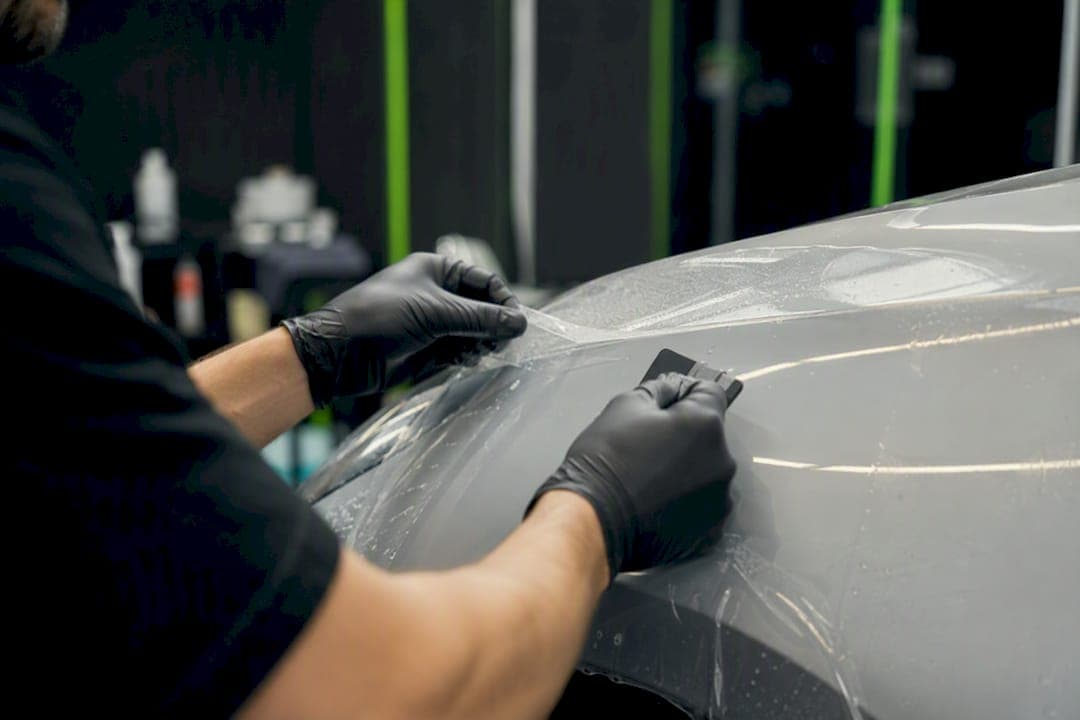
Most quality paint protection film lasts 5 to 10 years, with premium aliphatic TPU films pushing toward 7 to 12 years when installed correctly and maintained well. That range comes from real-world tracking and accelerated aging tests like QUV weathering, which simulate years of UV exposure in a lab. At Tint & Wraps Customs, we tell every customer the same thing: plan on a professional inspection around year five, and start budgeting for replacement somewhere between year 7 and year 10 depending on your film and your climate.
Here's the quick version before you dig into the details:
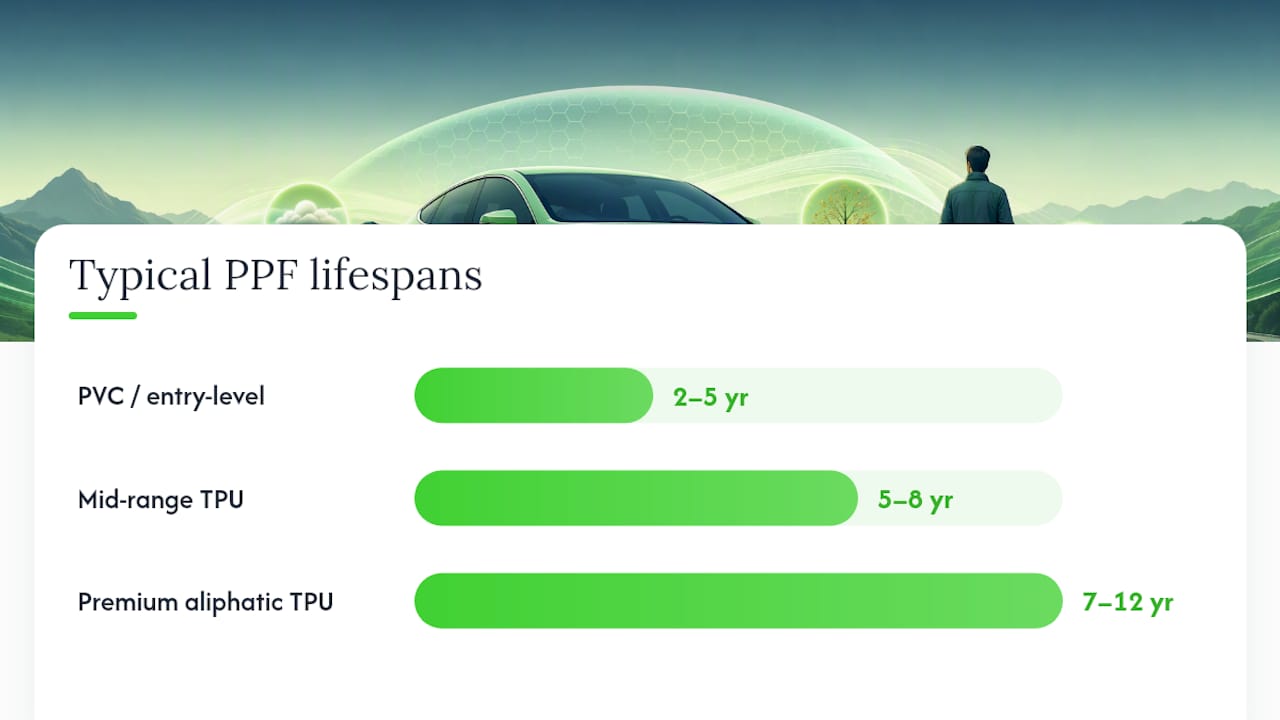
- Entry-level PVC film: 2 to 5 years before visible yellowing or edge lift
- Mid-range TPU: 5 to 8 years with reasonable care
- Premium aliphatic TPU: 7 to 12 years, often backed by a 10-year warranty
Quick verdict: get a full inspection at the five-year mark no matter what film you have, and treat year 7 as the point where replacement conversations become realistic rather than premature.
Key Takeaways
PPF lifespan depends more on film chemistry and installation quality than on any single manufacturer's marketing claim, and a five-year inspection is the single best predictor of long-term outcomes.
| Point | Details |
|---|---|
| Typical lifespan range | Most quality PPF lasts 5 to 10 years, with premium aliphatic TPU reaching 7 to 12 years. |
| Inspect at year 5 | A professional inspection at the five-year mark catches adhesive issues before they spread. |
| Installation quality matters most | A well-installed mid-range film often outlasts a poorly installed premium film. |
| Maintenance extends service life | pH-neutral soap, prompt contaminant removal, and a PPF-safe sealant push films toward their upper lifespan range. |
| Tintandwrapscustoms's approach | Climate-controlled installation, manufacturer-backed warranties, and Tesla/EV expertise across 1,000+ vehicles protected. |
Table of Contents
- How Long Does PPF Last by Film Type?
- What Factors Shorten or Extend PPF Longevity?
- What Are the Signs PPF Needs Replacing?
- How Do You Maintain PPF for Maximum Lifespan?
- What Do PPF Warranties Actually Cover?
- Can PPF Last 20 Years?
- When Should You Inspect or Replace PPF?
- What Have We Learned From Installing Over 1,000 PPF Jobs?
- What's the One Habit That Actually Extends PPF Life?
- Ready to Protect Your Paint the Right Way?
- Where Can You Learn More About PPF Longevity?
- Frequently Asked Questions
- Sources
How Long Does PPF Last by Film Type?
The lifespan gap between film types comes down to chemistry, not marketing. Aromatic TPU and PVC films use polymer chains that break down faster under UV exposure, which is why cheaper film yellows within a couple of years in sunny climates. Aliphatic TPU uses a more stable molecular structure that resists that breakdown, and that difference alone explains most of the spread you'll see in lifespan numbers.
Independent lifespan reporting backs up what installers see daily: premium TPU properly installed commonly reaches 7 to 12 years, mid-range TPU lands at 5 to 8 years, and PVC or budget films typically top out at 2 to 5 years. Manufacturers know this too. XPEL's own FAQ page states its film can last up to 10 years under recommended conditions, and that claim tracks with what we see on vehicles we've protected in Van Nuys.
Warranty length is one of the most honest signals you'll get about a film's real durability. A brand that only guarantees against "material defects" for two years is telling you something different than one offering 10 years of yellowing coverage.
| Film Chemistry | Typical Lifespan | Warranty Length / Coverage Note | UV / Stain Resistance |
|---|---|---|---|
| PVC / entry-level | 2–5 years | Often 1–3 years, limited to manufacturing defects | Prone to yellowing, weaker stain resistance |
| Mid-range TPU | 5–8 years | Typically 5 years, may exclude yellowing | Moderate UV resistance, decent self-healing |
| Premium aliphatic TPU | 7–12 years | Commonly 10 years, includes yellowing/cracking/delamination | Strong UV resistance, best-in-class self-healing |
What Factors Shorten or Extend PPF Longevity?
UV dose and heat cycling do more damage over a film's life than almost anything else. Repeated thermal expansion and contraction stresses the adhesive bond at panel edges, which is usually where failure starts, not in the middle of a hood or fender.
A handful of variables determine whether your PPF hits the low end or high end of its expected range:
- Environmental exposure: UV intensity, salt air, road grime, and daily debris impacts all accelerate wear
- Installation quality: proper edge wrapping, correct film tension, and clean adhesive application matter as much as the film itself
- Film chemistry and top coat: aliphatic TPU with a quality self-healing top coat outperforms aromatic TPU and PVC across every metric
- Washing habits: automated brush washes and harsh chemicals degrade the top coat faster than hand washing
- Parking habits: garage or covered parking dramatically slows UV-driven aging compared to daily outdoor exposure
One overlooked point worth repeating: a mid-range film installed by a skilled technician often outlasts a premium film applied poorly. Installation technique is not a minor detail. It's frequently the deciding factor.
Pro Tip: Let freshly installed PPF cure for at least 48 to 72 hours before washing it, and avoid pressure washing directly at panel edges for the first two weeks. Rushing this step is one of the most common reasons edges lift early.
What Are the Signs PPF Needs Replacing?
Yellowing and hazing are the most obvious tells, but they're rarely the first ones to show up. Watch for optical distortion (a slight waviness when you look across the panel at an angle), edge lifting where the film starts to peel away from the paint, and hairline cracking in the top coat.
A few functional signs matter just as much as the visual ones:
- Reduced self-healing performance after warm-water or heat-gun tests
- Sticky or soft spots where the film feels different from surrounding areas
- Adhesive failure specifically at edges or seams, even if the center panel looks fine
The decision rule is simple: a single small localized defect usually means a repair, patching or replacing one panel section. Yellowing, cracking, or lifting across multiple panels means it's time to plan a full replacement rather than chase repairs one at a time.
How Do You Maintain PPF for Maximum Lifespan?
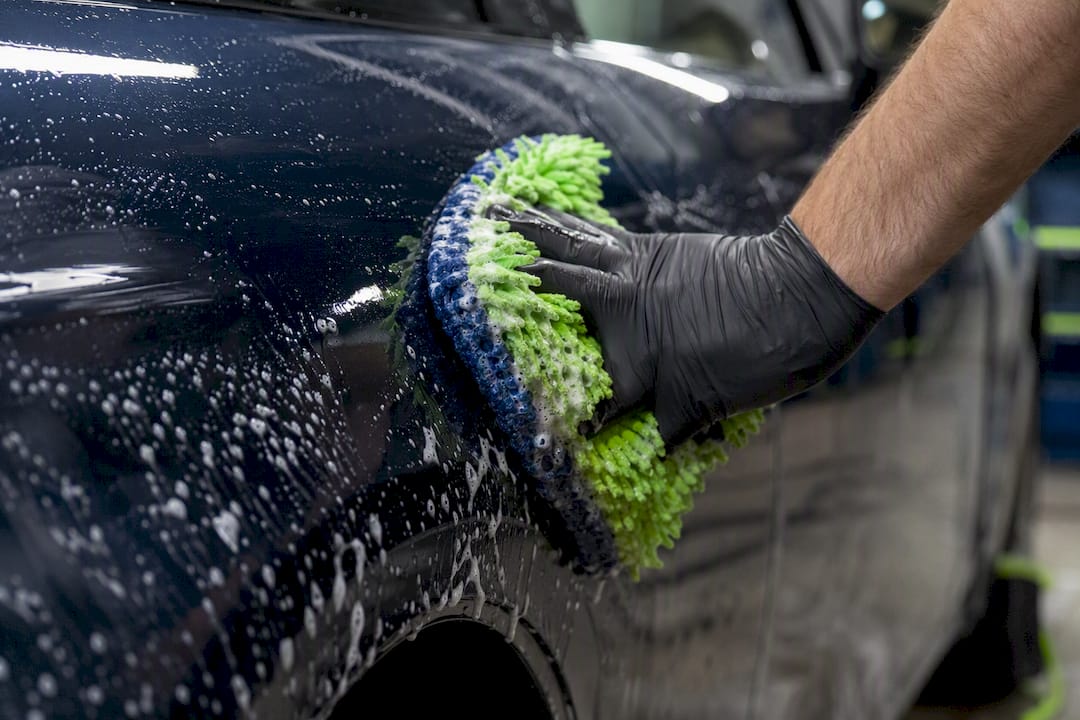
Good maintenance is the cheapest lifespan extension available to you, and it costs nothing but a little discipline. Stick to pH-neutral car soap and a soft microfiber wash mitt, and skip high-pH cleaners or anything solvent-based, which can degrade the top coat over time. Bird droppings and tree sap should come off within a day or two. Left too long, they can etch into the film's surface.
What to avoid is just as important as what to do:
- Harsh polishing compounds or abrasive pads on or near film edges
- Direct high-pressure water blasts aimed at seams and panel edges
- Petroleum-based solvents or citrus degreasers not rated safe for PPF
Adding a PPF-safe ceramic coating or sealant on top of the film boosts hydrophobic performance and makes contaminants easier to rinse off, which cuts down on the scrubbing that wears the top coat prematurely.
A simple maintenance rhythm to follow:
- Rinse weekly, full wash every 1 to 2 weeks with pH-neutral soap
- Inspect edges and high-impact areas monthly for early lifting or chipping
- Reapply a PPF-safe sealant or ceramic topper roughly every 12 months
- Schedule a professional inspection annually, with a more thorough checkup at year 5
What Do PPF Warranties Actually Cover?
Most reputable manufacturer warranties run 5 to 10 years and cover yellowing, cracking, and delamination under normal use. Goods Detailing notes that top-tier brands commonly extend 10-year limited coverage, while budget films often carry shorter terms with narrower protection. Exclusions almost always include improper washing, mechanical damage from impacts, and installation by an unauthorized shop.
Before you sign off on any install, ask your installer:
- Is this a manufacturer warranty, an installer workmanship warranty, or both?
- What voids coverage, and does it require documented maintenance?
- Is the warranty transferable if I sell the vehicle?
- What's the claims process if I spot yellowing or lifting in year 3?
Cost-wise, patching a single panel is almost always cheaper than a full-vehicle replacement, but once three or more panels show wear, piecemeal repairs stop making financial sense. At that point a full reinstall usually costs less over time than chasing repairs panel by panel, a topic we break down further in our guide to PPF cost expectations.
Can PPF Last 20 Years?
No, not under normal conditions. Getting anywhere near 20 years would require near-perfect storage, negligible UV exposure, and a film chemistry that doesn't yet exist at scale. Real-world films don't get that lucky.
What actually happens after year 10, when a vehicle stays protected that long:
- Gradual yellowing becomes visible even on premium films
- Edge lifting appears at high-stress points like mirrors and door handles
- Adhesive bonds weaken, increasing the risk of full delamination
- Self-healing top coats lose their responsiveness to heat
Plan to replace by year 10 to 12 even with premium film and excellent care. Anything beyond that is bonus mileage, not the expectation.
When Should You Inspect or Replace PPF?
Your driving and storage habits shift the timeline meaningfully. Here's a practical framework:
- Daily outdoor driver: annual visual check, professional inspection at year 5, plan replacement around year 7 to 8
- Garage-kept weekend car: annual check is enough, professional inspection at year 5 to 6, often stretches to year 10 to 12
- High-UV climate vehicle: check every 6 months, professional inspection at year 4, replacement often needed by year 6 to 8
Installers consistently recommend that five-year inspection point regardless of climate, since early adhesive issues are far cheaper to catch than to fix after they spread. As a budgeting rule, set aside replacement funds once your warranty coverage starts approaching its end date. That's when the cost-benefit of ongoing repairs starts to shift.
What Have We Learned From Installing Over 1,000 PPF Jobs?
Working in a climate-controlled facility changes what you see over the long term. Dust, humidity swings, and temperature fluctuations during install all affect how well film bonds initially, and that first bond quality shows up years later as the difference between a clean edge and one that starts lifting by year 4.
The vehicles that come back looking best after 7 or 8 years almost always have two things in common: wrapped edges instead of cut edges, and an owner who didn't touch a pressure washer near seams for the first month.
Working on Tesla and other EV platforms has taught us that panel gaps and unique curves demand extra attention during edge wrapping, since a rushed job on a Model 3 fender shows lifting faster than on a traditional steel panel. Aggressive film stretch during install is another quiet lifespan killer we see often on vehicles that came from other shops.
A few practical guidelines worth following:
- Full-front PPF makes sense for daily drivers facing rock chips and highway debris
- Full-vehicle coverage suits owners protecting resale value or dealing with harsh climates
- Garage storage alone can push a film toward the top of its expected range
- Professional repair beats DIY patching almost every time once edges are involved
What's the One Habit That Actually Extends PPF Life?
Most of the mistakes we see come down to impatience: washing too soon after install, ignoring a lifting edge for months, or assuming PPF means zero maintenance. The single habit that separates films that hit year 10 from ones replaced at year 5 is simple, consistent gentle washing paired with a real inspection when the film hits five years old. That one appointment alone has caught early adhesive issues on dozens of vehicles before they turned into full-panel problems.
Ready to Protect Your Paint the Right Way?
If you've made it this far, you already know that installation quality and film chemistry matter more than any single brand name. Tintandwrapscustoms installs in a climate-controlled facility specifically to avoid the dust and temperature swings that cause early edge lifting, and every job comes with manufacturer-backed warranty coverage so you're not guessing what's protected.
We handle standard installs and the tighter curves and panel gaps that come with Tesla and other EV platforms, a specialty most shops in the San Fernando Valley don't offer at the same level. With over 1,000 vehicles protected, we've built our five-year inspection recommendation into how we schedule customer checkups from day one. If your film is approaching that mark, or you're weighing full-front against full-vehicle coverage for a new purchase, book an inspection or request a quote and we'll walk you through what to expect for your specific vehicle and climate.
Where Can You Learn More About PPF Longevity?
- ELOV's breakdown of PPF yellowing covers film chemistry and QUV testing results in detail.
- KSB Window Film's lifespan guide explains real-world longevity by product tier.
- Goods Detailing's PPF guide summarizes typical warranty terms across major brands.
- XPEL's FAQ page states manufacturer expectations for film life under normal conditions.
- Our own comparison of XPEL vs 3M PPF digs into warranty differences between major manufacturers.
Frequently Asked Questions
How often should I replace PPF? Most owners replace PPF between year 7 and year 10, though premium film in good conditions can stretch past that. Base your decision on inspection results, not the calendar alone.
What are the negatives of PPF? It requires a curing period after install, needs gentler washing than bare paint, and eventually shows yellowing or edge wear that bare paint doesn't experience the same way. None of these outweigh the protection benefit for most owners, but they're worth knowing upfront.
What happens to PPF after 10 years? Expect gradual yellowing, weaker adhesive bonds, and reduced self-healing performance in the top coat. Most films are due for replacement by this point even with excellent care.
Can PPF really last 20 years? Not realistically. It would require near-perfect storage and UV avoidance that doesn't match how most vehicles get driven and parked.
Sources
- PPF Yellowing Causes and Clear Film Choice | ELOV
- How Long Does Paint Protection Film Last? Real PPF Lifespan Explained
- How Long Does PPF Last? Complete Guide
- XPEL FAQs