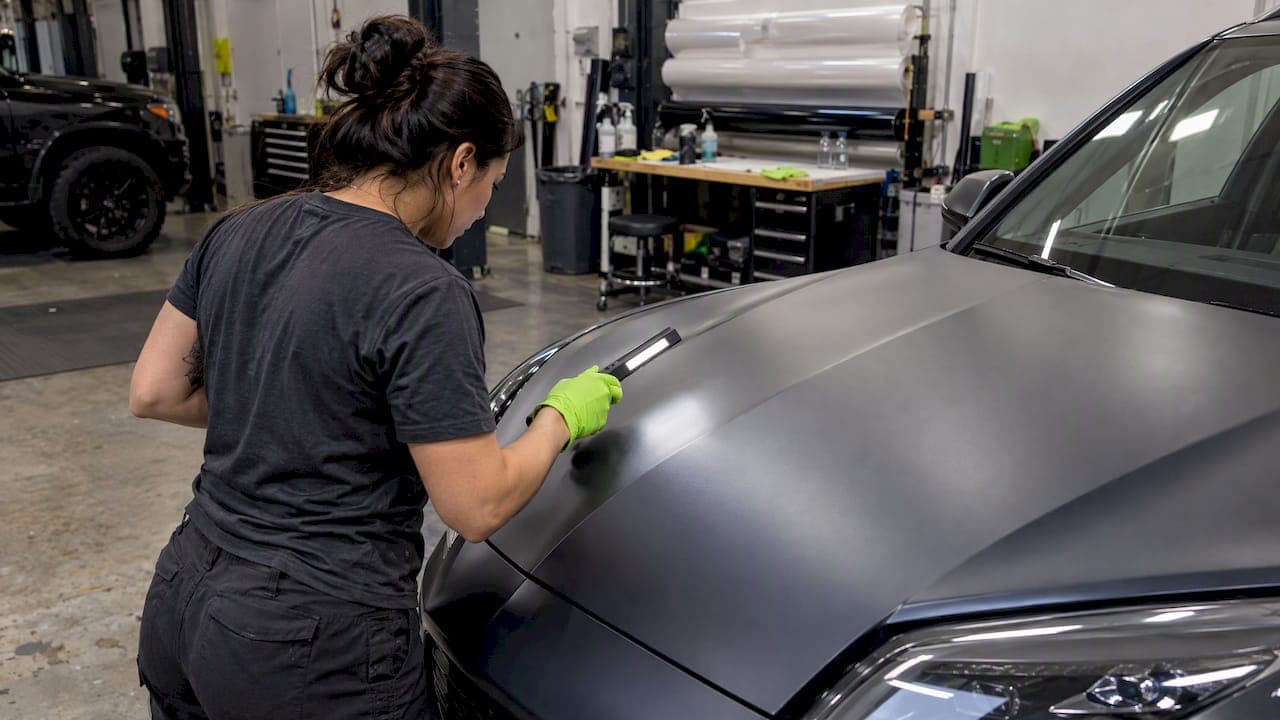
Yes, you can protect matte paint with paint protection film, but only with a matte or satin-specific film and correct prep. Standard gloss PPF or careless installation can add unwanted sheen, trap stains, or peel on uncured paint. Manufacturer guides from 3M and Avery Dennison spell out the prep and handling rules that make the difference.
TL;DR:
- Matte or satin PPF requires a dedicated flat or satin topcoat to avoid unwanted shine or discoloration, unlike standard gloss film.
- Proper surface preparation, including full curing, cleaning, and correct application temperature, is essential to prevent film failure or visible defects on matte paint.
- Low-solvent cleaners and gentle maintenance routines are crucial to preserve the matte finish, as harsh products can cause shine or staining.
- Full-body coverage is recommended for a uniform matte look, but the cost increases with film type, prep work, and vehicle complexity.
- Trusted installers should offer a climate-controlled environment, manufacturer-backed warranty, and experience with EV and Tesla panels to ensure a high-quality matte PPF application.
Table of Contents
- What matte PPF is and how it differs from gloss PPF or matte wraps
- Benefits and downsides of PPF on existing matte paint
- Film options and material details for matte finishes
- Installation and prep rules specific to matte paint
- Maintenance and cleaning that keep matte film looking right
- Coverage choices and what drives matte PPF cost
- What a credible matte PPF installer should show you
- Matte PPF, wrap, or repaint: a quick take
- Request a matte PPF quote from our Van Nuys shop
- FAQ
- Sources
What matte PPF is and how it differs from gloss PPF or matte wraps
Matte PPF uses a flat or satin topcoat instead of the glossy finish on standard film, so it sits over your paint without adding shine. Manufacturers market these as matte, stealth, or satin lines, and the terms describe the same idea: a textured or chemically flattened topcoat designed to blend with a factory matte finish.
- Matte or satin PPF: a clear film with a flattened topcoat built to disappear on matte paint while adding impact and stain resistance.
- Gloss PPF: the standard clear film; it protects the same way but will visibly shine a matte panel.
- Matte vinyl wrap: a colored or clear vinyl that changes or renews appearance but offers thinner protection and is easier to remove or replace than PPF.
Benefits and downsides of PPF on existing matte paint
The upside is real protection: a matte topcoat resists rock chips, bug acid, and light swirling the way gloss PPF does, and most matte films add stain resistance against tree sap and water spots.
- Stone chip and abrasion resistance comparable to gloss PPF, just without the shine.
- Self-healing topcoats on several matte products shrug off light swirls with heat exposure, per Madico's Protekt Satin Matte PPF documentation.
- Stain resistance against sap, bird droppings, and road grime when cleaned promptly.
The downside list matters just as much. Hard solvents can burn or shine a matte topcoat, some films require wet-apply installation with its own learning curve, and dry-apply films are only rated for fully cured OEM paint, since removal can damage uncured or repainted panels, according to Avery Dennison's dry-apply guidelines. Deep scratches under the film are not repairable without replacing that section.
Pro Tip: Ask your installer whether your specific film is wet-apply or dry-apply before scheduling, since the two systems call for different tools and paint-condition checks.
Film options and material details for matte finishes
Matte-specific PPF has matured well past a generic flat topcoat. XPEL's STEALTH line and Avery Dennison's Xtreme Matte Supreme PPF both use dedicated topcoat chemistries built to hold a flat look under UV and cleaning cycles, rather than a texture that can wear smooth over time.
- Matte topcoats are chemically formulated to stay flat, not just textured on application.
- Hard solvents such as isopropyl alcohol can mat, shine, or discolor the topcoat if used during or after install, a warning repeated across manufacturer documentation.
- Ceramic coatings formulated for stealth or matte film do not add shine, according to XPEL, but a generic gloss-boosting ceramic can undo the flat look.
Storage and handling also matter: rolls should stay at moderate room temperature before use, since heat or cold can affect how the adhesive and topcoat behave during application.
Installation and prep rules specific to matte paint
Correct prep separates a flawless matte PPF job from a visible mistake. The sequence installers follow:
- Confirm the paint is fully cured and inspect for prior damage or touch-up work.
- Remove any existing ceramic coating, wax, or sealant from the panel.
- Clay bar the surface to pull embedded contaminants before the final solvent wipe.
- Apply film within the manufacturer's recommended temperature window.
- Use tack solution and a squeegee technique suited to wet or dry apply, per the film's instructions.
- Let seams and edges set before applying firm pressure or trimming.
**3M's installation guideline recommends an application temperature within a moderate range optimal for adhesive performance, avoiding conditions that are too cold or too hot, according to 3M's Pro Series installation guideline.
After install, most manufacturers advise waiting 24 to 48 hours before the first wash and avoiding abrasive polishes or dyed waxes while the adhesive finishes setting. A full install, start to finish, commonly runs several hours depending on coverage and vehicle complexity, as outlined in this install timeline breakdown.

Maintenance and cleaning that keep matte film looking right
Matte PPF needs gentler handling than gloss film because the wrong product can leave permanent shine or staining. Stick to pH-neutral soaps, microfiber mitts, and rinse-first techniques to avoid grinding grit into the topcoat.
- Use pH-neutral car soap and a dedicated matte-safe microfiber wash mitt.
- Avoid hard solvents, abrasive polishing compounds, and waxes with dyes or gloss additives.
- Treat bird droppings, tar, and sap quickly with manufacturer-approved removers rather than scrubbing.
- Apply only ceramic sprays labeled compatible with matte or stealth film, since generic boosts can add sheen.
Pro Tip: Keep a matte-safe quick detailer in the trunk so sap or droppings never sit on the film longer than a day. For a full routine, our PPF maintenance guide walks through week-by-week care.
Coverage choices and what drives matte PPF cost
Full-body coverage protects every painted panel and gives the most uniform look on a matte car, since partial kits can leave a visible edge line where film meets bare paint under certain light. Full-front or track-pack style coverage protects the highest-impact zones (hood, fenders, mirrors, bumper) at lower cost and complexity.
- Film type and finish: matte or stealth film typically costs more than standard gloss PPF due to the specialized topcoat.
- Prep time: removing an existing ceramic coating or correcting swirls adds labor before film ever goes on.
- Vehicle complexity: curves, trim pieces, and tight panel gaps increase install time and risk.
- Shop environment: dust and temperature control affect how cleanly film lays down.
Before booking, ask about installer warranty terms, climate-controlled workspace, documented experience with matte finishes, and written post-care instructions.
What a credible matte PPF installer should show you
A shop worth trusting with matte paint will volunteer specifics, not vague reassurances.
- A climate-controlled, dust-free installation bay.
- Manufacturer-backed warranty coverage on the film itself.
- A track record of completed installs and a public star rating.
- Documented Tesla and EV experience, since these panels often carry unique sensor and trim layouts, as covered in our Tesla matte PPF guide.
Ask directly which film brand they use, how they handle wet versus dry apply, and what the warranty excludes.
Matte PPF, wrap, or repaint: a quick take
Daily drivers that need real protection are better served by matte PPF than a wrap, since film holds up to rock chips a vinyl wrap cannot. A show car focused purely on appearance, or one needing a full color change, often makes more sense as a matte wrap or repaint instead.
— Jake
Request a matte PPF quote from our Van Nuys shop
We install paint protection film in a climate-controlled, dust-free facility in Van Nuys, built specifically to keep matte and satin finishes free of the debris that shows up as swirls or fisheye under flat paint. Our team has handled Tesla and EV installs regularly, which matters on panels with sensor cutouts and tight trim gaps, and every install is backed by a manufacturer warranty.

- Climate-controlled bay keeps dust and temperature swings out of the install.
- Manufacturer-backed warranty coverage on the film we apply.
- Tesla and EV fitment experience built into our prep and install process.
A typical appointment usually involves a paint inspection, decontamination and clay prep, film application, and a final quality check before handoff. Visit our paint protection film page to see coverage options and request a detailed quote for your matte finish.
FAQ
Can you put PPF on matte paint?
Yes, as long as the film is a matte or satin-specific product and the installer follows manufacturer prep steps for cure time and cleaning. Standard gloss PPF will visibly shine a matte panel, so finish selection matters as much as installer skill.
How much does PPF for matte paint cost?
Pricing depends on coverage (partial kits versus full-body), film finish, and how much prep the paint needs before install, and our shop provides a quote after inspecting your vehicle on our paint protection film page. Matte and stealth films generally cost more than standard gloss PPF due to the specialized topcoat.
Is PPF available in matte finish?
Yes, several manufacturers produce dedicated matte or satin PPF lines, including XPEL's STEALTH and Madico's Protekt Satin Matte PPF, both built to preserve a flat look while adding stain resistance and self-healing properties.
What are the downsides of matte PPF?
Matte topcoats are sensitive to hard solvents like isopropyl alcohol, which can leave shiny patches or discoloration if used during cleaning or install. Some matte products also require wet-apply installation, which takes more installer skill than standard dry-apply film, and deep damage under the film typically means replacing that section rather than spot-repairing it.
Sources
- 3M Paint Protection Film Pro Series installation guideline
- Avery Dennison - Application instructions for Supreme PPF films (IB 1.15)
- Protekt Satin Matte PPF — Madico