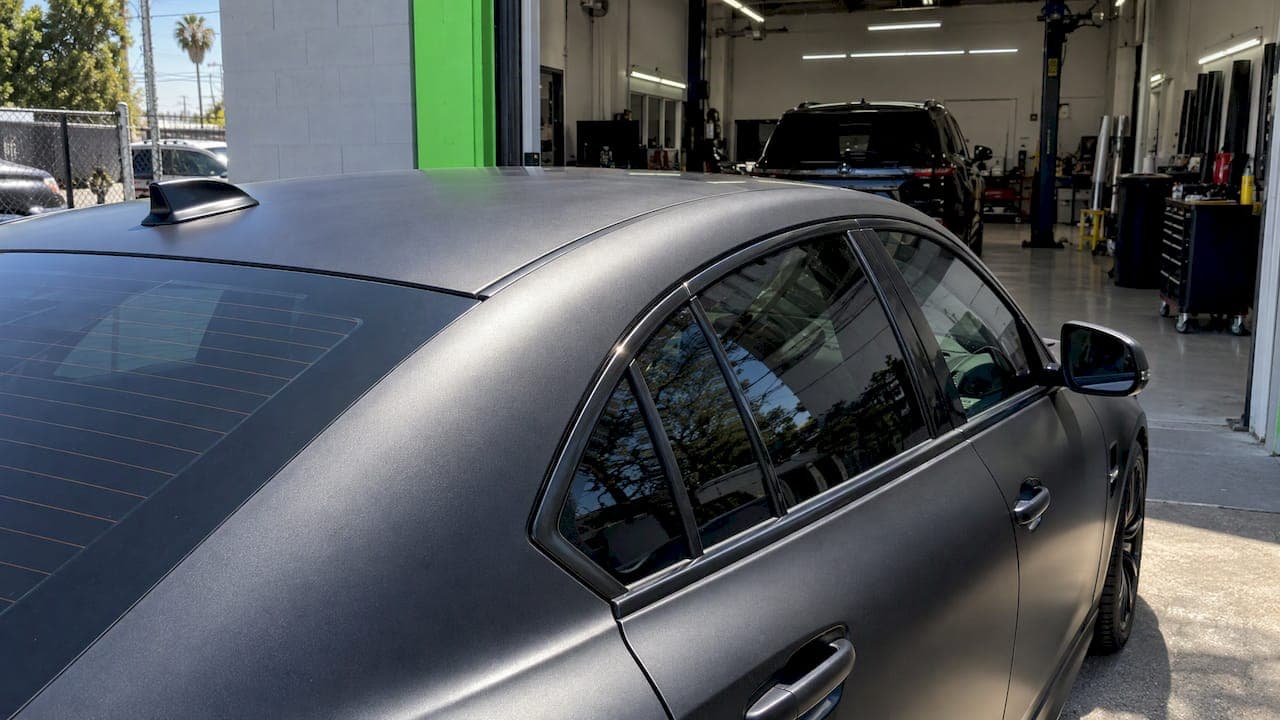
A quality automotive vinyl wrap handles everyday heat well. Manufacturer data sheets rate cast wrap films for service temperatures of roughly 194°F to 230°F or more, far above what a parked car's body panels normally see. The real threat in a hot, sunny place like Southern California is not one hot day. It is years of heat and UV working on the film, especially on horizontal panels. This guide covers the actual ratings, what they mean, and how to keep a wrap looking right.
TL;DR
- Cast wrap films carry published service ratings of about -58°F up to 230°F, so normal summer heat will not melt or fail a wrap.
- The rating is not the whole story: heat plus UV, dirt and pollution shorten a wrap's life, mostly on the hood, roof and trunk.
- Installers heat the film to 203°F to 248°F during post-heating on purpose. That is a one-time process step, not a limit on driving.
- Shade, a regular wash and a wrap-safe sealant do most of the work of keeping a wrap healthy.
- Use the right cleaners. Hard solvents such as isopropyl alcohol can dull and age the film.
Table of Contents
- What temperatures can a vinyl wrap actually handle?
- Why a hot day is rarely the problem
- Sun, UV and which panels suffer first
- Post-heating is not the same as heat resistance
- Installation conditions matter as much as the film
- How to protect a wrap from heat and sun
- Does a wrap protect paint from sun damage?
- Heat-resistant films versus heat-resistant wraps for other uses
- What to ask a shop before you book
- Book a wrap built for Valley heat
- FAQ
- Sources
What temperatures can a vinyl wrap actually handle?
The best answer comes from the data sheets of the film makers. Three examples show the spread:
| Film | Published temperature range | In °F |
|---|---|---|
| Avery Dennison Supreme Wrapping Film | -50°C to +110°C service temperature | -58°F to 230°F |
| Avery Dennison ColourWrap Film | -40°C to +90°C end-use temperature | -40°F to 194°F |
| ORACAL 970RA | -58°F to +248°F, short-term exposure, on aluminum | -58°F to 248°F |
Three things stand out. First, every one of these ratings sits well above the air temperature in any US city. Second, the ratings differ by product, so a premium cast film is not the same as a basic one. Third, the numbers come with conditions: a test substrate, a short exposure, a defined use. A data sheet is a lab statement, not a promise that the wrap will look new after eight summers.
That is why a shop choosing a film for your car should know which product line it is working with and what its sheet says. Different finishes, such as gloss, satin, matte, chrome or textured, can behave differently, so ask for the specific film's data sheet when you compare options.
Why a hot day is rarely the problem
People search this topic after imagining a wrap bubbling in a parking lot. A properly installed wrap on healthy paint does not do that on an ordinary hot day. The film is already built to be heated during installation, stretched around curves and settled with a heat gun.
Where heat does matter is cumulative. Orafol's processing guidelines say a film's expected service life is reduced by high temperatures, high humidity, air pollution and high UV levels. The same document describes a dry, hot climate zone that includes deserts. Los Angeles and the San Fernando Valley are not a desert strictly, but long, dry, bright summers put a wrap in the demanding end of that range.
So the honest framing is this: heat will not suddenly ruin a wrap, but a wrap in a hot, sunny market ages faster than the same wrap in a mild, cloudy one, and care matters more.
Sun, UV and which panels suffer first
3M's wrap care FAQ states that prolonged exposure to sun and atmospheric pollutants degrades vinyl graphics, particularly on horizontal surfaces such as the hood, trunk lid and roof. That matches what you see on cars: the panels facing the sky take the most radiation, while doors and bumpers age more slowly.
What that damage looks like in practice:
- Fading or color shift, most visible on bright reds, yellows and some satin colors on the roof and hood.
- Loss of gloss or a chalky look as the surface layer weathers.
- Edge lifting or cracking on older film, where heat cycling and dirt work on the adhesive and the material.
- Staining, when contaminants sit on the surface through hot days.
Avery Dennison notes in its cleaning and maintenance bulletin that film left in constant contact with dirt, grime and contaminants can degrade, especially when left unclean and exposed to UV light or heat. In other words, heat and neglect compound each other.
Post-heating is not the same as heat resistance
One common confusion: installers heat vinyl to 200°F and beyond, so how can a wrap be rated for less? Because those are two different jobs.
Post-heating is part of installation. Arlon's installation guide describes it as a function of temperature, time and reapplied pressure. It can increase adhesive contact, reveal uninstalled areas and bubbles, relieve film stress and speed up adhesion build. The same guide says edges, seams and stretched areas should be post-heated between 203°F and 221°F (95°C and 105°C).
ORACAL's processing sheet for US vehicle wraps gives a similar picture: post-heat the full web of film to roughly 150°F so the adhesive starts settling on large flat sections, then heat edges, recesses and tucked areas to 230°F to 248°F.

The point for you as an owner: a wrap that is post-heated correctly has a memory of its new shape. Film that was stretched into a recess and never post-heated may pull back later, and a hot afternoon is when you will notice. If you want to know what a careful job looks like, our guide on how to vet post-heated wrapped edges explains the steps and the questions to ask an installer.
Installation conditions matter as much as the film

Heat resistance starts before the film touches the car. Vinyl applied in cold goes on brittle, and applied in dust it traps debris under the surface. Shops that care about finish work in a controlled space. At Tint & Wraps Customs we install in a climate-controlled, dust-free facility in Van Nuys, which keeps temperature and contamination out of the equation while the film is stretched and set.
Paint preparation is the other half. The adhesive needs clean, sound paint to grip, and a wrap on poorly bonded repaint is the classic case of problems appearing in summer heat. Our write-up on what pros do in the weeks before wrapping covers how to prevent paint trouble.
Perspective
We wrap cars in the San Fernando Valley, where August can be hard on any exterior surface, so heat is not a theoretical question for us. Our view is simple. A quality film from a major manufacturer has a temperature rating you will never reach in daily use. What separates a wrap that looks good in year four from one that looks tired in year two is installation and habits.
That means a dust-free, temperature-controlled bay, properly prepared paint, edges and recesses post-heated to the manufacturer's range, and an owner who knows how to wash and park the car. We would rather talk through those details with you at the counter than sell you a color and hope for the best.
Our team also works with Tesla and other EVs regularly, and we plan panels, sensors and trim before any film goes on. If you want a wrap that ages well in this climate, choose the film, the installer and the care routine together.
Jake
How to protect a wrap from heat and sun
The care steps below come from Avery Dennison's maintenance bulletins and apply to most cast films. Follow your own film's instructions where they differ.
- Park out of direct sun when you can. Avery's maintenance guidance recommends shade, a garage or cover. At a workplace lot, even a shaded corner helps the hood and roof.
- Wash regularly. The same bulletin says a wrap should ideally be cleaned every two weeks. Frequent washing keeps abrasive dust and acidic contaminants from baking on.
- Spot-clean quickly. Bird droppings, tree sap and bug residue are best removed promptly, before heat bonds them to the film.
- Use a wrap-safe sealant. Avery says its Supreme Wrap Care Sealant adds a protective layer that makes it harder for dirt, bird droppings, tree sap and other contaminants to bond to and damage the film. Ask your installer which product suits your finish, since matte and satin films often need different products than gloss.
- Avoid hard solvents. The same bulletin warns against applying hard solvents such as isopropyl alcohol directly to Avery Dennison films, because they may cause matting, loss of gloss and premature degradation.
For a full routine, including washing technique and what to skip at the car wash, see our vinyl wrap maintenance guide.
Practical habits for Valley drivers
- Wash in the morning or evening, not on hot panels in direct afternoon sun, so soap and water do not dry into spots.
- Skip heat guns, steamers and pressure-washer nozzles held close to edges.
- Watch the roof and hood most closely. If you see lifting at an edge, have it looked at early, because heat and dirt make small lifts grow.
- Keep fuel from spilling on the film at a gas station. Wipe it up fast with a soft, damp cloth.
Does a wrap protect paint from sun damage?
A wrap covers the paint with a layer of film, so the paint underneath is not directly exposed to sunlight, and many owners reasonably expect it to stay fresher beneath. But a wrap is mainly a color and appearance product. If your main goal is defending paint against chips and scratches, clear paint protection film is made for that job, and the two can work together. Our comparison of PPF versus vinyl wrap explains which to pick for protection and which for looks.
Remember that the same sun that spares the paint is aging the wrap. The film is the consumable layer. Planning removal on schedule, rather than leaving a sun-baked wrap on for years, makes for a cleaner takedown, and our car wrap lifespan guide sets out what to expect.
Heat-resistant films versus heat-resistant wraps for other uses
Search results for this keyword mix car wraps with stove, appliance and engine-bay products. Those are different materials, rated for much higher surface temperatures. Automotive color-change film is designed for body panels, which see sun and road heat, not exhaust or brake-rotor temperatures. If you want something on a hot component, such as calipers, wheels or exhaust tips, ask about coatings made for that purpose. We offer wheel and caliper painting for that part of the car.
Interior glass is another heat story. A wrap does not cool the cabin. Window tint does, by cutting solar heat and UV through the glass. Our post on indoor tinting for vehicle and EV owners explains how film is installed in a controlled setting and what UV protection to expect.
What to ask a shop before you book
Use these questions to compare installers:
- Which film line will you use, and can I see its technical data sheet?
- Where is the car wrapped, and is the space temperature controlled and clean?
- How do you post-heat edges and recesses, and to what temperature?
- What warranty comes with the film, and what does it require from me in care?
- How should I wash and protect this particular finish?
A shop that answers these without hesitation is usually one you can trust with a hot-climate wrap.
Book a wrap built for Valley heat
We install vinyl wraps, chrome delete and fleet wraps in our climate-controlled Van Nuys facility, using film from established manufacturers and backing installs with manufacturer warranties. If you are planning a color change or a branded vehicle, see our vinyl wrap options and talk to us about the panels that see the most sun. Business owners can also look at fleet wrap pricing in Van Nuys.
Tell us how the car is parked, driven and washed, and we will recommend a film and care plan to match.
FAQ
Can a vinyl wrap melt in a hot car or hot weather?
Not under normal conditions. Published ratings for cast wrap films run up to about 194°F to 248°F depending on the product and test, which is far above ordinary weather. Problems in heat usually trace back to poor installation, such as film that was stretched and never post-heated, or to wraps that have simply reached the end of their service life.
Does the sun fade a vinyl wrap?
Yes, over time. Manufacturer guidance says prolonged sun exposure degrades vinyl graphics, especially on the hood, roof and trunk. Parking in shade, washing regularly and using a wrap-safe sealant slow the process.
Is a vinyl wrap's heat rating the same as the heat gun temperature used to install it?
No. Installers heat film above everyday temperatures for a short time to set it, and data sheets for post-heating call for roughly 203°F to 248°F at edges and recesses. The service rating describes the finished wrap in daily use over years.
Can I use isopropyl alcohol to clean my wrap?
Avoid applying it directly. Avery Dennison warns that hard solvents such as isopropyl alcohol can cause matting, loss of gloss and premature degradation of its films. Use a cleaner approved for your film and follow the maker's instructions.
Sources
- Avery Dennison Supreme Wrapping Film data sheet
- Avery Dennison ColourWrap Film technical datasheet
- ORACAL 970RA technical data sheet
- ORACAL processing guidelines for car wrapping
- ORACAL processing and handling of solid color vehicle wraps
- 3M 2080 Wrap Series vehicle care FAQ
- Arlon installation guide
- Avery Dennison IB1.50 cleaning and maintenance for vehicle wraps
- Avery Dennison IB 1.8 vehicle wrap and graphics maintenance