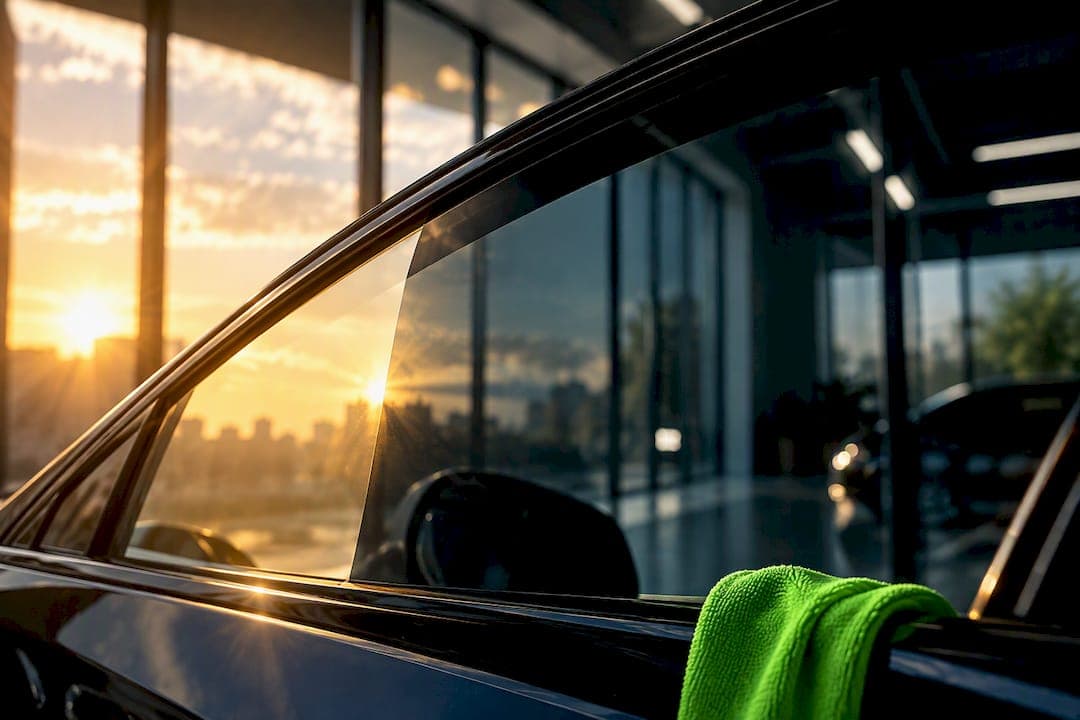
Professional indoor automotive tinting cuts UV exposure and cabin heat, reduces glare, adds privacy, and protects your interior from sun damage. Installing the film in a climate-controlled shop keeps out dust and debris that cause bubbles and peeling, which is why indoor jobs tend to hold up longer under manufacturer-backed warranties. Federal rules also cap how dark a shop can legally go on your front windows, so a reputable installer will explain those limits before they start.
TL;DR:
- Quality film can reject up to 99.9% of UV rays, significantly reducing interior fading and protecting dashboards and upholstery from sun damage.
- Infrared rejection in ceramic and ceramic IR films helps lower cabin temperatures and preserves EV range by reducing the load on air conditioning systems.
- Darker tinting improves glare reduction and privacy but may impair night visibility, making lighter ceramic options preferable for those driving frequently after sunset.
- Indoor, climate-controlled installation prevents dust and debris from causing bubbles and peeling, ensuring longer-lasting results with manufacturer-backed warranties.
- Federal regulations limit front window tinting to 70% VLT, while state laws vary; always request documentation of compliance after installation.
Table of Contents
- 1. Top benefits at a glance for vehicle owners
- 2. Health and interior protection: UV exposure and fading
- 3. Thermal comfort and EV range: why heat rejection matters
- 4. Glare, visibility, and night-driving trade-offs
- 5. Comparing nano-ceramic, carbon, and clear ceramic film
- 6. How indoor, climate-controlled installation changes the outcome
- 7. Legal and compliance basics before you book
- 8. What tint customers actually notice after the install
- Book an indoor tint appointment that protects your car and your time
- Sources
- FAQ
1. Top benefits at a glance for vehicle owners
Most people book a tint appointment for one reason, then discover the rest once the car is done. The full list is worth seeing together before you pick a film.
- UV protection: quality film blocks the rays that fade dashboards, crack leather, and age upholstery, delivering multiple window tinting advantages every vehicle owner needs.
- Lower cabin temperatures: less solar heat means less strain on your air conditioning, which matters even more in an EV.
- Reduced glare: driving into low sun becomes noticeably less tiring on the eyes.
- Privacy and curb appeal: darker glass discourages break-ins and gives most vehicles a cleaner look.
- Electronics and interior protection: phone mounts, child seats, and infotainment screens see less heat and UV stress over time.
- Longer film life: installation indoors, away from dust and pollen, cuts the defect rate that shortens a tint job's usable life.
3M's Ceramic IR Series brochure reports up to 99.9% UV rejection and up to 93% glare reduction on its higher-performance ceramic films, which explains why UV damage and glare are usually the first two complaints a good tint job resolves.
2. Health and interior protection: UV exposure and fading
Most drivers assume their windows already block UV rays. Windshields generally do a consistent job of it, but side windows are a different story.
A JAMA Ophthalmology study found that front windshields provided steady UV-A protection while side windows varied widely between vehicles, a gap researchers linked to more sun damage on the left side of drivers' faces. Health commentary from the University of Utah's HealthFeed echoes this, recommending professional window film as a way to standardize protection rather than relying on factory glass.
That inconsistency shows up inside the cabin too:
- Untreated leather and vinyl fade and crack faster under direct UV exposure.
- Dashboards and door panels discolor unevenly depending on sun angle.
- A near-99.6% UV block from quality film helps keep that damage from ever starting, which preserves resale value.
3. Thermal comfort and EV range: why heat rejection matters
Total Solar Energy Rejected (TSER) and infrared rejection (IRR) are the two numbers that matter most for comfort. TSER measures how much total solar energy a film keeps out of the cabin, while IRR isolates the infrared band responsible for that radiant, skin-level heat you feel through glass on a hot day.

For EV owners, this isn't just a comfort question. Purdue research on cabin cooling load links higher air-conditioning demand directly to measurable driving range loss, since climate control draws from the same battery that powers the drivetrain. A film with strong IR rejection reduces how hard the AC compressor has to work to hit a comfortable cabin temperature, which trims that parasitic draw on the battery. On a parked car under direct sun, that difference in interior temperature is often noticeable within minutes of getting back in.
4. Glare, visibility, and night-driving trade-offs
Cutting glare makes daytime driving less tiring, especially at sunrise, sunset, or on long highway stretches. But there's a real trade-off to manage.
- Very dark films reduce glare well but can also dim your view of the road at night.
- Lighter ceramic films cut glare and heat while keeping visibility closer to factory levels after dark.
- Clear ceramic options block UV and infrared without darkening the glass at all, a good fit for drivers who want protection but need to stay near legal front-window limits.
Pro Tip: If you drive a lot at night, ask your installer about a clear ceramic film for the front windows and save darker tint for the rear and back doors.
5. Comparing nano-ceramic, carbon, and clear ceramic film
Not all films chase the same goal, so it helps to know what each type is actually built to do.
- Nano-ceramic: the top performer for IR rejection, non-metallic so it won't interfere with GPS, radio, or Tesla sensor systems. The 3M Ceramic IR Series reports IR rejection up to 95% in tested bands, one of the clearest examples of what premium ceramic film can deliver.
- Carbon film: solid heat rejection with a flat, matte finish that many owners like aesthetically, usually at a lower price point than ceramic.
- Clear ceramic: built for owners who want UV and IR protection without any visible darkening, common on Tesla and luxury EV windshields.
When comparing quotes, look past the marketing name and check the actual numbers: VLT (how much visible light passes through), TSER (total solar energy rejected), IRR (infrared rejected), and UV rejection percentage. Those four figures tell you more than any brand label.
6. How indoor, climate-controlled installation changes the outcome
Dust is the enemy of a clean tint job. A single speck trapped under the film during application can create a bubble or a visible defect that shows up weeks later, which is why installing indoors in a controlled environment matters more than most buyers realize.

Some installers perform every install in a climate-controlled, dust-free facility and back their work with manufacturer warranties; this approach can help protect many vehicles and maintain a strong reputation. For Tesla and EV owners specifically, that controlled setting supports the precise trimming needed around door sensors and cameras, so the film sits flush without interfering with factory electronics or leaving a rough edge along the frame.
7. Legal and compliance basics before you book
Federal rules set a real floor on how dark a business can legally go on certain windows, and it's worth knowing before you show up for an appointment.
- Know the 70% rule: under FMVSS No. 205, commercial installers cannot apply tint that drops windows requisite for driving, generally the windshield and front sides, below 70% VLT.
- Understand who the rule binds: NHTSA's guidance clarifies that vehicle owners aren't federally barred from tinting darker themselves, but shops and repair businesses can't legally do it under the render-inoperative provision.
- Check your state limits too: state laws vary on rear and back-side windows, so confirm your local rules, including California's specific limits if that's where you're driving.
- Ask for documentation: request the installed VLT reading and a written compliance note you can keep in the glovebox.
8. What tint customers actually notice after the install
Most calls I get start with heat or fading complaints, and most follow-ups end with people telling me their car finally feels comfortable again. Warranty reliability matters too. Our shop's climate-controlled installs, 5-star reputation, and track record protecting over 1,000 vehicles are why owners keep choosing professional indoor work over a driveway job. If you want results that hold up, indoor installation isn't optional.
— Jake
Book an indoor tint appointment that protects your car and your time
Booking a professional indoor tint means showing up with a clean car, mostly. Clear out personal items and give the glass a quick wash beforehand so the technician isn't fighting grime on top of dust. Most jobs run a few hours depending on the vehicle and film choice, and a climate-controlled bay means no surprise weather delays or airborne debris mid-install.
You have real choices here, not just one dark film:
- Carbon tint for a clean matte look at a lower cost.
- Ceramic tint for maximum heat and UV rejection, especially useful for EVs.
- Clear ceramic for UV and IR protection with no visible darkening.
Many professional installers offer manufacturer-backed warranties and use a climate-controlled process for their installations, regardless of the vehicle type. Visit the window tinting page to see film options and book your appointment.
Sources
- Interpretation ID: 17440.drn (NHTSA)
- Assessment of Levels of Ultraviolet A Light Protection in Automobile Windshields and Side Windows
- 3M Automotive Window Film Ceramic IR Series brochure
- Purdue paper on cooling load and vehicle energy consumption
- Car windows won't protect you from UV rays — HealthFeed (University of Utah)
FAQ
Does window tint actually block UV rays?
Yes, quality automotive film is specifically designed to block UV radiation, with some ceramic films reporting UV rejection up to 99.9% according to manufacturer testing. This matters because factory side windows are inconsistent at blocking UV compared to windshields, according to a JAMA Ophthalmology study.
Can indoor tinting help preserve my EV's driving range?
Reducing cabin heat lowers how hard your air conditioning has to work, and research on vehicle cooling load ties higher AC demand to measurable range loss in electric vehicles. A film with strong infrared rejection reduces that solar heat load before it ever reaches the cabin.
How dark can I legally tint my front windows?
Under FMVSS No. 205, commercial installers cannot tint windows requisite for driving below 70% visible light transmittance. State rules add further limits on rear and back-side windows, so check your local requirements before booking.
What is the difference between ceramic and carbon window tint?
Ceramic film generally delivers stronger heat and UV rejection and avoids interfering with electronics or GPS signals, while carbon film offers solid heat rejection with a matte finish at a lower cost. Clear ceramic is a third option for drivers who want protection without any visible darkening.
Why does indoor installation matter for tint quality?
Installing tint in a climate-controlled, dust-free space prevents the debris and airborne particles that cause bubbles, peeling, and adhesive failure. Shops that install indoors, like Tint & Wraps Customs, can back the work with manufacturer warranties because the controlled environment produces a more consistent result.