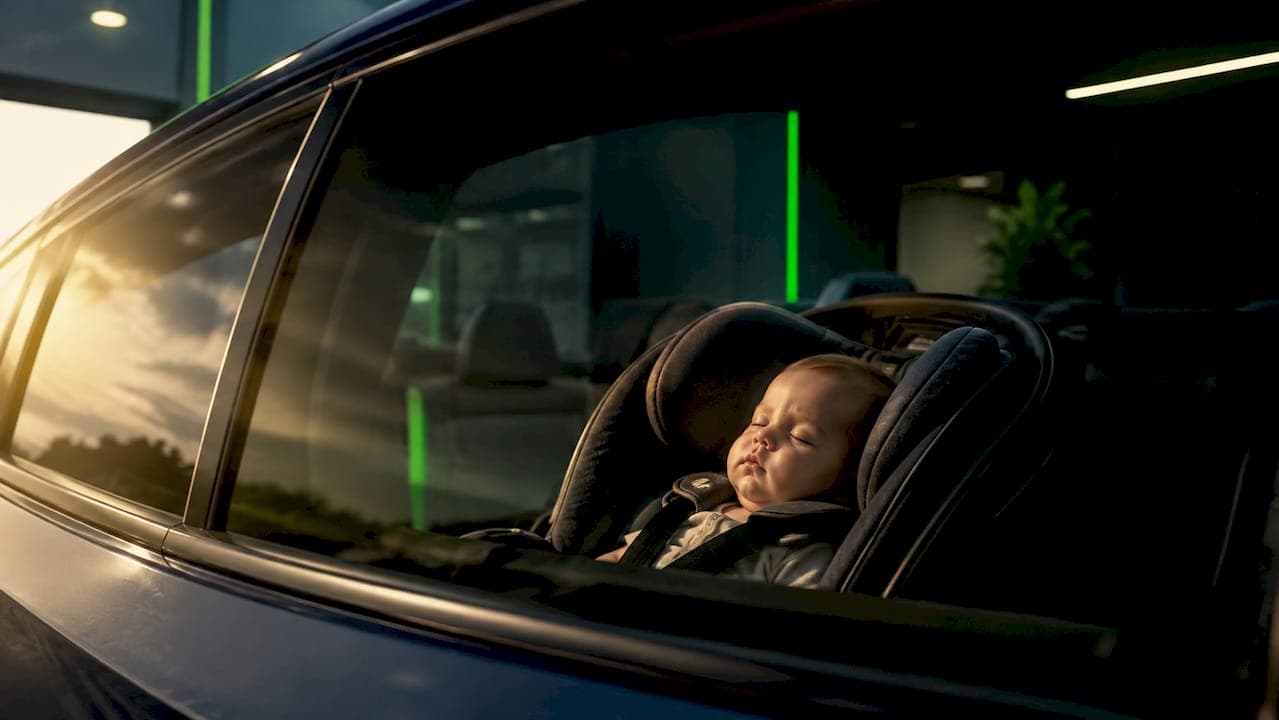
Quality automotive window film, specifically ceramic or crystalline, is worth installing for rear-seat infants because it blocks nearly all UVA and UVB rays and cuts cabin heat significantly. It is not a substitute for supervision, and the film has to meet your state's legal limits and go on through a professional installer who tests the result. Get those two things right and you have solved most of the problem.
TL;DR:
- UV rejection ratings should be 99% or higher, with lab data confirmed by the installer, to ensure effective protection for infants.
- Ceramic and crystalline films offer the best heat rejection and UV blocking without darkening the windows excessively, ideal for car seats and driver visibility.
- Proper installation by a professional with a climate-controlled facility and post-install VLT measurement prevents protective failure and voided warranties.
- Laws governing VLT vary by state, so confirming legal limits and avoiding overly dark tint on driver windows reduces safety and legal risks.
- Combining tint with daily sun-protective clothing and mindful driving habits maximizes safety and UV protection for infants.
Table of Contents
- Is Car Tint for Babies Actually Necessary?
- Ceramic, Crystalline, Carbon, or a Removable Shade: What Fits a Baby's Car?
- Tint Laws and Visibility: What Parents Need to Confirm Before Installing
- How to Choose the Right Tint for a Baby's Car
- Professional Installation vs. DIY Kits: What Actually Protects a Baby
- Keeping Tint Working: Cleaning, Checks, and Daily Habits
- Why Parents Choose Tint & Wraps Customs for Baby-Safe Installations
- Your Action Plan for Baby-Safe Window Tint
- Health Concerns Parents Raise About Tinted Car Windows
- An Editorial Take on Baby-Safe Window Tint
- Get Baby-Safe Tint Installed Right the First Time
- Sources
Is Car Tint for Babies Actually Necessary?
Standard automotive glass is better at blocking UVB than most parents assume, but it leaks UVA at a rate that should concern anyone who drives a baby around on sunny afternoons. Pediatric safety researchers point out that while side windows stop most UVB (the ray responsible for sunburn), they let significant UVA through, and UVA exposure is linked to long-term skin damage that accumulates over years, not single trips. A baby strapped into a rear-facing seat for 20 minutes a day, five days a week, racks up more sun exposure than most parents realize, especially on the side of the car that faces the sun during a typical commute.
This is where professional-grade film changes the equation. Lab-tested automotive window film can reject close to all UVA and UVB radiation, with many professional products advertising around 99% UV rejection. That is a meaningful jump from bare glass, and it does not fade or wear off the way sunscreen does mid drive.
Heat matters just as much as UV exposure. Infants regulate body temperature far less efficiently than adults, and a car interior on a warm day turns into a greenhouse fast. Independent testing on solar-reflective film and quality tint has recorded cabin air temperature drops in roughly the 5 to 15 degree Fahrenheit range depending on film type and conditions, along with lower surface temperatures on car seats and dashboards. That is the difference between a car seat buckle that is warm to the touch and one that is genuinely uncomfortable to grab.
Quick numbers worth remembering:
- Professional film: up to roughly 99% UVA/UVB rejection
- Measured cabin temperature reduction: approximately 5–15°F depending on film and conditions
- UVA passes through untreated auto glass at rates high enough to concern pediatric researchers
None of this replaces sunscreen, sun hats, or a shade you put up when the car is parked. Think of tint as the layer that works even when you forget the other layers.
Ceramic, Crystalline, Carbon, or a Removable Shade: What Fits a Baby's Car?
Not every film does the same job, and picking the wrong one means paying for protection you don't actually get.
Ceramic film rejects infrared heat better than almost anything else on the market, and it does this without going dark or metallic. If your priority is keeping the back seat cool on 95 degree days, ceramic film's heat rejection properties make it the strongest pick, and it holds up to sun exposure for years without degrading.
Crystalline film trades a bit of heat rejection for near-total visibility. It looks almost clear while still blocking the bulk of UV and a good chunk of infrared heat, which matters if you glance in the rearview mirror constantly to check on your baby. Installers often describe crystalline as the visibility-first option for family vehicles, and it is a common recommendation when parents want protection that does not change how the car looks or feels from the driver's seat. A clear ceramic option accomplishes something similar if you want the UV block without any visible darkening at all.
Carbon and dyed films sit a step below. They block a reasonable amount of UV but fall short of ceramic and crystalline on heat rejection, and older metalized versions can interfere with cell signal, GPS, or in some cases toll transponders. If budget is the main constraint, carbon still beats no tint at all, but it is the compromise option, not the first choice.
Removable shades (mesh, static cling, magnetic, or roller) fill a different need entirely. They are cheap, portable, and useful for a rental car or a grandparent's vehicle where permanent tint isn't practical. But not all shades are built the same:
- Static-cling and magnetic shades stay put well and rarely detach.
- Suction-cup and roller shades with rigid frames carry more risk. Pediatric safety guides note some designs can detach in a crash or create blind spots, which turns a sun-protection tool into a projectile hazard.
- Consumer shades sold online often advertise strong UPF and UV-block numbers, though durability and mounting quality vary a lot between listings, so read reviews before assuming a $12 shade performs like a $60 one.
Pro Tip: If you're weighing a shade against permanent tint, ask yourself how long you'll own the car. Tint pays for itself over years of daily driving; a shade makes more sense for a car you'll have for one more season or a vehicle you don't own outright.
Tint Laws and Visibility: What Parents Need to Confirm Before Installing
Every state treats window tint differently, and what's legal for your neighbor's SUV in Nevada might be illegal on your sedan in New York. Window tint laws vary by state, and most states allow noticeably darker film on rear side windows and the rear window than on the front driver and passenger windows. That's good news for parents, since the rear seat is usually where the car seat lives anyway. But "usually darker in back" is not the same as "no rules in back," and some states cap rear-window darkness too.
Before you book an install, confirm your state's rules directly rather than trusting a shop's assumption or a forum post. A quick look at California's specific tint regulations shows how detailed these rules can get. Visible Light Transmission, or VLT, is the number that matters here. It measures the percentage of light that passes through the glass and film combined, and it's the figure law enforcement checks with a meter, not a guess based on how dark the window looks.
A few practical points to keep in mind:
- Ask your installer to measure and document the combined VLT after installation, not just before.
- Front windows almost always carry stricter limits than rear windows, so don't expect to match the darkness front to back.
- Crystalline or lighter ceramic films are the better call on any window you rely on for checking your baby without turning around.
- Never let a shade or film reduce the driver's own visibility, especially on the rear window used for reversing.
- A few states allow medical exemptions for photosensitive conditions; if that applies to your family, check with your pediatrician and your local DMV before assuming standard limits apply.
Confirming these details takes fifteen minutes and saves you a fix-it ticket, a failed inspection, or worse, film that has to come off and get redone.
How to Choose the Right Tint for a Baby's Car
A good installer will welcome specific questions. A vague answer to any of these is a signal to keep shopping.
- Confirm the UV rejection rate. Look for film rated at 99% or higher UV block. Ask if the manufacturer publishes lab data rather than a marketing claim.
- Ask about heat rejection, not just tint darkness. IR rejection and TSER (Total Solar Energy Rejected) numbers tell you how much heat actually stays out, which matters more than how dark the glass looks.
- Set your VLT target based on your state's legal limit, then confirm the installer will hit that number, not eyeball it.
- Ask if the film is non-metallic. Non-metallic ceramic or crystalline film avoids the signal interference issues tied to older metalized products.
- Confirm the warranty terms. A manufacturer-backed warranty tells you the film is expected to hold its performance for years, not just look good on day one.
- Request a post-install VLT reading. A shop that measures and documents this after the job is a shop that stands behind its numbers.
Ask directly: "Which film model are you installing, do you have lab data for its UV and IR rejection, and will you measure the combined VLT after the job is done?" A confident, specific answer means you're in good hands.
Red flags worth walking away from: an installer who can't name the film they're using, pressure to go darker than your state allows on front windows, or no offer to measure VLT once the job is finished.
Pro Tip: Save the installer's answers in a text to yourself or a photo of the invoice. If you ever sell the car or need a warranty claim, having the exact film name and install date on hand speeds everything up.
Professional Installation vs. DIY Kits: What Actually Protects a Baby
DIY tint kits are cheap and tempting, and for a garage project on a truck you don't care much about, they're fine. For a car carrying an infant, the math changes.
Professional installation matters because gaps and air bubbles are not just cosmetic. A poorly sealed edge lets UV rays sneak around the film's border, which defeats a meaningful part of the protection you paid for. Pro installers also work in controlled conditions that reduce dust and debris getting trapped under the film, something a driveway DIY job struggles to match.
DIY risks stack up quickly: bubbling that never fully clears, seams that peel within months, and a VLT result that's darker or lighter than intended because a home installer can't precisely test light transmission the way a shop meter can. Some vehicle manufacturers will also void portions of a glass warranty if aftermarket film is applied incorrectly, which is a real cost if you ever need a windshield or window replaced under warranty.
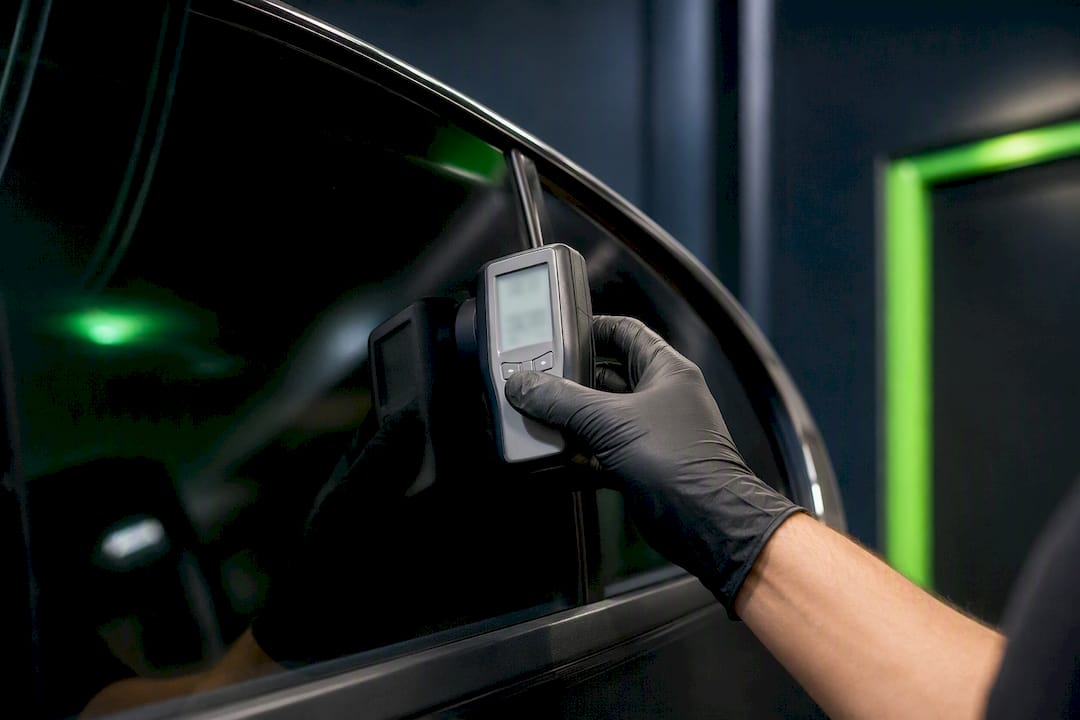
Cost varies by vehicle size, film type, and number of windows, with ceramic and crystalline running higher than dyed or carbon film due to material cost. Manufacturer-backed film warranties typically apply only when the film is professionally installed, which is one more reason the labor cost buys more than convenience.
Curing time is the other piece people underestimate. Film needs time, often several days depending on temperature and humidity, for the adhesive to fully set. During that window, avoid rolling the windows down and skip automatic car washes. Rushing this step is the single most common reason a fresh install develops hazing or edge lift.
Keeping Tint Working: Cleaning, Checks, and Daily Habits
Tint protects your baby only as long as it stays intact, and that depends partly on how you treat it after installation.
Cleaning basics:
- Use a soft microfiber cloth and an ammonia-free cleaner made for tinted glass.
- Wait until the film has fully cured before rolling windows down or washing them, per your installer's timeline.
- Avoid abrasive sponges or paper towels, which can scratch the surface over time.
- A streak-free cleaning method applied gently keeps film clear without introducing swirl marks that reduce visibility.
Watch for damage. Bubbling, peeling at the edges, or a purple discoloration means the film is breaking down and no longer performing at its rated UV block. Any of those signs is a reason to call your installer, since most quality film comes with a warranty that covers exactly this kind of failure.
Daily habits that fill the gaps tint can't cover:
- Dress your baby in lightweight, sun-protective clothing for extra coverage tint alone doesn't provide.
- Never leave a child unattended in a parked car, regardless of tint or shade quality. Interior temperatures climb fast even with the best film installed.
- Use a reflective windshield shade when parked, since side and rear tint doesn't address heat coming through the front glass.
- Combine tint with breathable car seat covers on the hottest days for one more layer between your baby and a hot surface.
None of these habits are complicated, but skipping them undercuts the investment you made in the film itself.
Why Parents Choose Tint & Wraps Customs for Baby-Safe Installations
Choosing an installer matters as much as choosing the film, and this is where a shop's track record becomes relevant rather than just marketing copy.
Tintandwrapscustoms operates a climate-controlled installation facility in Van Nuys, which matters directly to the concerns above: dust and temperature swings are two of the biggest causes of bubbling and poor adhesion during a DIY or lower-end install. The shop has protected more than 1,000 vehicles, offers manufacturer-backed warranties on the film itself, and has built a 5-star reputation among customers who specifically mention attention to detail during installation.
| What parents need | How it maps to the install |
|---|---|
| No gaps or edge lift | Climate-controlled bay reduces dust and adhesion failures |
| Warranty protection | Manufacturer-backed coverage on film performance |
| Confidence in complex glass | Tesla and EV-specific installation experience |
| Proof the film performs | Post-install checks and documented film specs |
The shop's Tesla and EV installation experience is worth noting for families driving newer electric vehicles, since EV glass and sensor placement around windows can complicate a standard tint job. A shop with specific experience there is less likely to run into surprises mid-install.
At a consult, ask Tintandwrapscustoms the same questions outlined earlier: film model, lab-tested UV and IR numbers, and a post-install VLT reading. A shop confident enough to answer those specifics on the spot is one worth trusting with a car that carries your baby every day.
Your Action Plan for Baby-Safe Window Tint
Start with the rear side windows and rear window, since that's where the car seat lives and where most states allow the darkest legal film. Choose ceramic if heat is your main concern, crystalline if you want to see your baby clearly at a glance. Add a mesh or static-cling shade for occasions when you need extra coverage temporarily, like a long summer road trip. Book a professional installer, confirm your state's VLT limit beforehand, and request a documented post-install reading so you know exactly what you got. None of this replaces active supervision. Tint reduces UV and heat exposure, but it doesn't make a hot car safe to leave a child in, even for a minute.
Health Concerns Parents Raise About Tinted Car Windows
A common worry is whether tint itself poses any risk to a baby, beyond the obvious visibility question already covered. The film materials used in reputable automotive tint are inert once cured. They don't off-gas in any way that's been linked to health concerns, and the adhesive fully sets during the curing period discussed earlier.
The bigger real concern isn't the film, it's what happens when parents assume tint means they can skip other precautions. Tint reduces UV and heat, but it doesn't eliminate either. A baby in a tinted car on a 100 degree day still needs air conditioning running, still needs monitoring, and still shouldn't be left alone even briefly. Overreliance on tint as a complete solution is the actual risk, not the film itself.
One more consideration: overly dark film on rear windows can reduce a driver's visibility when reversing or checking blind spots, which creates a different kind of safety trade-off. This is one more reason to stay within legal VLT limits rather than pushing for the darkest film available, and to have a professional confirm the final result doesn't compromise your own view of the road.
An Editorial Take on Baby-Safe Window Tint
Most advice on this topic treats tint like a single decision: pick a shade percentage and move on. That misses the actual point. The film category matters more than darkness, and I'd argue parents overweight "how dark" and underweight "how well it rejects heat and UV at any legal shade." A crystalline film at a lighter VLT can outperform a cheap dyed film that's darker, and most parents never ask that question because installers rarely bring it up unprompted.
The conventional wisdom also undersells installation quality. A flawless ceramic film installed with a gap at the edge protects worse than a properly sealed crystalline job. Where I'd push back hardest: shopping by price alone, without asking for lab data or a post-install VLT check, is how parents end up with film that looks fine and performs poorly. Start with the questions in this guide, not the price sheet.
— Jake
Get Baby-Safe Tint Installed Right the First Time
Tintandwrapscustoms is the option for parents who want the questions in this guide answered before the appointment even starts, not after a problem shows up. The shop's climate-controlled bay in Van Nuys eliminates the dust and adhesion issues that cause bubbling and edge lift, the two most common reasons tint fails to protect the way it's supposed to. Every install comes with manufacturer-backed warranty coverage, and the shop's experience with Tesla and EV glass means complex vehicles get the same careful treatment as anything else on the lot.
If you're ready to protect the back seat properly, reach out to Tintandwrapscustoms to schedule a consult, ask about ceramic or crystalline film for your specific vehicle, and get a documented post-install VLT reading before you drive away.