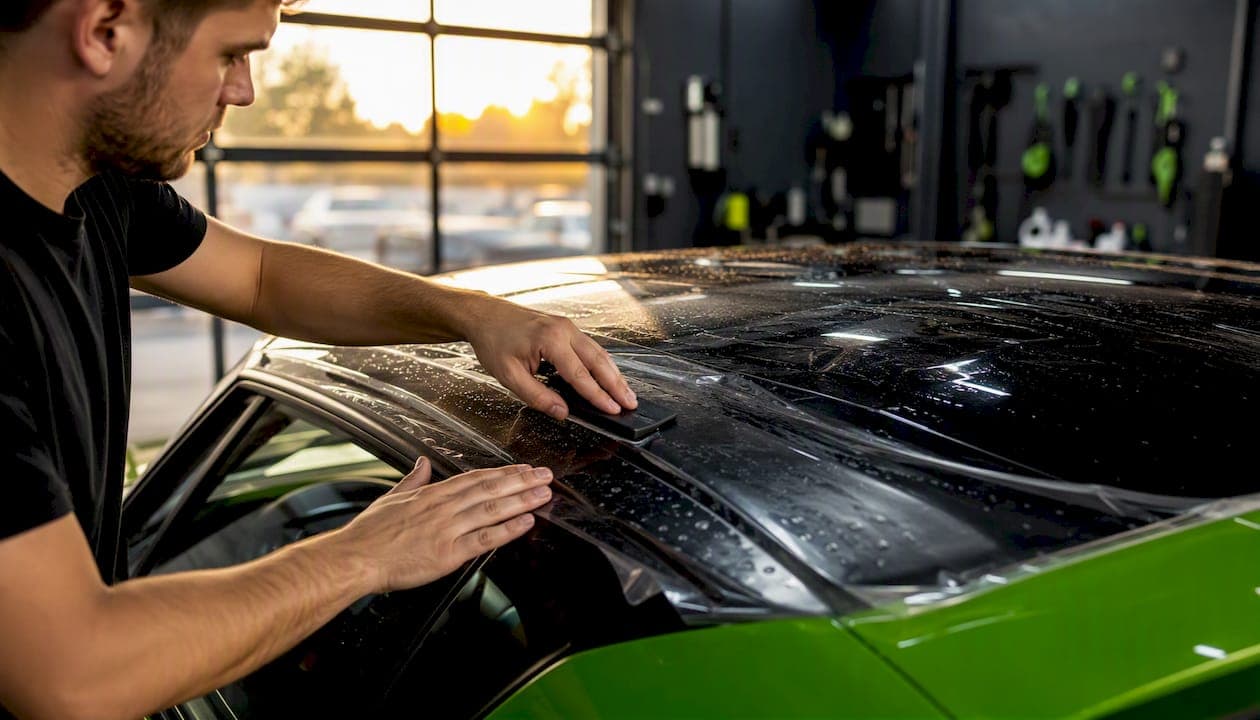
XPEL is the better pick for show cars, high-value vehicles, and buyers who prioritize the fastest self-healing and the largest pre-cut pattern library. SunTek is the smarter choice when you want strong protection across more of the car for the same budget. Both films are genuinely good. The decision usually comes down to your priorities, not a clear winner.
- Resale value / collector car: XPEL Ultimate Plus. The faster self-healing topcoat and manufacturer-backed warranty transferability make it easier to document protection history at sale.
- Daily driver / value buyer: SunTek Ultra. Competitive clarity, solid durability, and a lower installed price let you cover more surface area without overspending.
- Track or high-mileage truck: Either film works, but prioritize a certified installer with a climate-controlled shop over brand selection. Installation quality is the bigger variable.
- Tesla or EV owner: Both brands offer EV-specific coverage. An installer with documented Tesla experience, manufacturer-backed warranties, and a controlled environment matters more than the badge on the film.
Key Takeaways
Both XPEL and SunTek are premium PPF brands with near-identical construction; the right choice depends on your budget, coverage goals, and installer quality, not brand loyalty.
| Point | Details |
|---|---|
| XPEL for resale and show cars | Transferable warranty and faster self-healing give XPEL an edge for high-value vehicles and documented resale. |
| SunTek for value and coverage | Lower installed cost per panel lets you cover more of the car for the same budget. |
| Installer skill is the biggest variable | A certified, experienced installer with a climate-controlled shop matters more than brand selection. |
| Warranty registration is non-negotiable | Confirm your installer submits registration at pickup; an unregistered film has no manufacturer warranty. |
| Tintandwrapscustoms for Van Nuys area | Over 1,000 vehicles protected, climate-controlled installs, and manufacturer-backed warranties for both XPEL and SunTek. |
Table of Contents
- How do SunTek and XPEL PPF actually compare?
- What are XPEL and SunTek, and where do they sit in the market?
- How are these films built, and does construction actually matter?
- How do the films perform on chips, scratches, self-healing, and UV?
- What do the finish options look like, and how do they affect appearance?
- What do the warranties actually cover, and how long do the films last?
- What does PPF installation cost, and what drives the price difference?
- What should you expect during installation, and how do you care for PPF?
- How do you decide between XPEL and SunTek for your specific vehicle?
- What do experienced installers actually say about these two films?
- The part most buyers get wrong about PPF
- Tintandwrapscustoms protects your paint the right way in Van Nuys
- Selected sources and further reading
How do SunTek and XPEL PPF actually compare?
The two films are closer than most marketing suggests. Both use a multilayer thermoplastic polyurethane (TPU) construction, both offer gloss and matte finishes, and both carry long manufacturer warranties. The differences are real but narrow.
Key difference: XPEL advertises a faster ambient self-healing response and a significantly larger DAP pattern library, which reduces hand-trimming on complex body lines. SunTek positions Ultra and Reaction as strong value alternatives with competitive clarity and slightly better conformability around tight curves.
Quick comparison:
- XPEL's pattern library (DAP) is one of the largest in the industry, cutting install time on complex vehicles.
- SunTek Ultra is frequently cited by installers as easier to handle around bumpers and door edges.
- XPEL's self-healing topcoat is reported to activate faster at ambient temperatures, a meaningful advantage in cooler climates.
- Both brands offer 10-year manufacturer warranties on their premium lines.
- Installed price for SunTek typically runs lower per panel, which adds up on full-vehicle jobs.
What are XPEL and SunTek, and where do they sit in the market?
XPEL is a San Antonio-based manufacturer that built its reputation on the DAP (Design Access Program) software, a digital pattern library that lets certified installers pre-cut film to exact vehicle specs. Its flagship consumer lines are Ultimate Plus (gloss) and Stealth (matte/satin). XPEL markets heavily to luxury and exotic car owners, and its warranty is transferable to a subsequent owner, a detail that matters at resale. The brand's self-healing topcoat is one of its most-cited selling points.
- XPEL Ultimate Plus: — Gloss finish, self-healing topcoat, 10-year warranty.
SunTek is a Martinsville, Virginia-based manufacturer (part of the Eastman Chemical family) with a strong presence in both the professional installer market and the value-conscious buyer segment. Its two main PPF lines are Ultra (gloss, premium tier) and Reaction (gloss, mid-tier with an updated self-heal formula). SunTek also offers a matte option. The brand competes directly with XPEL on clarity and durability while typically coming in at a lower installed price.
Both brands require certified installers to honor their manufacturer warranties. Installer network density varies by region, so checking local availability before committing to a brand is worth doing.
How are these films built, and does construction actually matter?
Every premium PPF shares the same basic architecture: a pressure-sensitive adhesive layer on the bottom, a TPU carrier film in the middle, and a clear self-healing topcoat on top. What separates brands is how each layer is formulated.
| Spec | XPEL Ultimate Plus | SunTek Ultra |
|---|---|---|
| Total thickness | 8 mil | 8 mil |
| Topcoat | Self-healing elastomeric | Self-healing elastomeric |
| Available finishes | Gloss, matte (Stealth) | Gloss, matte |
| Pattern library | DAP (large, frequently updated) | Available, smaller library |
| Adhesive behavior | Aggressive, strong edge bond | Slightly softer, easier repositioning |
Sources: bdautodetailing.com, manufacturer pages.
Thickness is effectively equal between the two at roughly 8 mil for their premium lines, so neither film has a meaningful edge-protection advantage from thickness alone. The adhesive formulation is where installers notice a real difference. XPEL's adhesive bonds aggressively, which is good for long-term edge adhesion but less forgiving if a panel needs repositioning mid-install. SunTek Ultra's slightly softer adhesive gives installers a wider correction window, which is one reason it gets recommended for vehicles with complex body lines or deep sculpted curves.
The topcoat on both films uses an elastomeric polymer that returns to its original shape after minor scratches. The chemistry is similar in principle; the speed and temperature threshold at which it activates is where the brands diverge, covered in the performance section below.
For installers, pattern availability is a practical concern. XPEL's DAP library is larger and updated more frequently, which means less hand-trimming on newer model years. Fewer hand cuts means fewer opportunities for edge imperfections. On vehicles not yet in any pattern library, both brands require hand-cutting, and the installer's skill becomes the only variable that matters.
How do the films perform on chips, scratches, self-healing, and UV?
Both films stop rock chips and road debris effectively. At 8 mil, either one absorbs the kind of highway gravel that would leave a chip or deep scratch on bare paint. The protection level is comparable. Where they differ is in recovery and long-term appearance.
Self-healing
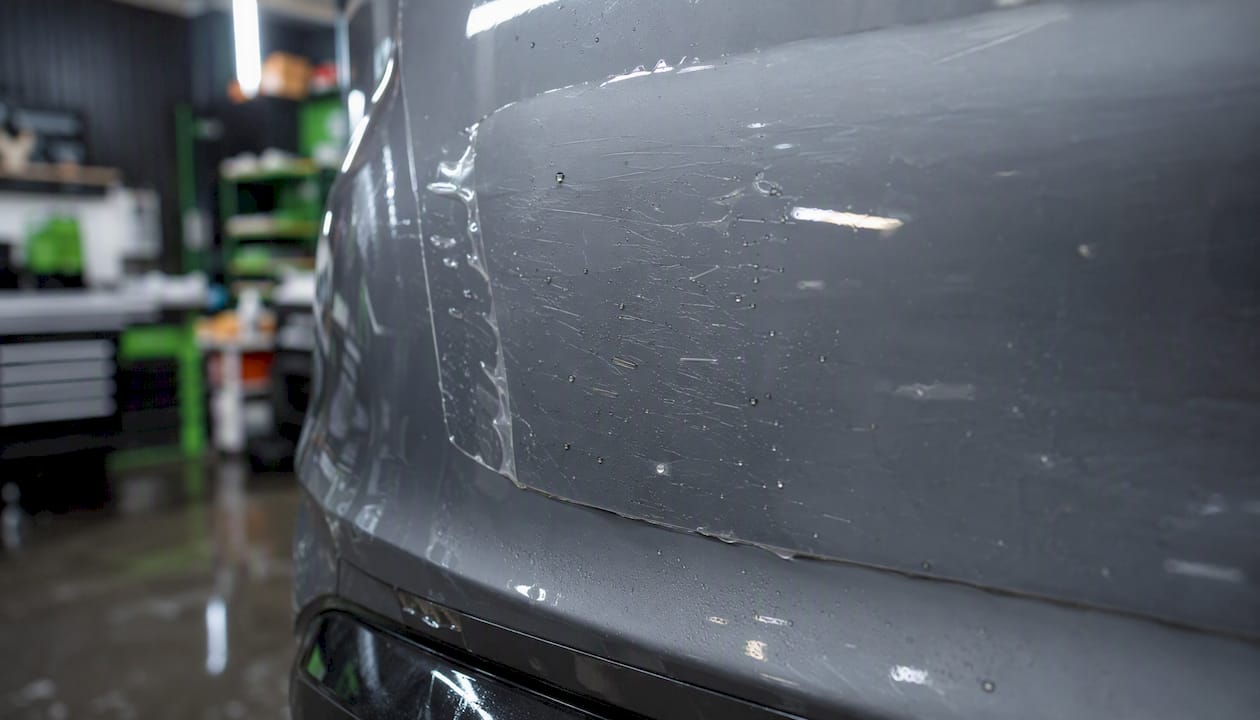
XPEL's topcoat is widely reported to self-heal faster at ambient temperatures, meaning minor swirl marks and light scratches can disappear without heat application in many conditions. SunTek's Reaction formula closed much of that gap, but independent installer comparisons still give XPEL a slight edge for speed in cooler environments. In Southern California heat, both films heal quickly enough that the difference is minimal day-to-day.
Hydrophobic behavior
Both premium lines include a hydrophobic topcoat that causes water to bead and sheet off. This matters for bird droppings, tree sap, and hard water spots, all of which can etch paint if left to dwell. Neither film is immune to staining if contaminants sit for extended periods, but the hydrophobic layer buys time. Wash the car within 24 hours of a bird dropping landing on PPF, regardless of brand.
UV and yellowing resistance
Yellowing is the failure mode buyers worry about most, and both brands have improved significantly over older-generation films. Installer and comparative sources note that with proper maintenance, neither XPEL nor SunTek shows meaningful yellowing within the first five years under normal U.S. conditions. Desert climates and high UV exposure accelerate degradation on any film; parking in shade and applying a PPF-safe spray sealant periodically extends the appearance life of both.
Common failure modes to know about
- Edge lift: More common on hand-cut installs with aggressive adhesive. Proper edge tucking at install prevents most cases.
- Staining from organic contaminants: Both films can absorb staining from prolonged contact with iron deposits or industrial fallout. A clay bar treatment on the film surface addresses most cases.
- Delamination: Rare on either brand when installed correctly. Usually a sign of improper surface prep, not film failure.
What do the finish options look like, and how do they affect appearance?
XPEL and SunTek both offer gloss and matte finishes, but the way each handles optical clarity and surface texture varies in ways that matter on dark paint.
Gloss finishes
XPEL Ultimate Plus and SunTek Ultra both aim for an "invisible" look on gloss paint. In practice, both are very close. The subtle difference installers report is in orange peel texture: XPEL Ultimate Plus tends to match factory orange peel closely on most OEM finishes, while SunTek Ultra can appear slightly smoother on some paint textures, which reads as a minor optical difference on certain angles in direct sunlight. Neither is objectively better; it depends on the factory finish of your specific vehicle.
Matte and satin finishes
XPEL Stealth converts a gloss paint surface to a satin/matte appearance. SunTek's matte option does the same. Both are popular on black and dark gray vehicles. If you own a Tesla Model Y or Model 3 and want a matte look, both films deliver it, but the install complexity on Tesla's large, curved panels makes installer experience the deciding factor. For a deeper look at matte-specific considerations on EVs, the matte PPF guide for Tesla covers the tradeoffs in detail.
Pro Tip: When evaluating a shop's work, ask to see a finished car with PPF on black or dark blue paint in natural light. Edge visibility and any orange-peel mismatch show up most clearly on dark colors at a low angle. If the shop can't show you a reference car, that's a red flag.
What do the warranties actually cover, and how long do the films last?
Both XPEL and SunTek offer 10-year manufacturer warranties on their premium lines. The coverage language is similar: protection against yellowing, cracking, peeling, hazing, and edge lift under normal use. But the fine print matters.
Warranty caveats both brands share:
- The film must be installed by a certified installer. DIY installs void the warranty on both brands.
- Registration is typically required within a set window after install. Ask your installer to confirm registration at pickup.
- Warranty is tied to the original vehicle. XPEL's warranty is transferable to a subsequent owner, which is a documented advantage for resale. SunTek's transferability terms vary by installer and region; confirm in writing before committing.
- Environmental exclusions apply: damage from improper washing (pressure washing edges), chemical exposure, or accidents is not covered.
For a broader look at how warranty language works across vehicle protection products, the window tint warranty guide explains the documentation habits that protect coverage.
Realistic lifespan
Under normal U.S. conditions with regular washing and occasional sealant application, both films realistically last 7–10 years before showing meaningful optical degradation. In high-UV markets like Southern California, Arizona, or Florida, expect the lower end of that range without diligent maintenance. Garaged vehicles with regular care can push past 10 years on either brand.
Steps to protect your warranty:
- Keep your installer's certification documentation and your purchase receipt.
- Photograph the vehicle at pickup, including all edges and panel transitions.
- Use only PPF-safe wash products. Avoid automatic car washes with stiff brushes.
- Address any edge lift within the first 30 days while the installer's correction window is typically still open.
- If you sell the vehicle, transfer warranty documentation to the buyer and notify the manufacturer per their process.
What does PPF installation cost, and what drives the price difference?
Installed PPF pricing varies more than most buyers expect, and brand choice is only one of several cost drivers. Coverage area, vehicle complexity, installer labor rates, and pattern availability all affect the final number.
| Coverage Level | Typical Installed Range (U.S.) | Notes |
|---|---|---|
| Partial front (hood, fenders, mirrors, bumper) | Entry-level pricing varies | Most common entry point for daily drivers |
| Full front (adds A-pillars, full doors, rockers) | Mid-range pricing varies | Best value for highway commuters |
| Full vehicle | Higher pricing varies by vehicle size and complexity | Varies heavily by vehicle size and complexity |
| Targeted add-ons (door cups, rockers, headlights) | Additional costs vary | Good for high-wear spots on a budget |
Sources: bdautodetailing.com, tintprosmobile.com.
SunTek typically costs $200–$600 less than XPEL on equivalent coverage, depending on the shop. That gap is meaningful on a full-vehicle job. One practical approach: use the savings from choosing SunTek to extend coverage to areas you might otherwise skip, like rocker panels or door cups, rather than pocketing the difference. More film on the car usually beats a premium brand on fewer panels.
For a detailed breakdown of what drives PPF cost at each coverage level, the full pricing guide covers regional variation and how to read a quote.
What actually drives cost:
- Film brand and product tier (XPEL Ultimate Plus costs more than SunTek Ultra per square foot).
- Coverage area: more panels, more labor, more film.
- Vehicle complexity: exotic body lines, large curved surfaces (Tesla Model Y roof), and tight door jambs all add time.
- Pattern vs. hand-cut: shops using pre-cut patterns charge for the software access but save labor; hand-cut shops may charge more labor.
- Shop overhead: a climate-controlled facility with certified technicians costs more to operate than a garage setup, and that shows up in the quote.
What should you expect during installation, and how do you care for PPF?
A professional PPF install follows a consistent process regardless of brand. Knowing the steps helps you evaluate a shop before you commit.
What a proper install looks like:
- Full decontamination wash, clay bar treatment, and paint inspection for existing chips or scratches.
- Paint correction (if needed) before film application. PPF locks in whatever is under it.
- Film cutting via DAP software or hand-cutting in a clean, climate-controlled environment.
- Panel-by-panel application with slip solution, squeegee work, and edge tucking.
- Heat gun work on complex curves to conform the film without lifting edges.
- Post-install inspection under bright lighting for bubbles, debris, and edge adhesion.
- A 24–72-hour cure period before washing. Some installers recommend 5–7 days before pressure washing near edges.
Red flags at pickup:
- Visible bubbles that haven't resolved after 48 hours (small water bubbles are normal and disappear during cure; air bubbles do not).
- Lifted or rolled edges at panel transitions.
- Adhesive residue or haze visible from outside the film.
- Visible seam lines on panels that should be seamless.
Pro Tip: Run your fingernail very lightly along a panel edge at pickup. A properly tucked edge should feel flush and smooth. Any roughness or lifting means the adhesive didn't seat correctly, and you want that corrected before you drive away.
Maintenance basics:
- Wait the full cure period before washing.
- Hand wash with a pH-neutral soap. Touchless automatic washes are acceptable; brush washes are not.
- Apply a PPF-safe spray sealant every 3–4 months to maintain hydrophobic performance.
- Remove bird droppings and tree sap promptly. Let warm water soften them before wiping.
- Avoid parking under trees that drop sap regularly.
How do you decide between XPEL and SunTek for your specific vehicle?
Work through this checklist before calling a shop. It takes five minutes and will sharpen every conversation you have with an installer.
- Define your primary goal. Resale value and documentation? XPEL's transferable warranty is a concrete advantage. Maximum coverage for a set budget? SunTek's lower per-panel cost stretches further.
- Set your coverage area. Partial front protects the highest-impact zones. Full front adds doors and rockers for daily highway drivers. Full vehicle makes sense for show cars, new exotics, and EVs where paint repair is expensive.
- Check installer certification. Both brands require certified installers for warranty coverage. Ask for the installer's certification level and how long they've been working with that brand.
- Ask about the pattern library. For newer or complex vehicles, confirm the shop has a current pattern for your exact trim. Hand-cutting on a complex car is not inherently bad, but it requires more skill.
- Request photos of past installs. Specifically ask for photos of dark-colored vehicles in natural light. Edge work and clarity issues show up there first.
- Confirm warranty registration.** Ask who handles registration, when it's submitted, and how you receive confirmation. This is not optional.
- Compare quotes on the same coverage area. A lower quote for less coverage is not a better deal. Make sure you're comparing identical scope.
Common mistakes to avoid:
- Choosing by price alone without checking installer certification.
- Mixing brands on one vehicle (different adhesive chemistry can cause visual inconsistency at seams).
- Skipping paint correction before install. Swirls and scratches under PPF are permanent.
- Assuming a warranty is active without confirming registration.
What do experienced installers actually say about these two films?
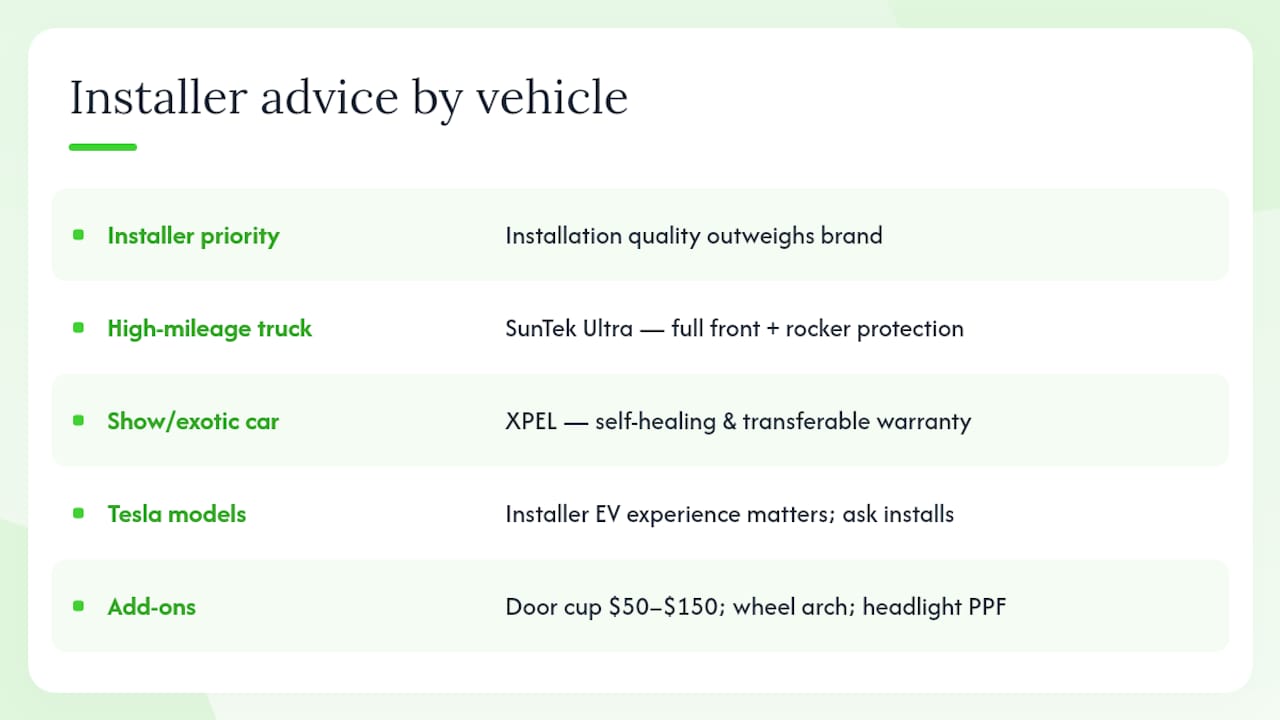
The most consistent message from experienced PPF shops is that installation quality outweighs brand selection in almost every real-world scenario. A flawless SunTek install beats a sloppy XPEL install every time. That said, brand choice does shift the approach.
For a high-mileage truck, the recommendation is usually SunTek Ultra on the full front with rocker protection added. The lower cost per panel means the owner can cover more surface area, and trucks take more abuse on the lower body than anywhere else. The film brand is secondary to getting the rockers and lower doors covered.
For a black show car or a new exotic, XPEL Ultimate Plus is the more defensible choice. The faster self-healing matters more on a car that gets scrutinized up close, and the transferable warranty is a selling point if the car ever goes to auction. The XPEL vs 3M comparison covers how XPEL's warranty stacks up against other premium brands in more detail.
For a Tesla Model 3 or Model Y, the large roof panel and complex front bumper geometry reward an installer with documented EV experience. The film brand is less important than whether the shop has done that specific vehicle before. Tintandwrapscustoms has protected over 1,000 vehicles in the San Fernando Valley, with specific experience on Tesla installations in a climate-controlled facility.
Pro Tip: Ask any shop you're considering: "How many Tesla Model Y full-front installs have you done this year?" A shop that does them regularly will answer immediately with a number. A shop that hesitates is telling you something.
A note on add-ons that change the value calculation: door cup protection ($50–$150) prevents the most common paint wear point on any vehicle. Wheel arch film stops the stone chips that rockers miss. Headlight PPF extends bulb life and prevents UV hazing on projector lenses. These targeted additions often deliver more protection per dollar than upgrading from SunTek to XPEL on the same coverage area.
For Tesla-specific paint protection considerations, the Tesla paint protection guide covers the model-specific tradeoffs in detail.
The part most buyers get wrong about PPF
The SunTek vs XPEL debate is real, but it's the wrong place to spend most of your decision energy. The gap between these two films, installed by equally skilled technicians, is genuinely small in day-to-day use. What's not small is the gap between a certified installer in a climate-controlled shop and someone working out of a garage with a heat gun and no pattern software.
The PPF industry has a transparency problem: it's easy to sell a premium brand name and harder to demonstrate installation quality before the job is done. Buyers who focus on the film brand and skip the installer vetting end up with XPEL Ultimate Plus that's lifting at the edges by year two, while the person who asked the right questions and chose a skilled SunTek installer is still looking at clean, flat film at year six.
There's also a coverage trap. Spending the full budget on XPEL for a partial front, when SunTek would have let you add rocker panels and door cups for the same money, is a real tradeoff that most comparison articles don't address directly. Rocks don't only hit hoods. The lower doors, rockers, and A-pillars take consistent abuse on any daily driver, and those areas unprotected will show it.
The transferable warranty on XPEL is a genuine differentiator for one specific buyer: someone who plans to sell a high-value vehicle and wants to hand over documented paint protection history. For everyone else, that advantage is real but not decisive.
Choose the film that fits your budget and coverage goals. Then spend the rest of your vetting energy on the shop.
Tintandwrapscustoms protects your paint the right way in Van Nuys
If you're in the San Fernando Valley and ready to move past the comparison and into a real install, Tintandwrapscustoms works with both XPEL and SunTek, so the film choice stays yours. Every job runs through a climate-controlled facility, which means no dust contamination, no humidity issues, and no shortcuts on edge work.
The shop handles manufacturer-backed warranty registration on every install, so you leave with documentation in hand, not a promise to follow up. Services include partial front packages, full front coverage, full-vehicle film, ceramic coating combinations, and Tesla-specific installs backed by hands-on experience with Model 3 and Model Y. With over 1,000 vehicles protected and a 5-star track record in the Valley, the work speaks for itself.
Get a quote or schedule an inspection and bring your coverage questions. The team will walk you through which film and coverage level actually makes sense for your vehicle, your budget, and how you drive.
Selected sources and further reading
- suntekfilms.com
- XPEL Vs. SunTek PPF: Pros, Cons And Differences
- XPEL vs SunTek vs LLumar PPF Comparison | Which Film Is Best? | Auto Spa Jackson Hole
- XPEL vs 3M vs SunTek PPF 2026: Expert Comparison
- XPEL vs SunTek PPF | Which Is Better? | Tint Pro's