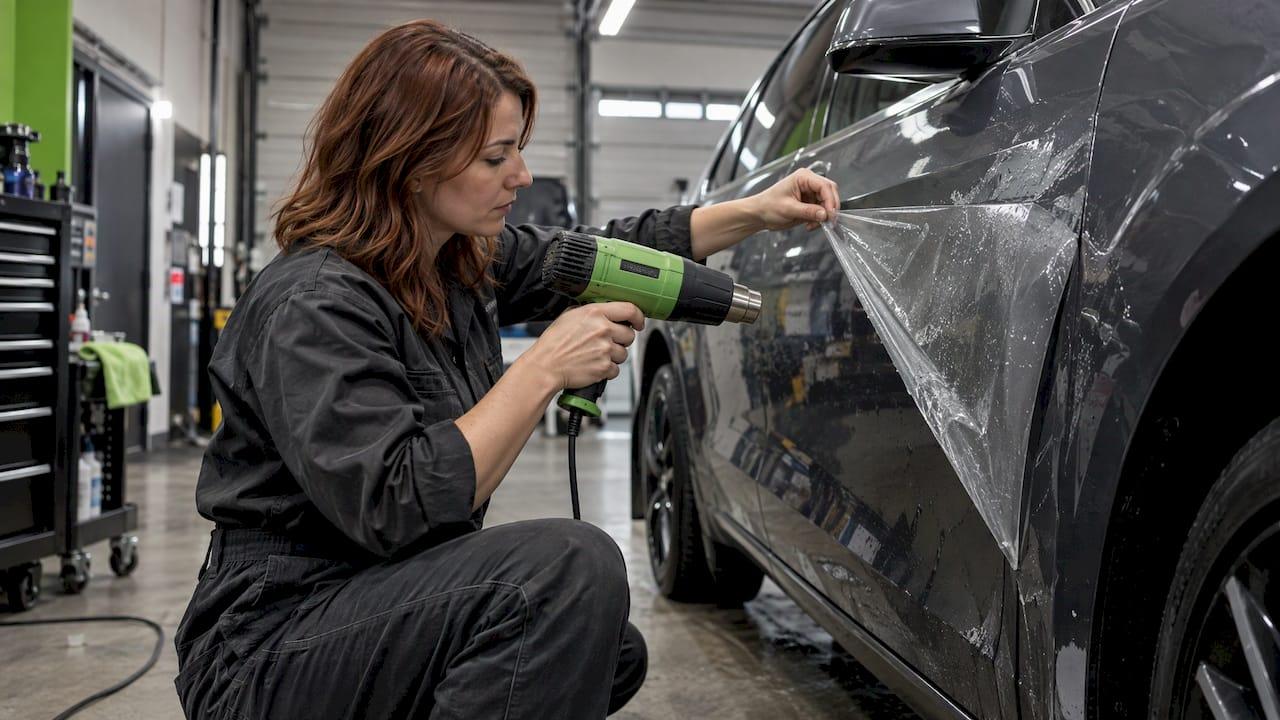
Paint protection film (PPF) is a clear urethane layer that sits on your paint to absorb rock chips and scratches. Taking it off is where most owners worry, and for good reason: a bad removal can leave adhesive on the panel, and in the worst case it can pull clear coat with it. The risk is lower than most forums suggest, but it is not random. It comes down to the age of the film, the condition of the paint underneath, temperature and technique. We install PPF at our climate-controlled shop in Van Nuys, CA, and the way a film goes on largely decides how it comes off years later.
TL;DR
- Most removal problems are adhesive residue, not paint damage. Residue is a cleanup job; clear coat coming off with the film is the real damage.
- Risk rises with three things: old film, repainted or soft paint, and rushed technique (cold film, steep pull angle, uncontrolled heat).
- Film makers say to peel at a shallow angle, no more than 45 degrees, with the film and panel warm, above 55°F.
- Stop and get a professional if the paint was refinished, is already chipped or flaking, or starts lifting with the film.
- Good installation on properly cured factory paint, with a manufacturer-backed warranty, is the best protection against a bad removal later.
Table of Contents
- What actually goes wrong during PPF removal
- Why some removals go wrong and others do not
- How film makers say removal should be done
- When to stop and bring in a professional
- Damage versus cost: how the numbers compare
- Stopping a bad removal before it starts: install it right
- Ready to protect your paint the right way?
- FAQ
- Sources
What actually goes wrong during PPF removal
PPF is held to the paint by a pressure-sensitive adhesive. Done correctly, the film peels away as one sheet and the adhesive leaves with it. Three outcomes are possible, from mild to serious.
Adhesive residue. Sticky film glue stays behind in patches. It looks bad, but the paint under it is intact. It is the most common outcome of a rushed pull and is cleaned off with an adhesive remover. Film manufacturers note that pulling at angles beyond 45 degrees tends to increase adhesive residue.
Surface marks. Scraping dry adhesive with a blade or an abrasive pad can scratch or haze the clear coat. Here the damage comes from the cleanup, not the film.
Clear coat or paint lift. This is the outcome people fear. The adhesive grips harder than the paint grips the layer beneath it, and a flake or sheet of clear coat comes away with the film. Small spots can sometimes be polished or blended by a paint specialist. Larger failures mean refinishing the panel.
Not everything you see after removal is damage. A color difference between a protected panel and an exposed one, a faint outline of the film edge and leftover glue are normal after years under film. Clear coat stuck to the back of the removed film is not.

Why some removals go wrong and others do not
It helps to think of paint damage as a stack of conditions rather than a single cause. When several line up, trouble follows.
Film that has been on too long
Adhesive ages. Avery Dennison's installation bulletin says film can be difficult to remove if it has been on the vehicle for a long time, and that clean removal with nominal residue applies within the film's expected lifetime on properly cured paint. A film that has baked, cracked or hardened past its service life is a different job from one removed on schedule. If you are not sure how long your film should last, our guide to PPF lifespan walks through it.
Paint that is not factory original
This is the biggest single variable. The same bulletin states that removal without paint damage is not warranted on non-OEM paint, meaning paint that was not applied at the factory. Repaints after an accident, a cheap respray or paint that was not fully cured when film went on all have weaker bonds to the layer below. Film over those panels deserves extra caution at removal time.
Cold film and a fast, steep pull
Cold adhesive is stiff and grabs. The manufacturer guidance is to remove film when both the film and the surface are above 55°F, using a heat gun or hair dryer in colder conditions. SunTek's FAQ adds that a steamer helps soften film and adhesive in cold weather, and warns against folding the film back over itself and ripping it off, because that leaves adhesive behind.
Uncontrolled heat
Heat is the tool that makes removal possible, and also the way to make it worse. Too little and the adhesive stays tight. Too much concentrated in one spot can soften or distort the film so it tears into small pieces, which turns a clean peel into a long, picky job. Even heat over a whole section, held at a safe temperature for the paint, is what experienced hands aim for.
How film makers say removal should be done
Every major film brand says the same thing first: have a professional do it. XPEL's care guidance recommends professional removal, and SunTek states that only a professional dealer should remove its film. Their fallback instructions show what a pro is controlling for:
- Warm the film and panel. A steamer keeps the film pliable and softens the adhesive. Stay above the 55°F threshold the film makers cite.
- Lift a corner with a fingernail. Avoid metal blades near paint.
- Pull toward yourself at a shallow angle. XPEL says to keep the pull under 45 degrees so the adhesive comes off with the film. Done right, the film stretches off the car instead of snapping.
- Work in small sections and keep warming. If the film starts resisting, add gentle heat rather than force.
- Clean up residue with adhesive remover. Let it soak into the glue and wipe it off, rather than scraping dry adhesive.
One safety point: many adhesive removers and wipe-down solvents are flammable. Never run a heat gun over a panel that is still wet with solvent, and work in a ventilated space away from sparks.
When to stop and bring in a professional
There are situations where the sensible move is to stop before the first pull. Others show up mid-removal.
Before you start:
- The film is still under warranty. Removing it yourself can complicate a claim.
- A panel has been repainted, or the paint is chipped, flaking or peeling. The film may be holding loose paint in place.
- The film is very old, cracked or hardened, or covers a large area such as a full-body install.
- New film is going on right after removal. The surface needs to be clean and flawless for the next install.
- You do not have a shaded, ventilated, temperature-controlled space.
During removal:
- Clear coat or paint visibly moves with the film.
- The film tears into small strips repeatedly.
- Paint bubbles, wrinkles or lifts at an edge or around a stone chip.
- You feel unexpected resistance near a previously repaired area.
In any of those cases, pausing keeps a small problem small. A damaged spot that is left alone can often be assessed and blended. One that gets pulled further grows.
Damage versus cost: how the numbers compare
A professional removal is a modest line item compared with refinishing a panel. Hoods, fenders and bumpers are the panels most exposed to rock chips and so most likely to wear film, and they are also the panels that cost the most to repaint if something lifts. For a breakdown of what professional removal typically runs in the U.S., see our guide to PPF removal cost. If you are weighing whether to remove or replace film that has aged, PPF cost shows what a fresh install involves.
| Situation | Relative risk to paint | Sensible approach |
|---|---|---|
| Film within its service life on factory paint | Lower | Professional removal with controlled heat and a shallow pull |
| Film well past its service life, yellowed or cracked | Higher | Professional removal, slower and in small sections |
| Film over a repainted panel | Higher | Professional assessment first |
| Paint already chipped or flaking under film | Higher | Do not peel it yourself |
| Cold weather, no controlled workspace | Higher | Wait for a warm, enclosed space |
Stopping a bad removal before it starts: install it right
The cleanest removals tend to follow the cleanest installs. Three choices made on day one matter years later.
Start on properly prepared, cured paint. Film on fresh paint that has not finished curing is one of the conditions that increases removal trouble, so a shop should be asking about your paint's history before it quotes a job.
Install in a controlled space. Dust and temperature swings under film cause lifting and contamination. Our installs happen in a climate-controlled, dust-free facility.
Choose a film with a manufacturer-backed warranty. It gives you a defined service life and a clear path when it is time to replace. We offer manufacturer-backed warranties on our work, which includes paint protection film in several coverage levels: The Track Pack, Full Front and Full Body.
Maintenance also plays a part. Film that is washed correctly and kept clean ages more evenly, which helps at removal time. Our PPF maintenance guide covers it.
Our view: removal is an install decision
We think about removal on the day we install. Most of the damage stories people tell trace back to the same few causes: paint that was not ready, film left far past its life, and a removal rushed in a cold garage. Those are all things you can plan for.
That is why we do installs in a climate-controlled, dust-free facility and back them with manufacturer warranties. A film applied cleanly to sound paint, with a known service life, gives whoever removes it later the best odds of a clean peel. Our Tesla and EV work follows the same logic: precise fit, no interference with sensors, and film that sits where it should.
If you are choosing a film today, ask about the paint's condition, the film's service life and the warranty, because those answers decide how the story ends years from now.
Jake
Ready to protect your paint the right way?
If you are planning a new film install, whether a Full Front for a daily driver, a Track Pack for the most exposed areas or a Full Body for a new Tesla, we do it in our Van Nuys shop with manufacturer-backed warranties. More than 1,000 vehicles in the San Fernando Valley and beyond have been protected here.
See our paint protection film options or visit Tint & Wraps Customs to start a booking. If you are comparing film with a color change, PPF vs vinyl wrap explains the difference.
FAQ
Can PPF removal damage my car's paint?
It can, but it is not the usual outcome. Damage is most likely when the film is old, the paint has been refinished or the removal is rushed with cold film and a steep pull. Removed within its service life from factory paint, film makers state it comes off with nominal residue.
Is leftover glue the same as paint damage?
No. Adhesive residue sits on top of the clear coat and is removed with adhesive remover and patience. Damage means clear coat or paint lifting with the film or marks cut into the surface by scraping dry adhesive.
Is it safe to remove PPF at home?
Film makers recommend professional removal first, with home steps as a fallback. The warm temperature, shallow angle and even heat all take practice. If your paint was repainted, is chipped, or the film is old or under warranty, stop and have it assessed.
How cold is too cold to remove PPF?
The Avery Dennison bulletin advises removing film when the film and surface are above 55°F. In colder conditions it calls for added heat from a heat gun or hair dryer, which is easier to control in an enclosed, temperature-managed space.
Sources
- Avery Dennison IB4.30 Paint Protection Film Application bulletin
- XPEL Product Care Instructions
- SunTek Paint Protection Film FAQ