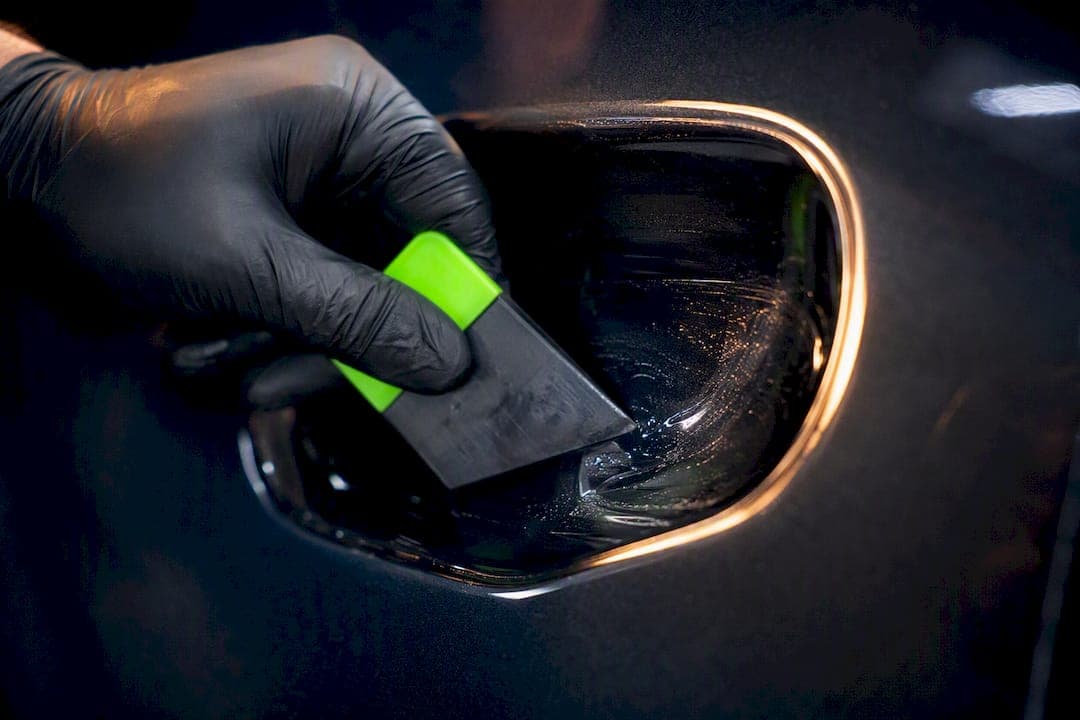
Clear PPF door cups are the best defense against scratched handle areas, and they beat every other option on the market. The film is sacrificial, virtually invisible once installed, and modern top coats can self-heal light marks with a little heat. Grab a pre-cut kit if you're comfortable with a DIY afternoon project, or book a professional install if you want a factory-grade finish backed by a warranty.
TL;DR:
- Clear PPF door cups provide near-invisible, self-healing protection that absorbs scratches from rings, fingernails, and keys, unlike basic wax or sealants.
- Vehicle-specific pre-cut films ensure precise fit and reduce installation errors, especially on newer models with flush or complex handle designs.
- Professional installation in climate-controlled facilities with proper heat finishing and edge sealing significantly extends film lifespan and prevents early failure.
- DIY kits are a cost-effective option for experienced users but require careful application to avoid bubbles, lifting, or trapped debris that compromise durability.
- The longevity of door cup PPF depends on environmental factors and film quality, with high-grade films lasting several years under normal daily use.
Table of Contents
- What Are Door Cups, and Why Do They Scratch So Easily?
- Clear PPF vs. Molded Plastic Door Cup Guards
- How Do You Choose the Right Door Cup Protection?
- DIY Pre-Cut Kits vs. Professional Installation
- Keeping Door Cup PPF Clear and Scratch-Free
- What Do Door Cup Protectors Actually Cost?
- Installer Perspective: What a Professional Shop Actually Delivers
- Does PPF Fit Every Vehicle the Same Way?
- What Goes Wrong With PPF Door Cups?
- PPF vs. Magnetic Guards and Metal Trim: How Do They Compare?
- How Long Does Door Cup PPF Actually Last?
- Should You DIY It or Call a Pro? My Honest Take
- Get Your Door Cups Protected the Right Way
- Sources
What Are Door Cups, and Why Do They Scratch So Easily?
The door cup is the recessed pocket behind your door handle, the spot your fingers sweep into every time you open the car. It's a small patch of paint, but it takes more abuse than almost any other panel on the vehicle.
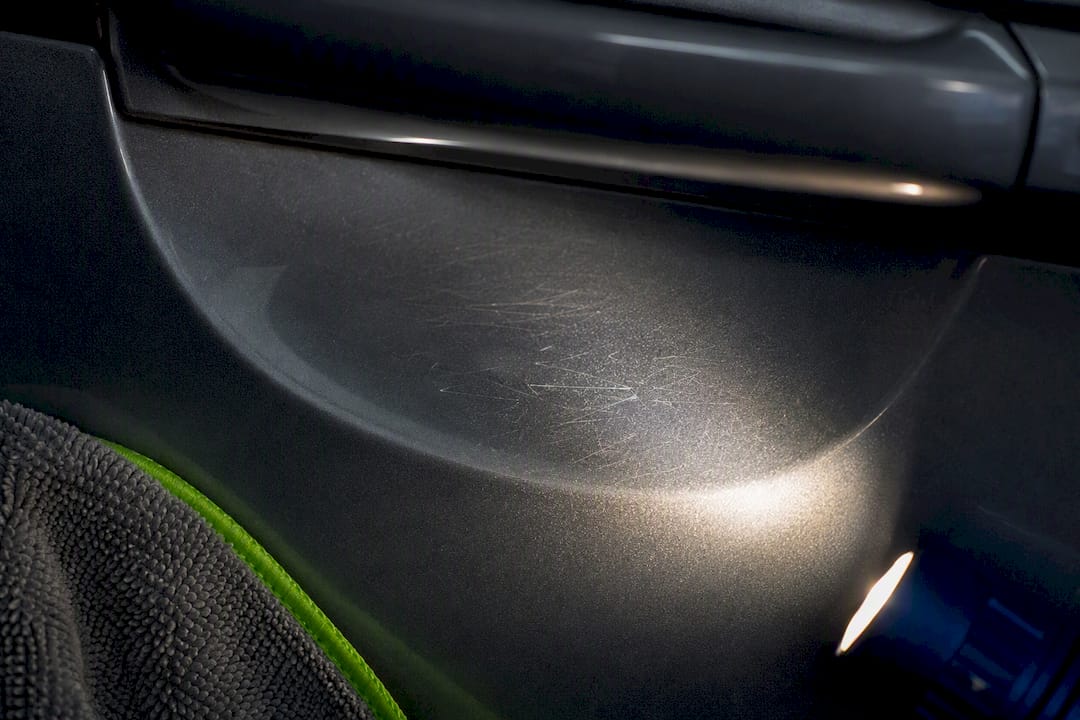
Fingernails, rings, watch clasps, even a stray key chain, all rake across that surface dozens of times a week. Because the area is concave, a buffer or polishing pad can't get proper leverage inside it. Once a scratch sets into the clear coat there, touch-up paint and spot polishing rarely blend cleanly, and a full respray of just that pocket is awkward and expensive relative to its size.
That's the real argument for prevention over repair. Paint protection film, PPF, exists to take the hit so your factory paint never has to.
Here's what's actually happening on the surface of your door when it's protected:
- A thermoplastic polyurethane (TPU) layer absorbs the physical scratch, not the paint underneath.
- An adhesive layer bonds the film to the clear coat without trapping moisture or dirt.
- A top coat, often infused with self-healing or ceramic properties, resists staining and shrugs off light swirl marks when warmed by sunlight or a heat gun.
PPF's layered construction is what separates it from a wax or sealant. Sealants add gloss and some chemical resistance, but they do nothing against a fingernail or a ring catching the edge of the handle. PPF is the only common option built to absorb that kind of contact damage directly.
Clear PPF vs. Molded Plastic Door Cup Guards
Not all door cup protection looks or performs the same way, and the differences matter more than most buyers expect.
Clear PPF is cut from TPU film, typically in the 6 to 8 mil thickness range for small panels like door cups, though some premium films run thicker. It lays flush against the paint, follows the exact contour of the recess, and disappears visually once it's cured. Top coats vary by brand, some prioritize self-healing (scratches vanish with heat), others lean into hydrophobic, ceramic-style finishes that resist water spotting and grime.
Molded plastic guards are a different animal entirely. They're rigid, pre-shaped inserts that sit on top of the paint rather than bonding to it. Installation is faster, sometimes just a peel-and-stick or snap-in process, but you'll usually see a visible edge or lip where the guard meets the factory paint.
- Choose PPF if you want near-invisible protection, especially on a new car or a vehicle you plan to keep long-term.
- Choose plastic guards if budget and speed matter more than a seamless look, or you need a stopgap fix before a proper film install.
- Avoid mixing the two on the same panel. Layering plastic over film traps moisture and accelerates edge lift.
For anyone protecting a daily driver they actually care about, PPF is the more durable, better-looking long-term investment.
How Do You Choose the Right Door Cup Protection?
Picking between kits or installers gets easier once you know what actually separates a good job from a mediocre one.
- Fit precision. Vehicle-specific pre-cut templates match the exact curve of your door cup. Universal film sheets require hand-trimming, which is risky in a tight recessed area where one crooked cut shows.
- Film quality. Check the mil thickness and whether the top coat is rated self-healing or ceramic-infused. Thin generic film scratches almost as easily as bare paint.
- Finish preference. Gloss film is the default and matches most factory clear coats. Matte film exists too, but it needs to match the rest of your vehicle's finish or it will look inconsistent.
- Warranty and removal policy. Ask what happens if the film yellows, lifts, or bubbles. A manufacturer-backed warranty on a professional install is a real trust signal, not a formality.
- Installer experience. Complex door contours, especially on newer EVs with flush handles, need someone who's actually installed film on that specific curve before.
Pro Tip: Ask any shop for photos of a completed door cup install under bright light before you book. Edge lift and trapped dust show up instantly in good lighting, and a confident installer will have plenty of clean examples to show you.
DIY Pre-Cut Kits vs. Professional Installation
A pre-cut door cup kit typically includes the film pieces themselves, a squeegee, and sometimes a small bottle of slip solution. If it doesn't include the solution, distilled water mixed with a drop of baby shampoo works as an effective substitute.
The basic install sequence looks like this:
- Clean the door cup thoroughly with isopropyl alcohol to remove wax, oil, and dust.
- Spray the panel with slip solution so the film can be repositioned without sticking prematurely.
- Lay the film into the recess and align it with the panel's edges.
- Squeegee from the center outward, pushing toward the edges to force out air and solution.
- Apply heat with a heat gun or hair dryer to soften the film around the curve, then tuck the edges down firmly.
- Inspect under direct light for bubbles, lifted corners, or trapped debris before calling it done.
That sequence sounds simple, and for a single door it usually takes under 30 minutes. But three mistakes account for most failed DIY attempts: rushing the squeegee pass before all the slip solution has worked out from under the film, skipping the heat step on curved sections so the film springs back and lifts at the edge, and working in a dusty garage where particles get trapped under the film permanently. Once that film cures, a bubble you rushed past is stuck there for good.
Professional installers solve all three problems structurally rather than through extra care. A climate-controlled facility keeps dust and humidity out of the equation entirely, which matters more on a small, high-visibility panel like a door cup than almost anywhere else on the car. Pros also finish every edge with controlled heat and tuck it under a squeegee pass most DIYers skip, which is the difference between an edge that lifts in six months and one that lasts the life of the film.
Time-wise, a single door cup job is usually a quick add-on to a larger appointment rather than a standalone visit. Most shops fold it into a broader PPF package and finish it same-day.
Beginners are generally steered toward pre-cut kits over bulk film rolls precisely because they remove the cutting risk. A single door cup is also a reasonable place to test your own DIY skills before committing to a full front-end wrap.
Keeping Door Cup PPF Clear and Scratch-Free
Film that's installed correctly can still fail early if it's cleaned the wrong way. The rules here are simple and worth following exactly.
- Wash with a pH-neutral soap and a clean microfiber towel, never a dish sponge or anything abrasive.
- Skip degreasers and harsh solvents; they can cloud the top coat over time.
- For tar, bug residue, or oil buildup, use a film-safe cleaner formulated for PPF rather than an all-purpose degreaser.
- Check the edges every few months for lifting, especially near the handle where fingers make constant contact.
Pro Tip: If you wear rings, get in the habit of leading with your knuckle instead of your fingertip when opening the door. It sounds small, but it noticeably reduces the fine scratching that accumulates on film over years of daily use.
For anyone protecting more than just the door cups, a broader PPF maintenance routine keeps the whole film system, hood, mirrors, and fenders included, looking consistent.
What Do Door Cup Protectors Actually Cost?
A basic pre-cut kit is one of the cheapest protective upgrades you can buy for a vehicle, and most retail sets come in multiple pieces covering all four doors.
Professional installation costs more, but it's usually bundled as a small add-on to a larger PPF package rather than priced as a standalone service. A few factors move that price:
- Film brand and grade: self-healing, ceramic-infused top coats cost more than basic TPU.
- Vehicle complexity: flush handles and tight EV contours take longer to fit cleanly.
- Warranty inclusion: a backed warranty adds cost but protects your investment if the film fails prematurely.
The real ROI case is simple: a scratched door cup is disproportionately expensive to fix compared to its size, and preserving that factory finish protects resale value on a car you plan to keep or sell later.
Installer Perspective: What a Professional Shop Actually Delivers
Booking a professional door cup install buys you more than convenience. It buys you controls a garage simply can't replicate.
A climate-controlled facility keeps dust, humidity, and temperature swings out of the equation. Film adhesive cures more evenly in a stable environment, which directly affects how long the edges stay sealed. That control matters even more on newer electric vehicles, where flush door handles and tighter panel gaps leave less room for error during a fit.
Manufacturer-backed warranties are the other piece worth asking about directly. A shop confident in its work will back the film against lifting, yellowing, or edge failure for a defined period, and that's worth more than a slightly lower price from a shop that won't commit to one.
The final steps separate a rushed job from a lasting one: controlled heat finishing to lock curves in place, edge sealing to prevent moisture intrusion, and a final inspection under bright lighting to catch anything a quick glance would miss. Ask to see that inspection step in person if you can. It tells you a lot about how seriously a shop treats the small panels most owners never think twice about.
Does PPF Fit Every Vehicle the Same Way?
Fit is not universal, and treating it that way is the single biggest reason DIY installs go wrong. Door cup shape varies significantly between a compact sedan's shallow handle pocket and a full-size truck's deeper recess, and even models within the same brand often use different handle geometry across generations.
Flush-mounted handles, common on newer EVs including several Tesla models, present their own fit challenge. The recess is often shallower and the surrounding panel curve tighter, which means a universal film sheet is far more likely to wrinkle or require excess trimming at the edges. Vehicle-specific pre-cut templates solve this by matching the factory geometry exactly, panel by panel, model year by model year.
If you drive an EV or a newer model with an unconventional handle design, it's worth confirming that whatever kit or installer you choose has a template or pattern specific to your exact trim. A guide built around a specific model's contours will fit noticeably better than a generic universal cut stretched to cover a shape it wasn't designed for. Older, simpler handle designs with more generous recess depth tend to forgive universal templates more easily, but that margin for error shrinks every year as automakers push toward flush, minimalist door hardware.
What Goes Wrong With PPF Door Cups?
Most PPF door cup failures trace back to one of three root causes, and none of them are really about the film itself.
Fitment problems top the list. A universal template stretched over a recess it wasn't cut for tends to wrinkle at the tightest part of the curve, right where the handle meets the door panel. That wrinkle isn't cosmetic only, it also creates a gap where dirt and moisture collect underneath.
Discoloration is the second common complaint, and it's almost always tied to film quality rather than installation. Cheaper, uncoated TPU can yellow under prolonged UV exposure, especially in regions with intense sun. Better top coats resist this for years longer, which is part of why film grade matters more on a small, always-visible panel like a door cup than it might on a less noticeable part of the car.
Edge lifting rounds out the main issues, usually from skipped heat-tucking during install or adhesive that never cured properly in a dusty environment. Once an edge lifts, contaminants work their way underneath and the problem accelerates. Left alone, a lifted edge on a door cup usually calls for a full replacement panel rather than a patch repair, since there's rarely enough flat surface area to blend a partial fix invisibly.
PPF vs. Magnetic Guards and Metal Trim: How Do They Compare?
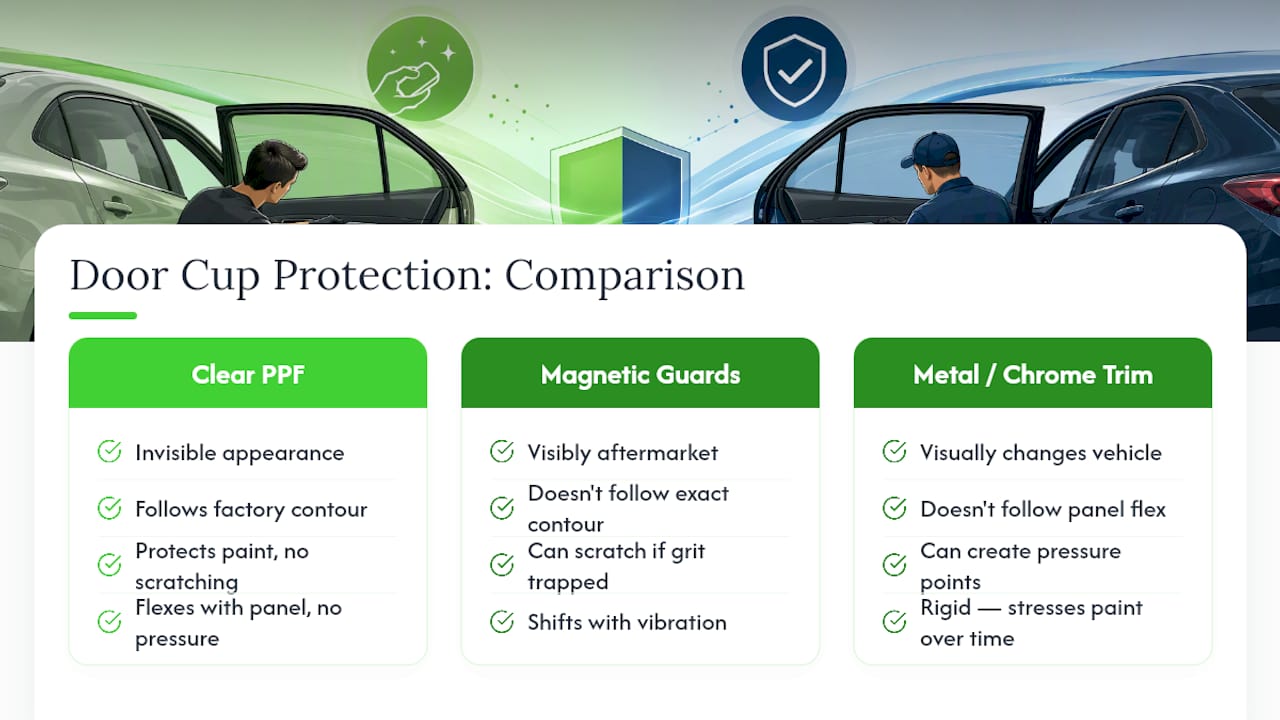
PPF isn't the only product marketed for door cup protection, but the alternatives trade invisibility for convenience in ways that matter.
Magnetic guards snap onto the door cup without adhesive, which sounds appealing until you actually use one daily. They shift with vibration, scratch the paint they're supposed to protect if grit gets trapped underneath, and look like an aftermarket accessory rather than a factory feature. They're a reasonable temporary fix for a rental or a car you're about to sell, not a long-term solution.
Metal or chrome trim pieces bolt or clip over the recess and offer real physical toughness, but they change the vehicle's appearance noticeably and often require drilling or clip modifications that weren't part of the factory design. They also don't flex with the panel the way film does, so they can create pressure points that stress the paint underneath over time.
Clear PPF remains the only option in this comparison that protects the paint while staying essentially invisible, follows the exact factory contour, and can be removed cleanly without altering the vehicle's original look. For anyone who wants protection without visually changing the car, film wins by a wide margin.
How Long Does Door Cup PPF Actually Last?
Environmental exposure affects door cup film more than almost any other panel, simply because it's touched constantly and sits in a tight recess that traps moisture differently than a flat hood or fender.
Heat and direct sun accelerate wear on lower-grade film faster than on shaded panels, which is part of why top-coat quality matters so much here. Cold climates introduce a different challenge: film can become slightly more rigid in freezing temperatures, making it marginally more prone to edge stress if the vehicle is driven hard on rough roads. Coastal environments add salt air into the mix, which can work into any existing edge lift and speed up adhesive breakdown.
None of that means film wears out fast under normal conditions. A well-installed door cup protector with a quality top coat holds up for years under daily use, and the self-healing properties built into better films actively fight the fine scratching that accumulates from rings and fingernails, rather than just delaying the inevitable. The panels that fail early are almost always the ones where installation cut corners, not the ones simply exposed to normal weather.
Should You DIY It or Call a Pro? My Honest Take
Here's my actual filter for this decision: if your car is under warranty, leased, or something you plan to sell in the next few years, pay for a professional install. The cost difference between a good DIY kit and a pro job is small relative to what a botched fingernail-width bubble does to resale perception.
If you're patient, mechanically inclined, and genuinely enjoy detail work, a pre-cut kit on one door is a fair place to test your skills. Just don't rush the squeegee pass. That's where almost every DIY failure actually starts, not in the cutting or the positioning, but in pulling the squeegee too fast and trapping air or solution before it's had time to work its way out from under the film.
Skipping the heat-tuck step on curved edges is the second mistake I'd flag hardest. It's tempting to call the job done once the film looks flat, but an untucked edge on a recessed panel is exactly the kind of detail that lifts within a season, not immediately.
Whichever route you pick, ask to see photos of a completed door cup install under bright light before committing, and always ask about the warranty terms in writing. A shop that won't show you a close-up of their own edge work is telling you something.
— Jake
Get Your Door Cups Protected the Right Way
A professional shop handles door cup PPF in a climate-controlled facility where dust and humidity are kept under control to protect the film's adhesive bond. That control matters most on small, high-touch panels like door cups, and professional installations are often backed by manufacturer warranties that cover lifting, yellowing, and edge failure.
Every install starts with a quick inspection of door cup contours, followed by an estimate before any film is applied. Most single-panel jobs finish same-day. Complex EV handle geometries, including Tesla-specific fits, require specialized handling. If you're weighing a bigger full front PPF package that includes door cups as part of the coverage, that's worth asking about too. For a broader look at aftermarket customization beyond protection film, Import Junkies covers styling upgrades that pair well with a protected daily driver.
Ready to stop worrying about ring marks and fingernail scratches on your door handles? Book a consultation with Tint & Wraps Customs and get a written estimate for your exact vehicle.
Sources
For deeper background, the Wikipedia entry on paint protection film covers material science basics, while UPPF USA's installation guide walks through DIY technique in detail.
- Paint protection film - Wikipedia
- What is PPF and How Does It Work? | Ceramic Pro
- How to PPF a car: Step-by-Step Installation Guide (UPPF USA)
- How to Install Paint Protection Film | Global Hi-Tech Films
- 3M-5pcs Customized Car Door Handle Cup Protector Made with 3M PPF | Amazon