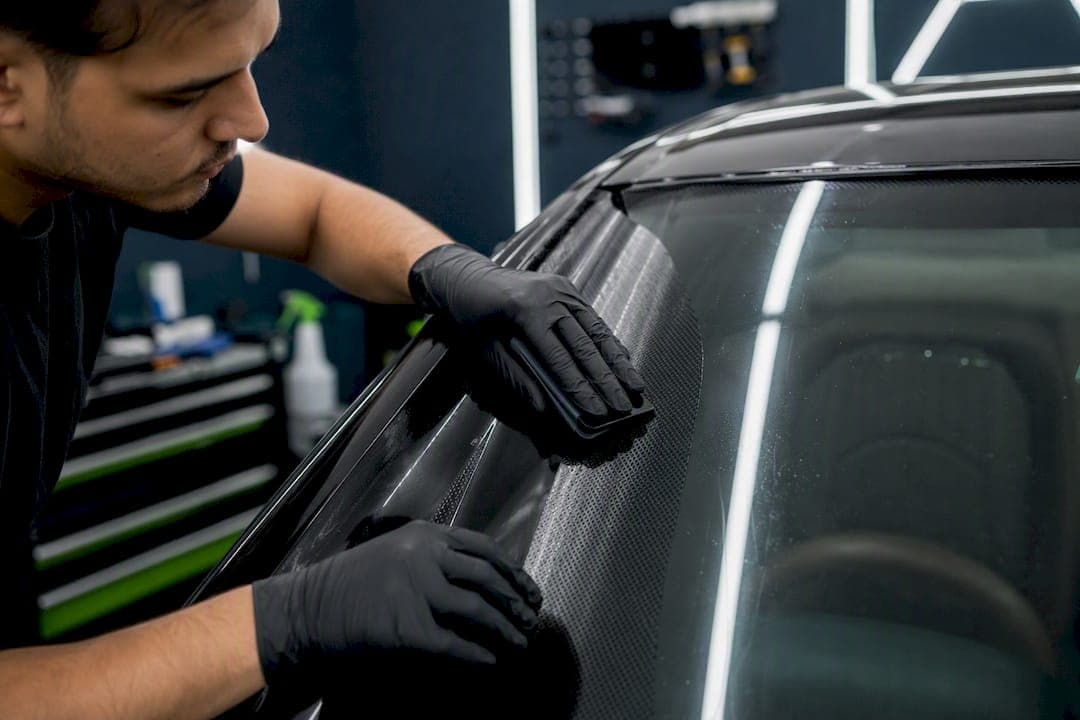
Yes, you can tint over a dot-matrix ceramic frit, but the reliable method uses a tack solution on the dotted band and a controlled cure, not a slip-only install stretched across the whole piece of glass. Slip-only installs are what cause the white haze and edge lift owners complain about six weeks later, because the slick solution never lets the film grip the baked-in dots.
If you're vetting a shop or deciding whether to attempt this yourself, ask three things before anyone touches your glass:
- Do they use a dedicated tack solution on the dot-matrix band, or the same slip solution across the whole piece of glass?
- What's their cure policy, and will they explain what normal haze during cure looks like versus a failure?
- Is there a written warranty that covers edge lift and silvering specifically, not just bubbling on the main glass?
Key Takeaways
Reliable dot-matrix tinting depends on using a tack solution on the frit band, easing squeegee pressure across the dots, and curing in a controlled environment for 48 to 72 hours.
| Point | Details |
|---|---|
| Tack over slip | Use a dedicated tack solution on the dot-matrix band, not the same slip solution used on the rest of the glass. |
| Sanding is a last resort | Abrasion can strip factory ceramic frit permanently; reserve it for stubborn spots only. |
| Cure time matters | Expect 48 to 72 hours before window operation, with the vehicle shielded from sun and temperature swings. |
| Check for real warranty language | Ask specifically whether coverage names edge lift and silvering, not just general bubbling. |
| Climate control reduces failures | Tintandwrapscustoms installs every job in a climate-controlled Van Nuys facility, backed by manufacturer warranties across 1,000+ vehicles. |
Table of Contents
- What Is Dot Matrix Tint and Why Does It Reject Adhesive?
- Tack Solutions, Sanding, and Other Fixes: What Actually Holds
- How Do Installers Tint Dot-Matrix Edges Step by Step?
- Do DIY Fixes Like TintGel Work on Dot Matrix?
- How Do You Know the Cure Held and the Warranty Is Real?
- How Tint & Wraps Customs Handles Dot-Matrix Installs
- The Part Most Shops Skip on Dot-Matrix Installs
- Get a Dot-Matrix Install That Actually Holds
- Frequently Asked Questions
- Sources
What Is Dot Matrix Tint and Why Does It Reject Adhesive?
The dot matrix is a printed band of black ceramic dots baked directly into the glass, usually along the top edge of the windshield, the perimeter of the rear window, and often the quarter windows. Automakers use it to hide the urethane bonding strip and block UV degradation of the adhesive underneath.
That baked-on enamel is the problem. It creates a rough, low-surface-energy texture that behaves nothing like bare glass, leaving microscopic valleys between the dots where a normal slip solution just pools instead of bonding. Tint film floats over these gaps rather than seating into them.
Three failure modes show up when installers ignore this:
- Silvering — a white or silver haze along the dotted band, usually visible within days.
- Edge lift — the film peels back from the frit line, often starting at a corner.
- Dirt intrusion — grime works into the gap under the lifted edge and turns the whole strip gray within a season.
Tack Solutions, Sanding, and Other Fixes: What Actually Holds
Shops have tried nearly everything to get film to grip a dot-matrix band, and the results vary wildly by method. Here's how the main approaches stack up.
- Tack solutions. These are thicker, stickier, water-based formulas applied specifically to the dotted band while a standard slip solution goes on the rest of the glass. The tack grabs the film immediately during positioning, reducing the float that causes silvering. The tradeoff: tack solutions leave less room to reposition the film once it's down, so the installer has to get placement right the first time.
- Sanding or abrading. Light abrasion can knock down high spots on the frit and improve grip, but it's a risky move. Go too aggressive and you scratch the glass or strip the factory ceramic layer itself, which is not something you can undo. Reserve this for stubborn spots, not a first-resort technique.
- Glue beads or glue-stick fixes. A thin bead of adhesive along the dot line can bridge small gaps temporarily, but it's a short-term patch. Most glue-stick fixes fail within a few months as the adhesive dries out and the film releases again.
- Painting over the dots. Some shops paint the frit area to create a smoother surface before tinting. It works cosmetically but adds labor cost and only makes sense on vehicles where the frit band is unusually wide or damaged.
- Leaving a small gap. On some models, especially where the dot band is narrow, trimming the film just short of the frit line and accepting a slim visible gap beats fighting a doomed bond. It's not glamorous, but it holds.
How Do Installers Tint Dot-Matrix Edges Step by Step?
A professional workflow for this area looks nothing like a standard windshield strip install. The sequence matters as much as the products.
- Clean the entire piece of glass thoroughly, using a dedicated prep solution to strip factory wax, silicone residue, and any old adhesive haze. Skipping this step is the single fastest way to guarantee failure later.
- Apply tack solution specifically to the dot-matrix band, keeping slip solution on the rest of the glass so the film can still be adjusted where it matters.
- Position the film and squeegee with overlapping strokes, easing pressure as the blade crosses the dots. Full pressure across the frit can push the film into the gaps unevenly and create bubbles later.
- Seal the trim and edge, using measured heat on curved or recessed sections. On tight curves like quarter windows, heat applied incorrectly causes shrink back and reopens gaps right over the dot band, undoing the whole install.
- Follow a strict cure protocol. Most installers recommend 48 to 72 hours before rolling windows down, with the vehicle kept out of direct sun and extreme temperature swings during that window.
Pro Tip: If a shop tells you they always sand the dot matrix before every install, that's a sign they're compensating for a missing tack solution, not following best practice. Read how curing time affects the final result before you sign off on any timeline they give you.
Do DIY Fixes Like TintGel Work on Dot Matrix?
If you're tinting your own car, a few consumer-facing products exist specifically for this problem. TintGel™ is one of them, marketed as a direct fix for dot-matrix adhesion. The instructions call for applying a thin layer over the dotted band, letting it set briefly, then installing the film with lighter scraper pressure than usual to avoid pushing air back into the gaps. Used correctly, it fills the microscopic valleys well enough to prevent the white halo. Used carelessly, with too much product or too much pressure, it just creates a different kind of bubble.
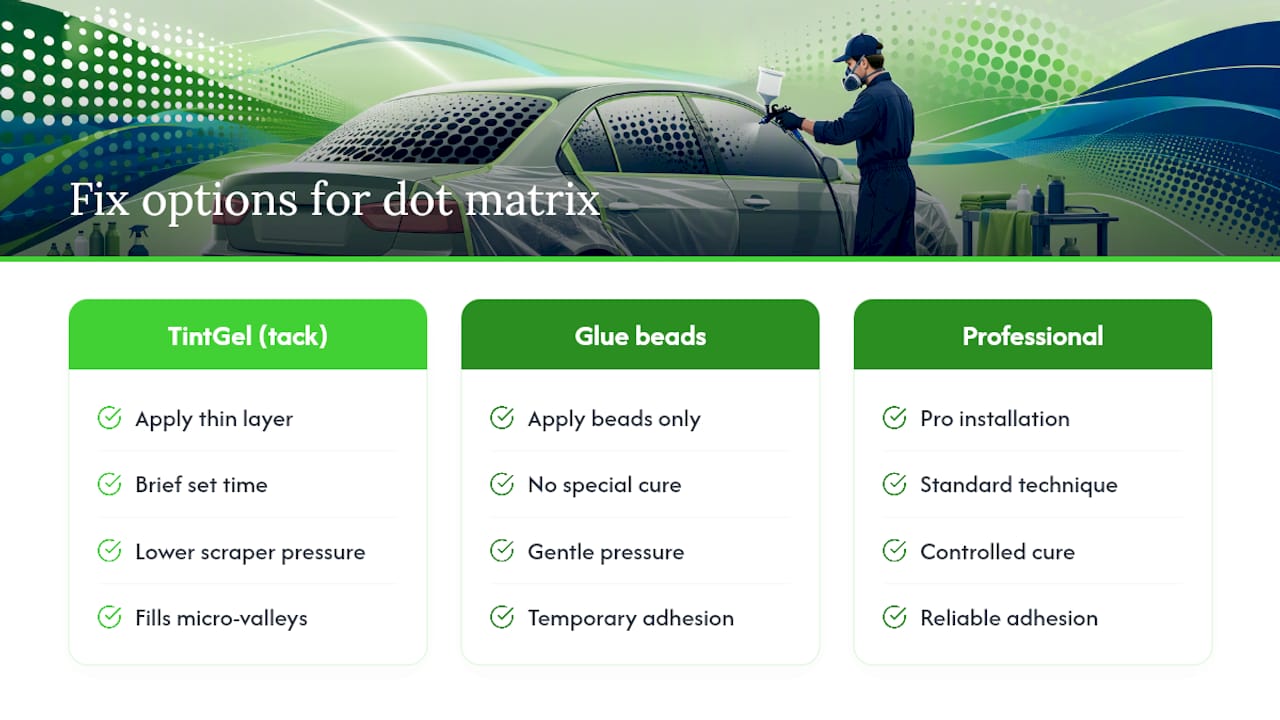
Temporary glue beads can buy you a few months on a low-visibility panel, but they're not a real fix. Aggressive sanding should stay a last resort. It risks the glass itself, and once you've damaged the factory frit, there's no putting it back.
If your vehicle has curved quarter glass, heated rear glass, or you've already had one failed attempt, that's the threshold where hiring a professional stops being optional and starts being the cheaper option long term.
How Do You Know the Cure Held and the Warranty Is Real?
The first 72 hours tell you almost everything. Expect some light haze during that window; it should fade completely, not deepen into a permanent white line along the frit.
Run these checks once cure time has passed:
- No silvering or white haze visible along the dot-matrix band after 48 to 72 hours.
- Film edge feels fully sealed, with no lifting when you run a finger lightly along the trim.
- No trapped debris or bubbles visible under strong light at an angle.
Ask directly whether the shop offers a manufacturer-backed warranty that names edge lift and silvering, not just general film failure, and whether the install happened in a climate-controlled bay. Shops with real environmental control report fewer callbacks tied to dot-matrix adhesion than shops installing in open bays where dust and humidity swing all day. If a shop can't show you photo examples of a dot-matrix edge holding up months later, that's worth asking about directly before you book.
How Tint & Wraps Customs Handles Dot-Matrix Installs
Every install at our Van Nuys facility happens in a climate-controlled bay, which matters most exactly on the jobs this article is about. Dust, humidity, and temperature swings are the enemy of a tack bond curing properly, and a controlled environment removes that variable entirely.
We've protected more than 1,000 vehicles, including a heavy volume of Tesla and EV installs where quarter-glass shapes and heated rear windows demand the kind of edge relief and heat control described above. That repetition is what separates a shop that handles dot-matrix bands correctly from one guessing at it.
The dot-matrix band punishes shortcuts faster than any other part of a tint job. Get the tack method and the cure environment right, and it's a non-issue. Get either wrong, and it shows up in weeks, not months.
Manufacturer-backed warranties back every install, and our gallery shows real examples of dot-matrix edges holding clean months after install. If you've had a failed attempt already, a diagnostic visit is the fastest way to find out why.
The Part Most Shops Skip on Dot-Matrix Installs
Most of the advice floating around about dot-matrix tinting focuses on the product: which gel, which glue, which brand of film. That's the wrong starting point. The actual failure point is almost always process, specifically the switch between tack and slip solution and whether the installer eases pressure crossing the dots. A shop can use the best tack product available and still silver an edge if the squeegee technique doesn't change once it crosses the frit line.
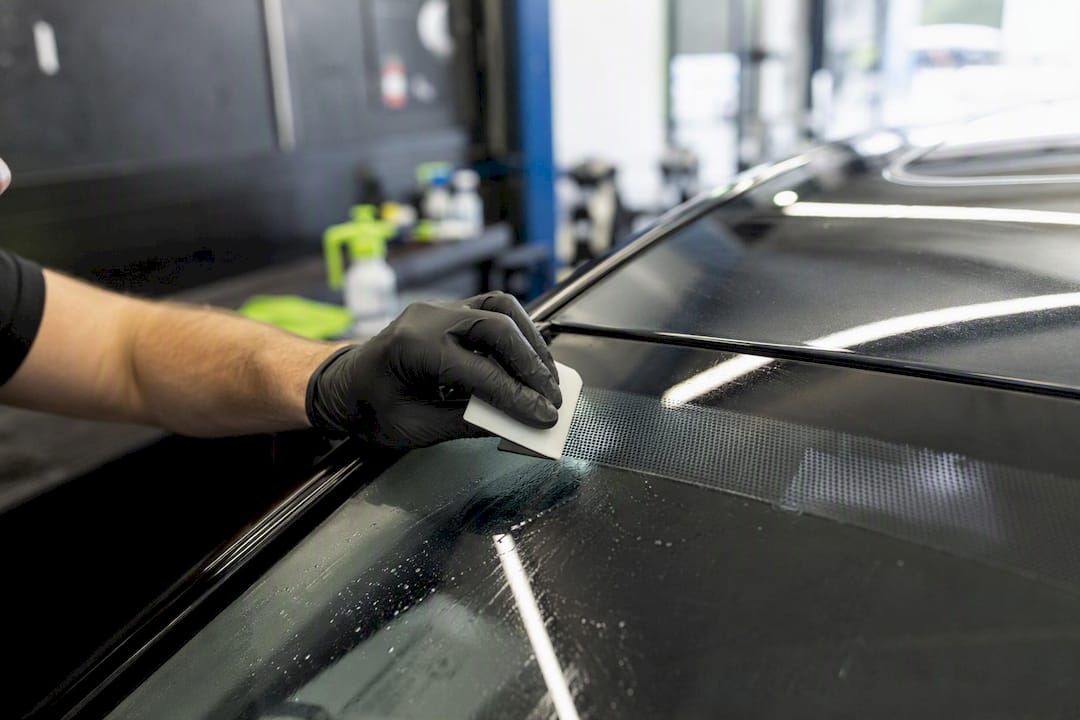
The conventional advice to "just sand it a little" undersells the risk. Sanding is a one-way decision on a piece of glass you can't replace cheaply, and it's often reached for because a shop doesn't have a tack solution on hand, not because the vehicle actually needed it.
If you're evaluating a shop, skip the sales pitch about premium film brands and ask about their dot-matrix process specifically. Ask what changes about their technique the moment the squeegee crosses that band. A shop that can answer specifically, rather than gesturing at "we've done this before," is the one worth trusting with a Tesla quarter window or a rear windshield with a wide frit band.
Get a Dot-Matrix Install That Actually Holds
If everything above has you weighing a DIY tack solution against a professional install, the honest answer for anything beyond a flat side window is to let a shop with the right process handle it. Tintandwrapscustoms runs every install through a climate-controlled bay in Van Nuys, which removes the humidity and dust variables that cause dot-matrix bonds to fail during cure. We've handled the tack-versus-slip transition on over 1,000 vehicles, including EV and Tesla quarter glass where the curves make heat control unforgiving.
Every job comes with a manufacturer-backed warranty that specifically covers edge lift and silvering, not just general film defects. If you've already had one failed attempt or you're staring at a Tesla with tight quarter-glass curves, book a diagnostic visit and get a straight answer on what your dot-matrix band actually needs before film goes anywhere near it.
Frequently Asked Questions
Can you tint over dot matrix without any special product? You can attempt it with a standard slip solution, but the risk of silvering and edge lift within weeks is high. A tack solution built for the dotted band gives film something to grip during positioning and cure.
How long does dot matrix tint take to cure properly? Most professional installers recommend 48 to 72 hours before rolling windows down, keeping the vehicle out of direct sun and extreme heat during that window.
Is TintGel™ a permanent fix for dot matrix adhesion? TintGel is designed to fill the microscopic gaps in the frit and reduce the white-halo effect when applied correctly with lighter scraper pressure. It works as a genuine fix when used as directed, not as a stopgap.
Why does my tint look silver or white along the top edge? That's silvering, caused by trapped air or an incomplete bond between the film and the dot-matrix band. It usually means a slip-only install was used where a tack solution was needed.
Should I sand the dot matrix before tinting? Only as a targeted fix for a specific stubborn spot, never as a routine first step. Aggressive sanding risks permanent damage to the glass or the factory ceramic coating.
Sources
- How to Tint Over Dot Matrix: The Complete Guide for Professional Installers
- TintGel™ - Dot Matrix fix 100ML
- The Window Tint Dot Matrix Problem