3M Color Stable is a non-metalized, fade-resistant automotive window film built to keep its original shade instead of turning purple over time. The Color Stable Series rejects up to 64% of total solar energy and blocks nearly all UV rays, according to 3M's own specs. The film's limited lifetime warranty is tied to installation by an authorized dealer, which is a detail worth checking before you book anyone.
TL;DR:
- Many states cap front side tint at 35%, while others require 70% on certain windows; factor in factory glass and meter the installed VLT.
- Ceramic films generally reject more heat at a higher price, while Color Stable prioritizes lasting color; carbon offers a middle ground above basic dyed film.
- 3M’s limited lifetime warranty requires installation by an authorized dealer, so confirm the shop’s status and ask how long it has held authorization.
- High performance films can last a decade or more, compared with 3 to 5 years for dyed tint; wait 3 to 5 days before cleaning.
Table of Contents
- What color-stable tint means and how the film's technology stops fading
- Performance specs: solar rejection, UV blocking, and how long the film lasts
- How color-stable tint compares to dyed, carbon, and ceramic films
- Choosing a legal, comfortable VLT and verifying it after install
- Installation quality, curing, and the warranty signals worth checking
- Why we often recommend Color Stable film to our customers
- Book Color Stable window tinting with our Van Nuys team
- FAQ
- Sources
What color-stable tint means and how the film's technology stops fading
Cheap dyed window film can be more prone to fading or color changes over time. It is one of the most common complaints with budget tint jobs.

Color stable tint solves this differently. 3M's version uses ceramic nano-particles and a patented infused dye, which 3M describes as supporting color retention. Its non-metalized construction is another feature that distinguishes it from metallic films.
VLT, or visible light transmission, tells you how much light passes through the glass after tint is applied. A lower VLT percentage means a darker window.
- A 5% VLT looks very dark and offers substantial privacy.
- A 35% VLT is a common middle ground for daytime visibility and moderate privacy.
- A 50% to 70% VLT is lighter, often chosen for front windows where visibility at night matters most.
Performance specs: solar rejection, UV blocking, and how long the film lasts
3M's Color Stable Series rejects up to 64% of total solar energy and blocks up to 93% of visible light depending on the VLT chosen, per 3M's product data. The brochure separately claims up to 99% UV rejection, which is the figure most relevant to skin and interior protection.

Those numbers translate into everyday differences you can feel. A cabin that rejects more solar energy runs cooler on hot days, which eases the load on your air conditioning. Higher UV blocking protects your skin on long drives and slows the cracking and fading of dashboards, leather, and upholstery. Darker VLT choices also cut glare and add privacy.
Lifespan depends on three things:
- Film quality, since ceramic and infused-dye films typically outlast basic dyed film.
- Installation quality, where bubbling or edge lifting shortens a film's working life regardless of how good the film itself is.
- Environmental exposure, since intense sun and heat accelerate wear on any film over time.
High-performance films can last a decade or more with proper care, compared with 3 to 5 years for standard dyed tint. Most installers recommend waiting 3 to 5 days after installation before cleaning the glass, and using an ammonia-free cleaner afterward to avoid breaking down the adhesive.
How color-stable tint compares to dyed, carbon, and ceramic films
Dyed film is the entry point of the tint world. It costs less upfront but carries the highest risk of fading to purple, since the color sits in a surface dye layer with no added technology to protect it.
Carbon film sits a step up. It holds its color better than basic dyed film and offers decent heat rejection, making it a reasonable mid-tier choice for owners who want better durability without paying ceramic prices.
Color stable and ceramic-style films share the same non-metalized, fade-resistant foundation, but they diverge on heat performance. Ceramic films generally push infrared rejection higher, which matters most to owners prioritizing cabin coolness above all else, while color stable film focuses on holding its exact appearance for years.
- Dyed film: lowest cost, highest risk of fading or purpling over time.
- Carbon film: moderate durability and heat rejection, better color retention than dyed.
- Ceramic and color-stable films: non-metalized, fade-resistant, with ceramic options typically rejecting more heat at a higher price point.
Non-metalized construction matters beyond looks. 3M says its non-metalized films won't interfere with electronics.
Choosing a legal, comfortable VLT and verifying it after install
Picking the right VLT starts with your state's rule, not your preference. Tint laws vary significantly by state: many set a 35% front-side limit, while some require a minimum as high as 70% on certain windows. Confirm your state's exact limit before you choose a shade.
- Check your state's published front-side and rear-side VLT limits before deciding on a percentage.
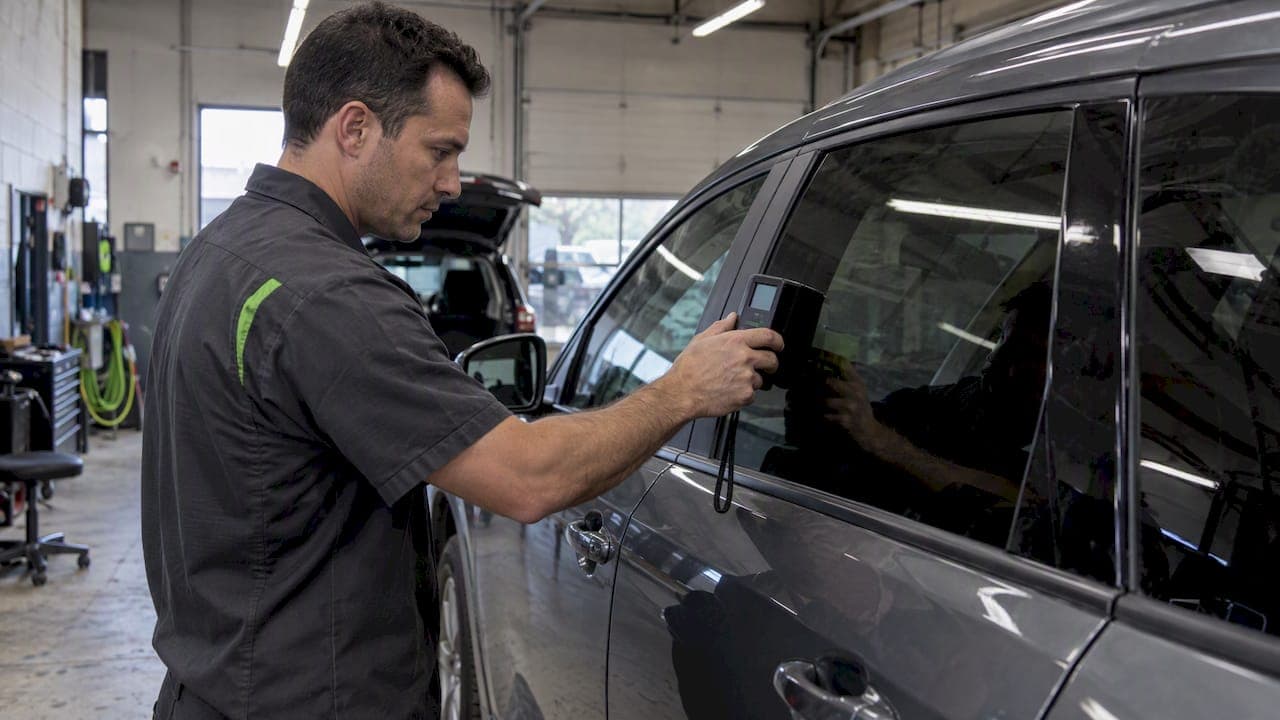
- Ask your installer to verify installed net VLT with a meter rather than trusting a box label, since factory-tinted glass changes the final reading.
- Choose a lighter front-side VLT for nighttime visibility and a darker rear VLT for privacy, staying within your state's legal range.
- Factor in your vehicle's factory privacy glass, since combining factory tint with aftermarket film changes the net VLT you end up with.
A meter reading after installation can help confirm compliance. Box labels describe the film alone, not the combined effect once it's layered over your factory glass.
Installation quality, curing, and the warranty signals worth checking
An authorized installer designation matters because manufacturers back their warranties only when the film goes on through vetted shops using approved techniques. 3M's limited lifetime warranty on the Color Stable Series is tied to installation by an authorized dealer, which is a meaningful signal when comparing quotes.
A proper install follows a consistent sequence: cleaning the glass, precision-cutting the film to the exact window shape, applying it with a slip solution, and squeegeeing out air and moisture. Curing typically takes several days, during which the film should not be rolled down or cleaned.
Watch for these warning signs of a poor install:
- Visible bubbles or hazy patches days after the film should have cured.
- Edges lifting or peeling away from the glass.
- Adhesive lines or gaps visible along the window frame.
Pro Tip: Ask your installer how long their shop has been authorized for the film brand they're quoting, not just how long they've been in business.
Why we often recommend Color Stable film to our customers
Working out of a climate-controlled facility in Van Nuys, we install tint and protective film, and focus on getting the details right the first time. Color Stable tends to suit owners who care most about a factory-correct appearance holding up for years, along with drivers who want the signal safety of non-metalized film.
For Tesla and EV owners specifically, that non-metalized build matters even more. We install with extra care around sensor housings and cameras to avoid any interference, which keeps driver-assist systems working exactly as intended after the tint goes on.
— Jake
Book Color Stable window tinting with our Van Nuys team
We install window tint alongside carbon and ceramic film options in our climate-controlled shop. Whether you're chasing the longest-lasting color retention or the strongest heat rejection, we can match the film to your vehicle and your state's VLT rules.
- Request a quote through our window tinting page to compare carbon and ceramic options.
- Schedule an inspection so we can confirm the legal VLT limits for your vehicle before installation.
- Book your install date once you've settled on a film and shade.
Head to our home page to see the full range of services, from paint protection film to vehicle wraps, and get your installation on the calendar.
FAQ
What is color stable tint?
Color stable tint is a non-metalized automotive window film engineered to resist fading or turning purple over time. 3M's Color Stable Series uses ceramic nano-particles and a patented infused dye to lock color into the film rather than relying on a surface dye layer.
What are the key differences between 3M ceramic IR and color stable window tint?
Both are non-metalized films, but ceramic IR films are built primarily to push infrared and heat rejection higher, which matters most for cabin coolness. Color Stable prioritizes long-term color retention, rejecting up to 64% of total solar energy while focusing on keeping its original shade for years.
What are the differences between 3M Obsidian and 3M Color Stable window tints?
3M's Obsidian line also uses infused dye technology for better durability and color retention than many dyed films, with some descriptions citing up to 60% total solar energy rejection.
What is the highest quality window tint brand?
There's no single verified ranking of tint brands, since quality depends on the specific film line, VLT choice, and installation. Manufacturer-backed, non-metalized films like 3M's Color Stable or Ceramic lines are widely regarded as premium options because of their documented solar rejection and UV blocking specs.
How do I choose a legal VLT for my state?
Check your state's published front-side and rear-side VLT limits, since requirements vary widely, from a 35% front-side limit in many states to minimums as high as 70% in others. After installation, ask your installer to verify the net VLT with a meter rather than relying on the film's box label alone.
Sources
- 3M™ Automotive Window Film Color Stable Series | 3M United States
- 3M Automotive Window Film Color Stable Brochure
- Window Tint Laws by State: Legal VLT Limits (2026) - TintScout