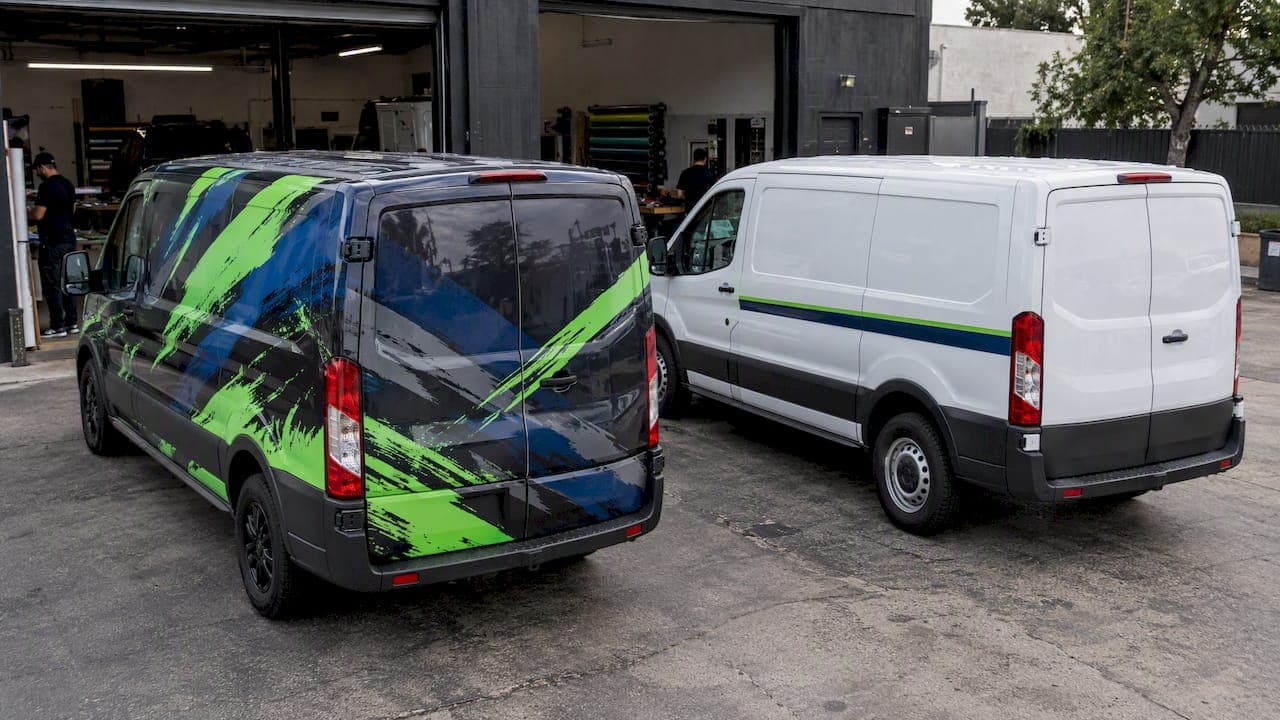
Fleet van wraps turn every work van into a moving billboard while shielding the paint underneath. 3M says a single wrapped vehicle can generate 30,000 to 70,000 impressions a day, and its films carry manufacturer warranties. Your next step is simple: request a custom quote from our fleet wrap team.
TL;DR:
- Treat the impression estimate as a planning ceiling, not a forecast, and track calls with a dedicated number or landing page to measure actual leads.
- Choose full coverage when passersby need to understand your services; use a logo and contact stripe when local recognition already does the explaining.
- Ask for exact film and overlaminate names and written claims procedures; 3M’s coverage excludes misapplication, ordinary wear, accidents, and paint pull during removal.
- Stage installations around dispatch schedules to keep vans working, and ask the installer to plan the rollout around your slowest days.
- Check state and local rules for window coverage, required vehicle numbers, lights, and reflective finishes before approving artwork, especially when vans cross state lines.
Table of Contents
- Which design direction fits your work vans?
- How do fleet wraps drive visibility, trust, and leads?
- What wrap films and warranties should you look for?
- What happens during professional installation, and how long does it take?
- What drives the cost of a fleet wrap?
- How long do fleet wraps last, and how do you care for them?
- Why trust us with your fleet installs?
- What legal rules apply to fleet wrap graphics?
- How do weather and washing affect a fleet wrap?
- How should wraps differ for logistics, service, and delivery vans?
- Should you wrap your fleet yourself or hire a professional?
- What most fleet wrap advice gets wrong
- Ready to wrap your fleet?
- FAQ
- Sources
Which design direction fits your work vans?
A full wrap tells a complete story: your services, your phone number, your brand colors, all wrapped around the body. A minimal setup, such as a clean logo with a contact stripe, costs less film and still works when your brand is already well known locally. Choose the full wrap when you want new customers to understand what you do from across a parking lot. Choose minimal when recognition matters more than explanation.
Whatever you pick, design for motion. Most people see your van only briefly, which is why our blog post on the 3 second rule for fleet owners focuses on what to show first. Keep the logo large, use high color contrast, and put the phone number or web address where following drivers can read it. Remember the van itself: door handles, sliding doors, ladder racks and body creases all interrupt artwork.
Brief your designer and installer with this checklist:
- Van make, model, roof height and wheelbase for every vehicle in the fleet
- Locations of ladder racks, lights, sensors and cargo door hinges
- Brand colors with exact color values, plus vector logo files
- One main message and one call to action, such as a phone number
- Which panels must stay clear for legal numbers or decals
Pro Tip: Print your design at small scale and view it from across a room. If you cannot read the company name and phone number in a glance, enlarge them before production.
How do fleet wraps drive visibility, trust, and leads?
A wrapped van advertises every mile it drives, on job sites, in traffic and while parked in front of a customer's home. Unlike a billboard, it follows your actual service area. A branded van also reassures customers that a legitimate crew is arriving, which matters for plumbers, electricians, and delivery services.
3M's commercial materials state that a single vehicle wrap can generate between 30,000 and 70,000 impressions a day. That is a manufacturer estimate, so treat it as a ceiling to plan against, not a promise.
Impressions only help if you can tie them to leads. Use these tracking tactics:
- A dedicated landing page with a short URL printed only on the wrap
- A unique phone number routed through call tracking
- A promo code mentioned on the van, such as "VAN10"
- A question on your intake form: "How did you hear about us?"
To estimate return, start with a conservative share of impressions that turn into calls or visits, multiply by your close rate, then by your average job value. For example, estimate the revenue from additional jobs by multiplying your average job value by the number of extra jobs, then compare that amount with the install price. Our vehicle wrap ROI breakdown walks through a fuller version of this math.
What wrap films and warranties should you look for?
Not every film is built for fleets. Knowing the categories helps you judge an installer's claims:
- Print wrap film: vinyl that carries your printed artwork. 3M's Controltac and IJ180 bulletins describe 2-mil films with micro air-release channels for easier, bubble-free installs.
- Colored film: solid-color vinyl for color changes or accent panels.
- Clear printable film: used where you need graphics without covering the paint color.
- Overlaminates: protective clear layers. 3M guidance lists recommended overlaminates such as 8528, 8548G, 8549L and 8900 for protecting horizontal vehicle wraps.
3M's warranty states that applied Wrap Film Series 2080 will be free of defects in materials and manufacture, while excluding misuse, accident, misapplication, ordinary wear and paint pull during removal.
That exclusion list is why film choice and installer skill go together. Before you book, ask for the exact film and overlaminate names, how warranty claims are handled, and proof that the installer works with the manufacturer's products. We use brands including 3M, as listed on our vinyl wraps page.
What happens during professional installation, and how long does it take?
Fleet installs follow a predictable sequence:
- Pre-inspection: we check each van for dents, rust, failing clear coat and old graphics.
- Surface evaluation: paint and substrate condition decide whether the film will bond properly.
- Prep and partial disassembly: we clean thoroughly and remove handles, lights or trim where needed for clean edges.
- Application: film goes on in a climate-controlled bay, which limits trapped dust and finishing defects.
- Post-install inspection: we check seams, edges and recesses, then document the result for warranty records.
A single van's installation time depends on prep and coverage. For a larger fleet, staged rollouts keep most vehicles on the road: a few vans in, a few vans out, and your route schedule stays intact.
Pro Tip: Send your dispatcher's schedule with the quote request. A good installer can sequence vans around your slowest days.
Ask any installer about lead time, how warranty claims are handled, and what the removal policy is before you sign.
What drives the cost of a fleet wrap?
Price depends on several variables, not just van size:
- Vehicle size and body complexity
- Coverage level: full wrap, partial wrap or lettering only
- Print complexity and number of colors
- Film brand and overlaminate choice
- Removal of old graphics before the new film goes on
Per-vehicle cost often drops when you wrap several vans at once, since design, setup and scheduling are shared. Staging the work over several weeks can keep downtime manageable without giving up that benefit.
When you compare quotes, check that each one states:
- The specific film and overlaminate
- Estimated labor hours and turnaround time
- How warranty claims are handled
- Whether removal of old graphics is included
Our fleet wrap cost guide covers budgeting frameworks in more detail. For a number that fits your vehicles, a custom quote through our fleet wrap pricing page is the right next step.
How long do fleet wraps last, and how do you care for them?
Lifespan depends on sun exposure, cleaning habits, road debris and film quality. A van parked outdoors all day in strong sun ages faster than one garaged overnight, and cheaper film fades sooner. Ask your installer what to expect for the specific film they propose, and check it against the manufacturer's material.
Simple habits extend the life of a wrap:
- Wash gently and regularly with a mild detergent
- Avoid high-pressure washing at close range, especially near edges
- Inspect seams and edges for lift, and report it early
- Remove fuel, bird droppings and tree sap promptly
Pro Tip: Photograph each van after install. Dated photos make any later warranty conversation faster.
Removal is best left to professionals, because pulling film wrongly can lift paint, and paint pull is excluded from the 3M warranty. Plan a rewrap or removal around lease end, resale or a rebrand.
Why trust us with your fleet installs?
We perform installs in a climate-controlled, dust-free facility in Van Nuys, California, which helps keep finishes clean and seams tight. Our team also has experience with Tesla and other EV installs, where sensors and tight panel fits leave little room for error.
Our trust signals are straightforward: manufacturer-backed warranties, positive customer ratings, and extensive vehicle-protection experience. You can see our work on our vehicle wraps page, compare numbers on our fleet pricing page, and read the design and cost guides we link throughout this article before you commit.
What legal rules apply to fleet wrap graphics?
Rules vary by state and city, so confirm them before finalizing artwork. We cannot give legal advice, and we are not citing a specific statute here, so check with your state's motor vehicle agency and your local government.
Common areas to review:
- Windows and visibility: many jurisdictions limit what can cover the windshield, front side windows and rear view. Perforated window film is common, but local rules decide what is acceptable.
- Required markings: commercial vehicles may need license, DOT or contractor numbers displayed in specific sizes and positions. Keep those areas clear of artwork.
- Lighting and reflectivity: graphics must not hide lamps, reflectors or plates, and very reflective finishes can raise questions.
- Content rules: claims on a wrap are advertising like any other, so avoid statements you cannot back up.
- Local ordinances: some cities and HOAs regulate vehicle signage or parked commercial vehicles.
Send these requirements to your installer with the design brief. It is far cheaper to adjust a layout before printing than to reprint panels afterward. If your vans operate across several states, check the stricter rules and design to them.
How do weather and washing affect a fleet wrap?
Fleet vans live harder lives than personal cars. They sit in sun, idle in traffic, get loaded and unloaded, and are often washed fast. Ultraviolet exposure is the main enemy of color, so horizontal surfaces such as roofs and hoods age first, which is why 3M guidance highlights overlaminates for horizontal wraps.

Weather resistance depends on the film, the overlaminate and the install. Heat, cold, rain and road salt all stress edges, so well-sealed edges and clean prep matter. Climate-controlled application helps because it keeps dust and moisture out of the adhesive layer.
Cleaning protocols are easy to standardize across a fleet:
- Hand wash or use a touchless wash with mild soap
- Keep pressure washers at a distance, and never aim the spray at an edge
- Skip abrasive brushes and harsh solvents
- Rinse off fuel and chemical splashes quickly
- Park in shade or a garage when possible
Write these steps into a one-page care sheet and give a copy to every driver. Fleets that treat the wrap as an asset, not an afterthought, tend to get more months of clean, readable branding.
How should wraps differ for logistics, service, and delivery vans?
Each industry needs a different message from the same canvas.
Logistics and delivery: these vans are seen in motion and from behind. Make the company name and a web address large, use simple shapes, and keep vehicle numbers legible for dispatch. Consistency matters most here, so one template applied to every van builds recognition fast.

Service trades: plumbers, electricians, HVAC and cleaning crews win jobs when customers can match the van to a trusted name. List the services, a phone number and, if you have them, a license number. Leave space for roof and rear details, since ladder racks and shelving often sit there.
Mobile sales and promotions: if the van is part of an event or sales team, bold graphics and a short offer drive foot traffic. These wraps are more likely to be updated with seasonal campaigns, so ask about panel-by-panel replacement.
Across all three, consider partial wraps when budgets are tight, or a color change with simple lettering when you want a clean, premium look. If your plan includes vehicles beyond vans, our team can also handle other vinyl wrap and color-change work so the fleet looks consistent.
Should you wrap your fleet yourself or hire a professional?
Doing it yourself looks cheap on paper, but a van is a large, curved surface with deep recesses, seams and door edges. Here is how the two paths compare:
| Factor | DIY | Professional |
|---|---|---|
| Upfront outlay | Lower labor cost | Higher, includes labor and warranty handling |
| Skill needed | High, with a steep learning curve | Trained installers with repeatable process |
| Finish quality | Risk of bubbles, wrinkles and lifted edges | Controlled environment, post-install inspection |
| Warranty | May be void if misapplied | Manufacturer terms with installer support |
| Fleet consistency | Varies van to van | Same standard across vehicles |
The manufacturer's own terms matter here. The 3M warranty excludes misapplication, so a flawed DIY install can cost you coverage as well as time. Vans out of service while you learn also cost real money.
Mobile installers are another option for simple jobs, and a Miami mobile tint and wrap guide explains how on-site service works for film installs. For a branded fleet with printed graphics, though, a dedicated bay with controlled conditions gives you the best finish and a cleaner paper trail for warranty.
What most fleet wrap advice gets wrong
Most advice starts with the design, and the design is the cheapest part to change. What decides whether a wrap pays off is the install and the follow-through: clean prep, authorized film, a documented warranty process, and a plan to measure leads. A stunning layout on a poorly prepped van peels at the edges within months and tells customers you cut corners.
The other overrated idea is the impressions number. Manufacturer figures are useful for scale, but they do not book jobs. A phone number you can read at a red light and a landing page you can track do. I would rather see a fleet manager wrap three vans with excellent contrast, a big phone number and a tracking code than twenty vans with clever artwork nobody can read at speed.
Prioritize in this order: choose the installer, confirm the film and warranty handling, brief the design around legibility, then set up tracking before the first van rolls out. Everything else is polish.
— Jake
Ready to wrap your fleet?
If you want branded vans without long downtime, we can handle the design consult, the quote and the install under one roof. Our climate-controlled installs, manufacturer-backed warranty support and EV experience are built for businesses that cannot afford rework.
- Ask for a staged install schedule and sample timeline to limit downtime
FAQ
How much does it usually cost to wrap a van?
Cost depends on van size, coverage, print complexity, film brand and whether old graphics need removal. Our vehicle wrap ROI guide shows example install values for US businesses. For an exact number, request a custom quote.
How long does 3M vinyl wrap last?
Lifespan depends on sun exposure, cleaning habits and film quality, so there is no single figure that fits every van. Applied 3M Wrap Film Series 2080 is covered against defects in materials and manufacture under 3M's warranty. Gentle washing and shade parking help it last longer.
Who is the best car wrapping company?
The best choice is an installer who names the exact film, works with authorized products, installs in a controlled environment and handles warranty claims clearly. Ask to see past fleet work and reviews before you decide. We encourage you to compare these points across every quote you collect.
What is car vinyl wrap made of?
Vehicle wrap film is a flexible vinyl sheet with an adhesive layer, designed to conform to curved surfaces. 3M describes its print wrap films as 2-mil vinyl with micro air-release channels. A clear overlaminate often goes on top for protection.
Sources
- Wrap Film
- Graphics
- Multimedia
- Revision U, March 20203M™ Controltac™ Graphic Film 3M™ Print Wrap Film
- Commercial Vehicle Wraps - Graphics and Signage