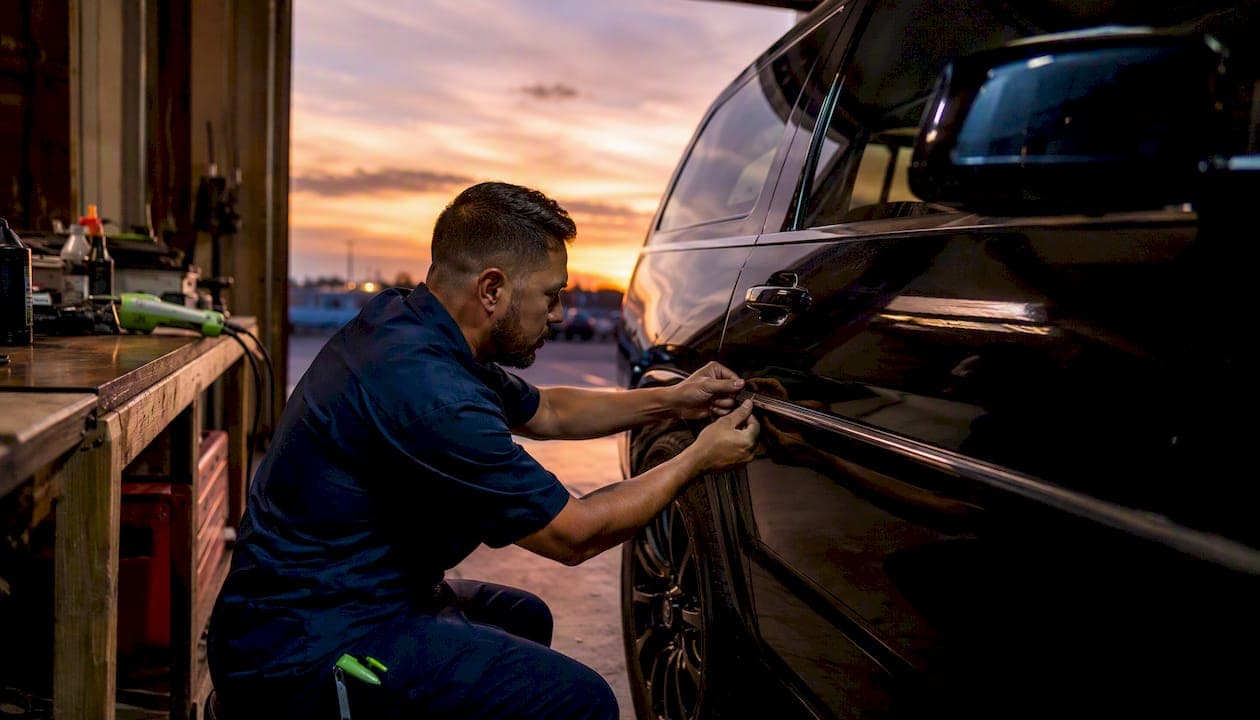
Professional chrome delete pricing typically falls within a moderate range for most vehicles, with DIY kits available at lower starting prices. For the majority of owners, professional cast vinyl wrap is the right call: it lasts 5–7 years, looks factory-clean, and comes off without damaging the original trim.
TL;DR:
- DIY kits (materials only) are available at various price points depending on the listing.
- Partial professional jobs covering window trim and badges commonly cost in the lower to mid hundreds.
- Full professional deletes covering all chrome surfaces usually reach the higher end of the moderate price range.
Professional vinyl holds up 5–7 years under normal conditions. Luxury SUVs and large trucks often incur higher costs due to the greater number of trim pieces.
Table of Contents
- How much does chrome delete cost? A full breakdown by scope
- What drives the final price up or down
- Vinyl, paint, powder coat, or PlastiDip: which method fits your situation?
- How long the job takes and how long the results last
- Is a chrome delete actually worth the money?
- How to get an accurate quote from a shop
- Why shop credentials matter as much as price
- Key Takeaways
- The part most guides skip about DIY vs. pro
- Tintandwrapscustoms chrome delete service: what's included
- Useful sources and tools
How much does chrome delete cost? A full breakdown by scope
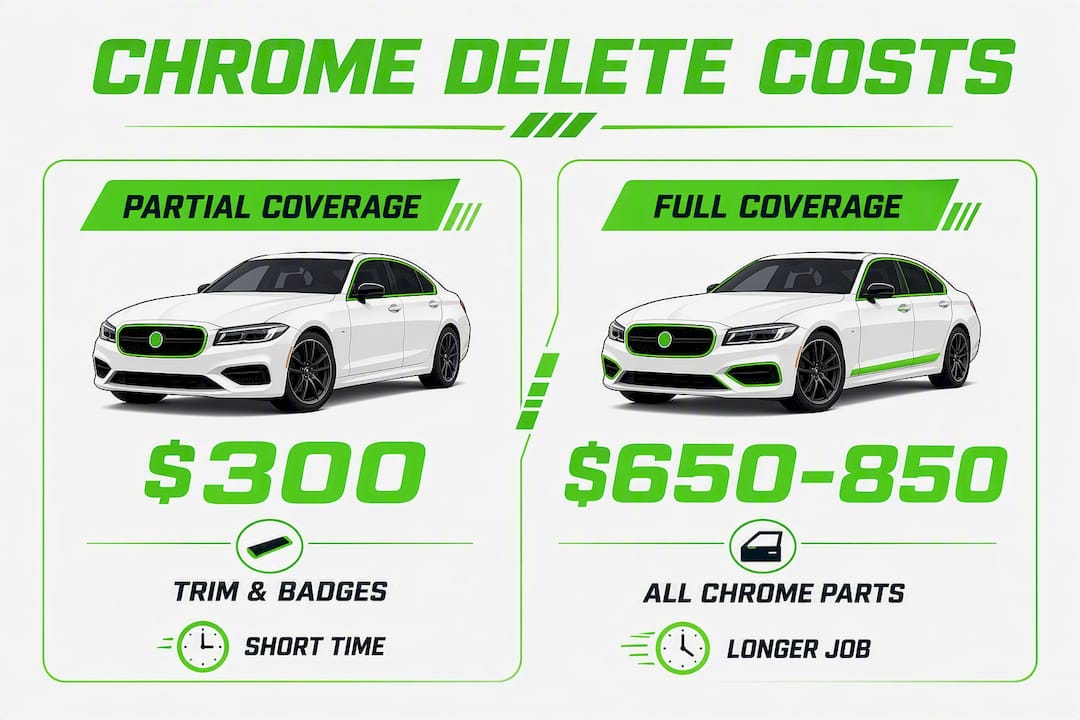
The price you pay tracks almost directly with how much chrome your vehicle has and how much of it you want covered. Shops across the US typically categorize jobs into common scope tiers with corresponding price ranges.
| Scope | What's Included | Professional Price Range | DIY Kit Range |
|---|---|---|---|
| Window trim and badges | Window surrounds, door pillar trim, trunk badge | ~$300 | — |
| Common visible package | Windows + grille + mirrors + badges | — | — |
| Full delete | Every chrome surface on the vehicle | $650–$850 | $150–$300+ |
Three real-world examples show how these bands play out:
- Compact sedan (e.g., Honda Civic, Toyota Corolla): Minimal chrome, usually window trim and a badge or two. Expect $300 for a professional partial job.
- Full-size truck (e.g., Ford F-150, Chevy Silverado): Chrome door handles, mirror caps, running board trim, grille surround, and tailgate lettering add up fast. Full deletes commonly run $650–$850 or more.
- Luxury SUV (e.g., BMW X5, Cadillac Escalade): Complex grilles, layered trim, and tight-radius curves push labor time higher. Budget $850–$1,000+ for a complete job.
US shop pricing for professional chrome delete typically lands between $300 and $850 for most vehicles, with sedans at the low end and large trucks or luxury SUVs at the high end. Urban markets tend to have notably higher labor rates than rural locations, affecting overall pricing.
What drives the final price up or down
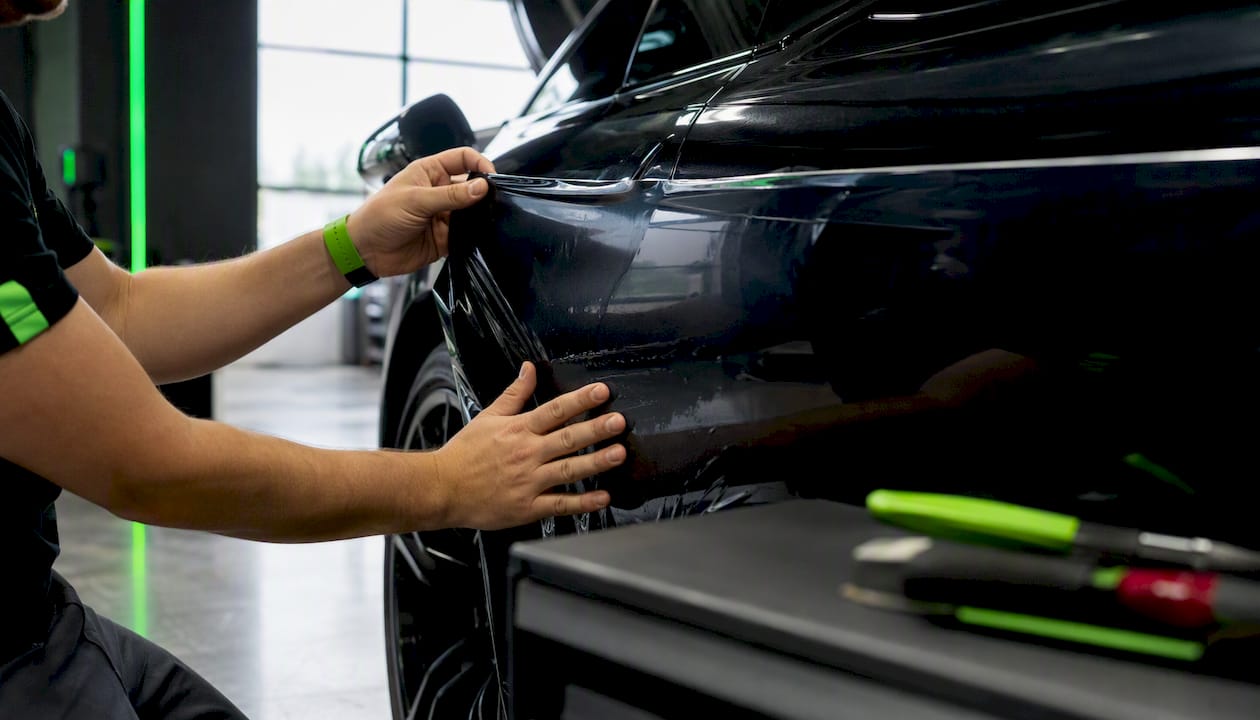
Trim count is the single biggest variable. A compact sedan might have eight chrome pieces; a full-size truck can have 30 or more. Door handles, mirror caps, and grille trim are the most time-consuming elements because they require precise cuts and heat-forming around tight curves.
Here's what shops factor into a quote:
- Number of pieces: More pieces = more labor hours, plain and simple.
- Vehicle size: Larger vehicles have more surface area and longer trim runs.
- Trim complexity: Deep channels, tight radii, and layered grille designs require heat-forming and slow the installer down.
- Finish type: Matte and satin finishes are slightly harder to apply without visible seams compared to gloss.
- Material quality: Premium cast vinyl (3M, Avery Dennison) costs more upfront but conforms better and lasts longer. Cheaper calendered vinyl can shrink and lift within a year.
- Prep work: If existing chrome has adhesive residue, surface oxidation, or minor paint damage underneath, prep time adds to the bill.
- Geographic labor rates: A shop in Van Nuys or downtown LA charges more per hour than one in rural Ohio.
- Disassembly: Removing door handles or disassembling a grille to wrap it cleanly adds 30–60 minutes per component.
Pro Tip: Ask the shop specifically whether they use cast or calendered vinyl. Cast vinyl (like 3M 1080 or Avery Dennison Supreme Wrapping Film) conforms to complex curves without shrinking, which is why it's the professional standard. Calendered vinyl is cheaper but noticeably stiffer — fine for flat surfaces, problematic on chrome trim with curves.
Vinyl, paint, powder coat, or PlastiDip: which method fits your situation?
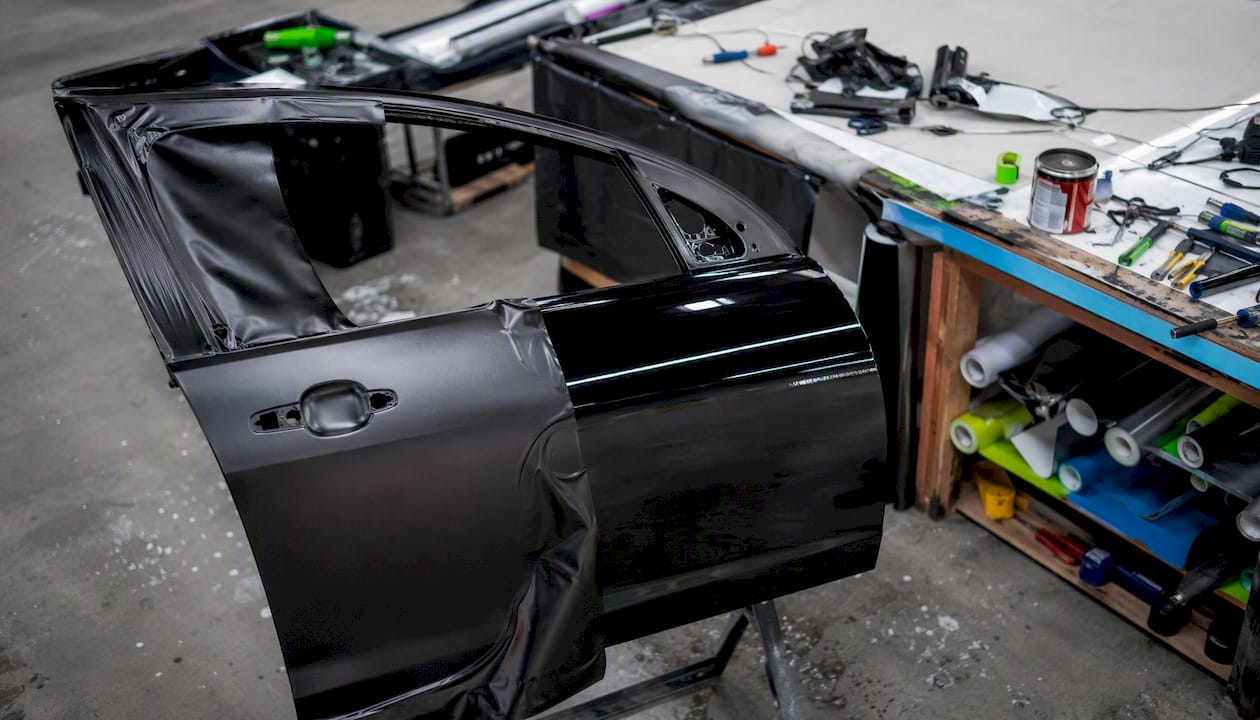
Professional vinyl wrap is preferred for chrome delete due to its factory-quality appearance, durability over multiple years, and clean removability. The other methods each have a specific use case, but none matches vinyl's combination of appearance, durability, and reversibility for most owners.
| Method | Cost Range | Durability / Lifespan | Reversible? | Time to Complete | Best Use Case |
|---|---|---|---|---|---|
| Professional cast vinyl is commonly chosen for chrome delete for its durability of several years, clean peelability, and applicability for most owners, leased cars, and resale-sensitive vehicles. | |||||
| Paint (color-matched) offers a longer-lasting, permanent finish typically suited for show cars or long-term color changes. | |||||
| Powder coat provides a durable, permanent finish often used for wheels and off-road builds. | |||||
| PlastiDip is a budget-friendly, temporary coating option that peels off relatively easily but has a shorter lifespan. |
A few things worth noting about each option:
- Paint makes sense when you want a permanent, color-matched finish and the vehicle is a keeper. The cost is higher and the process is longer, but the result is seamless.
- Powder coat is popular for wheels and metal grille components. It's extremely durable but requires disassembly and baking, so it's not practical for all trim pieces.
- PlastiDip costs almost nothing and peels off, but it looks noticeably different from vinyl at close range and degrades quickly in UV-heavy climates like Southern California.
For leased vehicles, reversible vinyl is the only sensible choice. For resale-sensitive owners, it also protects the original factory chrome underneath.
How long the job takes and how long the results last
Partial jobs like window trim and badges usually require a few hours in the shop, while full deletes and complex components may take a full day or more. Plan to leave the vehicle overnight if you're doing a complete delete on a truck or SUV.
Professional vinyl generally lasts several years with proper care; paint and powder coat last longer but are not reversible, whereas PlastiDip offers a short-term solution with typical peeling within a couple of years or less in harsh climates.
Before your appointment:
- Wash and dry the vehicle thoroughly
- Remove any wax or sealant from chrome surfaces
- Note which pieces you want included and photograph them
After installation:
- Avoid washing the vehicle for 48–72 hours to let the vinyl cure
- Skip automated brush car washes entirely; they catch edges and lift vinyl
- Use a pH-neutral, non-abrasive cleaner for hand washing
- Consider a ceramic coating over the vinyl to extend its life and make maintenance easier
Is a chrome delete actually worth the money?
For most owners, yes. The visual payoff is immediate: blacked-out trim modernizes almost any vehicle, and the effect is especially dramatic on silver or white cars where chrome previously dominated the profile.
The financial case is more nuanced. Chrome delete can improve curb appeal and resale value, but it's subjective. Some buyers love the blacked-out look; others want factory chrome. Reversible vinyl sidesteps the issue entirely by preserving the original finish underneath.
Use this checklist to decide:
- Are you leasing? If yes, vinyl is the only option. It comes off cleanly at turn-in.
- Are you planning to sell within 2 years? Vinyl protects factory chrome for resale; paint does not.
- Is your budget under $500? Start with a partial delete (window trim and badges) and expand later.
- Do you want a permanent finish? Paint or powder coat is worth the higher cost for a vehicle you're keeping long-term.
- Is the chrome already damaged or oxidized? A chrome delete can actually hide deteriorating trim that would otherwise cost more to repair or replace.
One non-financial benefit that often goes unmentioned: chrome shows water spots, fingerprints, and road film constantly. Matte or satin vinyl is dramatically easier to keep looking clean between washes.
How to get an accurate quote from a shop
Vague estimates come from vague requests. Shops that quote without seeing the vehicle are guessing, and that guess often changes at drop-off. Here's how to get a number you can actually budget around.
- Gather your vehicle details: Year, make, model, and trim level. A Sport trim and a Limited trim on the same model can have completely different chrome layouts.
- Photograph every chrome piece: Walk around the vehicle and shoot each piece from two angles. Include close-ups of grille sections and door handles.
- Shoot a short video of complex areas: Grilles with layered sections and door handles with deep channels are hard to quote from a single photo.
- Decide on finish: Matte, satin, or gloss. Satin black is the most popular choice; gloss is easier to apply; matte hides minor imperfections.
- List which pieces you want included: Number them if you can. "Window surrounds, door handles, mirror caps, front grille, trunk badge" is a quote-ready list. "All the chrome" is not.
When you contact a shop, ask these questions directly:
- What vinyl brand and product line do you use? (Cast vinyl is the right answer.)
- Does the quote include prep work and adhesive removal?
- Will seams be visible on any piece?
- What does the warranty cover: material, labor, or both?
- Have you worked on my specific model before?
Some shops offer online price calculators that let you select components and get a preliminary estimate. These are useful for ballpark figures, but a physical inspection almost always refines the number. Bring photos and your VIN to any in-person consultation.
Why shop credentials matter as much as price
A chrome delete is only as good as the installer's technique and the material they use. Climate-controlled installation matters more than most owners realize: temperature swings cause vinyl to contract or expand mid-application, which leads to lifting edges within months.
Tintandwrapscustoms operates out of a climate-controlled facility in Van Nuys, CA, with manufacturer-backed warranties and over 1,000 vehicles installed. Their 5-star customer ratings reflect consistent results across vehicle types, including Tesla and EV models where trim geometry is particularly unforgiving. When evaluating any shop, look for these same signals:
- Written warranty covering both material and labor (not just material)
- Named vinyl brand (3M, Avery Dennison, or equivalent premium cast film)
- Experience with your specific model, especially for complex grilles or EV trim
- Installation photos from previous jobs on similar vehicles
Tesla owners in particular should ask about EV-specific experience. The trim profiles on Model 3 and Model Y require different heat-forming angles than traditional ICE vehicles, and a shop that hasn't worked on them before will show it in the finish.
Key Takeaways
Professional chrome delete pricing runs $300–$850 for most US vehicles, with cast vinyl wrap as the recommended method for its combination of durability, reversibility, and factory-quality finish.
| Point | Details |
|---|---|
| Price ranges by scope | Partial (trim and badges): $300; full delete: $650–$850; DIY kits: $150–$300+. |
| Recommended method | Professional cast vinyl (3M, Avery Dennison) lasts 5–7 years and peels cleanly for leased vehicles. |
| Top cost drivers | Trim piece count, vehicle size, grille complexity, and material quality affect the final price most. |
| Getting an accurate quote | Send photos of every chrome piece, specify your finish, and ask the shop for their vinyl brand and warranty terms. |
| Tintandwrapscustoms | Offers professional chrome delete in Van Nuys with manufacturer-backed warranties, a climate-controlled facility, and 1,000+ vehicles installed. |
The part most guides skip about DIY vs. pro
The DIY vs. professional debate usually gets framed as a cost question. It's really a technique question. Chrome trim is among the hardest surfaces to wrap cleanly because it combines tight-radius curves, deep channels, and a non-porous surface that punishes any air pocket or wrinkle. Beginners consistently underestimate the heat-forming skill required to get vinyl to conform around a door handle or grille section without overstretching it. The result is almost always lifting edges within a few weeks, which then requires a professional redo anyway.
The honest math: a failed DIY attempt on a full delete can cost $150 in materials plus $650 in professional correction. That's more than just hiring a pro from the start.
What I'd tell any owner considering DIY: start with a single flat badge. If that goes cleanly, try a mirror cap. If the mirror cap lifts or wrinkles, stop there and book a shop for the rest. Staged upgrades also make financial sense: start with window trim and badges (the most visible pieces), see how you like the look, and add grille and door handles later. A good shop can match the vinyl finish across sessions if you use the same material and color.
The one thing worth asking any shop before you hand over the keys: "What brand of vinyl are you using?" If they can't answer that immediately, keep looking.
Tintandwrapscustoms chrome delete service: what's included
Skip the guesswork of a DIY kit and the risk of an under-equipped shop. Tintandwrapscustoms delivers professional chrome delete in Van Nuys using premium cast vinyl installed in a climate-controlled facility, which means no shrinkage surprises and no lifting edges six months later.
Every job includes manufacturer-backed warranty coverage, prep work, and curing instructions. Their team has completed chrome deletes on over 1,000 vehicles, including Tesla Model 3 and Model Y, where trim geometry demands precision that most general shops don't have. Partial packages (window trim and badges) start around $300; full deletes are quoted based on your specific vehicle after a photo review.
Send photos of your chrome pieces and your vehicle's year, make, and model to get a photo-based estimate before you visit. Request a quote at Tintandwrapscustoms and get a number you can actually plan around.
Useful sources and tools
- Chrome Delete Cost Guide — Gilroy Blackout: Detailed US price breakdown with scope tiers and lifespan data.
- Does Chrome Delete Increase Vehicle Value? — Trim Illusion: Balanced look at resale impact and why reversible vinyl protects factory value.
- PPF vs. Vinyl Wrap — Tintandwrapscustoms Blog: Useful if you're weighing additional paint protection alongside a chrome delete.
- Ceramic Coating Cost Guide — Tintandwrapscustoms Blog: Covers adding a ceramic layer over vinyl to extend finish life and simplify maintenance.
When requesting a quote in person, bring your vehicle's VIN and a printed or digital photo set of every chrome piece you want covered. It cuts the consultation time in half and gets you a more accurate number on the first visit.